Find the Best HVAC Installers for Your Business
No obligation • Fast responses • Nationwide coverage

Why you can trust HVAC Firms
HVAC Firms is a leading United States resource for evaluating HVAC service providers. Our team researches companies, checks credentials, and reviews customer feedback to present clear, unbiased information. Listings and rankings are based on merit, and companies cannot pay to change our editorial content.
Search providers near you
Find HVAC Installers near you
Installing a new heating, ventilation, and air conditioning (HVAC) system is a significant home improvement decision that impacts your comfort, energy bills, and property value for years to come. Whether you're replacing an old, failing unit or adding climate control to a new space, understanding the process, options, and costs is crucial. This guide provides a clear overview of what a new HVAC system installation entails, the different types of systems available, and key factors that influence the final project, helping you make an informed choice and connect with qualified local professionals.
Search providers near you
Understanding Your HVAC System Options
The term "HVAC installation" covers a wide range of equipment designed to heat and cool your home. The right choice depends on your existing infrastructure, climate, and budget. The primary systems installed in U.S. homes include:
- Central Split Systems: This is the most common setup, consisting of a separate furnace (for heating) and an air conditioner (for cooling) that share ductwork to distribute air. Installation typically involves an indoor air handler or furnace and an outdoor condenser unit. This is the standard for homes with existing ductwork.
- Heat Pumps (Air-Source): An increasingly popular all-in-one solution, heat pumps provide both heating and cooling by transferring heat. They are highly efficient, especially in moderate climates, and can be configured as central systems (using ducts) or ductless.
- Ductless Mini-Split Systems: Ideal for homes without ducts, additions, or for creating zoned comfort, these systems have an outdoor compressor connected to one or more indoor air handlers mounted on walls or ceilings. They offer flexible, room-by-room temperature control.
- Geothermal Heat Pumps: These systems use the stable temperature of the earth for highly efficient heating and cooling. While they have the highest upfront installation cost due to the required ground loop, they offer the lowest operating costs and longest equipment life.
The Step-by-Step Installation Process
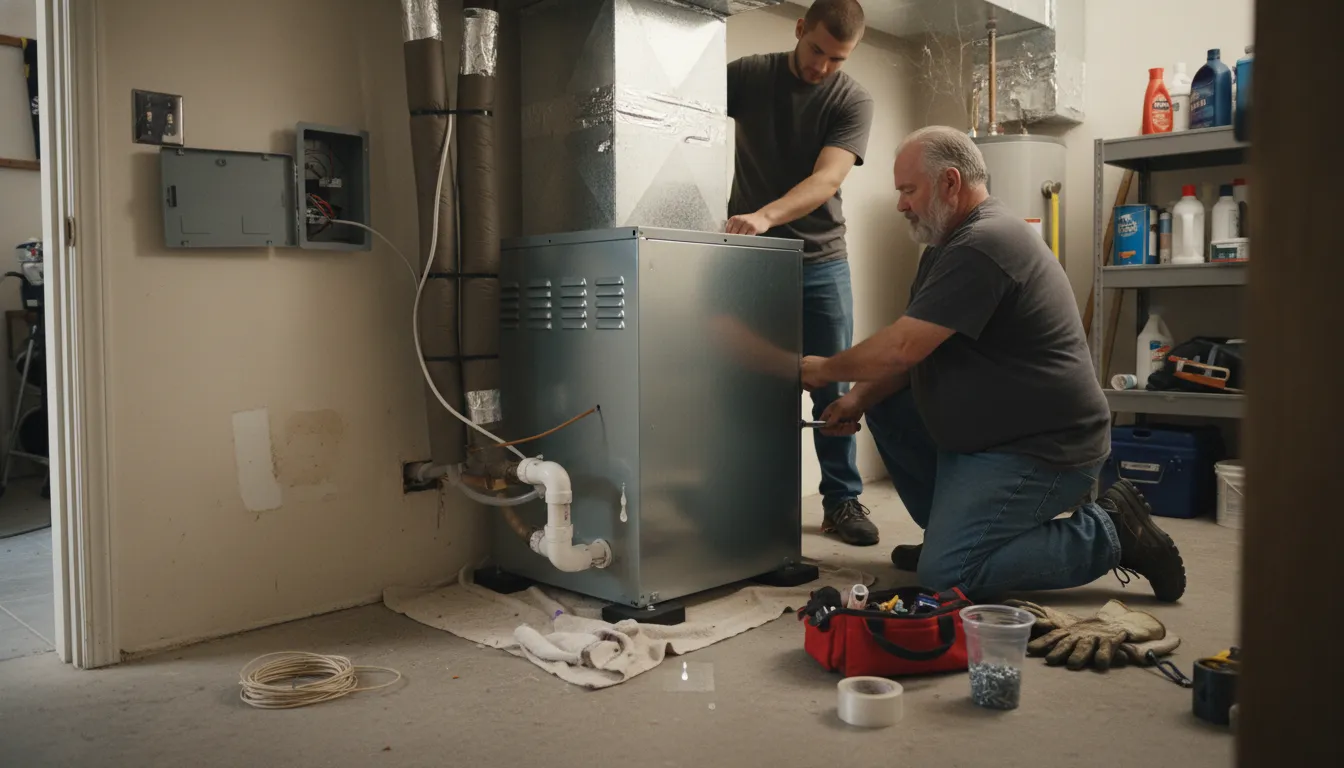
A professional HVAC setup is more than just swapping an old box for a new one. It's a detailed process that ensures safety, efficiency, and long-term reliability.
- Assessment and Removal: The process begins with a thorough home evaluation, including a load calculation to determine the correct system size. The old furnace, air conditioner, or heat pump is then safely disconnected and removed.
- Equipment Installation: New indoor units (furnace, air handler) and outdoor units (AC condenser, heat pump) are carefully positioned and secured. This step must account for clearances, airflow, and local building codes.
- Ductwork Modification or Installation: For central systems, existing ducts are inspected, sealed, and often modified to optimize airflow. If new ductwork is needed, it is fabricated and installed, which is a significant portion of the labor.
- Electrical and Fuel Connections: New electrical lines are run to power the system, and for gas furnaces, new gas lines are connected with proper leak testing. This is a critical safety step that must be performed by licensed technicians. 1
- System Commissioning and Testing: Once physically installed, the system is charged with refrigerant, started up, and tested. Technicians balance airflow, check for leaks, verify thermostat operation, and perform a final walk-through with the homeowner. 2
Key Factors Influencing Installation Cost
The price for a new climate control system varies widely. Understanding what drives these costs helps in budgeting and comparing quotes.
- System Type and Efficiency: The choice between a standard air conditioner/furnace combo, a heat pump, or a ductless system forms the cost base. Higher efficiency ratings (SEER for cooling, AFUE for heating, HSPF for heat pumps) mean a higher initial price but significantly lower monthly energy bills. 3
- Home Size and Layout: Larger homes require larger capacity (measured in tons) equipment. The complexity of the installation-such as a multi-story home, attic or crawlspace access, and the number of zones-directly impacts labor time and cost.
- Ductwork Requirements: The condition of existing ducts is a major variable. Simple sealing and modifications are less costly, while installing an entirely new duct system for a central air setup can add thousands to the project. 4 5
- Labor and Geographic Location: Professional installation labor rates vary by region and the contractor's expertise. Permits and local code requirements can also affect the timeline and cost. 6
- Brand and Advanced Features: Premium equipment brands often come at a higher price. Additional features like advanced air filtration, humidifiers, dehumidifiers, or smart zoning systems will also increase the total investment. 7 8
Find the perfect hvac installers for your needs
Get personalized recommendations and expert advice
Breaking Down Average Installation Costs
While every project is unique, here are general cost ranges for full system installations in the U.S., which typically include equipment and professional labor. These are estimates; always get detailed, written quotes for your specific home.
- Central Split System (Furnace & Air Conditioner): $10,000 - $20,000. This is the standard cost for replacing a full system, including new indoor and outdoor units. The higher end of the range often includes significant ductwork modifications or replacement.
- Air-Source Heat Pump System: $9,000 - $20,000. As a combined heating and cooling solution, heat pumps are a versatile choice. Cost depends on capacity, efficiency, and whether it integrates with existing ducts.
- Ductless Mini-Split System: $2,000 - $10,500+ per zone. The cost is highly variable based on the number of indoor heads (zones) and the capacity of the outdoor unit. A single-zone system for one room is at the lower end, while multi-zone whole-home solutions reach the upper end. 9 10
- Gas Furnace Replacement Only: $3,800 - $12,000. If only the heating component is being replaced and the existing air conditioner and ducts are in good condition, costs are lower. Price varies with furnace efficiency and capacity. 11
- Geothermal Heat Pump System: $20,000 - $100,000+. The excavation or drilling required for the ground loop makes this the most expensive upfront option, though it offers unparalleled efficiency and federal tax credits may be available. 12 13
How to Prepare for a Successful Installation
Being an informed homeowner leads to a smoother project. Before your installation day:
- Get Multiple Estimates: Obtain at least three detailed, written quotes from licensed, insured, and well-reviewed contractors. The quote should include a manual load calculation, not just a rule-of-thumb guess.
- Ask the Right Questions: Inquire about the proposed equipment's efficiency ratings, warranty details, the estimated timeline, and how the crew will protect your home during work.
- Check for Rebates: Look for available incentives from utility companies, state programs, or federal tax credits for high-efficiency systems, especially heat pumps and geothermal.
- Plan for Disruption: A standard replacement can take 1-3 days. Ensure clear access to the work areas (indoors and outdoors) and plan for times without heating or cooling.
Frequently asked questions
Sources
Footnotes
-
Expert Guide to HVAC System Installation - Golden Rule - https://goldenrulephc.com/blog/a-guide-to-hvac-system-installation/ ↩
-
Residential HVAC Installation Process: A Comprehensive Guide - https://precisionairhc.com/blog/residential-hvac-installation-process/ ↩
-
HVAC Installation Costs and Breakdowns - TMC Heating and Cooling - https://tmcservice.com/hvac-installation-costs-and-breakdowns/ ↩
-
How Much Does HVAC Installation Cost? - https://ashburnhvac.com/how-much-does-hvac-installation-cost/ ↩
-
HVAC Installation Cost Per Sq Ft: Average Pricing Guide - https://www.superbrothers.com/hvac-installation-cost-per-sq-ft-average-pricing-guide/ ↩
-
HVAC Buying Guide 2026: Types, Installation Costs, FAQs - https://modernize.com/hvac ↩
-
All to Know About HVAC Pricing When Buying a New Unit - https://www.acehardwarehomeservices.com/blogs/all-to-know-about-hvac-pricing-when-buying-a-new-unit ↩
-
2026 Heat Pumps Installation Cost Guide: Types, Sizes and Brands - https://modernize.com/hvac/heating-repair-installation/heat-pump ↩
-
Cost to Install Central Air in 2026: How to Save - NerdWallet - https://www.nerdwallet.com/home-ownership/home-improvement/learn/cost-to-install-central-air ↩
-
Step-by-Step HVAC Installation Guide - https://www.carrier.com/residential/en/us/products/air-conditioners/hvac-installation/ ↩
-
How Much Does a New HVAC System Cost in 2025? - https://www.jacklehr.com/blog/air-conditioning-service/new-hvac-system-cost-2025/ ↩
-
3 Types of HVAC Systems and When To Install Them - https://www.ccservicellc.com/3-types-of-hvac-systems-and-when-to-install-them ↩
-
New HVAC System Cost Calculator: Get a Custom Estimate in 2026 - https://modernize.com/hvac/cost-calculator ↩