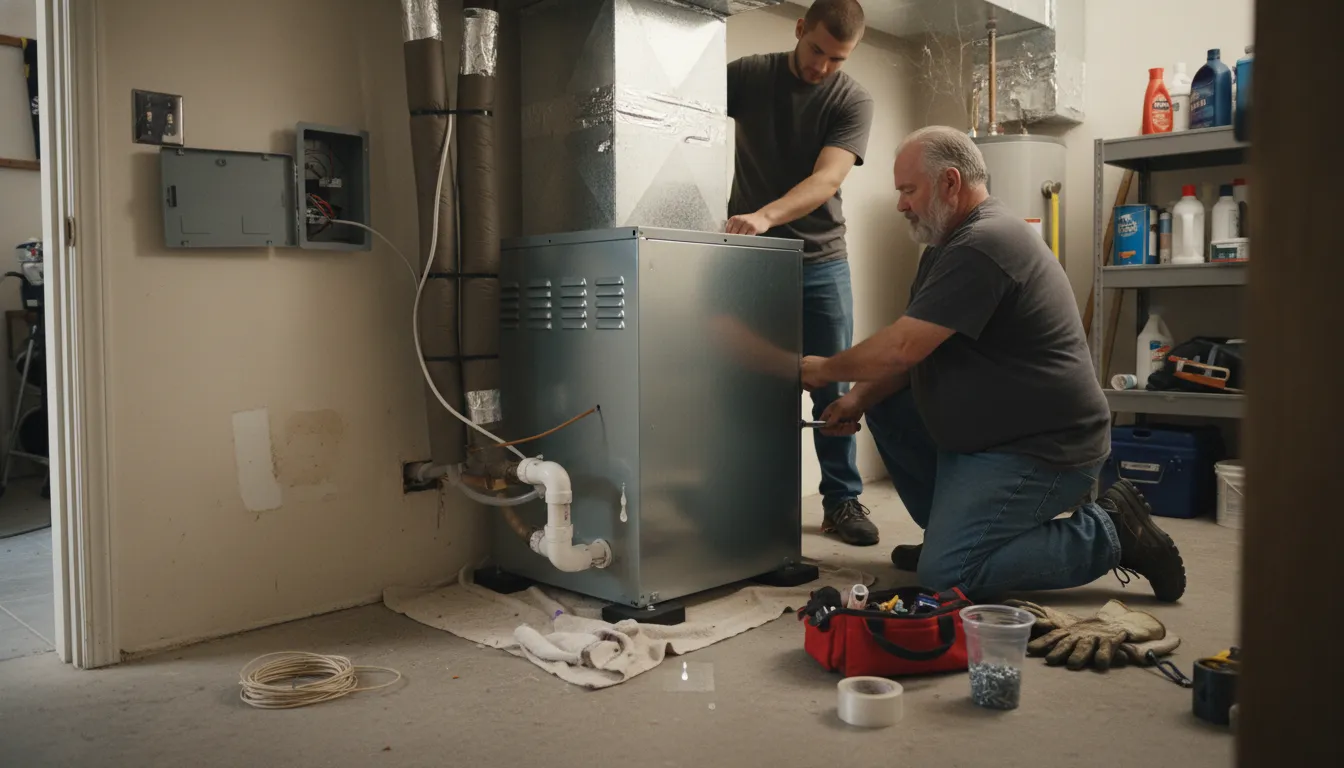
Find the Best HVAC Installers for Your Business
No obligation • Fast responses • Nationwide coverage

Why you can trust HVAC Firms
HVAC Firms is a leading United States resource for evaluating HVAC service providers. Our team researches companies, checks credentials, and reviews customer feedback to present clear, unbiased information. Listings and rankings are based on merit, and companies cannot pay to change our editorial content.
Search providers near you
Best HVAC Installers in Minnesota Ranked
Choosing the right heating and cooling system for your Minnesota home is a critical decision that impacts your comfort, energy bills, and indoor air quality year-round. With the state's extreme temperature swings-from humid summers to bitterly cold winters-a properly sized and installed system is essential. This guide explains the available options, current efficiency standards, and key cost factors to help you make an informed choice when selecting a local professional for your project.
Hurlburt Heating & Plumbing
1000 County Rd E Suite 115, Shoreview, MN 55126
Hurlburt Heating & Plumbing is a family-owned home services provider serving Minneapolis, MN, and surrounding areas. Since 1959, they have offered a wide range of services including HVAC installation and repair, plumbing, and electrical work. Their HVAC services cover air conditioner and furnace repair, heat pump and mini split installation, indoor air quality solutions, and HVAC tune-ups. Hurlburt also provides whole-home air scrubbers, purifiers, humidifiers, and dehumidifiers to improve indoor air quality. With over six decades of experience, they combine modern technology with personalized service to address customer needs.
Nice Heating & Air
24 Onville Rd suite 101-9, Stafford, VA 22556
Nice Heating & Air is an HVAC company serving Minneapolis, MN, specializing in air conditioning, heating, and indoor air quality services. They provide installation, repair, and maintenance for systems including ductless mini splits, heat pumps, furnaces, and water heaters. The company has many years of experience and focuses on delivering high-quality products and services with a commitment to customer satisfaction. Their capabilities include HVAC tune-ups and indoor air quality improvements such as air purifier installation and ventilation services.
Furnace Doctors
102 County Rd C West, Little Canada, MN 55117
Furnace Doctors is an HVAC company based in Minneapolis, MN, offering a range of heating and cooling services. Their expertise includes furnace repair and replacement, air conditioner repair and installation, ductless system installation, and indoor air quality solutions such as air filtration and humidity control systems. The company emphasizes maximizing HVAC system performance and has installers with over 25 years of experience. Furnace Doctors also provides annual maintenance plans to help keep systems running efficiently.
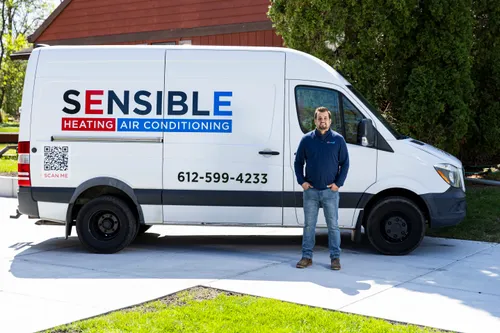
Sensible Heating and Air Conditioning
3533 Roosevelt St NE, St Anthony, MN 55418
Sensible Heating and Air Conditioning is a locally owned HVAC company serving Minneapolis, MN. They provide a range of services including air conditioning, furnace, and heat pump repair, installation, and tune-ups. With 16 years of experience, they focus on maintaining efficient and comfortable home environments through reliable HVAC solutions. Their expertise includes troubleshooting and installing all major brands to ensure energy-efficient performance throughout the year.
Standard Heating & Air Conditioning, Inc.
130 Plymouth Ave N, Minneapolis, MN 55411
Standard Heating & Air Conditioning, Inc. has been serving Minneapolis, MN, and the surrounding Twin Cities area since 1930. They provide a range of HVAC services including air conditioning and furnace repair and installation, indoor air quality solutions, and HVAC tune-ups. The company emphasizes customer education and family care, with a team of NATE-certified technicians using industry-leading equipment. Their long history reflects a commitment to ethical service and community involvement.
Understanding Your Minnesota HVAC System Options
Minnesota homeowners have several primary pathways for heating and cooling, each with distinct advantages depending on your home's layout, existing infrastructure, and efficiency goals.
Standard Air Conditioner and Furnace This traditional split system remains a common and reliable choice. It pairs a central air conditioner for summer cooling with a natural gas or propane furnace for winter heating. This setup is ideal for homes with existing ductwork and provides powerful heating capable of handling the coldest winter nights 1. Modern furnaces must meet a minimum efficiency of 81% Annual Fuel Utilization Efficiency (AFUE).
Air-Source Heat Pumps (ASHPs) Heat pump technology has advanced significantly, making it a increasingly popular all-in-one solution for Minnesota climates. An ASHP provides both efficient cooling in summer and heating in winter by transferring heat between your home and the outdoor air. For reliable performance in sub-zero temperatures, look for high-efficiency cold-climate models or consider a dual-fuel system, which pairs a heat pump with a gas furnace as a backup for extreme cold. These systems must meet specific regional efficiency standards.
Ground-Source (Geothermal) Heat Pumps This is the most energy-efficient long-term option. Geothermal systems use the stable temperature of the earth to heat and cool your home, offering substantial savings on energy bills. The main barrier is the higher upfront installation cost due to the required ground loop excavation, but they provide exceptional durability and low operating costs.
Ductless Mini-Split Systems For homes without existing ductwork, or for adding comfort to specific zones like a finished basement or sunroom, ductless mini-splits are an excellent solution. These systems consist of an outdoor compressor unit connected to one or more indoor air handlers mounted on walls or ceilings. They offer targeted zoning and high efficiency, though they are less common as the sole system for larger, whole-home applications.
Key Features for Enhanced Comfort and Efficiency
Beyond the basic system type, several advanced features can significantly improve your home's comfort, air quality, and energy use.
Variable Speed and Modulating Systems Unlike traditional single-stage systems that simply turn on and off, variable-speed compressors and modulating furnaces adjust their output in small increments. This allows for more precise temperature control, quieter operation, better humidity removal, and improved overall efficiency, often qualifying for utility rebates.
Energy Recovery and Heat Recovery Ventilators (ERVs/HRVs) Modern, tightly sealed homes need a controlled way to bring in fresh air without wasting energy. ERVs and HRVs are ventilation systems that exchange stale indoor air with fresh outdoor air while transferring heat (and in the case of ERVs, moisture) between the two streams. Notably, Minnesota's latest residential energy code requires mechanical ventilation, making these systems a crucial consideration, especially in new construction or major renovations 2.
Zoned Air Distribution Zoning systems use multiple thermostats and motorized dampers in your ductwork to control temperatures independently in different areas of your home. This prevents overheating or overcooling unused rooms and can lead to substantial energy savings and enhanced comfort 3.
Navigating Minnesota's Efficiency Standards and Codes
All new HVAC installations in Minnesota must comply with federal and state-specific regulations designed to promote energy conservation.
Minimum Efficiency Ratings As of 2023, the U.S. Department of Energy's SEER2 and HSPF2 standards are in effect. Minnesota falls under the Northern region, which requires:
- Air Conditioners: A minimum of 13.4 SEER2 (approximately equivalent to the old 14 SEER rating).
- Air-Source Heat Pumps: A minimum of 14.3 SEER2 (approx. 15 SEER) for cooling efficiency and 7.5 HSPF2 (approx. 8.8 HSPF) for heating efficiency 4.
- Furnaces: Must achieve at least 81% AFUE.
Installing equipment that exceeds these minimums can qualify for utility rebates and federal tax credits, reducing your net cost.
Ductwork and Installation Codes Proper installation is as important as the equipment itself. State codes have specific requirements for ductwork, particularly when it runs through unconditioned spaces like attics or crawlspaces. For example, ducts in these areas must be insulated to a minimum of R-8 to prevent energy loss. A reputable installer will ensure all aspects of the installation meet or exceed these code requirements.
Find the perfect hvac installers for your needs
Get personalized recommendations and expert advice
Cost Considerations for HVAC Installation in Minnesota
The total investment for a new HVAC system in Minnesota varies widely based on system type, efficiency, home size, and installation complexity.
Typical Price Ranges
- Basic Mid-Efficiency AC Replacement (with existing ducts): $4,500 - $7,000 5.
- High-Efficiency AC or Heat Pump System: $8,500 - $12,000+ 6.
- Advanced Cold-Climate Air-Source Heat Pump (full system): $12,000 - $24,000+ 7.
- Ductwork Modifications, Repair, or New Installation: Can add $2,000 - $5,000+ to the total project cost 8 9.
Factors Influencing Your Final Cost
- Home and System Size: A correctly sized system (calculated via a Manual J load calculation) is crucial. An oversized or undersized unit will cost more upfront and operate inefficiently.
- Equipment Efficiency: Higher SEER2, HSPF2, and AFUE ratings typically come with a higher initial price tag but lower long-term operating costs.
- Existing Infrastructure: The condition of your current ductwork, electrical service, gas line, and thermostat will affect the project scope and price.
- Brand and Features: Premium brands and models with variable-speed technology or smart features will be more expensive than builder-grade basic models.
- Incentives and Rebates: Always ask your contractor about available rebates from local utilities (like CenterPoint Energy, Xcel Energy, or Minnesota Power) and federal tax credits for high-efficiency equipment. These can reduce your net cost by hundreds or even thousands of dollars.
Choosing the Right Local HVAC Professional
Given the complexity and importance of a proper installation, selecting a qualified contractor is paramount.
- Seek Detailed Assessments: Avoid contractors who give quotes over the phone without a thorough home evaluation. They should inspect your existing equipment, ductwork, insulation, and windows.
- Request Manual J Load Calculations: Ensure they perform this industry-standard calculation to determine the precise heating and cooling needs of your home.
- Check Credentials: Verify they are licensed, bonded, and insured in Minnesota. Look for certifications from organizations like North American Technician Excellence (NATE).
- Get Multiple Quotes: Compare detailed written proposals from at least three contractors. The quote should include equipment model numbers, efficiency ratings, labor warranty, and a clear scope of work.
- Ask About Post-Installation Support: Understand the warranty on both parts and labor, and inquire about their service plans and emergency repair policies.
Frequently asked questions
Sources
Footnotes
-
Types of Heating Systems For Your Bloomington, MN Home - https://www.bloomingtonheating.com/choose-the-right-heating-system/ ↩
-
Updating Minnesota's residential energy code could lower ... - https://fresh-energy.org/updating-minnesotas-residential-energy-code-could-lower-emissions-costs ↩
-
Energy Savings from Residential Zoned Air Distribution Systems - https://mn.gov/commerce-stat/pdfs/187377_CEE_Zoned-FA-Res-WP_Final-Secure.pdf ↩
-
New 2023 SEER HVAC Regulations in Minnesota Explained - https://genzryan.com/blog/new-2023-seer-hvac-regulations-in-minnesota/ ↩
-
Cost To Replace Your Home's Air Conditioner in Minnesota - https://mspplumbingheatingair.com/cost-to-replace-air-conditioner-in-minnesota/ ↩
-
AC Unit Replacement Costs and Financing: What Minnesota ... - https://www.aircomfortmn.com/blog/ac-unit-replacement-costs-and-financing-what-minnesota-homeowners-should-know ↩
-
How to Choose the Right HVAC System for Your Minnesota ... - https://brinkshvac.com/blog/how-to-choose-the-right-hvac-system-for-your-minnesota-home ↩
-
Replacing your Central Air - Center for Energy and Environment - https://www.mncee.org/replacing-your-central-air ↩
-
How Much a New HVAC System Costs in Minnesota ... - https://comfortbydesign.com/blog/new-hvac-system-cost/ ↩