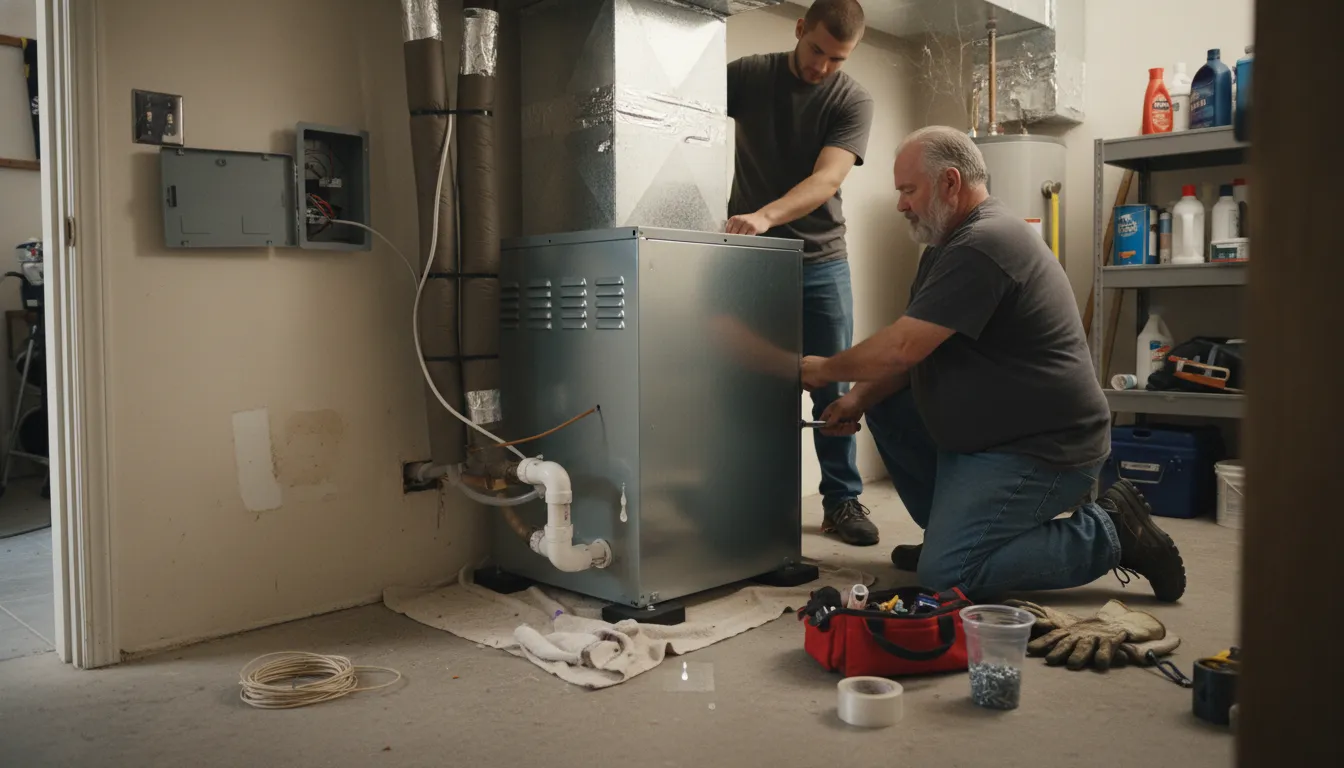
Find the Best HVAC Installers for Your Business
No obligation • Fast responses • Nationwide coverage

Why you can trust HVAC Firms
HVAC Firms is a leading United States resource for evaluating HVAC service providers. Our team researches companies, checks credentials, and reviews customer feedback to present clear, unbiased information. Listings and rankings are based on merit, and companies cannot pay to change our editorial content.
Search providers near you
Best HVAC Installers in Arizona Ranked
A new HVAC installation is a major investment in your home's comfort and energy efficiency, especially in Arizona's extreme climate. The right system can dramatically lower your utility bills, improve indoor air quality, and provide reliable cooling and heating for years. This guide will help you understand your options, from system types and efficiency ratings to costs and regulations, so you can make an informed decision when selecting a professional for your project.
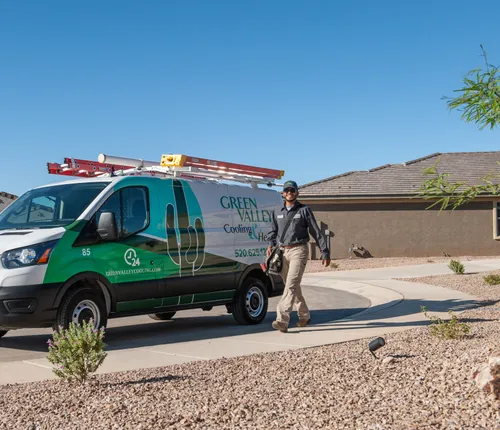
Green Valley Cooling & Heating
645 W Ward Ln, Green Valley, AZ 85614
Green Valley Cooling & Heating is an HVAC company serving Tucson, AZ, and surrounding communities including Green Valley, Sahuarita, and Vail. They provide a wide range of services including air conditioning and heating installation, repair, and maintenance, as well as duct cleaning and indoor air quality solutions. The company is a Certified Daikin Comfort Pro Dealer and offers expertise in energy-efficient upgrades and whole-home comfort systems. Established in 1968, Green Valley Cooling & Heating has over fifty years of experience in the industry. Their licensed and insured technicians are available 24/7 for emergency repair services.
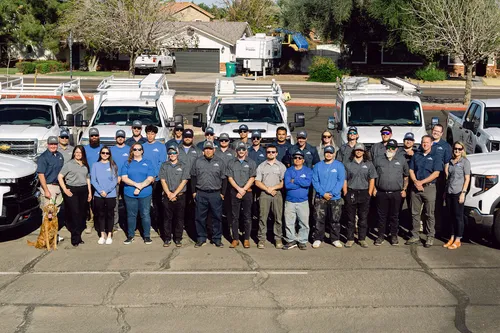
Mountain Peak Air
Mesa, AZ
Mountain Peak Air is a family-owned HVAC company based in Mesa, AZ, specializing in air conditioning repair, installation, heating, and indoor air quality services. They focus on maintaining and improving home comfort by offering AC repairs, system installations, and advanced air purification using NASA technology. The company provides tailored solutions suited to the desert climate of Mesa, ensuring both cooling efficiency and clean air for residents. Mountain Peak Air emphasizes repairing before replacing systems and offers maintenance plans to keep units in optimal condition.
AC Repair Near Me
77 W Chicago St Unit 4, Chandler, AZ 85225
AC Repair Near Me is a locally owned HVAC company serving Phoenix, AZ, and surrounding areas. They offer a full range of heating and cooling services including AC and furnace repair, installation, maintenance, and duct cleaning. The company is equipped to handle emergency repairs and provides 24/7 availability to address urgent HVAC issues. Their technicians are certified and experienced, using advanced diagnostic technology to ensure proper service. AC Repair Near Me emphasizes thorough inspections before work begins and offers customized maintenance plans to keep systems running efficiently.
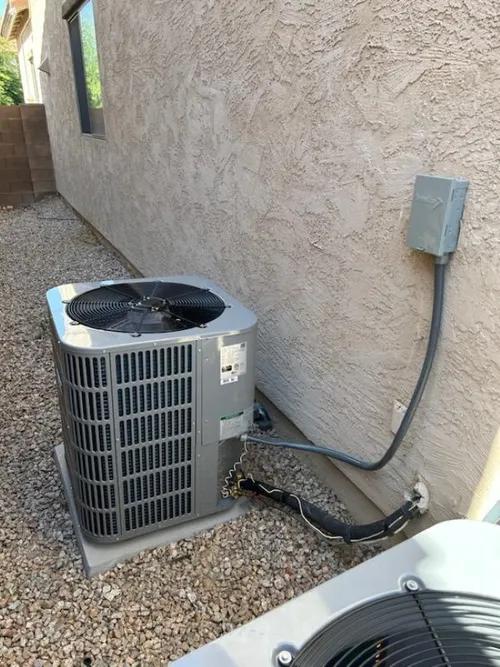
AZ Home Services Group of Queen Creek
23010 S 208th St, Queen Creek, AZ 85142
AZ Home Services Group of Queen Creek is a full-service HVAC and plumbing company serving the Queen Creek, AZ area. They provide air conditioning repair and installation, furnace and heat pump installation, mini-split systems, thermostat installation, and HVAC tune-ups. The company works with major brands like Goodman, Carrier, Trane, and Rheem, offering tailored HVAC solutions based on home size and insulation. They also handle plumbing services including leak detection, water softener installation, and water heater replacement. AZ Home Services Group offers 24/7 emergency AC repair to address urgent cooling needs in the hot Arizona climate.
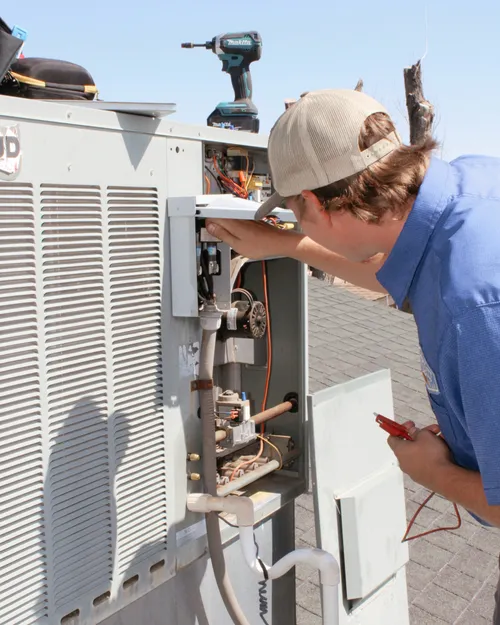
Reliance Heating and Air Conditioning
302 W Lone Cactus Dr, Phoenix, AZ 85027
Reliance Heating and Air Conditioning is a family-owned HVAC company serving Phoenix, AZ, and the surrounding areas. They offer a range of services including air conditioning, furnace, and heat pump repair and installation, as well as HVAC tune-ups and thermostat installation. As a Trane Comfort Specialist, they provide expertise with Trane systems known for reliability and quality. With over 40 years of experience as a third-generation family business, Reliance Heating and Air Conditioning emphasizes treating customers' homes with care and professionalism.
Understanding Arizona's Unique HVAC Demands
Arizona's climate presents a unique challenge for heating, ventilation, and air conditioning systems. With long, intensely hot summers and mild but sometimes chilly winters, your system must be robust enough to handle extreme temperature swings. The primary load is cooling, which can run for more than half the year, placing enormous stress on equipment. This makes efficiency not just a matter of saving money, but also of system longevity and reliability. A properly sized and installed high-efficiency system is crucial for maintaining comfort without exorbitant energy costs.
Furthermore, factors like low humidity (in most regions) and high dust levels influence system choice and maintenance needs. Systems must be designed to manage air quality effectively. Understanding these local demands is the first step toward choosing an installation that will perform optimally in Arizona's environment for its entire lifespan.
Types of HVAC Systems for Arizona Homes
Selecting the right type of system is foundational to your home's comfort. Here are the most common options suitable for Arizona residences:
Central Air Conditioners & Furnaces: This is the traditional split-system setup, with an outdoor condenser/compressor unit and an indoor air handler or furnace. In Arizona, the air conditioner is the workhorse. Furnaces are typically less critical but are needed for winter warmth. Modern systems are categorized by their staging:
- Single-Stage Systems (14-15 SEER2): These are budget-friendly options that operate at 100% capacity whenever they are on. They are less efficient during milder hot weather and can lead to more temperature swings and humidity variability.
- Two-Stage Systems (15-16 SEER2): These units have a high and a low stage. They run on the low stage about 80% of the time, providing more consistent temperatures, better humidity control, and improved energy efficiency compared to single-stage models1 2.
- Variable-Speed/Modulating Systems (17+ SEER2): The premium choice for Arizona. These systems adjust their output in small increments to match the exact cooling demand. This results in ultra-consistent temperatures, superior humidity removal, whisper-quiet operation, and the highest possible energy savings, which is particularly valuable given the state's cooling costs 3.
Heat Pumps: An excellent and increasingly popular option for Arizona. A heat pump provides both cooling and heating from one unit, functioning like an air conditioner in summer and reversing the process to extract heat from the outside air in winter. Given Arizona's mild winters, high-efficiency heat pumps (20+ SEER) are extremely effective and can offer significant year-round energy savings compared to a standard AC/furnace combo.
Packaged Units: These are all-in-one systems typically installed on the roof or a concrete slab beside the home. They contain all components-compressor, coil, and fan-in a single cabinet. They are a common solution for homes without the space for an indoor furnace/air handler, such as those on a slab foundation.
Efficiency Standards: SEER2 and What You Need to Know
Efficiency is measured by SEER2 (Seasonal Energy Efficiency Ratio), an updated standard that took effect in 2023. It provides a more realistic assessment of how a system performs under real-world conditions.
- Minimum Legal Requirement: For new split-system air conditioner installations in Arizona (Southwest region), the federal minimum is 14 SEER2. For split-system heat pumps, the minimum is 14 SEER2 and 7.5 HSPF2 (Heating Seasonal Performance Factor) 4.
- Practical Recommendation for Arizona: While 14 SEER2 is the legal minimum, it is rarely the most cost-effective choice for Arizona homeowners. Due to the intense and prolonged cooling season, investing in a higher-efficiency system pays dividends. Most experts recommend aiming for 16 SEER2 or higher (often marketed as 20+ SEER under the old rating). The higher upfront cost is typically recouped through substantial monthly energy bill savings 5.
Choosing a system well above the minimum standard is one of the smartest financial decisions you can make for an Arizona home.
Cost Breakdown for HVAC Installation in Arizona
The cost of a new HVAC installation varies widely based on system type, efficiency, home size, and existing infrastructure. Below is a general price range for a full system replacement in a typical Arizona home.
System Type & Efficiency Tier (Approx. Cost Range):
- Basic Single-Stage AC & Furnace (14 SEER2): $6,500 - $11,500
- Mid-Range Two-Stage AC & Furnace (15-16 SEER2): $10,000 - $13,000
- Premium Variable-Speed AC & Furnace (17+ SEER2): $13,000 - $17,000+
- High-Efficiency Heat Pump System (e.g., 3-ton, 20+ SEER): $10,000 - $13,0006 7 8 9
Key Factors Influencing Cost:
- Home Size & Tonnage: Larger homes require larger capacity systems (measured in tons), which cost more.
- Ductwork: If existing ductwork is damaged, poorly designed, or insufficient, modification or replacement can add $2,000 to $5,000 or more to the project.
- System Features: Adding a smart thermostat, advanced air purification systems, zoning dampers, or UV lights will increase the total cost.
- Brand & Warranty: Premium brands with comprehensive extended warranties often come at a higher initial price.
- Labor & Complexity: Installations in difficult-to-access attics or on multi-story homes will incur higher labor costs.
Find the perfect hvac installers for your needs
Get personalized recommendations and expert advice
The Installation Process: What to Expect
A professional HVAC installation is a multi-day process that should be meticulously planned.
- Initial Consultation & Load Calculation: A reputable professional will perform a Manual J load calculation, not just a rule-of-thumb estimate. This complex calculation considers your home's square footage, insulation, window types, orientation, and more to determine the precise system size needed. An oversized or undersized system will lead to comfort issues, higher costs, and premature wear.
- System Design & Proposal: Based on the load calculation and your home's layout, the installer will design a system, select appropriate equipment, and provide a detailed written proposal outlining costs, equipment models, efficiency ratings, warranties, and a project timeline.
- Preparation & Removal: On installation day, the crew will protect your home and carefully remove the old equipment.
- Installation & Integration: This involves setting the new outdoor unit, installing or modifying the indoor unit, connecting refrigerant lines and electrical wiring, and integrating the system with your ductwork and thermostat.
- Testing & Commissioning: This is the most critical step. The technician will test for proper refrigerant charge (using subcooling/superheat methods, not just pressure), check airflow across the coil, ensure all electrical connections are secure, test the heat strip or furnace, and verify the system cycles correctly. They should also demonstrate the thermostat and explain basic maintenance.
- Final Walkthrough & Documentation: You should receive all manufacturer warranty paperwork and a documentation of the installation details.
Critical Regulations and Permits in Arizona
HVAC installations are regulated to ensure safety and efficiency.
- Permits: Most municipalities in Arizona require a permit for a full HVAC system replacement. The contracting professional typically pulls this permit. The permit ensures the installation will be inspected by a city or county official to verify it meets current mechanical and electrical codes.
- EPA Section 608 Certification: Technicians handling refrigerant must be EPA-certified. This ensures they follow proper procedures for recovery and recycling of old refrigerants, which is both an environmental and legal requirement.
- Energy Code Compliance: Installations must comply with the International Energy Conservation Code (IECC) as adopted by the state and local jurisdiction, which includes duct sealing requirements and equipment efficiency standards10.
Always verify that the professional you hire is licensed, bonded, insured, and familiar with local codes.
Choosing the Right HVAC Professional in Arizona
Your choice of installer is as important as your choice of equipment. A superior system can be rendered inefficient and prone to failure by a poor installation.
- Credentials: Verify an active ROC (Registrar of Contractors) license for the correct classification (e.g., K-11 for residential HVAC). Check for insurance (liability and workers' compensation) and bonding.
- Experience & References: Look for established companies with a strong local reputation. Ask for references from recent installations similar to yours.
- Detailed Proposals: Avoid vague quotes. The proposal should list exact equipment model numbers, efficiency ratings, warranty terms, a breakdown of labor and materials, and the project scope.
- Communication & Professionalism: Choose a company that communicates clearly, answers your questions thoroughly, and conducts itself professionally from the first contact.
Investing time in selecting a qualified, experienced professional is the best way to ensure your HVAC installation delivers optimal comfort, efficiency, and value for years to come.
Frequently asked questions
Sources
Footnotes
-
Arizona HVAC Guide: Choosing the Right System for Your ... - https://comfortairsolutionsaz.com/choosing-the-right-hvac-system-for-arizona/ ↩
-
Energy-Efficient HVAC Systems for Arizona Homes - https://forbesrefrigeration.com/blog/hvac-systems-for-arizona-homes/ ↩
-
Top Energy-Efficient Air Conditioners for Arizona Homes - https://www.markdanielsac.com/energy-efficient-air-conditioners-arizona/ ↩
-
DOE HVAC Energy Efficiency Standards: The Facts - Trane - https://www.trane.com/residential/en/resources/blog/doe-efficiency-standards-need-know/ ↩
-
What are the 2023 SEER2 Requirements in Arizona? - AC by J - https://acbyj.com/what-are-the-2023-seer2-requirements-in-arizona/ ↩
-
AC Replacement Cost in Arizona: What to Expect in 2025 - https://azhomeservices.group/ac-replacement-cost-in-arizona-what-to-expect-in-2025/ ↩
-
How Much Does It Cost to Replace an AC in Arizona? - HVAC.com - https://www.hvac.com/expert-advice/cost-to-replace-air-conditioner-in-arizona/ ↩
-
New HVAC System Cost in Phoenix, Arizona | Wolfgangs - https://wolfgangscooling.com/air-conditioning-ac/the-true-cost-of-a-new-hvac-system-in-arizona/ ↩
-
HVAC Installation Cost Phoenix AZ | Pricing Guide - https://coldstingerheatingandairconditioning.com/hvac-costs/hvac-installation-cost/ ↩
-
Navigating Arizona's HVAC Regulations: What Homeowners Should ... - https://spartanmechanicalaz.com/blog/navigating-arizona-s-hvac-regulations--what-homeowners-should-know ↩