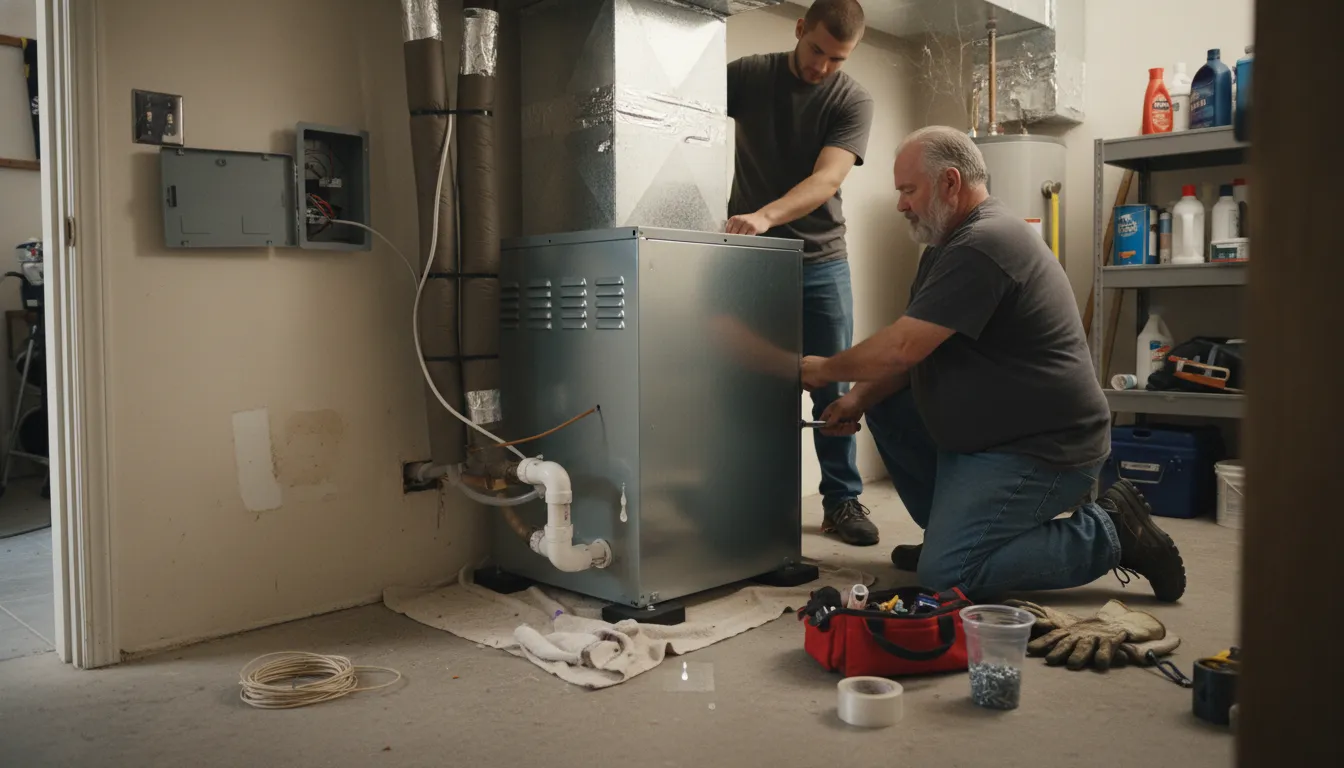
Find the Best HVAC Installers for Your Business
No obligation • Fast responses • Nationwide coverage

Why you can trust HVAC Firms
HVAC Firms is a leading United States resource for evaluating HVAC service providers. Our team researches companies, checks credentials, and reviews customer feedback to present clear, unbiased information. Listings and rankings are based on merit, and companies cannot pay to change our editorial content.
Search providers near you
Top HVAC Installers in Tucson, Arizona Ranked
Installing a new heating and cooling system is a significant investment in your home's comfort, efficiency, and value. In Tucson's unique climate-with its intense summer heat and mild winters-choosing the right HVAC system and ensuring it's installed correctly is crucial for year-round performance and energy savings. This guide will help you understand the process, options, and key considerations for a successful HVAC setup in Tucson, connecting you with the information needed to find qualified local professionals for your project.
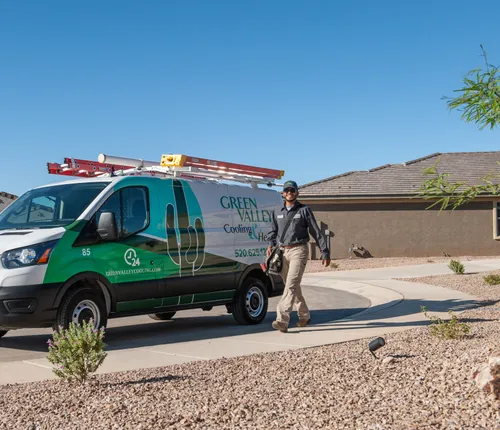
Green Valley Cooling & Heating
645 W Ward Ln, Green Valley, AZ 85614
Green Valley Cooling & Heating is an HVAC company serving Tucson, AZ, and surrounding communities including Green Valley, Sahuarita, and Vail. They provide a wide range of services including air conditioning and heating installation, repair, and maintenance, as well as duct cleaning and indoor air quality solutions. The company is a Certified Daikin Comfort Pro Dealer and offers expertise in energy-efficient upgrades and whole-home comfort systems. Established in 1968, Green Valley Cooling & Heating has over fifty years of experience in the industry. Their licensed and insured technicians are available 24/7 for emergency repair services.

Temperature Control, Inc. A/C-Heating & Plumbing - Oro Valley, AZ
7445 N Oracle Rd Suite 101, Tucson, AZ 85704
Temperature Control, Inc. A/C-Heating & Plumbing - Oro Valley, AZ is a full-service home comfort provider serving Tucson, AZ. Established in 1982, the company offers a wide range of HVAC services including air conditioning, furnace, heat pump, and mini split installation and repair, as well as HVAC tune-ups. Their licensed technicians provide reliable plumbing and electrical solutions alongside HVAC services. Temperature Control is known for its comprehensive maintenance plans and 24/7 support to ensure home comfort year-round.
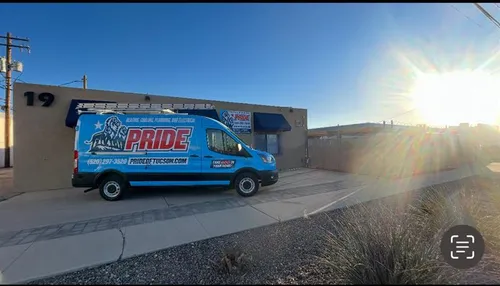
Pride Heating, Cooling, Plumbing and Electrical
19 W Ventura St, Tucson, AZ 85705
Pride Heating, Cooling, Plumbing and Electrical is a full-service home service company based in Tucson, AZ. Since 2010, they have provided HVAC installation, repair, and tune-up services along with plumbing and electrical work across Southern Arizona. Their team handles air conditioning, furnace, and heat pump systems, offering comprehensive solutions to maintain and improve home comfort. The company serves Tucson and surrounding communities including Catalina, Oro Valley, and Sierra Vista, among others.
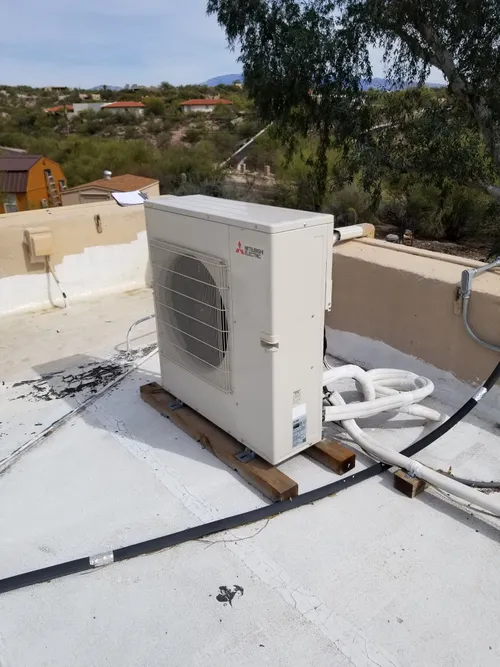
Nichols Air Conditioning Specialists
4250 N Bear Canyon Rd, Tucson, AZ 85749
Nichols Air Conditioning Specialists is an HVAC company based in Tucson, AZ, providing installation, repair, replacement, and maintenance services for heating and cooling systems. Their services cover air conditioning, mini splits, heaters, humidifiers, custom sheet metal work, and commercial and residential HVAC needs. They emphasize quality installations using top-quality parts backed by a two-year workmanship warranty and offer same-day service for emergency repairs.
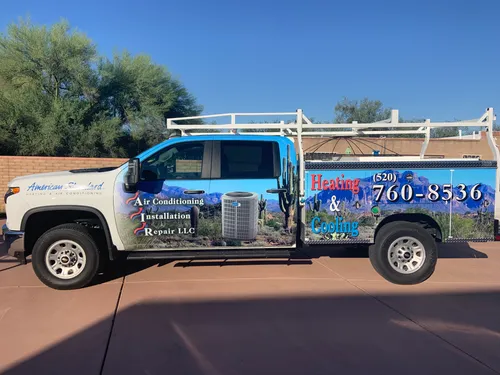
AIR
9180 E Walnut Tree Dr, Tucson, AZ 85749
AIR is a family-owned HVAC company based in Tucson, AZ, offering heating and cooling services including AC and furnace repair, installation, and tune-ups. With over 30 years of experience, they provide maintenance contracts and flat rate service fees to ensure transparent pricing. Their services cover timely and efficient HVAC system repairs and installations.
Understanding Tucson's Climate and HVAC Needs
Tucson's desert climate presents specific challenges for home comfort systems. Summers are long, hot, and dry, placing a heavy demand on air conditioning for most of the year. Winters are generally mild, but nighttime temperatures can drop significantly, requiring reliable heating. This climate makes system selection and proper sizing paramount. An undersized air conditioner will struggle to cool your home on a 110°F day, while an oversized system will short-cycle, failing to dehumidify properly and wearing out components prematurely. The right system balances capacity with efficiency to handle the extreme heat without wasting energy.
Common System Choices for Tucson Homes
When planning a new HVAC installation, Tucson homeowners typically consider several types of systems, each with advantages for the local environment.
Heat Pumps: These are an excellent, all-in-one solution for Tucson. A heat pump works by transferring heat, pulling it from inside your home to cool it in summer and reversing the process to extract heat from the outside air to warm your home in winter. Because Tucson's winters are rarely severely cold, heat pumps operate very efficiently here for both seasons, often eliminating the need for a separate furnace.
Central Air Conditioners: A traditional central AC paired with a gas furnace is another common setup. The air conditioner handles the intense summer cooling, while the furnace provides heat during the cooler months. This split-system approach can be cost-effective, especially if your home already has natural gas lines 1.
Ductless Mini-Split Systems: For homes without existing ductwork, or for adding zoned comfort to specific rooms (like a sunroom or garage addition), ductless mini-splits are a versatile option. These systems consist of an outdoor compressor unit connected to one or more indoor air handlers mounted on walls or ceilings. They offer high efficiency and individual room control without the need for extensive duct modifications 2.
The HVAC Installation Process: A Step-by-Step Overview
A professional HVAC installation is a detailed process that ensures your system's longevity, efficiency, and safety.
- Consultation & Home Evaluation: A certified technician will visit your home to assess your needs. This critical step includes a Manual J load calculation, which uses factors like your home's square footage, insulation, window types, and sun exposure to determine the precise heating and cooling capacity required. The technician will also inspect existing ductwork for leaks or damage.
- System Design & Proposal: Based on the evaluation, the contractor will design a system, recommend specific equipment models, and provide a detailed quote. This is the time to discuss efficiency ratings (SEER for cooling, HSPF for heat pumps), potential rebates, and any necessary ancillary work like duct sealing or electrical upgrades.
- Permitting: Reputable contractors will obtain all required city of Tucson permits before beginning work, ensuring the installation meets local building codes.
- Removal of Old Equipment: The old indoor and outdoor units are safely disconnected, removed, and responsibly disposed of or recycled.
- New Equipment Installation: The new outdoor condenser (for AC or heat pump) and indoor air handler or furnace are set in place. This includes mounting, securing, and connecting refrigerant lines, condensate drains, and electrical connections.
- Ductwork & Electrical Modifications: If the evaluation called for it, this phase involves repairing, sealing, or replacing sections of ductwork to ensure efficient airflow. Any necessary electrical work, such as installing a new disconnect or upgrading wiring, is completed by a licensed electrician.
- System Testing & Startup: Once everything is connected, the technician will start the system, check refrigerant charge, measure airflow at all vents, test the thermostat and all safety controls, and verify heating and cooling modes. They will also review the system's operation with you.
- Follow-Up: Many companies schedule a follow-up visit after a short period to ensure everything is running perfectly and to address any minor adjustments.
Installation Timelines and What to Expect
The duration of an HVAC installation project in Tucson can vary. A straightforward replacement of a split system with compatible existing ductwork and electrical can often be completed in 1 to 3 days 3. However, if the project involves extensive new ductwork, complex electrical upgrades, or the installation of a more involved system like a multi-zone ductless setup, the timeline can extend to a week or more 4 5. Your contractor should provide a clear schedule upfront and communicate any delays promptly.
Find the perfect hvac installers for your needs
Get personalized recommendations and expert advice
Costs and Financial Incentives for Tucson Homeowners
The cost of a new HVAC system in Tucson depends on the system type, size, efficiency rating, and complexity of the installation. For the system equipment alone, homeowners might see a range from around $3,000 for a basic unit to over $7,000 for a high-efficiency model. A complete replacement for a typical 2,000-square-foot Tucson home, including labor, duct modifications, and other essentials, often falls in the range of $13,000 or more 6 7.
Fortunately, significant incentives can help offset these costs:
- Federal Tax Credits: The Energy Efficient Home Improvement Credit (IRS Form 5695, 25C) allows you to claim 30% of the cost of qualified energy-efficient equipment, up to a $2,000 annual limit. This includes high-efficiency central air conditioners, heat pumps, and biomass stoves 8.
- Local Utility Rebates: Tucson Electric Power (TEP) offers rebates to customers for making energy-efficient upgrades. These can include $35 for a qualifying smart thermostat and up to $700 for high-efficiency HVAC system upgrades 9. These programs often require pre-approval and professional installation, so check with TEP and your contractor early in the process.
Key Takeaways for a Successful Installation
- Get Multiple Quotes: Always obtain detailed written estimates from at least three licensed, insured, and well-reviewed local HVAC contractors. Compare not just the price, but the proposed equipment, warranty, and scope of work.
- Insist on a Manual J Calculation: Never let a contractor "guess" your system size based solely on square footage. A proper Manual J load calculation is the industry standard for ensuring your new system is neither too large nor too small for your specific home 10.
- Ask About Rebates & Financing: A knowledgeable contractor should be able to guide you through available federal tax credits and local utility rebates, like those from TEP, to maximize your savings. Many also offer financing options.
- Check Credentials: Verify that the contractor holds an Arizona ROC (Registrar of Contractors) license for HVAC work and carries both liability insurance and workers' compensation coverage.
Frequently asked questions
Sources
Footnotes
-
Cost to Install Central Air in 2026: How to Save - NerdWallet - https://www.nerdwallet.com/home-ownership/home-improvement/learn/cost-to-install-central-air ↩
-
What HVAC System Is Good For Tucson Arizona - Everest Air - https://everestairaz.com/what-hvac-system-is-good-for-tucson-arizona/ ↩
-
What Can I Expect During My HVAC Installation? - https://www.acdirect.com/blog/what-can-i-expect-during-my-hvac-installation/ ↩
-
Step-by-Step HVAC Installation Guide - Carrier - https://www.carrier.com/residential/en/us/products/air-conditioners/hvac-installation/ ↩
-
HVAC Replacement and Costs - First American Home Warranty - https://homewarranty.firstam.com/blog/hvac-replacement-guide ↩
-
New HVAC System Cost in Phoenix, Arizona | Wolfgangs - https://wolfgangscooling.com/air-conditioning-ac/the-true-cost-of-a-new-hvac-system-in-arizona/ ↩
-
New HVAC System Cost Calculator: Get a Custom Estimate in 2026 - https://modernize.com/hvac/cost-calculator ↩
-
What Is The Average Cost For A New HVAC System? 2025 Shocking Facts - https://comforttemp.com/what-is-the-average-cost-for-a-new-hvac-system/ ↩
-
HVAC Installation in Tucson | Year-Round Comfort & Efficiency - https://advantagehomeperformance.com/hvac-installation-in-tucson-keep-your-home-comfortable-year-round/ ↩
-
HVAC Services | Intelligent Design Tucson - https://www.idesignac.com/services/hvac-tucson ↩