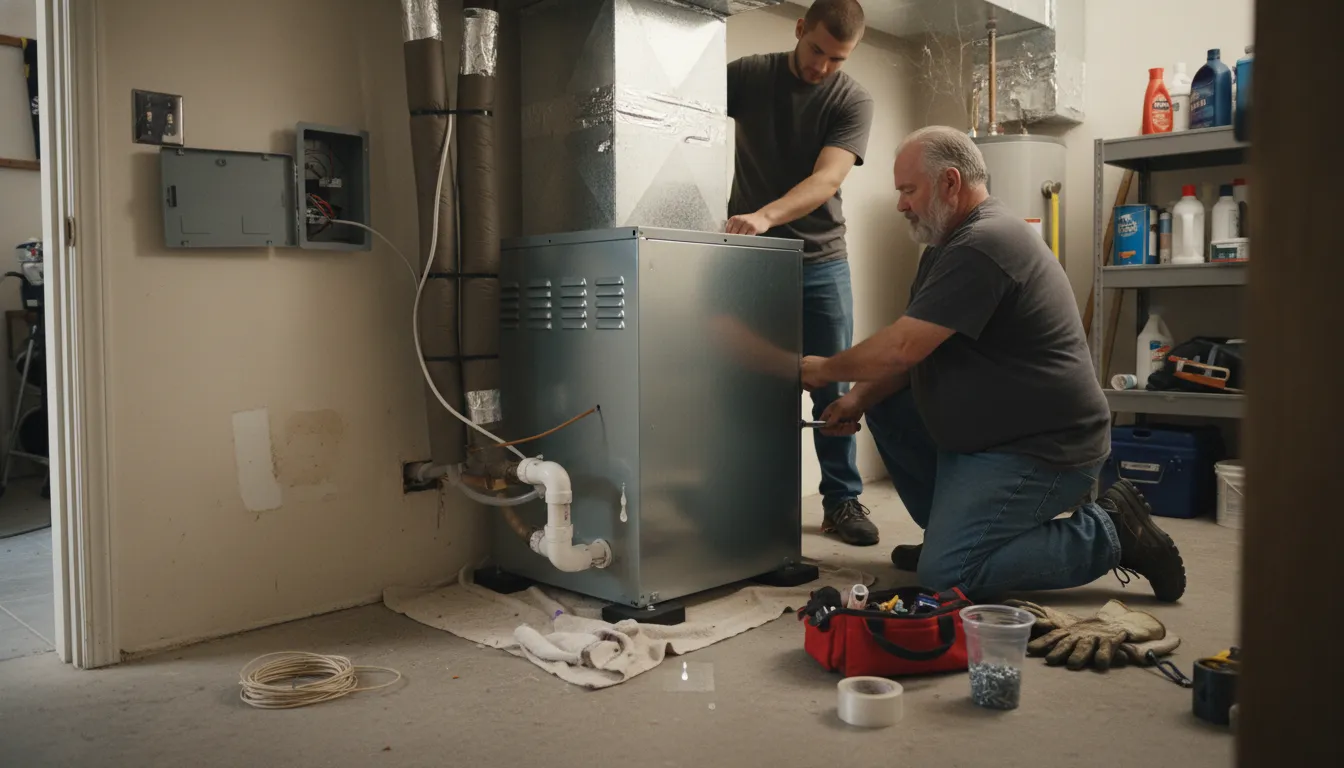
Find the Best HVAC Installers for Your Business
No obligation • Fast responses • Nationwide coverage

Why you can trust HVAC Firms
HVAC Firms is a leading United States resource for evaluating HVAC service providers. Our team researches companies, checks credentials, and reviews customer feedback to present clear, unbiased information. Listings and rankings are based on merit, and companies cannot pay to change our editorial content.
Search providers near you
Top HVAC Installers in Chandler, Arizona Ranked
Installing a new heating and cooling system is a significant investment in your Chandler home's comfort, energy efficiency, and long-term value. With the city's intense summer heat and mild winters, choosing the right system and a qualified installer is crucial. This guide will help you understand your options, the installation process, and what to expect when upgrading your home's climate control, connecting you with local expertise for your project.
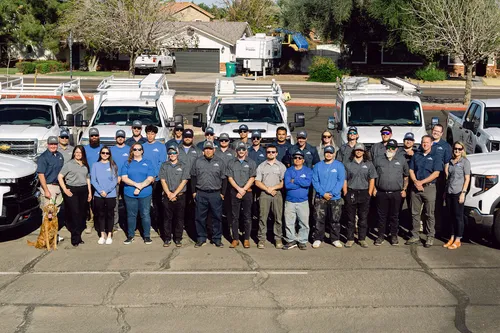
Mountain Peak Air
Mesa, AZ
Mountain Peak Air is a family-owned HVAC company based in Mesa, AZ, specializing in air conditioning repair, installation, heating, and indoor air quality services. They focus on maintaining and improving home comfort by offering AC repairs, system installations, and advanced air purification using NASA technology. The company provides tailored solutions suited to the desert climate of Mesa, ensuring both cooling efficiency and clean air for residents. Mountain Peak Air emphasizes repairing before replacing systems and offers maintenance plans to keep units in optimal condition.
AC Repair Near Me
77 W Chicago St Unit 4, Chandler, AZ 85225
AC Repair Near Me is a locally owned HVAC company serving Phoenix, AZ, and surrounding areas. They offer a full range of heating and cooling services including AC and furnace repair, installation, maintenance, and duct cleaning. The company is equipped to handle emergency repairs and provides 24/7 availability to address urgent HVAC issues. Their technicians are certified and experienced, using advanced diagnostic technology to ensure proper service. AC Repair Near Me emphasizes thorough inspections before work begins and offers customized maintenance plans to keep systems running efficiently.
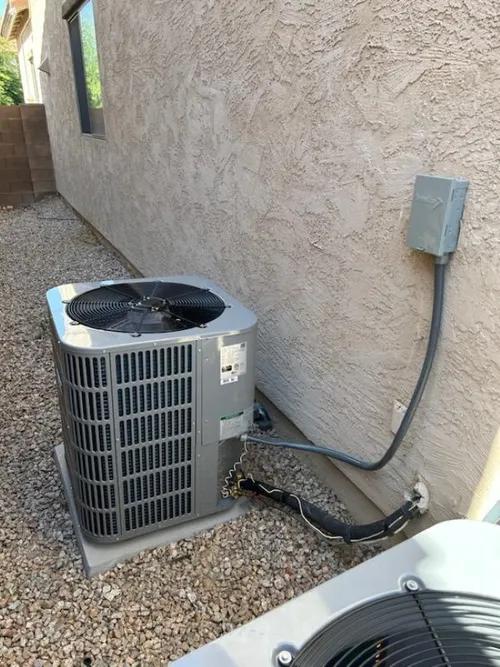
AZ Home Services Group of Queen Creek
23010 S 208th St, Queen Creek, AZ 85142
AZ Home Services Group of Queen Creek is a full-service HVAC and plumbing company serving the Queen Creek, AZ area. They provide air conditioning repair and installation, furnace and heat pump installation, mini-split systems, thermostat installation, and HVAC tune-ups. The company works with major brands like Goodman, Carrier, Trane, and Rheem, offering tailored HVAC solutions based on home size and insulation. They also handle plumbing services including leak detection, water softener installation, and water heater replacement. AZ Home Services Group offers 24/7 emergency AC repair to address urgent cooling needs in the hot Arizona climate.
Reliance Heating and Air Conditioning
302 W Lone Cactus Dr, Phoenix, AZ 85027
Reliance Heating and Air Conditioning is a family-owned HVAC company serving Phoenix, AZ, and the surrounding areas. They offer a range of services including air conditioning, furnace, and heat pump repair and installation, as well as HVAC tune-ups and thermostat installation. As a Trane Comfort Specialist, they provide expertise with Trane systems known for reliability and quality. With over 40 years of experience as a third-generation family business, Reliance Heating and Air Conditioning emphasizes treating customers' homes with care and professionalism.

Everest Air LLC
1455 E University Dr, Mesa, AZ 85203
Everest Air LLC is a licensed and insured HVAC company serving Mesa, AZ, specializing in air conditioning and heating services for residential and commercial clients. They offer a full range of services including installation, repair, maintenance, and replacement of air conditioning and heating systems. Everest Air works with leading manufacturers like Carrier, Trane, Rheem, and American Standard to ensure quality equipment and precise installation. The company also provides indoor air quality services to help maintain healthier environments. With a team of certified technicians, Everest Air is committed to meeting local codes and delivering reliable HVAC solutions in Mesa and nearby areas.
Understanding Your HVAC System Options in Chandler
When planning a new air conditioning installation or full system replacement, Chandler homeowners have several effective choices. The best system for your home depends on its size, layout, existing ductwork, and your specific comfort goals.
Split Systems (AC + Furnace) This is the most common configuration found in Chandler homes. It consists of an outdoor condenser/compressor unit paired with an indoor air handler or furnace, connected by refrigerant lines and utilizing your home's ductwork to distribute air. This setup is reliable and well-suited to the region's climate, providing powerful cooling and efficient heating for the cooler winter months.
Heat Pumps An increasingly popular and efficient option for Arizona's climate, a heat pump provides both heating and cooling from a single unit. It works by transferring heat, moving it indoors in the winter and outdoors in the summer. Modern heat pumps are highly effective even in our mild winters and can offer significant energy savings compared to traditional systems, often being paired with an air handler for distribution 1.
Ductless Mini-Split Systems For room additions, sunrooms, or homes without existing ductwork, ductless mini-splits are an ideal solution. These systems feature a compact outdoor unit connected to one or more indoor air handlers mounted on walls or ceilings. They provide excellent zoned comfort, allowing you to control temperatures in individual rooms, which can lead to reduced energy consumption.
Key Considerations for Your New System
Beyond the type of system, several technical factors will influence your installation's performance, cost, and long-term satisfaction.
System Sizing (Tonnage) An improperly sized system is a leading cause of inefficiency and discomfort. A system that's too large will short-cycle, turning on and off frequently, failing to dehumidify properly and wearing out components faster. One that's too small will struggle to keep up on the hottest days. A professional technician will perform a Manual J load calculation, assessing your home's square footage, insulation, window orientation, and other factors to determine the correct size, often measured in tons (e.g., a 3-ton unit).
Efficiency Ratings (SEER2) The Seasonal Energy Efficiency Ratio (SEER2) measures an air conditioner or heat pump's cooling efficiency. The higher the SEER2 rating, the less electricity it uses. Upgrading to a higher SEER2 rating (e.g., 14+) can substantially reduce your summer energy bills. While higher-efficiency models have a higher upfront cost, utility rebates and long-term savings often make them a wise investment.
Smart Thermostats and Controls Integrating a Wi-Fi smart thermostat with your new HVAC installation adds a layer of convenience and control 2. These devices allow you to adjust temperatures remotely, create automated schedules, and receive maintenance alerts, helping you optimize your system's performance and energy use.
The HVAC Installation Process: A Step-by-Step Guide
A professional HVAC installation follows a structured process to ensure safety, code compliance, and optimal system operation.
- Initial Consultation and Home Assessment: A certified technician will visit your home to discuss your needs, evaluate the existing system, and inspect the ductwork, electrical panel, and installation locations. This is when the critical load calculation is performed to determine the correct system size.
- System Selection and Proposal: Based on the assessment, the installer will present options that fit your home and budget, providing a detailed written estimate that includes equipment models, labor, and any necessary ancillary work.
- Permitting and Scheduling: Your contractor will obtain the required local permits from the City of Chandler, ensuring the installation meets all building and safety codes. A project timeline is then confirmed.
- Preparation and Removal: On installation day, the crew will protect your home's work areas. The old outdoor condenser and indoor unit (furnace or air handler) are safely disconnected, refrigerant is recovered, and the equipment is removed.
- New System Installation: This phase includes setting the new outdoor pad or stand, placing the condenser, installing the new indoor unit, connecting refrigerant lines, electrical wiring, condensate drainage, and the thermostat. If your ductwork needs modification, sealing, or replacement, that work is done at this time.
- System Startup, Testing, and Inspection: Once physically installed, the system is charged with refrigerant, powered on, and put through a series of tests. The technician will check airflow, temperature differential, electrical readings, and safety controls. A final inspection may be conducted by the city or the installing company to verify code compliance 3.
Find the perfect hvac installers for your needs
Get personalized recommendations and expert advice
What to Expect: Timelines and Investment
Understanding the project scope and associated costs helps in planning your HVAC upgrade.
Installation Timeline For a standard replacement of a split system with no major ductwork changes, the installation is typically completed in one day, often within 4 to 8 hours4 5. If significant ductwork modification, repair, or replacement is needed, the project may extend by an additional 1 to 2 days5. More complex installations, like a multi-zone ductless system, will also require more time.
Cost Factors for Chandler Homes HVAC installation costs vary based on several key factors:
- System Type and Size: A standard 3-ton air conditioner and furnace combination typically ranges from $10,500 to $12,500 or more6. A 3-ton heat pump system with an air handler may range from $10,000 to $13,000+6.
- Efficiency: Higher SEER2-rated equipment commands a higher price but offers lower operating costs. For a 2,000-square-foot home, the average cost for a SEER2 AC and furnace is around $8,300, with a broad range from $5,600 to $14,700 depending on specifications7 8.
- Ductwork and Infrastructure: The condition of your existing ducts, the need for new electrical circuits, or custom fabrication can add to the project cost9 10.
- Permits and Labor: These are included in professional estimates and ensure a safe, code-compliant installation.
Financing and Incentives The upfront cost of a high-efficiency system can be offset by available incentives. Chandler residents should inquire about rebate programs from local utilities like APS and SRP for installing qualifying high-efficiency units 11. Additionally, federal tax credits may be available for Energy Star certified heat pumps and central air conditioners that meet specific efficiency criteria12.
Ensuring a Successful Installation
Your relationship with the installer is as important as the equipment itself. Look for a licensed, insured, and locally established contractor with positive reviews and a commitment to proper sizing and installation practices. A trustworthy professional will provide a clear, detailed contract, pull permits, and offer a robust warranty on both labor and equipment. By focusing on both quality components and quality installation, you can ensure your new system delivers reliable, efficient comfort for years to come.
Frequently asked questions
Sources
Footnotes
-
Comparing 8 Common Types of HVAC Systems - BigRentz - https://www.bigrentz.com/blog/types-of-hvac-systems ↩
-
How Much Does AC Installation Cost in 2025? - https://www.fixr.com/costs/air-conditioner-installation ↩
-
Step-by-Step HVAC Installation Guide - Carrier - https://www.carrier.com/residential/en/us/products/air-conditioners/hvac-installation/ ↩
-
AC Installation Chandler, AZ | Emergency Air Heating and ... - https://www.emergencyair.com/air-conditioning/new-ac-unit/ ↩
-
How Long Does It Take To Replace Your HVAC System? - https://downeyplumbing.com/blog/how-long-does-it-take-to-replace-your-hvac-system/ ↩ ↩2
-
HVAC Installation Services in Chandler, AZ - https://www.viking-hvac.com/services/hvac-installation ↩ ↩2
-
How Much Does an Air Conditioner Cost for a 2000-Square-Foot Home? - https://www.thisoldhouse.com/heating-cooling/air-conditioner-cost-for-2000-square-foot-home ↩
-
How Much Does It Cost to Replace an AC in Arizona? - HVAC.com - https://www.hvac.com/expert-advice/cost-to-replace-air-conditioner-in-arizona/ ↩
-
AC Installation & Replacement Services in Chandler, AZ - https://www.chandlerair.com/services/ac-installation ↩
-
What's Included In A Full HVAC System Replacement? 13 Essential ... - https://www.wrightac.com/blog/whats-included-in-a-full-hvac-system-replacement/ ↩
-
Central AC Replacement Cost in 2021, A Homeowner Guide - https://www.supertechhvac.com/central-ac-air-conditioner-replacement-cost/ ↩
-
Air Conditioning Installation in Phoenix, AZ | Day & Night - https://www.dayandnightair.com/air-conditioning-installation-phoenix/ ↩