Find the Best HVAC Installers for Your Business
No obligation • Fast responses • Nationwide coverage

Why you can trust HVAC Firms
HVAC Firms is a leading United States resource for evaluating HVAC service providers. Our team researches companies, checks credentials, and reviews customer feedback to present clear, unbiased information. Listings and rankings are based on merit, and companies cannot pay to change our editorial content.
Search providers near you
Best HVAC Installers in Tennessee Ranked
Installing a new heating and cooling system is a significant investment in your Tennessee home's comfort, efficiency, and value. The right HVAC installation ensures reliable performance through humid summers and variable winters while managing long-term energy costs. This guide will help you understand your options, the associated costs, and key considerations for selecting and working with a qualified professional to find the best system for your needs.
Right Time HVAC
5300 Old Hickory Blvd, Nashville, TN 37218
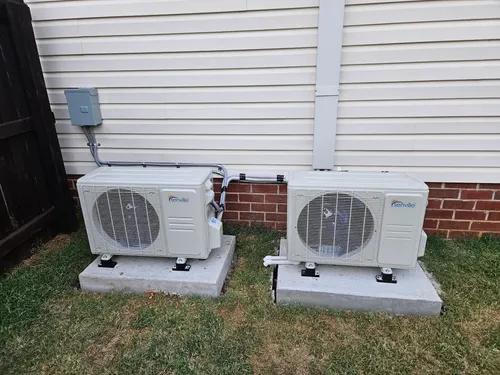
Right Time HVAC is a full-service heating, cooling, and geothermal contractor serving Nashville, TN. They offer installation, repair, and maintenance for air conditioners, furnaces, heat pumps, and geothermal systems, along with indoor air quality solutions for homes and businesses. The company specializes in advanced HVAC technologies including hydronics and inverter systems, and provides ductwork services to improve airflow and comfort. With over 30 years of combined experience among their technicians, Right Time HVAC focuses on honest, customer-focused solutions to meet diverse home comfort needs.
Bradley Maintenance & Air LLC
Nashville, TN
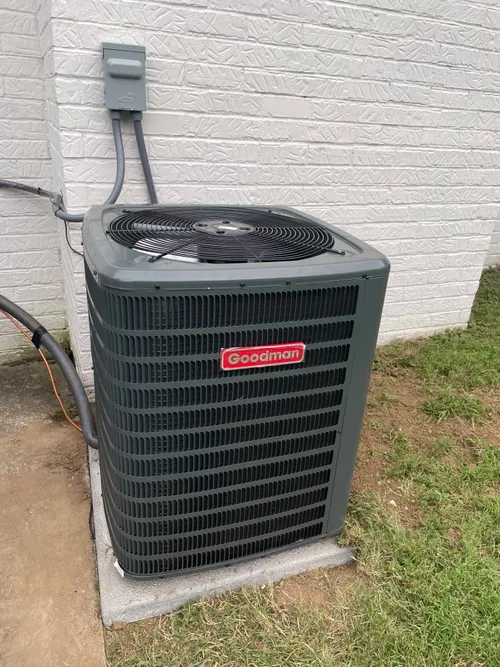
Bradley Maintenance & Air LLC is an HVAC and plumbing contractor serving Nashville, TN, and nearby areas including Brentwood, Antioch, and Murfreesboro. They provide HVAC maintenance, repair, and system changeouts, along with plumbing services such as water heater installation and repair. Their services cover air conditioning, furnace, heat pump installation, and tune-ups to maintain home and business comfort throughout the year.

Automatic Air Conditioning, Heating, Plumbing & Electric
3470 Tchulahoma Rd, Memphis, TN 38118
Automatic Air Conditioning, Heating, Plumbing & Electric has been serving Memphis, TN, and the surrounding areas since 1943. The company offers a wide range of services including HVAC installation, repair, and maintenance, as well as plumbing and electrical work. They are experienced in handling air conditioning, furnace, boiler, and geothermal heat pump systems, and provide 24/7 emergency service for HVAC, plumbing, and electrical needs. As a long-standing Carrier partner since 1956, they install locally manufactured units and support the local economy.

Affordable Heating & Cooling
5510 E Division St Suite 134, Mt. Juliet, TN 37122
Affordable Heating & Cooling serves Nashville, TN, providing air conditioning and heating system repairs and installations for both residential and commercial properties. With over 20 years of experience, the company offers services including AC repair, furnace repair, and mini split installation. They have NATE-certified technicians and a service truck equipped with the latest tools and frequently-needed parts. Affordable Heating & Cooling is available 24/7 for heating and cooling emergencies, ensuring prompt response at any time.
Crowe Services/Heating & Air
6391 Ferrell Dr, Memphis, TN 38134
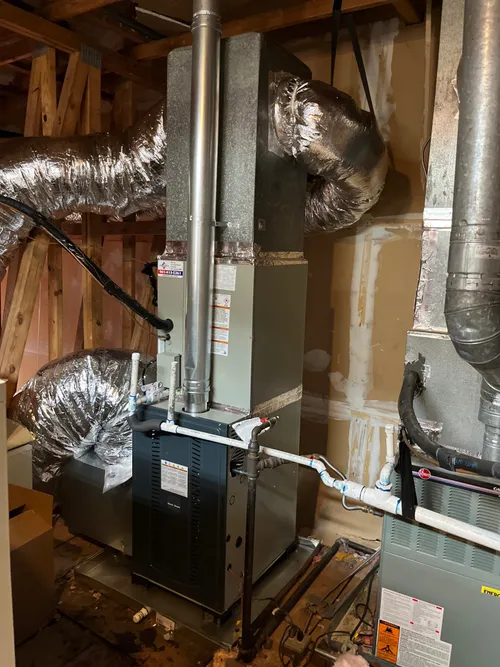
Crowe Services/Heating & Air is an HVAC and plumbing company serving Memphis, TN. They offer a wide range of services including air conditioning, furnace, heat pump, and mini split installation and repair, as well as indoor air quality solutions. Their commercial HVAC services support local businesses with installation, maintenance, and repair. They also provide plumbing services such as faucet and toilet repairs, leak detection, drain cleaning, hydro jetting, and sewer line maintenance. Crowe Services is an American-Standard® dealer with licensed technicians experienced in both residential and commercial systems. Emergency service is available to address urgent needs.
Understanding Your HVAC System Options in Tennessee
Tennessee's climate, with its hot, humid summers and cool to cold winters, requires a versatile and efficient heating and cooling solution. Modern systems offer a range of technologies to meet these demands.
- Central Air Conditioner & Furnace: This is the most common setup in Tennessee homes with existing ductwork. It combines a central air conditioner for summer cooling with a gas or electric furnace for winter heating, providing reliable whole-home comfort.
- Heat Pumps: An increasingly popular choice, heat pumps provide both heating and cooling in one unit. They are highly efficient, especially in Tennessee's moderate winters, by transferring heat rather than generating it. Modern models perform well even in colder temperatures 1.
- Ductless Mini-Split Systems: Ideal for home additions, older homes without ducts, or for creating independent temperature zones. While they offer excellent efficiency and control, they can be a more significant upfront investment per zone and may be less effective for cooling entire homes during extreme Middle or West Tennessee heat 2 3.
Energy Efficiency Standards and Climate Impact
Tennessee falls under the Southeastern U.S. regional standards for HVAC equipment. As of 2023, new central air conditioners installed in the state must have a minimum SEER2 (Seasonal Energy Efficiency Ratio) rating of 14.3, which is roughly equivalent to the previous 15 SEER standard 4. This mandate ensures a baseline of efficiency for all new installations.
The state's varied climate-from the hotter western regions to the cooler Appalachian Mountains-directly impacts system design and choice. Homeowners must balance the upfront cost of higher-efficiency equipment with long-term energy savings. Systems with variable-speed compressors and fans are particularly well-suited to Tennessee's fluctuating temperatures, as they adjust output precisely to demand, enhancing comfort and efficiency 5.
Breakdown of HVAC Installation Costs
The cost of a new HVAC system in Tennessee varies widely based on home size, system type, and complexity. Here is a general pricing framework based on recent local data:
- Small Home (under 1,000 sq ft): A basic system replacement typically ranges from $3,000 to over $6,000.
- Medium Home (1,000 - 2,000 sq ft): For a standard central system, expect costs between $6,000 and $10,000+. A common 3 to 4-ton unit often falls in the $9,000 to $13,000 range 6.
- Large or Complex Home (over 2,000 sq ft): Full system replacements, especially those requiring new ductwork or high-efficiency models, can range from $10,000 to $20,000 or more 7.
The single largest variable cost is often ductwork. Installing new ducts or significantly modifying existing ones can add thousands to the project but is critical for system performance. Leaky or poorly sized ducts can reduce efficiency by up to 30% 8 9.
Find the perfect hvac installers for your needs
Get personalized recommendations and expert advice
Key Factors Influencing Your Investment
Beyond square footage, several technical and practical factors determine the final price and performance of your installation.
- System Capacity (Tonnage): An improperly sized system is a common and costly mistake. An oversized unit will short-cycle, wasting energy and failing to dehumidify properly, while an undersized unit will struggle to maintain temperature. A professional load calculation is essential 10.
- Efficiency Tier: Systems are broadly categorized by their operational stages.
- Single-Stage: The most affordable upfront, but operates at 100% capacity or off, leading to temperature swings and higher utility bills.
- Multi-Stage: Operates at high or low capacity, improving comfort and efficiency.
- Variable-Speed/Modulating: The premium option. It adjusts its output in small increments for ultra-precise temperature and humidity control, maximizing comfort and energy savings.
- Ductwork Assessment: Before any installation, have your existing ducts inspected for leaks, damage, and proper sizing. Sealing and insulating ducts can dramatically improve system efficiency and is often a worthwhile investment.
- Return on Investment (ROI): When evaluating higher-efficiency models, consider the payback period. Aim for an ROI through energy savings within a reasonable timeframe, such as 5-10 years, rather than 15-20 years.
The Installation Process and Choosing a Contractor
A successful installation is as important as the equipment itself. The process should include a detailed home evaluation, system design, proper installation following manufacturer and code specifications, and thorough testing.
Selecting the right contractor is crucial. Look for licensed, insured professionals with strong local references. They should perform a Manual J load calculation to determine the correct system size and a Manual D calculation for duct design. A trustworthy contractor will provide a detailed, written estimate that breaks down equipment, labor, and materials, and will clearly explain the benefits and limitations of each option for your specific home.
Maintaining Your New System
Protect your investment with regular maintenance. An annual tune-up for your cooling system in the spring and heating system in the fall can prevent costly breakdowns, maintain efficiency, and extend the lifespan of your equipment. Many contractors offer maintenance plans that provide priority service and discounts.
Frequently asked questions
Sources
Footnotes
-
Choosing the best HVAC System for your Nashville home - Mjfrick CO - https://www.mjfrickco.com/blog/choosing-the-best-hvac-system-for-your-nashville-home/ ↩
-
7 Home Cooling Options in Tri-Cities, Tennessee - https://www.windowworldtricities.com/article/the-best-home-cooling-options/types-of-cooling-systems ↩
-
What does a new HVAC system cost? - TMC Heating and Cooling - https://tmcservice.com/what-does-a-new-hvac-system-cost/ ↩
-
Energy Efficiency Standards for HVAC Systems in Ooltewah, TN - https://wondercooling.com/hvac-energy-efficiency-standards-ooltewah/ ↩
-
The Impact of Tennessee's Climate on HVAC System Design - https://wondercooling.com/tennessee-climate-hvac-solutions/ ↩
-
HVAC Installation Costs and Breakdowns - https://tmcservice.com/hvac-installation-costs-and-breakdowns/ ↩
-
HVAC Installation Cost - South Nashville Heating and Cooling - https://southnashvillehvac.com/2024/10/16/understanding-the-cost-of-hvac-installation/ ↩
-
How Much Should a New HVAC System Cost in Tennessee (2025)? - https://milanheatingandair.com/f/how-much-should-a-new-hvac-system-cost-in-tennessee-2025?blogcategory=Heat+Maintenance ↩
-
Navigating HVAC Costs: A Homeowner's Guide | Chattanooga - https://www.onehourheatandair.com/chattanooga/about-us/blog/2023/august/navigating-hvac-system-costs-a-homeowners-guide/ ↩
-
What Tennessee Homeowners Should Know About SEER Ratings - https://www.acplusonline.com/what-tennessee-homeowners-should-know-about-seer-ratings/ ↩