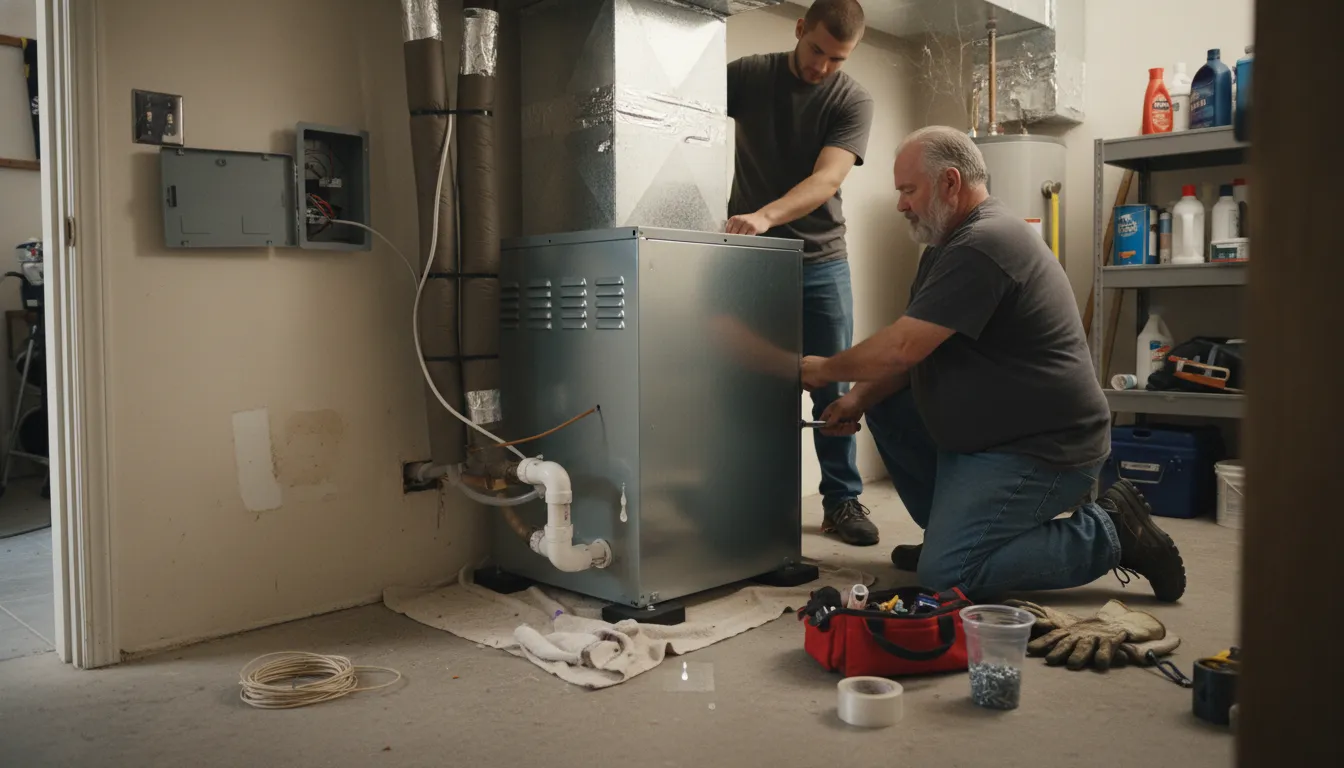
Find the Best HVAC Installers for Your Business
No obligation • Fast responses • Nationwide coverage

Why you can trust HVAC Firms
HVAC Firms is a leading United States resource for evaluating HVAC service providers. Our team researches companies, checks credentials, and reviews customer feedback to present clear, unbiased information. Listings and rankings are based on merit, and companies cannot pay to change our editorial content.
Search providers near you
Best HVAC Installers in Missouri Ranked
Installing a new heating and cooling system is a significant investment in your home's comfort, efficiency, and value. In Missouri, where summers can be humid and winters cold, choosing the right system and a qualified professional is crucial. This guide provides clear, practical information on the types of systems available, current efficiency standards, cost considerations, and key factors for a successful installation in the Show-Me State. You can use this information to understand your options and make informed decisions when selecting a local provider for your project.

Seliga Heating and Cooling
6211 Gravois Ave, St. Louis, MO 63116
Seliga Heating and Cooling is a fourth-generation family-owned HVAC business serving St. Louis, MO. They offer residential and commercial sales, service, and installation of heating and air conditioning equipment. The company employs highly trained NATE certified technicians and licensed mechanical pipefitters to handle air conditioning installation, furnace repair, and other HVAC services. Established in 1927, Seliga Heating and Cooling has a long history of serving the local community.
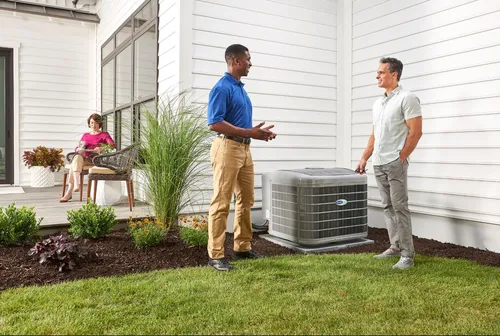
Rhymes Heating and Cooling
10958 Lin Valle Dr, St. Louis, MO 63123
Rhymes Heating and Cooling is an HVAC company serving St Louis, MO, specializing in air conditioning and furnace repair as well as HVAC installation. The company has been a family tradition since 1926, providing heating and cooling solutions tailored to the needs of homes and businesses. They offer 24/7 service to address urgent heating or cooling issues promptly and emphasize transparent pricing and energy efficiency education.
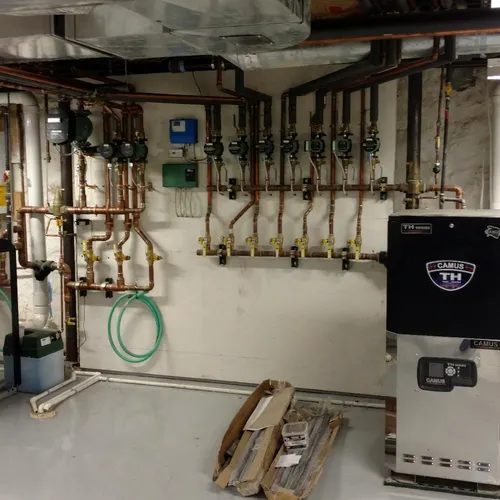
Air Care
10332 W 79th St, Shawnee, KS 66214
Air Care is an HVAC company serving Kansas City, MO, and the surrounding Shawnee area. Established in 1981, they provide a wide range of heating and cooling services including installation, repair, and maintenance of furnaces, air conditioners, boilers, mini-splits, and geothermal heat pumps. Their NATE-certified technicians handle both residential and light commercial work, with capabilities in duct design and indoor air quality services. Air Care offers 24/7 emergency repair service to address urgent heating or cooling issues.
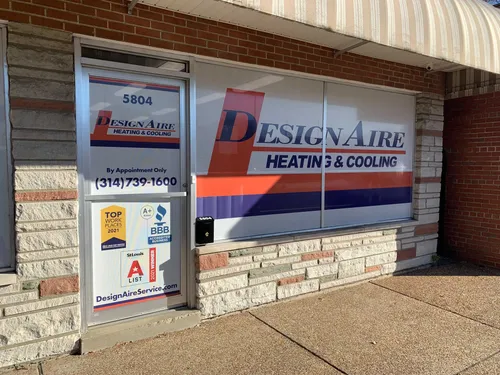
Design Aire Heating & Cooling - St. Louis
5804 Hampton Ave, St. Louis, MO 63109
Design Aire Heating & Cooling - St. Louis provides a full range of HVAC services in St. Louis, MO, including installation, maintenance, and repair of air conditioners, furnaces, boilers, and heat pumps. They also offer indoor air quality improvements such as air duct cleaning and advanced air purifiers. The company specializes in commercial and residential HVAC solutions, using the latest technologies to ensure systems run efficiently and safely. Established in 1904, Design Aire has a long history of serving the St. Louis area with a focus on quality and customer satisfaction.

Lancaster Brothers
19495 Metcalf Ave, Overland Park, KS 66085
Lancaster Brothers is an HVAC company serving Kansas City, MO, since 2000. They provide heating, air conditioning, geothermal heat pump installation and repair, indoor air quality services, and home generator installation. Their team handles residential and commercial projects, including new construction HVAC installations. Lancaster Brothers specializes in geothermal systems and offers same-day service with free estimates. Their licensed and certified technicians focus on delivering long-lasting solutions backed by warranties.
Understanding Your HVAC System Options in Missouri
Missouri's diverse climate, with hot, humid summers and chilly winters, demands a versatile and reliable climate control solution. The most common residential installations involve central split systems, heat pumps, or ductless mini-splits, each with distinct advantages.
Central Split Systems This is the most common setup in homes with existing ductwork. It consists of a separate outdoor unit (air conditioner or heat pump condenser) and an indoor unit (a furnace or air handler). For Missouri homes, a common and effective combination is a gas or propane furnace paired with a central air conditioner. Furnaces are rated by Annual Fuel Utilization Efficiency (AFUE), with standard models at 80% AFUE and high-efficiency models reaching 90% AFUE or higher 1 2.
Heat Pumps An increasingly popular option, a heat pump provides both heating and cooling from a single unit. It works by transferring heat, moving it indoors in winter and outdoors in summer. Modern heat pumps are highly efficient even in Missouri's colder temperatures and can be a cost-effective alternative to a traditional furnace and AC combo, especially in regions with moderate winters. They are rated for both cooling (SEER2) and heating (HSPF2) efficiency.
Ductless Mini-Split Systems Ideal for homes without existing ductwork, room additions, or for creating customized temperature zones, ductless mini-splits consist of an outdoor compressor/condenser and one or more indoor air-handling units. They offer high efficiency, quiet operation, and excellent zone control, allowing you to heat or cool only the rooms you're using 3.
Current Efficiency Standards and Regulations
As of 2023, new federal minimum efficiency standards for HVAC equipment took effect. These new SEER2 and HSPF2 ratings are designed to better reflect real-world performance by accounting for typical duct system losses 4. It's essential to ensure any new system you install meets or exceeds these Missouri-specific requirements:
- Air Conditioners (Split Systems): The minimum Seasonal Energy Efficiency Ratio 2 (SEER2) is 13.4 for northern Missouri and 14.3 for southern Missouri.
- Heat Pumps: The minimum Heating Seasonal Performance Factor 2 (HSPF2) for both northern and southern regions is 6.7.
- Furnaces: The minimum Annual Fuel Utilization Efficiency (AFUE) for new gas and oil furnaces remains 80%, with many high-efficiency models available in the 90% to 98% AFUE range 5.
Choosing equipment with ratings above these minimums will result in greater energy savings and potentially qualify for rebates or federal tax credits.
Cost Considerations for HVAC Installation
The cost of a new HVAC system in Missouri varies widely based on system type, size, efficiency, and the complexity of the installation. It's a significant investment, but one that pays off in comfort and lower utility bills.
- Basic to Mid-Range System: Replacing a standard-efficiency central air conditioner and furnace typically ranges from $4,000 to $8,000 or more. This covers a straightforward replacement of similar-capacity units 6.
- High-Efficiency Systems: Premium systems with high SEER2 ratings (20+) or furnaces with 95%+ AFUE can range from $7,000 to $15,000+. The higher upfront cost is offset by substantial long-term energy savings 7.
- Key Cost Factors: The final price is influenced by:
- System Size (Tonnage): Proper sizing is non-negotiable for efficiency.
- Equipment Brand: Different manufacturers have varying price points.
- Efficiency Rating: Higher SEER2, HSPF2, and AFUE ratings cost more.
- Ductwork Modifications: Repairing, replacing, or installing new ducts adds cost.
- Labor & Complexity: Multi-story homes, zoning requirements, and electrical upgrades affect labor time.
- Additional Features: Advanced thermostats, air purifiers, or humidifiers add to the total.
Find the perfect hvac installers for your needs
Get personalized recommendations and expert advice
Critical Factors for a Successful Installation
Simply buying a high-efficiency unit isn't enough. The quality of the installation is paramount to achieving the promised performance, comfort, and lifespan of your system.
Professional Load Calculation (Manual J) An accurate load calculation is the foundation of a proper installation. This assessment determines the exact heating and cooling capacity your home needs based on its square footage, insulation, window types, orientation, and local climate. An oversized system will short-cycle (turn on and off too frequently), wasting energy, failing to dehumidify properly, and wearing out faster. An undersized system will run constantly, struggling to maintain temperature.
Ductwork Evaluation Your duct system is the circulatory system of your HVAC. Leaky, poorly insulated, or incorrectly sized ducts can sabotage even the most efficient equipment, losing 20-30% of the conditioned air. A professional should inspect your ducts for leaks and ensure they are properly sized and sealed to deliver air efficiently to all rooms 8.
Humidity Control in Missouri's Climate Missouri's humid summers make proper dehumidification a key comfort factor. The fan speed setting on your air handler is critical. A speed that is too high can push air through the cooling coil too quickly, reducing its ability to remove moisture. Your installer should set the fan speed appropriately (often around 350 CFM per ton of cooling) to optimize both temperature and humidity control 9.
Exploring Incentives and Rebates Before making a purchase, check for available financial incentives. The federal Inflation Reduction Act may offer tax credits for qualifying high-efficiency heat pumps, air conditioners, and furnaces. Additionally, many local Missouri utility companies offer rebates for upgrading to ENERGY STAR® certified equipment. Your HVAC professional should be able to inform you of current programs.
Choosing the Right System for Your Home
Your choice depends on your home's infrastructure, local fuel costs, and personal comfort goals.
- Home with Existing Ductwork: A central split system (furnace + AC) or a heat pump is typically the most straightforward choice. Compare the cost of natural gas versus electricity in your area to decide between a high-efficiency furnace or a heat pump.
- Home Without Ducts (or with Additions): Ductless mini-splits are an excellent solution. They avoid the cost and disruption of installing ducts and provide superior zoning capabilities.
- Prioritizing Energy Savings: Look for systems with the highest SEER2 and HSPF2 (for heat pumps) or AFUE (for furnaces) ratings you can afford. While the initial cost is higher, the monthly energy savings will be greater.
- Seeking Whole-Home Comfort: Consider integrating humidity control, advanced air filtration, or zoning systems into your installation plan. Discuss these options with your installer during the initial consultation.
Frequently asked questions
Sources
Footnotes
-
Missouri Home Heating: Which System Is Most Cost-Effective? - https://www.fixedtostay.com/missouri-home-heating-which-system-is-most-cost-effective-fts-heating-cooling/ ↩
-
The Ultimate Guide To HVAC Systems: Which One Is Right For You? - https://socalclimatecontrol.com/ultimate-guide-hvac-systems-right-for-you/ ↩
-
Comparing 8 Common Types of HVAC Systems - BigRentz - https://www.bigrentz.com/blog/types-of-hvac-systems ↩
-
The New SEER Rating Regulation Homeowners Should Know - https://bucknershc.com/blog/new-seer-rating-regulations ↩
-
Understanding the New HVAC Energy Efficiency Standards - https://www.skcollaborative.com/2023/05/18/understanding-the-new-hvac-energy-efficiency-standards/ ↩
-
How Much Does AC Replacement Cost in St. Louis, MO? | Angi - https://www.angi.com/articles/how-much-does-installing-new-ac-cost/mo/st-louis ↩
-
A Guide to Missouri's 2023 HVAC Regulations - https://scottleeheating.com/stay-ahead-of-the-game-a-guide-to-missouris-2023-hvac-regulations/ ↩
-
Factors to Consider When Installing a New HVAC | Fahnestock - https://fahnestockhvac.com/2023/03/13/10-factors-to-consider-when-installing-a-new-hvac-system-in-your-home/ ↩
-
A Guide to Adjusting Your AC Fan Speed | Level 9 - https://level9hvac.com/a-guide-to-adjusting-your-ac-fan-speed/ ↩