Find the Best HVAC Installers for Your Business
No obligation • Fast responses • Nationwide coverage

Why you can trust HVAC Firms
HVAC Firms is a leading United States resource for evaluating HVAC service providers. Our team researches companies, checks credentials, and reviews customer feedback to present clear, unbiased information. Listings and rankings are based on merit, and companies cannot pay to change our editorial content.
Search providers near you
Best HVAC Installers in North Carolina Ranked
Choosing the right heating and cooling system is a significant decision for any North Carolina homeowner. A proper HVAC installation ensures year-round comfort, manages energy costs, and improves indoor air quality. This guide provides a detailed overview of system options, costs, efficiency standards, and key considerations to help you navigate the process of finding a qualified local professional for your project.
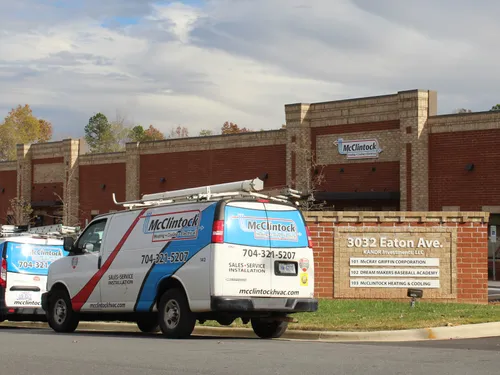
McClintock Heating and Cooling
3032 Eaton Avenue Suite 103, Indian Trail, NC 28079
McClintock Heating and Cooling is a locally owned and fully licensed HVAC company serving Charlotte, NC, and surrounding areas. They offer a range of heating and cooling services including repair and installation of air conditioners, furnaces, heat pumps, and indoor air quality solutions. The company also provides plumbing and electrical services, expanding their support for home and commercial comfort needs. With over 24 years of experience, McClintock Heating and Cooling focuses on tailored solutions that improve energy efficiency and system performance.
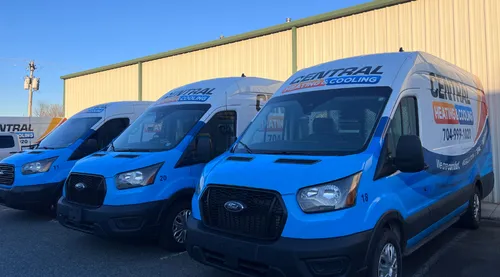
Central Heating & Cooling
4824 Unionville - Indian Trail Rd W unit b, Indian Trail, NC 28079
Central Heating & Cooling is an HVAC company based in Charlotte, NC, specializing in heating and cooling system repair, installation, maintenance, and indoor air quality services. The company focuses exclusively on HVAC systems, providing expert advice and service to ensure stable indoor climate control with maximum efficiency and safety. They offer air quality solutions using ActivePure Technology to continuously clean and protect indoor air and surfaces. Central Heating & Cooling emphasizes integrity, teamwork, and professionalism in their work. They have received consistent 5-star reviews and are known for their knowledgeable technicians and thorough approach.
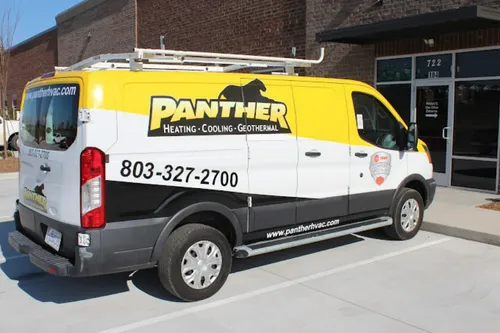
Panther Heating and Cooling
722 Corporate Blvd Suite 105, Rock Hill, SC 29730
Panther Heating and Cooling is an HVAC company based in Charlotte, NC, offering a full range of heating and cooling services including installation, repair, and maintenance of furnaces, air conditioners, heat pumps, and mini-split systems. They also provide indoor air quality solutions and smart thermostat installations. The company serves Charlotte and surrounding areas such as Rock Hill, Tega Cay, Fort Mill, Indian Land, York, Clover, Matthews, and Waxhaw. Panther Heating and Cooling emphasizes skilled, certified technicians and offers 24/7 emergency HVAC services to address urgent needs promptly.
City Air Experts Heating and Cooling
411 Foster Ave, Charlotte, NC 28203
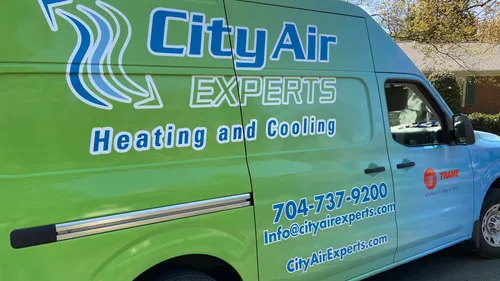
City Air Experts Heating and Cooling is a Charlotte, NC-based company providing residential and commercial HVAC services. They offer installation, repair, and maintenance for air conditioning, furnaces, heat pumps, mini splits, and general HVAC systems. The company is a certified Trane Comfort Specialist and employs NATE-certified technicians, ensuring skilled service. Established in 2009, City Air Experts provides 24/7 emergency HVAC services to respond to urgent needs any time of day or night.
K & V Heating & Air Conditioning
304 NC-67, East Bend, NC 27018
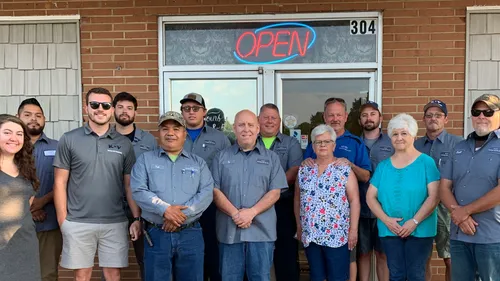
K & V Heating & Air Conditioning has been serving Winston Salem, NC, and the surrounding East Bend area for over 20 years. This family- and veteran-owned company offers a full range of HVAC services including installation, repair, and maintenance of air conditioners, furnaces, and heat pumps. They are certified dealers for Trane®, Coleman®, Bosch®, and Amana® equipment and provide custom metal duct fabrication with insulation options. With over 30 years of industry experience, K & V Heating & Air Conditioning also offers indoor air quality products such as humidifiers and air purifiers. Their services include 24-hour emergency support and yearly preventative maintenance plans to maintain system efficiency.
Common HVAC System Types for North Carolina Homes
North Carolina's climate, with its hot, humid summers and generally mild winters, influences the most popular and effective types of residential HVAC systems. Understanding the core options is the first step in making an informed choice.
- Ducted Split Systems: This is the most common setup found in homes with existing ductwork. It consists of an outdoor condenser/compressor unit and an indoor air handler (which may include a furnace or fan coil) connected by a network of ducts. They are a reliable choice for whole-home heating and cooling.
- Ductless Mini-Split Systems: Ideal for home additions, sunrooms, or providing zoned comfort, these systems feature one or more indoor air-handling units connected to an outdoor compressor via a small conduit 1. They offer individual room control and avoid the energy losses associated with ductwork.
- Heat Pumps: These are highly efficient systems that provide both heating and cooling by moving heat rather than generating it. Air-source heat pumps are increasingly popular in North Carolina due to the region's mild winters and the availability of significant incentives for high-efficiency models.
- Packaged Systems: All components-compressor, coil, and air handler-are housed in a single cabinet, typically installed on a rooftop or a concrete slab beside the home 2. These are a good solution for homes with limited indoor space for mechanical equipment.
Efficiency Standards and Incentives in NC
Efficiency is a major factor in both long-term operating costs and upfront installation incentives. North Carolina adheres to federal minimum standards but sees a strong market push toward higher efficiency.
- Federal Efficiency Standards (SEER2 & HSPF2): The U.S. Department of Energy sets minimum Seasonal Energy Efficiency Ratio 2 (SEER2) and Heating Seasonal Performance Factor 2 (HSPF2) ratings for new equipment. These updated standards are higher than previous SEER ratings, ensuring new installations are more efficient from the start.
- Market Trends and Goals: While the state follows federal minimums, the practical focus for many North Carolina installations is on high-efficiency equipment. For heat pumps, targeting a SEER2 of 15 or higher and an HSPF2 of 8.5 or higher is common, especially when paired with available financial incentives.
- Financial Incentives: This is a key driver for system upgrades. The federal Inflation Reduction Act (IRA) provides tax credits of up to $2,000 for the installation of qualifying high-efficiency heat pumps and other HVAC equipment. Additionally, local utility rebate programs, such as those offered by Duke Energy in its service areas, can provide substantial savings-sometimes up to $1,000 or more for heat pump installations. Always verify current programs with your installer and utility provider.
Understanding Installation Costs in North Carolina
The cost of a new HVAC system in North Carolina varies widely based on several factors. Having realistic budget expectations is crucial.
- Average Cost Range: For a full system replacement in a typical single-family home, homeowners can expect a range of $5,000 to $12,000 or more 3. Complex jobs involving extensive new ductwork or high-end equipment can reach $15,000+.
- Primary Cost Factors:
- System Size (Tonnage): Properly sizing the system for your home's square footage and layout is the most critical factor for performance and cost 4.
- Efficiency Rating: Higher SEER2 and HSPF2 ratings typically come with a higher initial price tag but offer lower operating costs.
- Ductwork Condition: Installing new ductwork or significantly modifying existing ducts adds considerable labor and material costs.
- Equipment Type: A basic heat pump replacement differs in cost from a multi-zone ductless mini-split system or a high-efficiency variable-speed model.
- Additional Features: Integrating zoning systems, smart thermostats, or advanced air purification systems will increase the total project cost.
- Example Cost Breakdowns:
- Basic SEER2 14/15 Heat Pump Replacement: $6,000 - $9,000+ 5.
- High-Efficiency Heat Pump (SEER2 16+): $9,000 - $12,000+ (before applying tax credits and rebates) 6.
- Ductless Mini-Split (Multi-Zone System): $3,000 - $5,000 per indoor zone installed.
Find the perfect hvac installers for your needs
Get personalized recommendations and expert advice
Critical Considerations for a Successful Installation
Beyond choosing a system and understanding costs, several technical and practical factors directly impact the success and value of your investment.
- Ductwork Assessment: The condition of your home's ductwork is paramount. Leaky, poorly insulated, or incorrectly sized ducts can reduce system efficiency by 20% or more, wasting energy and money 7 8. A reputable installer will inspect your ducts and recommend sealing, insulating, or replacement if needed.
- Proper System Sizing: An oversized system will short-cycle (turn on and off too frequently), leading to poor humidity control, uneven temperatures, and increased wear. An undersized system will run constantly, struggling to maintain comfort and driving up energy bills. A professional performs a Manual J load calculation to determine the precise size needed for your home's characteristics.
- Leveraging Incentives: Always discuss available federal tax credits and local utility rebates with potential installers. These incentives can substantially reduce your net cost and make higher-efficiency equipment more affordable 9. Your installer should be knowledgeable about the paperwork and eligibility requirements.
- Choosing the Right Contractor: The quality of the installation is as important as the equipment itself. Look for licensed, insured, and NATE-certified technicians. Ask for references, detailed written estimates, and ensure they pull the proper local permits. A good contractor will focus on your home's specific needs rather than offering a one-size-fits-all solution.
Frequently asked questions
Sources
Footnotes
-
The Ultimate Guide To HVAC Systems: Which One Is Right For You? - https://socalclimatecontrol.com/ultimate-guide-hvac-systems-right-for-you/ ↩
-
Comparing 8 Common Types of HVAC Systems - BigRentz - https://www.bigrentz.com/blog/types-of-hvac-systems ↩
-
How Much Does an HVAC Cost to Replace in North Carolina? - https://lmwilson.com/blog/how-much-does-an-hvac-cost-to-replace-in-north-carolina/ ↩
-
5 Steps on How To Size an HVAC System for Your New Installation - https://easternshorehvac.com/blog/how-size-hvac-system/ ↩
-
Heat Pump Replacement Cost - https://caseyserviceshvac.com/blog/heat-pump-replacement-cost/ ↩
-
Guide to Heat Pump Installation: Cost, Examples, and Tips for 2023 - https://www.simplysmarthome.ca/blog-posts/heat-pump-installation ↩
-
HVAC Costs in Western NC - Avery Heating & Air Conditioning - https://www.averyheating.com/energy-efficient-hvac/hvac-costs/ ↩
-
Mark Callahan's Real-World Guide to Trane AC Prices and How Goodman Fits Into the Mix - https://thefurnaceoutlet.com/blogs/news/mark-callahan-s-real-world-guide-to-trane-ac-prices-and-how-goodman-fits-into-the-mix ↩
-
Understanding HVAC Cost Per Square Foot: Tony Marino's Complete Guide - https://thefurnaceoutlet.com/blogs/news/understanding-hvac-cost-per-square-foot-tony-marino-s-complete-guide ↩