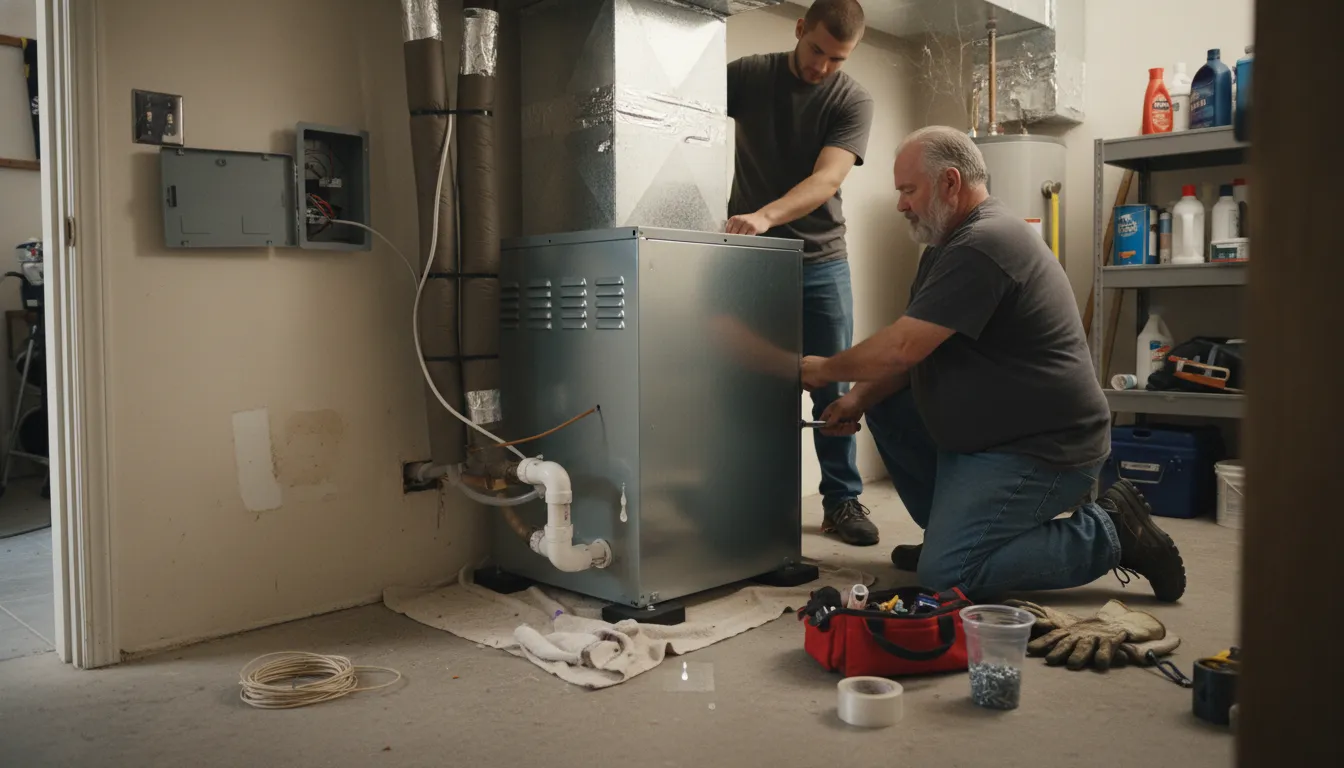
Find the Best HVAC Installers for Your Business
No obligation • Fast responses • Nationwide coverage

Why you can trust HVAC Firms
HVAC Firms is a leading United States resource for evaluating HVAC service providers. Our team researches companies, checks credentials, and reviews customer feedback to present clear, unbiased information. Listings and rankings are based on merit, and companies cannot pay to change our editorial content.
Search providers near you
Top HVAC Installers in Raleigh, North Carolina Ranked
Upgrading your home's heating and cooling system is one of the most significant comfort and efficiency investments you can make. For Raleigh homeowners, navigating the world of HVAC installation means understanding your options, from high-efficiency heat pumps to traditional central systems, and finding a qualified local professional to do the job right. This guide will help you understand the process, typical costs, and key considerations for a successful heating and air conditioning installation in the Triangle area.
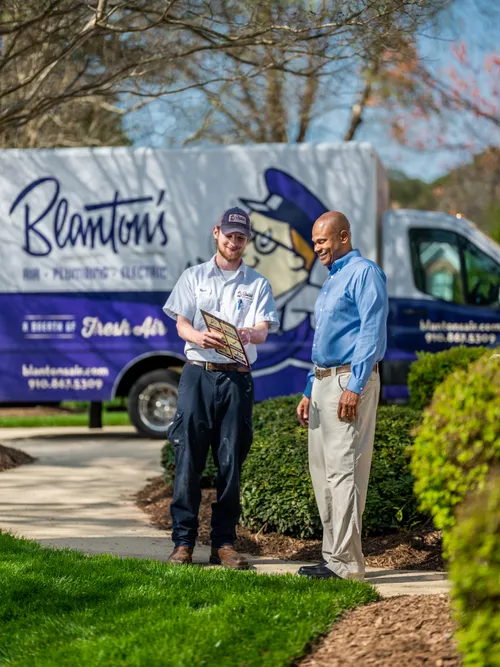
Blanton's Air, Plumbing & Electric
2000 Citation Dr Ste 100, Garner, NC 27529
Blanton's Air, Plumbing & Electric has been serving Raleigh, NC, and the surrounding Triangle area since 1951. They provide a wide range of home services including HVAC repair and installation for air conditioners, furnaces, heat pumps, and boilers. With over 75 years of experience, they offer comprehensive maintenance and emergency services to ensure home comfort and safety year-round. Their team is available 24/7, including after-hours support through an AI representative and live customer care, prioritizing urgent needs and flexible scheduling.
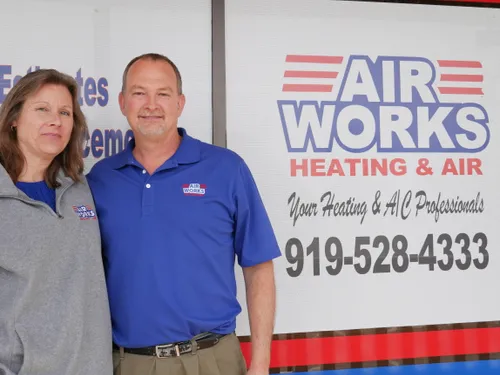
Air Works Heating & Air
5100 Unicon Dr #107, Wake Forest, NC 27587
Air Works Heating & Air is a family-owned HVAC and plumbing company serving Raleigh, NC, and the surrounding Wake County area. Since 2007, they have provided furnace and air conditioning repairs, installations, indoor air quality services, and duct cleaning. Their certified technicians work with top brands like American Standard and Mitsubishi Electric, offering services such as furnace replacements, AC tune-ups, and ductless mini split installations. The company emphasizes straightforward pricing and backs their work with a one-year parts and labor warranty.
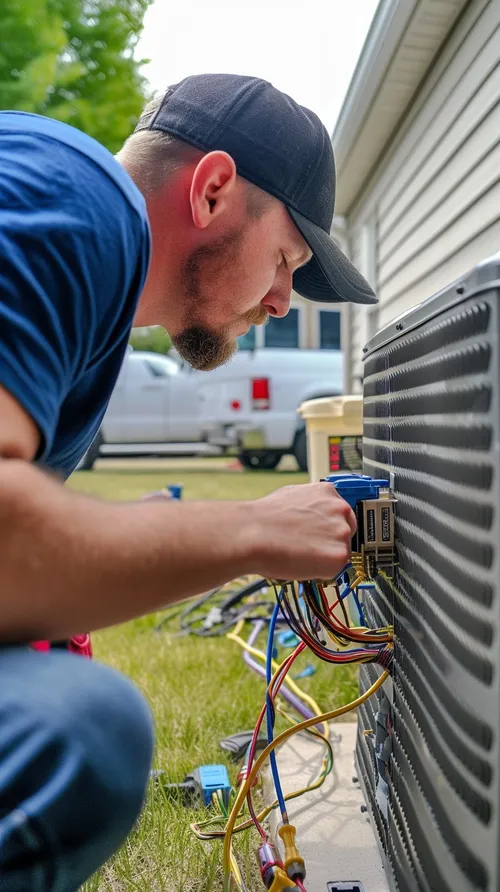
Jay's Heating and Cooling
6616 Prescott Shore Dr, Wake Forest, NC 27587
Jay's Heating and Cooling is a locally owned HVAC company serving Raleigh, NC. They provide a range of services including air conditioning repair and installation, furnace repair and installation, heat pump maintenance and repair, and HVAC tune-ups for both residential and commercial clients. The company uses advanced equipment and employs NATE certified technicians skilled in handling various HVAC systems, including those using A2L refrigerants. With over 60 years of combined experience, Jay's Heating and Cooling emphasizes quality workmanship and long-term client relationships.
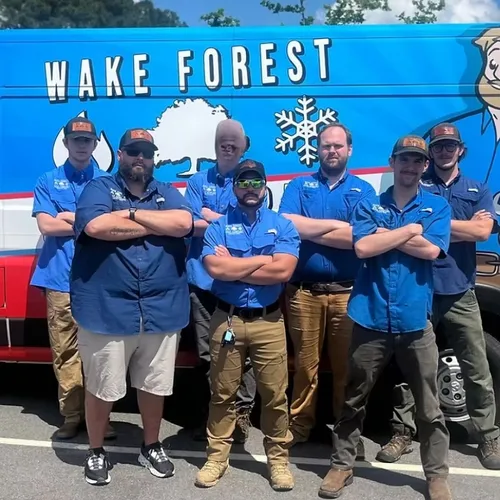
Wake Forest HVAC Company
107 E Young St, Rolesville, NC 27571
Wake Forest HVAC Company provides heating and cooling services in Raleigh, NC, and nearby areas including Rolesville, Wake Forest, and Youngsville. They offer a range of HVAC services such as air conditioning repair and installation, furnace and heat pump repair, thermostat installation, and regular maintenance tune-ups. Their preventative maintenance program includes two comprehensive visits annually to inspect and service HVAC systems, ensuring efficient operation. The company emphasizes professionalism, communication, and integrity in their work and supports their local community.
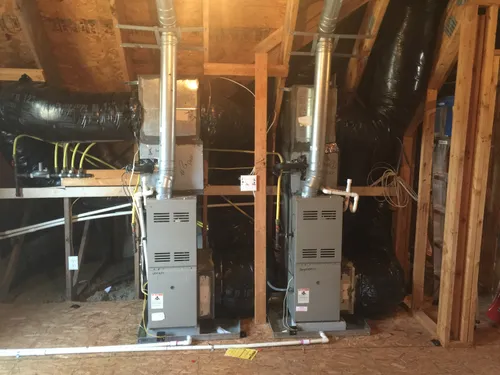
Smart Home Comfort
Raleigh, NC
Smart Home Comfort is an HVAC company serving Raleigh, NC, specializing in heating and cooling installation, repair, and maintenance. They offer services including air conditioning and furnace repair, heat pump installation, duct cleaning, and indoor air quality improvements. The company provides AeroSeal duct sealing to improve airflow and energy efficiency. Smart Home Comfort operates with a focus on personalized service and is available 24/7 for emergency HVAC needs.
Understanding Your Raleigh HVAC System Options
Choosing the right system is the first critical step. Raleigh's climate, with its hot, humid summers and relatively mild but occasionally cold winters, requires a versatile solution. The most common choices for whole-home comfort include a central air conditioner paired with a gas furnace, a standalone heat pump, or a ductless mini-split system. Each has distinct advantages depending on your home's layout, existing ductwork, and efficiency goals.
A central air conditioner and gas furnace combination is a standard and reliable choice. The furnace efficiently handles winter heating, while the AC unit tackles summer humidity and heat. This setup is ideal for homes with existing ductwork and provides consistent whole-home comfort. For a more energy-efficient year-round option, a heat pump is increasingly popular. It functions as both an air conditioner and a heater by moving heat rather than generating it, making it highly efficient in Raleigh's moderate climate 1. Finally, ductless mini-split systems are perfect for home additions, sunrooms, or providing zoned comfort in rooms without duct access. They offer individual room control and can be a cost-effective alternative to extending existing ductwork.
The Step-by-Step Installation Process
A professional HVAC installation is a multi-stage project that ensures your system is sized correctly, installed safely, and operates at peak performance. It's more than just swapping an outdoor unit; it's a comprehensive home comfort upgrade.
- Home Assessment & Load Calculation: A reputable contractor will start with a thorough evaluation of your home. This includes measuring square footage, assessing insulation, checking windows, and most importantly, performing a Manual J load calculation. This determines the exact heating and cooling capacity (in BTUs) your home needs-a crucial step to avoid an oversized or undersized system.
- System Selection & Design: Based on the assessment, you'll discuss system types, efficiency ratings (like SEER2 for cooling and HSPF for heat pumps), and brands. Your contractor should explain the pros and cons of each option for your specific home.
- Permitting: Your HVAC professional will pull the necessary local permits from the City of Raleigh or Wake County. This ensures the installation will be inspected and meet all building and safety codes.
- Removal & Preparation: The old equipment is safely removed, including the recovery of refrigerant from the old lines. The work area is prepared for the new units.
- Installation Day: This involves setting the new outdoor condenser and indoor air handler or furnace, connecting refrigerant lines, installing a new thermostat, and integrating electrical and control wiring. If ductwork modifications are needed, this is when they occur.
- System Testing & Commissioning: Once installed, the technician will test the system for proper refrigerant charge, airflow, electrical safety, and thermostat calibration. This step verifies everything is working as designed.
- Customer Walkthrough: A final step where the installer shows you how to operate your new system, explains your warranty, and reviews a recommended maintenance schedule to keep it running efficiently for years to come.
What to Expect: Timelines and Investment
Understanding the project scope helps in planning. A full HVAC replacement typically takes 1 to 3 weeks from consultation to completion, accounting for scheduling, permit acquisition, and the installation itself 2. The physical installation day for a standard system swap usually requires 4 to 8 hours of work, though complex jobs involving new ductwork or electrical upgrades can take longer 2.
The investment for a new heating and cooling system in Raleigh varies widely based on equipment type, efficiency, and home specifics. As a guide:
- A standard central air conditioner and gas furnace replacement can range from $8,000 to over $18,000, with higher efficiency models commanding a premium.
- A heat pump system installation typically falls between $4,500 and $10,000, with an average cost in the $5,500 to $8,000 range 3.
- A multi-zone ductless mini-split system for multiple rooms can range from $4,000 to $15,000 or more 4.
These costs are influenced by the system's efficiency ratings (SEER2, HSPF), the condition of existing ductwork, the equipment brand, and current labor rates. The most important step is to get 2-3 detailed, written quotes from licensed contractors after they have performed an in-home assessment. This allows for an accurate comparison of both price and proposed solutions.
Find the perfect hvac installers for your needs
Get personalized recommendations and expert advice
Key Factors for a Successful Installation
Beyond choosing a system, several factors dictate the long-term success and efficiency of your HVAC installation.
Sizing is Everything: An oversized system will short-cycle (turn on and off frequently), leading to poor humidity control, uneven temperatures, and increased wear. An undersized system will run constantly, struggling to keep up on extreme days. The Manual J calculation mentioned earlier is non-negotiable for proper sizing 5.
Ductwork Evaluation: Your ducts are the circulatory system for your conditioned air. During the assessment, have the contractor inspect your ductwork for leaks, poor insulation, or design issues. Sealing and insulating ducts can significantly improve efficiency and comfort, and may be a recommended part of the project.
Efficiency Ratings Explained: Don't just buy the highest number; understand the value. For air conditioners and heat pumps, the SEER2 (Seasonal Energy Efficiency Ratio) measures cooling efficiency. A higher SEER2 means lower electricity bills. For heat pumps, also look at the HSPF (Heating Seasonal Performance Factor) for heating efficiency. Weigh the upfront cost of a higher-efficiency unit against potential long-term energy savings in our climate 6.
The Importance of Professional Installation: Even the best equipment will underperform if installed incorrectly. Proper refrigerant charging, airflow calibration, and electrical connections are critical. A professional installation ensures safety, validates manufacturer warranties, and provides the comfort and efficiency you paid for.
Maintaining Your New Raleigh HVAC System
Once your new system is installed, protect your investment with regular maintenance. Schedule a professional tune-up twice a year-ideally in the spring for cooling and fall for heating. This typically includes cleaning coils, checking refrigerant levels, inspecting electrical components, and ensuring the system is operating safely and efficiently. Regularly changing your air filter (every 1-3 months) is the single most important task you can do to maintain airflow and system health. Proper maintenance extends the life of your equipment, maintains its efficiency, and helps prevent costly breakdowns.
Frequently asked questions
Sources
Footnotes
-
How Much Does an Air Conditioner Cost for a 2000-Square-Foot Home? - https://www.thisoldhouse.com/heating-cooling/air-conditioner-cost-for-2000-square-foot-home ↩
-
What is the installation timeline for my air conditioner? - https://newjupiterconstruction.com/what-is-the-installation-timeline-for-my-air-conditioner/ ↩ ↩2
-
Raleigh HVAC Replacement Guide: Expert Installation & Repair - https://www.fogghvac.net/hvac/hvac-replacement-raleigh-nc ↩
-
HVAC Replacement Costs Raleigh NC | Budget Guide - https://ultraairhvacnc.com/hvac-replacement-raleigh-north-carolina ↩
-
Heating Installation in Raleigh: When to Replace Your System - https://www.jaysraleighhvac.com/news/heating-installation-raleigh/ ↩
-
Step-by-Step HVAC Installation Guide - Carrier - https://www.carrier.com/residential/en/us/products/air-conditioners/hvac-installation/ ↩