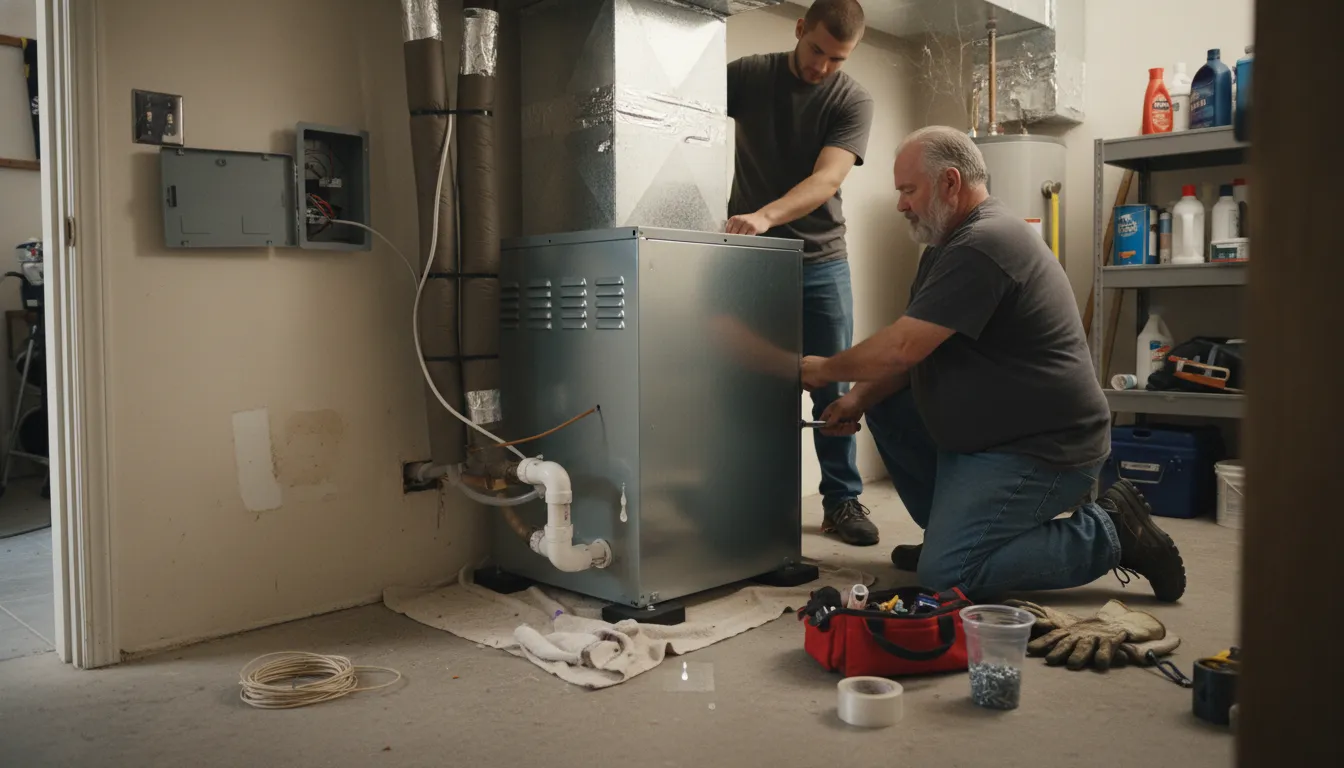
Find the Best HVAC Installers for Your Business
No obligation • Fast responses • Nationwide coverage

Why you can trust HVAC Firms
HVAC Firms is a leading United States resource for evaluating HVAC service providers. Our team researches companies, checks credentials, and reviews customer feedback to present clear, unbiased information. Listings and rankings are based on merit, and companies cannot pay to change our editorial content.
Search providers near you
Best HVAC Installers in Massachusetts Ranked
Installing a new heating and cooling system is a significant investment in your Massachusetts home's comfort, efficiency, and value. Given the state's cold winters, humid summers, and strict energy codes, choosing the right system and a qualified installer is crucial. This guide will help you understand your options, the associated costs, and the key regulations that impact HVAC installation in the Bay State, empowering you to make an informed decision for your home.
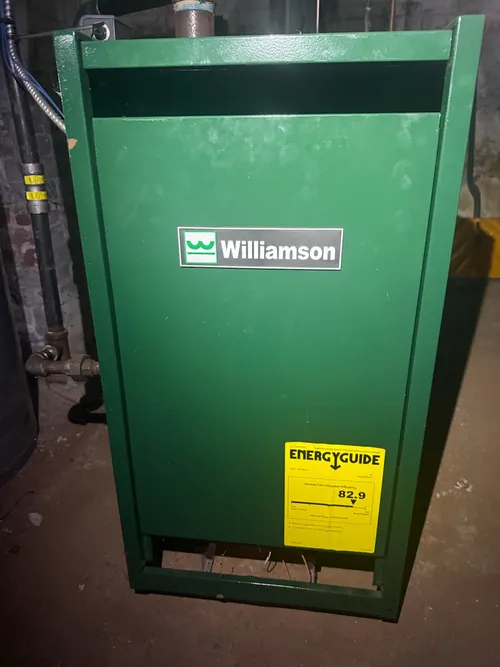
Minuteman Plumbing, Heating & Cooling
100 Garden St, Cambridge, MA 02138
Minuteman Plumbing, Heating & Cooling is a full-service provider based in Boston, MA, offering plumbing, heating, and air conditioning services for homes and small businesses. They cover Greater Boston and the South Shore, including suburbs such as Allston, Belmont, Brookline, and Somerville, as well as towns like Weymouth, Braintree, and Hingham. Their services include AC installation and repair, furnace and boiler installation and repair, HVAC tune-ups, and plumbing repairs. The company emphasizes expert assessment, clear communication, and efficient execution, with every installation backed by a lifetime workmanship guarantee. With decades of combined experience, their veteran-led team provides 24/7 emergency services and a one-hour business response time.
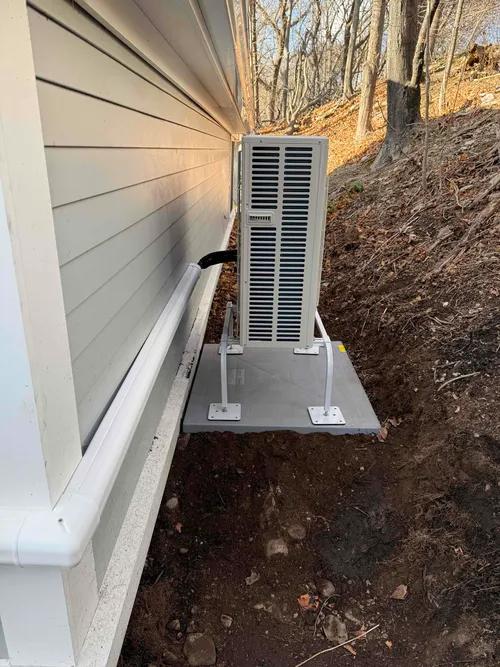
Yellow Dog Plumbing, Heating & Cooling
19 Kearney Rd, Needham, MA 02494
Yellow Dog Plumbing, Heating & Cooling is a plumbing and HVAC company serving Boston, MA, and nearby areas. They offer a wide range of services including air conditioning, furnace, heat pump, and boiler repair and installation, as well as HVAC tune-ups and indoor air quality solutions. Their technicians are equipped to handle both residential and light commercial HVAC needs, with well-stocked trucks to complete most repairs on the first visit. Yellow Dog emphasizes clear communication and customer care, providing same-day service and 24/7 live answering to support their clients' comfort and safety.
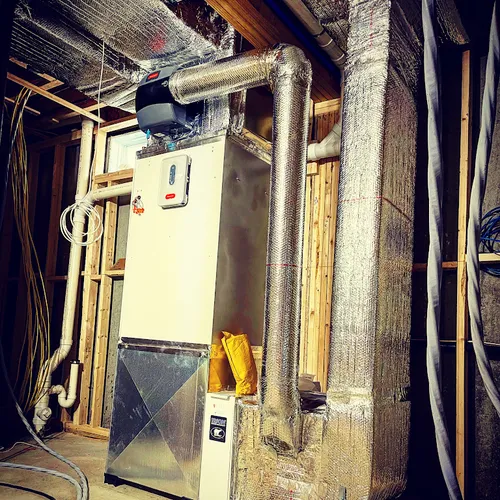
EML Mechanical
28 Pine St, Stoneham, MA 02180
EML Mechanical is an HVAC company serving Boston, MA, and the Greater Northshore Community. They provide residential and commercial heating, ventilation, and air conditioning services, including installation, repair, and tune-ups for systems like furnaces, heat pumps, and air conditioners. EML Mechanical is a MassSave-approved contractor, offering access to energy efficiency rebates and financing options. Their services also include indoor air quality solutions and thermostat installation. The company emphasizes integrity, expertise, and customer-focused service, with 24/7 emergency support available through their service membership plans.
Royal Air Systems, Inc.
210 Main St, North Reading, MA 01864
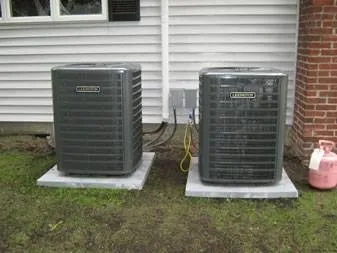
Royal Air Systems, Inc. is an HVAC company serving Boston, MA, and the surrounding North Shore communities. They offer a wide range of services including repair and installation of air conditioners, furnaces, heat pumps, and boilers. The company is known for its expertise in heat pump systems, providing flexible heating and cooling solutions that adapt to seasonal changes. Established in 1980, Royal Air Systems has over 46 years of experience in the HVAC industry. They also provide emergency after-hours service for heating repairs.
Total Comfort Mechanical
4 Garfield Cir, Burlington, MA 01803
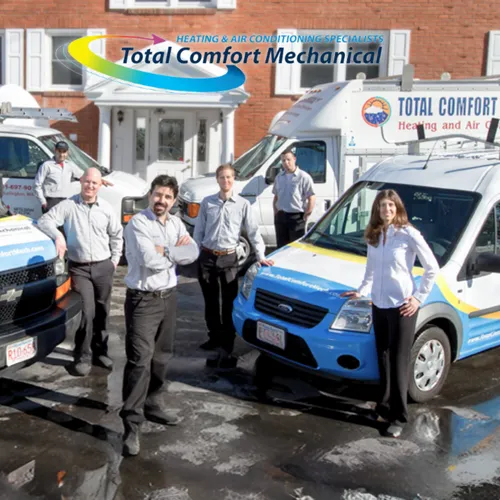
Total Comfort Mechanical is an HVAC company based in Boston, MA, specializing in air conditioning repair, installation, and heat pump services. They provide comprehensive HVAC tune-ups and system replacements, with expertise in multi-zone AC and heating units. The team is experienced in managing projects efficiently, ensuring clean and neat installations. Total Comfort Mechanical has built a reputation for knowledgeable and resourceful solutions, with direct involvement from the owner throughout each project.
Understanding Your HVAC System Options
Massachusetts homeowners have several primary choices for heating and cooling, each with distinct advantages and ideal applications. The best system for your home depends on your existing infrastructure, budget, and efficiency goals.
Central Air Conditioning and Heating Systems These are traditional ducted systems that provide whole-home comfort. A central air conditioner is typically paired with a furnace (for gas, oil, or electric heat) or an air-source heat pump. This option is most suitable for homes that already have functional ductwork. The efficiency of these systems is measured by SEER (Seasonal Energy Efficiency Ratio) ratings for cooling and AFUE (Annual Fuel Utilization Efficiency) for furnaces.
Ductless Mini-Split Heat Pumps Extremely popular in Massachusetts, these systems provide both heating and cooling without the need for ducts. They consist of an outdoor compressor unit connected to one or more indoor air handlers. This allows for "zoning," meaning you can control the temperature in individual rooms. They are an excellent solution for home additions, older homes without ducts, or for supplementing heating in colder rooms 1.
Air-Source and Geothermal Heat Pumps Heat pumps are highly efficient because they move heat rather than generate it. Air-source heat pumps (ASHPs) extract heat from the outside air to warm your home in winter and reverse the process to cool it in summer. Geothermal (or ground-source) heat pumps use the stable temperature of the earth for even greater efficiency. While geothermal has a higher upfront cost, it offers the lowest operating costs and is exceptionally effective in Massachusetts' climate.
Furnaces and Boilers Traditional forced-air furnaces (powered by natural gas, oil, or propane) and hydronic boilers (which heat water for radiators or radiant floor systems) remain common, especially in older homes. Modern high-efficiency models can be a good choice, particularly when paired with a separate central air conditioning system.
Massachusetts Regulations and Efficiency Standards
The state has some of the most rigorous energy codes in the nation, directly impacting HVAC installations. Compliance is not optional and ensures systems perform at their peak.
The Stretch Energy Code Adopted by most Massachusetts communities, this code mandates high-performance building envelopes. For HVAC installation, this means contractors must ensure robust air sealing and proper insulation around ducts, penetrations, windows, and doors. The goal is to minimize energy loss before the system is even turned on, which is critical for system efficiency and longevity.
Minimum Efficiency Ratings All new HVAC equipment installed must meet or exceed federal minimum efficiency standards, which are often surpassed by state and utility incentives. For cooling, look for SEER2 ratings of 15 or higher. For heat pumps, the Heating Seasonal Performance Factor (HSPF) is key. Installing equipment with higher ratings than the minimum is strongly encouraged and often financially rewarded 2.
Mass Save® Incentives This statewide program offers some of the most generous rebates in the country to encourage high-efficiency upgrades. Significant rebates are available for qualifying air-source heat pumps, geothermal systems, and other high-efficiency HVAC equipment. These incentives can reduce the installed cost by thousands of dollars, making premium systems much more accessible. Always check the current Mass Save offerings with your installer or directly on their website before making a purchase.
Breakdown of Installation Costs
HVAC installation costs in Massachusetts vary widely based on system type, home size, and complexity. The figures below are estimated installed costs before applying any Mass Save or federal tax credits.
- Central Air Conditioning (with existing ductwork): $4,500 - $12,000+ 3.
- New Ductwork Installation: Can add $5,000 - $15,000+ to the cost of a central system.
- Ductless Mini-Split System: $3,000 - $7,000 per indoor zone (head) 4.
- Air-Source Heat Pump (whole-home): $5,000 - $12,000.
- Geothermal Heat Pump System: $18,000 - $30,000+ due to ground loop installation 5.
- Furnace or Boiler Replacement: $3,500 - $11,000 6.
- Installation Labor: Typically adds $2,000 - $4,500+ to the equipment cost 7.
Find the perfect hvac installers for your needs
Get personalized recommendations and expert advice
Key Factors That Influence Your Final Cost
Understanding what drives these price ranges can help you budget and evaluate quotes.
- Home Size and Layout: Larger homes require larger capacity (tonnage) systems. Multi-story homes or those with complex layouts may need more equipment or zoning solutions.
- Existing Infrastructure: The condition of existing ductwork, electrical service, gas lines, or plumbing for boilers is a major factor. Repairing or replacing ductwork is a significant added expense.
- System Efficiency and Brand: Higher SEER, HSPF, or AFUE ratings command a premium price but offer lower utility bills. Equipment brand also affects cost.
- Installation Complexity: Installations in tight attics, crawl spaces, or historic homes require more time and labor. For geothermal systems, the property's soil composition and lot size dictate ground loop costs.
- Permits and Local Codes: Required permits and adherence to the Stretch Energy Code add to the project cost but are essential for safety, legality, and performance 8.
- Labor Rates: HVAC professional rates in Massachusetts typically range from $75 to $150 per hour 9.
The Installation Process: What to Expect
A professional HVAC installation follows a structured process to ensure quality and compliance.
- Initial Consultation and Load Calculation: A reputable contractor will perform a Manual J calculation to determine your home's precise heating and cooling needs, avoiding undersized or oversized systems.
- System Design and Proposal: They will recommend a system type and specific models, provide a detailed written quote, and discuss rebate eligibility.
- Permitting: The contractor pulls the necessary local building and electrical permits.
- Preparation and Removal: The old equipment is safely removed, and the worksite is prepared.
- Installation and Sealing: New equipment is installed, and all ducts, joints, and penetrations are sealed according to code requirements.
- Testing and Commissioning: The system is started, tested for proper operation, refrigerant charge, and airflow, and balanced if needed.
- Final Inspection and Walkthrough: A final local inspection may be required. The contractor should walk you through system operation and maintenance.
Choosing a Qualified Massachusetts HVAC Contractor
Your installer's expertise is as important as the equipment brand. Look for:
- Proper Licensing: Ensure they hold a valid Massachusetts Sheet Metal Worker or Refrigeration Technician license.
- Insurance: Verify they carry general liability and worker's compensation insurance.
- Local Experience: Choose a company familiar with the Stretch Energy Code and Mass Save program requirements.
- Detailed Written Estimates: Avoid vague quotes. Everything should be itemized.
- References and Reviews: Check BBB ratings, Google reviews, and ask for local references.
Frequently asked questions
Sources
Footnotes
-
Comparing Cooling Options for Massachusetts Homes - https://jaymoodyhvac.com/resources/blog/comparing-ac-options/ ↩
-
SEER Ratings Demystified: Choosing an Efficient Cooling System - https://www.sumzeroenergysystems.com/blog/seer-ratings-demystified-choosing-an-efficient-cooling-system ↩
-
What Affects Central AC Installation Costs in Massachusetts? - https://www.sumzeroenergysystems.com/blog/how-much-does-it-cost-to-install-central-ac-in-massachusetts ↩
-
Get Top AC Installation Services in Massachusetts By SumZero - https://www.sumzeroenergysystems.com/hvac/ac-installation ↩
-
Memorandum - Mass.gov - https://www.mass.gov/doc/memo-on-heating-technology-costs-and-emissions/download ↩
-
Preparing to Install Central AC in Massachusetts - https://goendlessenergy.com/blog/ac-installation/central-ac-installation-massachusetts-summer-2025/ ↩
-
The Hidden Costs of HVAC Installations in Massachusetts | What to Know - https://askgem.com/blog/hidden-costs-of-hvac-installations-in-massachusetts/ ↩
-
Central AC Installation in Massachusetts | What to Expect & Costs - https://www.sumzeroenergysystems.com/blog/what-to-expect-during-a-central-air-installation ↩
-
The Hidden Costs of HVAC Installations in Massachusetts - https://askgem.com/blog/hidden-costs-of-hvac-installations-in-massachusetts/ ↩