Find the Best HVAC Installers for Your Business
No obligation • Fast responses • Nationwide coverage

Why you can trust HVAC Firms
HVAC Firms is a leading United States resource for evaluating HVAC service providers. Our team researches companies, checks credentials, and reviews customer feedback to present clear, unbiased information. Listings and rankings are based on merit, and companies cannot pay to change our editorial content.
Search providers near you
Best HVAC Installers in Delaware Ranked
Choosing the right heating and cooling system is a significant decision for any Delaware homeowner. Proper HVAC installation ensures year-round comfort, manages energy costs, and protects your investment by meeting state building and efficiency codes. This guide outlines the key considerations for installing a new system in Delaware, from understanding your equipment options to navigating local regulations, helping you make an informed choice for your home.
Understanding Your HVAC System Options in Delaware
Delaware's climate, with its humid summers and cold winters, requires a versatile and efficient heating and cooling solution. The right system for your home depends on your existing infrastructure, budget, and efficiency goals.
- Gas Furnace & Central Air Conditioning: This is a traditional and popular combination. A natural gas furnace provides powerful, cost-effective heat during winter, while a separate central air conditioner handles summer cooling. This split-system approach is common in homes with existing ductwork.
- Heat Pumps: An increasingly popular choice for their efficiency, heat pumps provide both heating and cooling in one unit. They work by transferring heat rather than generating it, making them highly efficient in Delaware's moderate winters. Most systems include electric backup heat strips for the coldest days.
- Ductless Mini-Split Systems: Ideal for homes without ductwork, additions, or for creating independent temperature zones. These systems consist of an outdoor compressor and one or more indoor air handlers. They offer excellent efficiency and flexible installation.
- Boiler Systems: Common in many older Delaware homes, boilers use hot water or steam circulated through radiators or in-floor tubing to provide consistent, comfortable heat. They are known for durability but typically require a separate system, like ductless units or window ACs, for cooling 1.
Delaware's Energy Efficiency and Building Code Requirements
All new HVAC installations and major replacements in Delaware must comply with state-adopted codes, primarily based on the International Energy Conservation Code (IECC). These regulations are designed to improve home energy performance and reduce utility bills.
Equipment Efficiency Standards
Federal and state standards set minimum efficiency ratings for new equipment. As of 2023, key minimums include:
- Central Air Conditioners: Must have a SEER2 (Seasonal Energy Efficiency Ratio) rating of at least 13.4 for split systems.
- Heat Pumps: Must meet minimums for both cooling (SEER2) and heating (HSPF2 - Heating Seasonal Performance Factor). For example, a common requirement is 14.3 SEER2 and 7.5 HSPF2 for certain split-system heat pumps 2.
- Gas Furnaces: Must have an AFUE (Annual Fuel Utilization Efficiency) rating of 80% or higher, with high-efficiency models reaching 95%+ AFUE.
Installing equipment that exceeds these minimums can lead to significant long-term savings on energy bills.
Building Envelope and Ductwork Standards
The code isn't just about the equipment. It also sets standards for the home itself to ensure the conditioned air stays inside 3.
- Insulation (R-Value): Specific minimum R-values are required for ceilings, walls, and foundations. Proper insulation is critical for system efficiency and comfort.
- Windows (U-Factor & SHGC): New or replaced windows must meet maximum U-factor (insulating ability) and Solar Heat Gain Coefficient (SHGC) values to control heat loss and gain.
- Duct Sealing: Ductwork located in unconditioned spaces (like attics or crawlspaces) must be sealed and tested to prevent energy loss.
- Permanent Certificate: After installation, a certificate detailing the installed insulation R-values and equipment efficiencies must be posted on the electrical panel, providing a record for future homeowners 4.
Find the perfect hvac installers for your needs
Get personalized recommendations and expert advice
Factors Influencing HVAC Installation Cost
The cost of a new HVAC system in Delaware varies widely, typically ranging from $5,000 to over $12,000 for a complete central system replacement. Several key factors determine where your project will fall within this range 5 6 7.
- Home Size and Layout: The square footage and number of rooms directly impact the capacity (measured in tons) of the system needed. Larger homes require more powerful, and therefore more expensive, equipment.
- Type and Efficiency of Equipment: A basic, code-minimum system will cost less upfront than a high-efficiency model with advanced features. Heat pumps often carry a premium over standard AC units but offer dual functionality. Ductless mini-split costs depend on the number of indoor zones needed 8.
- Condition of Existing Infrastructure:
- Ductwork: Modifying, repairing, or installing new ductwork is a major cost factor. Many older Delaware homes may have inadequate or leaky ducts that need attention 9 10.
- Electrical Service: New systems, especially heat pumps, may require electrical panel upgrades or new circuit runs.
- Venting: High-efficiency furnaces require new PVC venting, which adds to labor and material costs.
- Labor and Complexity: Installation difficulty affects price. Jobs in tight attics, crawlspaces, or historic homes with unique challenges will take more time and skill.
- Permits and Inspections: Local municipalities require permits for HVAC work, with fees varying by location. The installation must pass inspection to ensure code compliance.
The Importance of Working with a Local Delaware Professional
Choosing an installer familiar with Delaware's specific climate and codes is crucial. A qualified local contractor will:
- Perform a Detailed Load Calculation: They won't just guess at the size. They will calculate the precise heating and cooling needs of your home (Manual J) to recommend correctly sized equipment, preventing inefficiency and discomfort.
- Navigate Local Codes: They understand Delaware's adoption of the IECC and local amendments, ensuring your installation passes inspection and qualifies for any available rebates.
- Assess Your Home's Unique Needs: They can identify issues common in regional architecture, such as the need for additional insulation in older homes or solutions for properties without existing ducts.
- Provide Proper Documentation: They will supply the required manuals, warranty information, and the permanent energy certificate for your electrical panel.
Planning Your Installation: A Step-by-Step Overview
- Initial Consultation: A reputable contractor will visit your home to discuss your comfort issues, assess the existing system, and take preliminary measurements.
- System Design and Proposal: They should provide a written proposal detailing the recommended equipment (make, model, efficiency ratings), scope of work, a breakdown of costs, and a timeline.
- Permitting: The contractor obtains the necessary permits from your local building department before work begins.
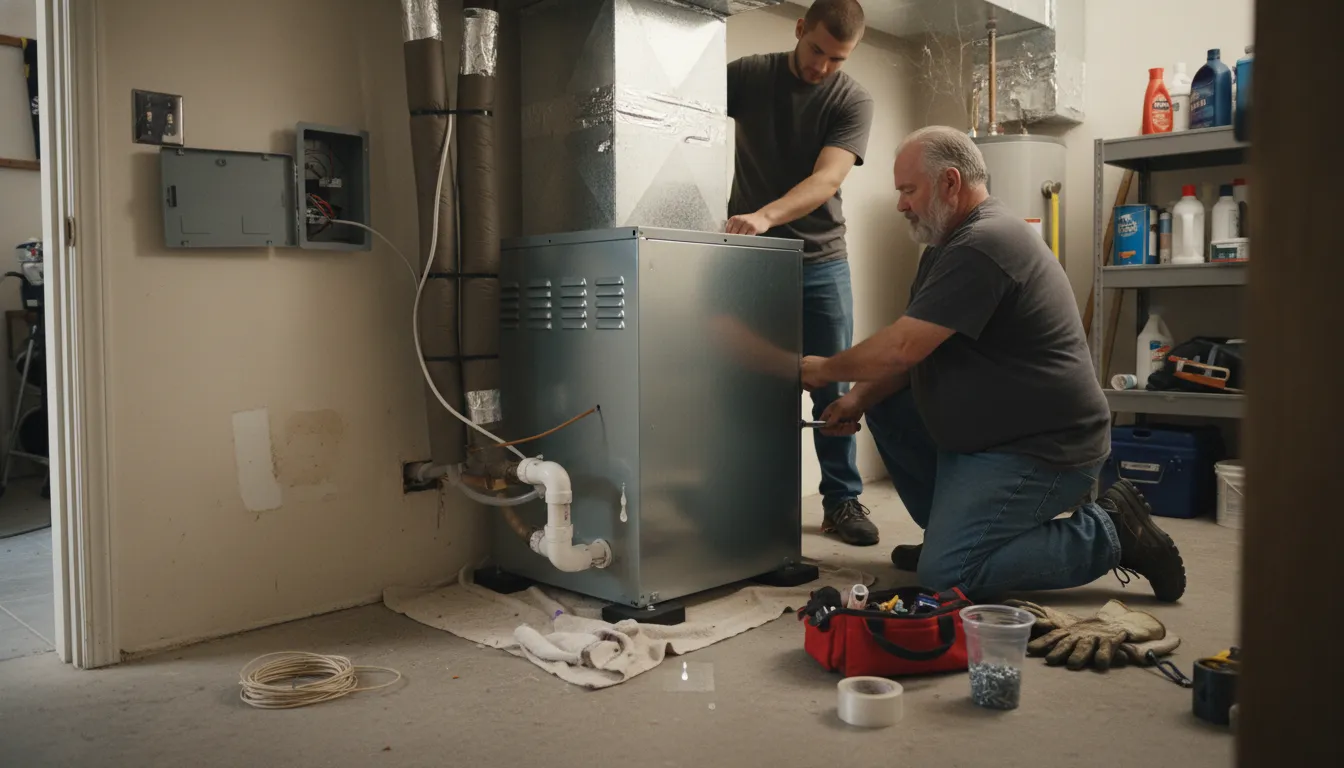
- Installation Day: The old equipment is safely removed. The new system is installed, which includes setting the outdoor unit, installing the indoor unit (furnace, air handler), connecting refrigerant and electrical lines, and integrating with thermostats and ductwork.
- Testing and Commissioning: The system is started, tested for proper operation, and balanced. The technician should measure airflow and refrigerant charge, not just check that it turns on.
- Final Inspection & Walkthrough: The contractor should review the system's operation with you, explain basic maintenance, and provide all paperwork, including the warranty registration.
Frequently asked questions
Sources
Footnotes
-
What's the Best Heating System for Your Delaware County Home? - https://dreamteampa.com/delaware-county-home-heating-solutions/ ↩
-
Chapter 4 [RE] Residential Energy Efficiency - UpCodes - https://up.codes/viewer/delaware/iecc-2018/chapter/RE_4/re-residential-energy-efficiency ↩
-
summary of key residential energy code requirements - https://www.co.delaware.in.us/egov/apps/document/center.egov?view=item&id=6286 ↩
-
summary of key residential energy code requirements - https://insulationinstitute.org/wp-content/uploads/2025/05/N114-DE-Energy-Code-0425.pdf ↩
-
2026 HVAC Standards: What New Regulations Mean for Your Home - https://www.dixielandenergy.com/hvac-standards-what-new-regulations-mean-for-your-home ↩
-
HVAC Installation Cost Per Sq. Ft: Average Prices & Factors - https://www.superbrothers.com/hvac-installation-cost-per-sq-ft-average-prices-factors-2024/ ↩
-
HVAC Installation Costs for 2021 - Delaware Heating and Air - https://delawareheatandair.com/hvac-installation-costs-for-2021/ ↩
-
Mini-Splits in Delaware: Energy Savings with CARE Heating - https://www.careheatingcooling.com/energy-saving-mini-split-in-delaware/ ↩
-
8 Factors That Affect AC Installation Cost - Kliemann Brothers - https://kliemannbros.com/8-factors-for-determining-your-ac-installation-cost-estimate/ ↩
-
HVAC Installation in Wilmington, DE - Costs 12 / 2025 - Homeyou - https://www.homeyou.com/de/hvac-installation-wilmington-costs ↩