Find the Best HVAC Installers for Your Business
No obligation • Fast responses • Nationwide coverage

Why you can trust HVAC Firms
HVAC Firms is a leading United States resource for evaluating HVAC service providers. Our team researches companies, checks credentials, and reviews customer feedback to present clear, unbiased information. Listings and rankings are based on merit, and companies cannot pay to change our editorial content.
Search providers near you
Best HVAC Installers in Arkansas Ranked
Choosing the right heating, ventilation, and air conditioning (HVAC) system is a significant decision for any Arkansas homeowner. The state's humid summers and variable winters demand reliable, efficient climate control. A proper installation ensures comfort, manages energy costs, and protects your investment for years to come. This guide will help you understand your options, the relevant state standards, and how to find qualified local professionals to assess your home's specific needs.
Understanding Your HVAC System Options in Arkansas
Several types of systems are commonly installed in Arkansas homes, each with its own advantages. The right choice depends on your existing infrastructure, fuel sources, and performance goals.
Split Systems: This is the most common residential setup in the state. It consists of an outdoor unit (condenser for cooling) paired with an indoor unit (a furnace or air handler). This configuration efficiently provides both heating and cooling, balancing upfront cost with reliable performance.
Heat Pumps: An increasingly popular choice for Arkansas, heat pumps provide both heating and cooling by moving heat rather than generating it from a fuel source 1. They are highly efficient in the state's moderate climate. Modern models come in single-stage, two-stage, and variable-speed options, with the latter offering the quietest operation and best humidity control 2.
Hybrid (Dual-Fuel) Systems: These systems combine an electric heat pump with a gas furnace. The system intelligently switches between the two energy sources, using the highly efficient heat pump for milder temperatures and switching to the gas furnace for faster, more powerful heating during the coldest snaps. This can optimize comfort and operating costs.
Ductless Mini-Split Systems: Ideal for home additions, sunrooms, or homes without existing ductwork, mini-splits consist of an outdoor compressor connected to one or more indoor air handlers. They offer high efficiency and zoned comfort control, allowing you to heat or cool individual rooms as needed.
Arkansas Energy Codes and Efficiency Standards
Arkansas has adopted state energy codes that set minimum requirements for HVAC systems and building insulation to promote efficiency 3. Understanding these standards and key efficiency ratings is crucial when selecting a new system.
Key Efficiency Ratings:
- SEER2: The Seasonal Energy Efficiency Ratio 2 measures cooling efficiency. A higher SEER2 number means greater efficiency and lower cooling costs. Arkansas's energy code sets a minimum SEER2 requirement 4.
- HSPF2: The Heating Seasonal Performance Factor 2 measures the heating efficiency of heat pumps. Like SEER2, a higher HSPF2 indicates a more efficient system.
- ENERGY STAR®: Products that earn the ENERGY STAR label meet strict energy efficiency guidelines set by the U.S. Environmental Protection Agency. Choosing an ENERGY STAR-certified HVAC system is a reliable benchmark for ensuring above-average efficiency and potential utility rebates 5.
These codes are in place to help homeowners manage energy consumption in the face of Arkansas's climate. A licensed contractor will be familiar with the current state-adopted standards, such as those based on ASHRAE 90.1, and can ensure your installation is compliant.
Factors Influencing HVAC Installation Cost
The cost of a new HVAC system in Arkansas varies widely, typically ranging from a few thousand dollars for a basic component replacement to over $10,000 for a complete, high-efficiency system with new ductwork 6 7. Several key factors determine your final investment.
System Type and Efficiency: A basic single-stage air conditioner has a lower upfront cost than a variable-speed heat pump or hybrid system 8. Similarly, units with higher SEER2 and HSPF2 ratings cost more initially but provide greater long-term savings on utility bills 9 10.
Home Size and Layout: Larger homes require larger capacity systems (measured in tons), which are more expensive. The layout also affects complexity; a multi-story home or one with many rooms may benefit from-and require the added cost of-a zoned system.
Ductwork Condition: Existing ductwork must be inspected for leaks, proper sizing, and insulation. Repairing, modifying, or installing new ductwork is a significant labor and material cost that can substantially impact the total project price 11 12.
Installation Complexity: The difficulty of the install plays a major role. Factors include attic or crawlspace accessibility, the need for electrical upgrades, and whether new refrigerant lines or drainage systems are required.
Brand and Contractor: Equipment prices vary by manufacturer and features. Perhaps more importantly, labor costs and company reputation vary between contractors. A high-quality installation from an experienced technician is critical for system performance and longevity.
Find the perfect hvac installers for your needs
Get personalized recommendations and expert advice
The Importance of a Professional Assessment and Quality Installation
An HVAC system is a major investment, and its performance hinges on proper sizing and installation. An undersized system will struggle to keep your home comfortable, while an oversized system will short-cycle, leading to poor humidity control, uneven temperatures, and increased wear.
A reputable Arkansas contractor will perform a detailed load calculation (often using Manual J software), which considers your home's square footage, insulation levels, window types, and local climate data. This ensures the new system is correctly sized-not just a replica of your old one.
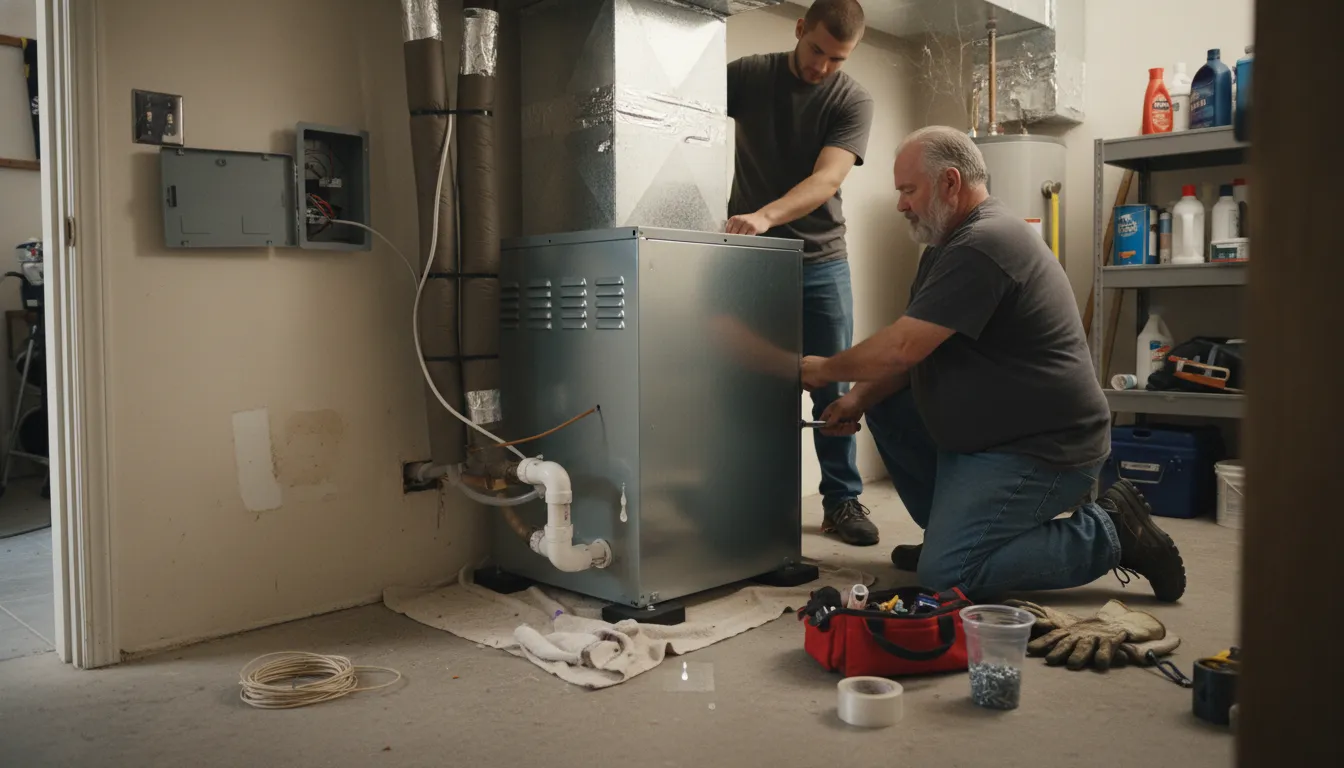
The installation process itself is equally critical. Best practices include ensuring proper refrigerant charge, verifying airflow across coils, sealing all duct connections, and setting up the thermostat correctly. A meticulous installation maximizes efficiency, extends equipment life, and reduces the likelihood of future repairs.
How to Choose a Qualified Arkansas HVAC Contractor
Selecting the right professional is the most important step in the process. Here is a practical approach to finding a reliable installer:
- Seek Recommendations and Reviews: Ask neighbors, friends, or local community groups for referrals. Check online reviews on multiple platforms to gauge consistency in customer satisfaction.
- Verify Licenses and Insurance: Ensure the company holds the necessary Arkansas state and local licenses for HVAC work. Confirm they carry both liability insurance and workers' compensation coverage.
- Request Detailed, Written Quotes: Obtain at least three comprehensive, written estimates. Each quote should include:
- Model numbers and full specifications of proposed equipment.
- Breakdown of all costs: equipment, labor, materials, permits.
- Detailed scope of work (e.g., "replace condenser and air handler, seal existing ductwork, install new thermostat").
- Project timeline and warranty information for both parts and labor.
- Ask the Right Questions: During consultations, ask about their experience with your chosen system type, who will perform the installation, whether they handle permitting, and what post-installation support they provide.
Taking these steps helps you compare options fairly and choose a contractor who will provide a quality installation tailored to your Arkansas home.
Maintaining Your New HVAC System
Once your new system is installed, protect your investment with regular maintenance. A well-maintained system operates more efficiently, has a longer lifespan, and is less likely to fail during peak season. Key maintenance tasks include changing air filters monthly or quarterly, keeping the outdoor unit clear of debris, and scheduling annual professional tune-ups. Many contractors offer maintenance plans that include seasonal inspections for both heating and cooling components.
Frequently asked questions
Sources
Footnotes
-
What Does HVAC Stand For and How Do HVAC Systems Work? - https://www.trane.com/residential/en/resources/glossary/what-is-hvac/ ↩
-
The Ultimate Guide To HVAC Systems: Which One Is Right For You? - https://socalclimatecontrol.com/ultimate-guide-hvac-systems-right-for-you/ ↩
-
Chapter 4 Residential Energy Efficiency: Arkansas Energy Code ... - https://up.codes/viewer/arkansas/iecc-2009/chapter/4/residential-energy-efficiency ↩
-
HVAC System Selection Life Cycle Cost Analysis - https://dpsaft.ade.arkansas.gov/Files/Ark_FM_7300_HVAC_-_123019_201019160317.pdf ↩
-
[Video] 2025 Home Energy Efficiency Standards: What You Should Know | Applewood - https://www.applewoodfixit.com/blog/home-energy-efficiency/ ↩
-
Choosing the Right HVAC System for Your Home in Arkansas - https://scottsystemshvac.com/blog/choosing-right-hvac-system-arkansas ↩
-
HVAC Installation in Little Rock, AR - Costs 01 / 2026 - Homeyou - https://www.homeyou.com/ar/hvac-installation-little-rock-costs ↩
-
and Variable-Speed HVAC Systems Explained - Trane - https://www.trane.com/residential/en/resources/blog/whats-the-difference-variable-speed-vs-two-stage-vs-single-stage-hvac-systems-explained/ ↩
-
The Most Efficient HVAC Systems: A Complete Guide (2025) | Neeeco - https://neeeco.com/blog/the-most-efficient-hvac-systems-a-complete-guide/ ↩
-
Energy Efficient HVAC Systems: A Comprehensive List - https://indoorairsystemsmass.com/energy-efficient-hvac-systems/ ↩
-
Factors to Consider When Installing a New HVAC | Fahnestock - https://fahnestockhvac.com/2023/03/13/10-factors-to-consider-when-installing-a-new-hvac-system-in-your-home/ ↩
-
What does standard AC installation include? - ANSA Painting - https://budmatthews.com/blog/what-does-standard-ac-installation-include ↩