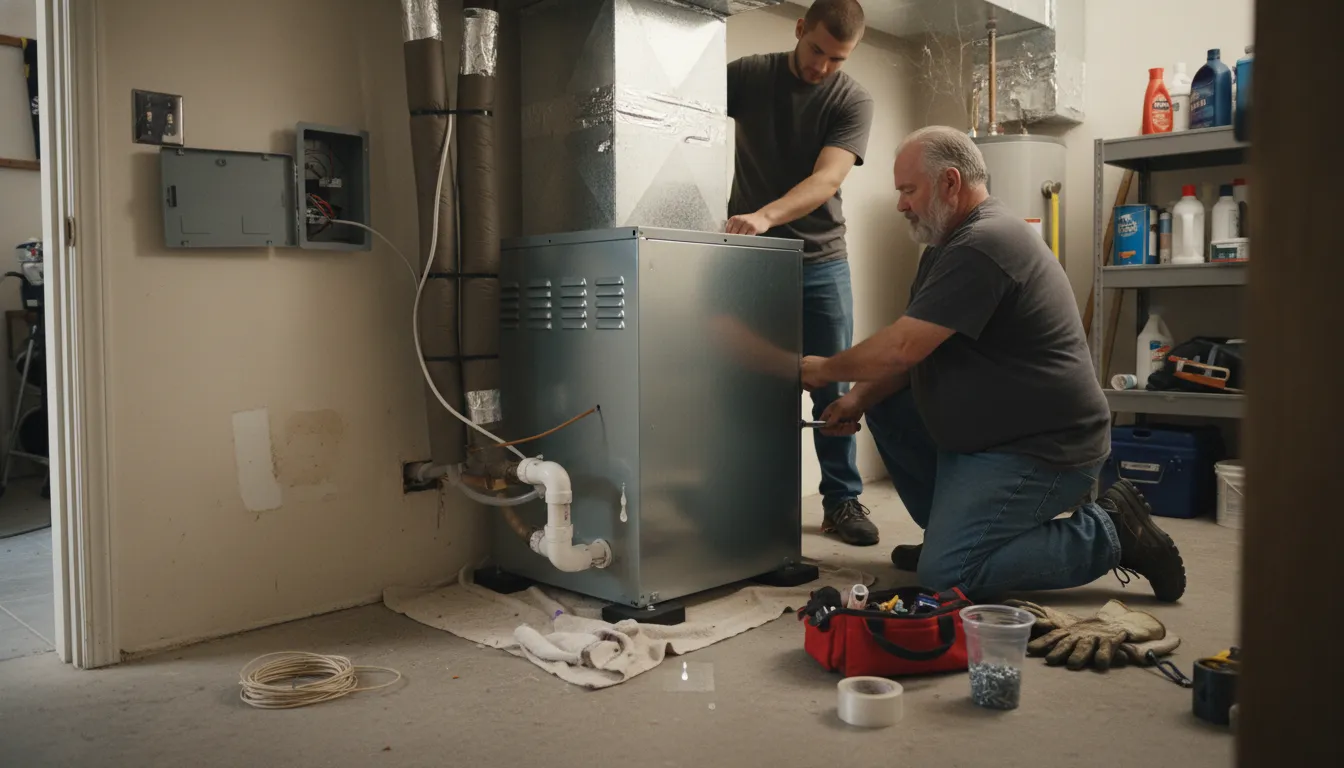
Find the Best HVAC Installers for Your Business
No obligation • Fast responses • Nationwide coverage

Why you can trust HVAC Firms
HVAC Firms is a leading United States resource for evaluating HVAC service providers. Our team researches companies, checks credentials, and reviews customer feedback to present clear, unbiased information. Listings and rankings are based on merit, and companies cannot pay to change our editorial content.
Search providers near you
Best HVAC Installers in Indiana Ranked
Installing a new heating and cooling system is a significant investment in your Indiana home's comfort, efficiency, and value. With the state's varied climate-from humid summers to cold winters-choosing the right system and a qualified professional is essential. This guide provides a detailed overview of HVAC installation in Indiana, covering system types, current efficiency standards, costs, and key considerations to help you make an informed decision for your home.

Home Heroes Plumbing Heating & Air
7768 Kane Ct, Fishers, IN 46038
Home Heroes Plumbing Heating & Air is a locally owned company serving Indianapolis, IN, and nearby areas. They provide a range of services including air conditioning and furnace repair and installation, plumbing, and heating system maintenance. The company has over a decade of experience and offers emergency services during business hours. They are known for their sump pump maintenance and installation, as well as water heater services including tankless models.
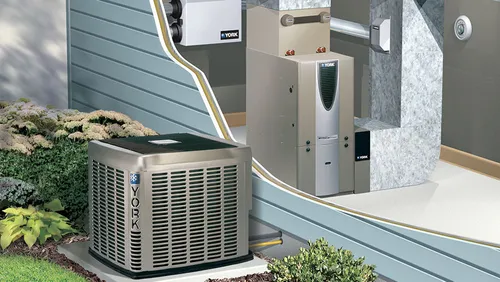
Northeast Mechanical Services, Inc.
3620 Metro Park Dr N, Fort Wayne, IN 46818
Northeast Mechanical Services, Inc. is an HVAC and plumbing contractor based in Fort Wayne, IN. They provide a wide range of services including installation and repair of air conditioning, furnaces, heat pumps, boilers, mini splits, geothermal heat pumps, and indoor air quality systems. The company also offers generator installation and maintenance, ensuring reliable power solutions for homes and businesses. Northeast Mechanical Services emphasizes honest recommendations and fair pricing, serving Fort Wayne and nearby communities such as New Haven, Auburn, and Huntington. Their expertise includes energy consultations and eco-friendly geothermal HVAC systems.
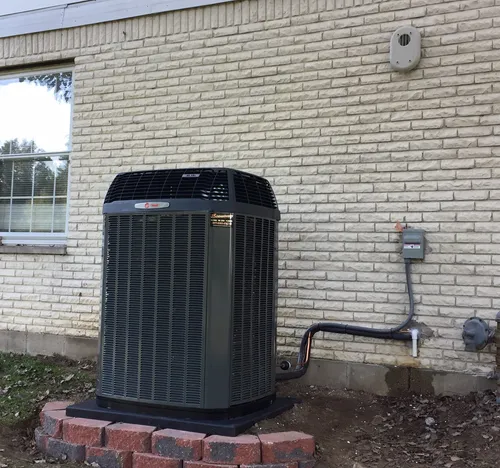
Economy HVAC
9116 Karen Dr, Mooresville, IN 46158
Economy HVAC is a family-owned company based in Indianapolis, IN, offering heating, air conditioning, and plumbing services. They provide installation, repair, and maintenance for furnaces, air conditioners, heat pumps, and HVAC systems. Economy HVAC is a certified Trane dealer and offers 24/7 emergency service to address urgent heating and cooling needs. Their technicians are highly trained and NATE certified, ensuring professional diagnostics and repairs. The company emphasizes quality workmanship and customer care in every project.
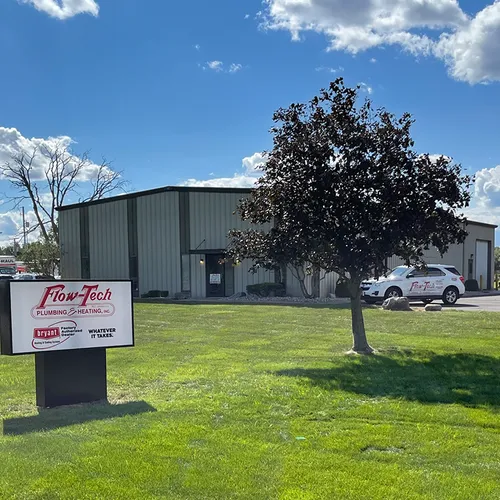
Flow-Tech Plumbing & Heating, Inc.
8131 N Clinton St, Fort Wayne, IN 46825
Flow-Tech Plumbing & Heating, Inc. has been serving Fort Wayne, IN, and surrounding areas since 1991. They provide a wide range of plumbing and HVAC services including installation, repair, and maintenance of air conditioners, furnaces, boilers, and indoor air quality systems. Their team handles both residential and commercial projects, offering specialized services such as backflow prevention, gas line work, and water purification system installation. Flow-Tech also provides 24/7 emergency service to address urgent plumbing and HVAC needs at any time.

Price Point Comfort,llc
6329 S Mooresville Rd # A, Indianapolis, IN 46221
Price Point Comfort, llc is a locally family-owned HVAC company serving Indianapolis, IN, and surrounding areas. With over 30 years of experience, they provide heating and cooling services including installation, repair, and tune-ups for residential and commercial clients. Their expertise covers air conditioning, furnace, and full HVAC system services. The company offers personalized consultations to help clients select the right HVAC solutions and uses high-quality parts and equipment. Price Point Comfort emphasizes individualized service and includes warranties with their work.
Understanding Your HVAC System Options in Indiana
Selecting the right type of system is the first step toward year-round comfort. The primary choices for Indiana homes include central air conditioners, heat pumps, furnaces, and ductless mini-splits. Each has distinct advantages suited to different home layouts and homeowner priorities.
- Central Air Conditioners: This is the most common system for cooling in Indiana, typically installed alongside a separate furnace for heating. They use a network of ducts to distribute cool air throughout the home. When paired with a high-efficiency furnace, this split-system approach is a reliable and effective solution for many households.
- Heat Pumps: These versatile systems provide both heating and cooling from a single unit, making them an increasingly popular choice. They work by transferring heat rather than generating it, which makes them highly efficient, especially in Indiana's moderate shoulder seasons. Modern cold-climate heat pumps are effective even in winter.
- Furnaces: As a primary heating source, gas-fired furnaces are essential for Indiana winters. They heat air and distribute it via the home's ductwork. Efficiency is measured by AFUE (Annual Fuel Utilization Efficiency), and newer models offer significant improvements over older units.
- Ductless Mini-Splits: Ideal for homes without existing ductwork, room additions, or for creating zoned comfort control, these systems consist of an outdoor compressor and one or more indoor air handlers. While the upfront cost per zone can be higher, they offer excellent efficiency and flexible installation options 1.
Current Efficiency Standards and Regulations
As of 2023, new federal minimum efficiency standards are in effect, impacting all new HVAC installations in Indiana. Understanding these ratings ensures your new system is compliant and helps you gauge long-term energy savings.
- Air Conditioners (SEER2): The new minimum Seasonal Energy Efficiency Ratio (SEER2) for central air conditioners in Northern states, including Indiana, is 14 SEER2 (approximately equivalent to the previous 14.3 SEER rating).
- Heat Pumps (SEER2 & HSPF2): Heat pumps must meet a minimum of 14.3 SEER2 for cooling efficiency. For heating performance, they must achieve a minimum Heating Seasonal Performance Factor (HSPF2) of 7.5 2.
- Furnaces (AFUE): The minimum Annual Fuel Utilization Efficiency for furnaces installed in the northern U.S. is 81% 3. Many modern high-efficiency models reach 95% AFUE or higher, converting nearly all the fuel to heat for your home.
Choosing equipment that exceeds these minimums can lead to substantial savings on your monthly energy bills. A professional can help you calculate the payback period for a higher-efficiency unit based on your home's specific needs.
Cost of HVAC Installation in Indiana
The total cost for a new HVAC system in Indiana varies widely based on system type, size, efficiency, and the complexity of the installation. Being aware of average costs and influencing factors will help you budget appropriately.
Average Installation Costs: Recent data suggests a typical range for a full HVAC system installation in Indiana falls between $4,591 and $6,2984. However, total project costs can realistically span from around $2,000 for a straightforward replacement to over $10,000 for a complete, high-efficiency system with complex ductwork modifications 4. For a basic central air conditioner installation, homeowners might expect to pay between $5,000 and $7,0005. A full system replacement (both heating and cooling) often ranges from $5,000 to $12,000 or more.
Key Factors Influencing Price:
- System Type and Efficiency: A standard 14 SEER2 AC unit will cost less than an 18 SEER2 model. Similarly, a high-efficiency modulating furnace costs more than a standard 80% AFUE model. Heat pumps and ductless systems have their own pricing tiers based on capacity and features 6 7.
- Home Size and System Capacity: Correct sizing, measured in tons for cooling and BTUs for heating, is critical. An undersized system will struggle, while an oversized system will short-cycle, reducing efficiency and comfort. For example, a 2,000-square-foot home in Indiana typically requires a 2.5 to 3.5-ton air conditioning unit.
- Ductwork Assessment: The condition of your existing ducts is a major cost variable. Leaky, poorly insulated, or incorrectly sized ducts must be repaired, sealed, or replaced to ensure your new system performs efficiently. This can add significantly to the project cost but is a vital investment.
- Labor and Additional Components: The complexity of the installation, local permit fees, disposal of the old unit, and the installation of new thermostats, line sets, or electrical upgrades all contribute to the final price.
Find the perfect hvac installers for your needs
Get personalized recommendations and expert advice
Critical Pre-Installation Considerations
A successful installation requires more than just purchasing equipment. Proper preparation ensures optimal performance, efficiency, and longevity of your new system.
- Professional Load Calculation: Never rely on the size of your old system. A reputable contractor will perform a Manual J load calculation, which considers your home's square footage, insulation levels, window types, and local climate to determine the precise capacity needed.
- Comprehensive Duct Evaluation: Before installation begins, have your ductwork professionally inspected. Sealing leaks and ensuring proper insulation in attics or crawlspaces can improve system efficiency by 20% or more, making your new unit work as intended 8 9.
- Balancing Efficiency with Budget: While a higher SEER or AFUE rating saves money on utility bills, it comes with a higher upfront cost. Discuss your long-term home plans and energy costs with your installer to find the right efficiency level that offers a good return on investment for your situation.
- Choosing the Right Contractor: This is perhaps the most important step. Look for licensed, insured, and NATE-certified technicians. Seek multiple detailed estimates, check references, and verify that the contractor will handle all necessary permits and post-installation inspections.
The Installation Process: What to Expect
A full HVAC replacement is typically a one-to-three-day process performed by a skilled crew. Understanding the steps can help you prepare your home and know what to expect.
- Preparation & Removal: The crew will protect your floors, safely disconnect and remove the old indoor and outdoor equipment, and recover any remaining refrigerant according to EPA regulations.
- Ductwork and Electrical Prep: Any necessary repairs, sealing, or modifications to the duct system are completed. New electrical connections or a disconnect box may be installed for the outdoor unit.
- Equipment Installation: The new furnace or air handler is leveled and secured in place. The new outdoor condenser/compressor is placed on a stable, level pad. New refrigerant lines and drain lines are run and insulated.
- System Connection & Test: All electrical and refrigerant line connections are made. The system is charged with refrigerant, started, and put through a series of tests to check for proper airflow, refrigerant charge, combustion safety (for furnaces), and thermostat communication.
- Cleanup & Owner Review: The job site is cleaned thoroughly. A lead technician will review the system operation with you, explain your new thermostat, and provide all warranty documentation and manufacturer literature.
Maintaining Your New HVAC System
Protect your investment by scheduling regular maintenance. An annual tune-up for your cooling system in the spring and your heating system in the fall can prevent costly breakdowns, maintain peak efficiency, and ensure your warranties remain valid. Simple homeowner tasks like changing the air filter every 1-3 months are also crucial for system health and indoor air quality.
Frequently asked questions
Sources
Footnotes
-
How Much Does HVAC Installation Cost? - https://ashburnhvac.com/how-much-does-hvac-installation-cost/ ↩
-
New 2023 SEER AC Ratings: What do They Mean? - https://www.kortedoesitall.com/blog/new-seer-ratings/ ↩
-
2024 Seer Regulation Changes For Indiana Homeowners - https://northerncomfortsystems.com/blog/2024-seer-rating-changes/ ↩
-
HVAC Installation in Indianapolis, IN - Costs 12 / 2025 - Homeyou - https://www.homeyou.com/in/hvac-installation-indianapolis-costs ↩ ↩2
-
How Much Does It Cost to Install Central Air in a 2000 Square Foot ... - https://www.edgertonhvac.com/how-much-does-it-cost-to-install-central-air-in-a-2000-square-foot-house/ ↩
-
HVAC Cost Calculator - Jackson Air Indiana - https://www.jacksonairindiana.com/hvac-cost-calculator/ ↩
-
Factors to Consider When Installing a New HVAC | Fahnestock - https://fahnestockhvac.com/2023/03/13/10-factors-to-consider-when-installing-a-new-hvac-system-in-your-home/ ↩
-
Measure Specifications | Indiana Energy Saver Program - https://indianaenergysaver.com/wp-content/uploads/assets/iesp_measure_specifications.pdf ↩
-
Preparing for HVAC Installation: 2025 Guide for Louisville and ... - https://projecthvac.com/2025/08/02/preparing-for-hvac-installation-louisville-southern-indiana/ ↩