Find the Best HVAC Installers for Your Business
No obligation • Fast responses • Nationwide coverage

Why you can trust HVAC Firms
HVAC Firms is a leading United States resource for evaluating HVAC service providers. Our team researches companies, checks credentials, and reviews customer feedback to present clear, unbiased information. Listings and rankings are based on merit, and companies cannot pay to change our editorial content.
Search providers near you
Best HVAC Installers in New Jersey Ranked
Choosing the right heating and cooling system for your New Jersey home is a significant investment that impacts your comfort, energy bills, and property value. HVAC installation involves selecting and professionally setting up a complete system, whether it's a central air conditioner, a furnace, a heat pump, or a ductless solution. Understanding your options, the latest efficiency standards, and available financial incentives can help you make an informed decision that suits your home's needs and your budget. This guide provides a clear overview of what to consider when planning a new HVAC installation in the Garden State.
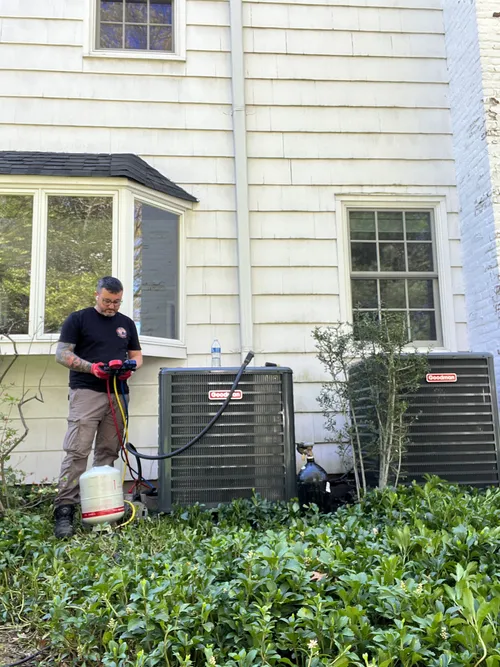
Air Cubes HVAC
2431 Dorchester Rd, Union, NJ 07083
Air Cubes HVAC is a family-owned HVAC contractor serving Newark, NJ, and surrounding areas in Essex, Hudson, Middlesex, and Union counties. They provide heating and air conditioning services including installation, repair, and maintenance for furnaces, air conditioners, heat pumps, and duct systems. The company is fully licensed and insured, with a master HVACR contractor leading the team. Air Cubes HVAC offers duct cleaning and HVAC tune-up services to help maintain system efficiency and comfort year-round.
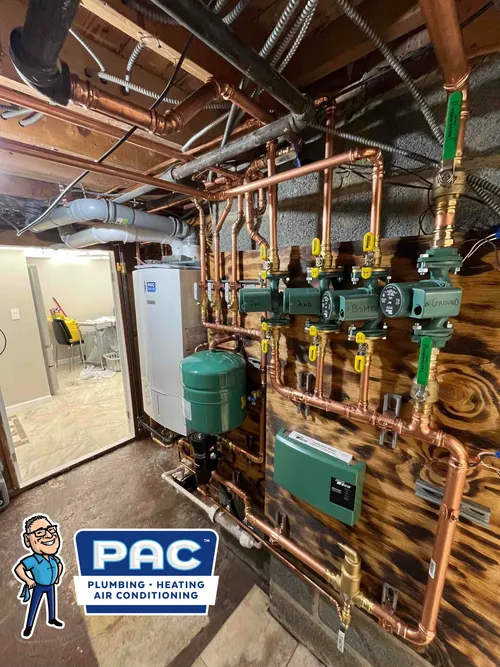
P.A.C. Plumbing, Heating, & A/C
545 Port Richmond Ave, Staten Island, NY 10302
P.A.C. Plumbing, Heating, & A/C is a full-service plumbing and HVAC company serving Newark, NJ, and surrounding areas. They provide a range of services including air conditioning and furnace repair and installation, as well as indoor air quality solutions. The company is known for offering accurate diagnoses and tailored service options to fit different budgets. Their team is experienced in handling various plumbing and HVAC issues, with a focus on long-term comfort through maintenance plans. P.A.C. Plumbing, Heating, & A/C has been recognized locally for its service quality and commitment to the community.
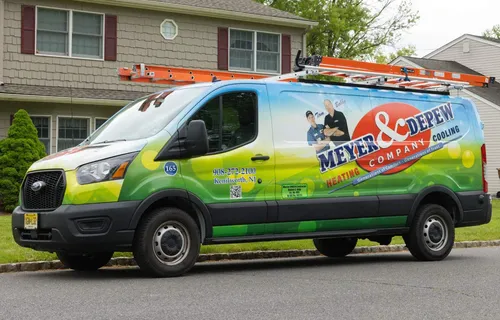
Meyer & Depew Co., Inc.
309 Lafayette Ave, Kenilworth, NJ 07033
Meyer & Depew Co., Inc. is an HVAC company serving Newark, NJ, specializing in air conditioning, furnace, and boiler installation, repair, and maintenance. They offer services including central AC installation, heating system tune-ups, and ductless mini split system installations. The company provides 24/7 availability for heating and air conditioning repairs and maintenance. Their technicians are licensed and experienced in handling high-efficiency heating and cooling systems, including Energy Star® boilers and furnaces. Meyer & Depew has a strong presence in central and northern New Jersey and is known for its preventative maintenance plans and technical expertise.
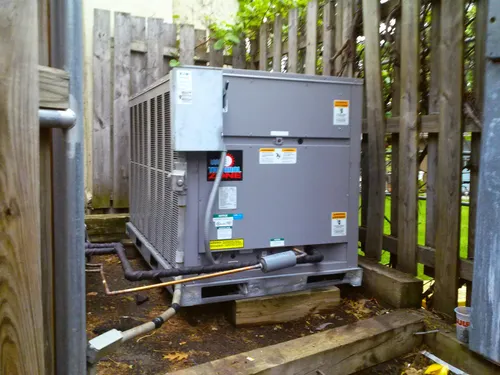
Airtek Mechanical Heating & Cooling LLC
400 Valley Brook Ave, Lyndhurst, NJ 07071
Airtek Mechanical Heating & Cooling LLC is an HVAC contractor based in Newark, NJ, providing residential and commercial heating, cooling, and refrigeration services. They offer repairs, installations, and maintenance for air conditioning, furnaces, boilers, and ductless mini-split systems. Their capabilities include 24-hour emergency HVAC repairs and servicing a variety of unit types such as rooftop package units and wall air conditioners. With over 10 years of experience, Airtek Mechanical serves Newark and surrounding areas with a focus on comprehensive HVAC solutions.

Woolley Home Solutions
12 Burnet Ave, Maplewood, NJ 07040
Woolley Home Solutions is a family-owned HVAC and plumbing company serving Newark, NJ, and surrounding counties. They provide heating and cooling services including installation and repair of oil and gas furnaces, boilers, dual fuel systems, and air conditioning units. Woolley Home Solutions also offers plumbing services such as repairs and fixture installations. With over 100 years of experience, the company emphasizes reliable home comfort solutions and incorporates Bioheat® fuel, a low-carbon energy source compatible with existing heating equipment.
Understanding Your HVAC System Options
New Jersey's diverse climate, with humid summers and cold winters, requires a reliable and efficient heating and cooling solution. The right system depends on your home's existing infrastructure, size, and your specific comfort goals. The primary residential options include central systems, ductless mini-splits, heat pumps, and geothermal systems.
Central Air Conditioning and Furnace Systems
This is the most common setup for homes with existing ductwork. It typically involves a split system with an outdoor air conditioning unit and an indoor furnace (powered by natural gas, oil, or propane). These systems can also be installed as a combined package unit. They provide whole-home heating and cooling from a single, integrated system. The efficiency and cost are heavily influenced by the equipment's SEER2 (cooling) and AFUE (heating) ratings.
Ductless Mini-Split Systems
Mini-splits are an excellent solution for homes without ducts, for room additions, or for enhancing zoning control. They consist of an outdoor compressor/condenser and one or more indoor air-handling units mounted on walls or ceilings. Each indoor unit can be controlled independently, allowing for customized comfort in different zones of the house. While highly efficient, the cost can increase with the number of indoor units required to cover an entire home.
Air-Source and Geothermal Heat Pumps
Heat pumps are versatile systems that provide both heating and cooling by moving heat rather than generating it. Air-source heat pumps extract heat from the outside air (even in cold weather) and are highly efficient, potentially reducing utility bills over time. Geothermal (or ground-source) heat pumps exchange heat with the ground through buried loops. They offer exceptional efficiency and consistency but require significant land access for installation, leading to a higher upfront cost 1.
New Jersey's Efficiency Standards and Building Codes
All new HVAC installations in New Jersey must comply with state-adopted building codes and federal appliance standards. These regulations are designed to improve energy efficiency and reduce environmental impact.
The 2023 SEER2 and HSPF2 Updates
As of January 1, 2023, new minimum efficiency standards took effect nationwide. New Jersey follows these updated requirements, which use new testing procedures (SEER2, EER2, HSPF2). For most split-system central air conditioners installed in the northern U.S., the minimum is now 14.3 SEER2 and 11.7 EER2. For split-system heat pumps, the minimum is 14.3 SEER2, 7.5 HSPF2, and 6.7 HSPF2 for certain regions 2 3. Installing equipment that exceeds these minimums can lead to greater energy savings.
Compliance with the 2021 IECC
New Jersey has adopted the 2021 International Energy Conservation Code (IECC) with state-specific amendments for residential buildings, effective in 2023 4. This code sets standards for the entire building envelope and mechanical systems. A professional installer will ensure your new system's capacity, ductwork design (if applicable), and installation practices meet these code requirements, which are in place to optimize overall home energy performance.
Breaking Down Installation Costs in NJ
The cost of a new HVAC system in New Jersey varies widely based on the system type, equipment efficiency, home size, and complexity of the installation. Prices typically represent a complete, professional installation, including equipment, labor, materials, and permitting.
- Furnace Replacement: $3,000 - $10,500+
- Central Air Conditioner Installation: $4,600 - $12,000+
- Complete System (Furnace + AC): $12,000 - $18,000+
- Ductless Mini-Split (single-zone): $3,500 - $8,000+
- Multi-Zone Ductless System or Heat Pump System: $8,000 - $20,000+
- Geothermal System: $20,000 - $40,000+ 5 6 7
Several key factors influence these price ranges:
- Equipment Efficiency: Higher SEER2, HSPF2, or AFUE ratings generally cost more upfront but save on operating costs.
- Home Size and Layout: Larger homes or those with complex layouts require more powerful equipment and potentially more labor for ductwork or refrigerant line routing.
- Existing Infrastructure: The condition of existing ductwork, electrical service, and gas lines can significantly impact cost. Modifying or replacing ductwork adds expense.
- Labor and Complexity: Installations in tight spaces, on rooftops, or requiring custom solutions will increase labor time and cost.
- Brand and Features: Premium brands and units with advanced features (e.g., variable-speed compressors, smart thermostats, advanced filtration) command higher prices.
Find the perfect hvac installers for your needs
Get personalized recommendations and expert advice
Financial Incentives and Rebates
Investing in a high-efficiency HVAC system can be more affordable thanks to incentives offered by the state and federal government. These programs are designed to encourage energy-efficient upgrades.
New Jersey's Clean Energy Program (NJCEP) offers rebates for qualifying high-efficiency heating and cooling equipment, including air-source heat pumps and central air conditioners that exceed standard efficiency levels. The program often works through participating contractors, who can apply the rebate directly to your project cost.
Federal Tax Credits are available through the Inflation Reduction Act for certain high-efficiency heat pumps and biomass stoves. These are claimed on your federal income tax return and can cover a significant percentage of the equipment and installation costs, subject to specific efficiency requirements 8.
It's crucial to discuss current incentives with your installation professional, as program details, funding levels, and eligibility requirements can change. They can help you identify which rebates or tax credits your planned system qualifies for and may assist with the application process.
The Importance of Professional Installation and Sizing
A perfectly engineered HVAC unit will underperform if it is incorrectly sized or poorly installed. Professional installation is not just a recommendation; it's essential for safety, efficiency, and system longevity.
Proper Sizing (Manual J Load Calculation): A reputable contractor will perform a Manual J calculation, which considers your home's square footage, insulation levels, window types, air leakage, and local climate. This determines the exact heating and cooling capacity (in BTUs) your home needs. An oversized system will short-cycle (turn on and off frequently), leading to uneven temperatures, higher humidity, and increased wear. An undersized system will run constantly, struggling to maintain comfort and driving up energy bills.
Quality Installation Practices: Proper installation includes correct refrigerant charging, secure electrical connections, safe combustion venting (for furnaces), and sealing of all ducts. According to industry standards, a significant portion of system efficiency is lost due to installation errors. A professional ensures the system operates at its rated efficiency, provides optimal comfort, and adheres to all local codes and manufacturer warranties.
Planning Your HVAC Installation Project
A successful installation starts with careful planning and choosing the right partner for the job.
- Get Multiple Estimates: Obtain detailed written estimates from at least three licensed, insured, and well-reviewed HVAC contractors in your area.
- Review the Proposal: A good proposal should include the specific make and model of equipment, the proposed system's capacity (BTUs), the efficiency ratings (SEER2, HSPF2, AFUE), a detailed scope of work (including any duct modifications), the total price, warranty information, and a projected timeline.
- Check Credentials: Verify the contractor holds a valid New Jersey Home Improvement Contractor (HIC) license and appropriate HVAC licenses. Ask for proof of insurance (liability and workers' compensation).
- Ask About Post-Installation Support: Understand the labor warranty offered by the installer and the manufacturer's equipment warranty. Inquire about their service department and maintenance plans to protect your investment long-term.
Taking these steps will give you confidence in your decision and help ensure your new HVAC system delivers reliable, efficient comfort for years to come.
Frequently asked questions
Sources
Footnotes
-
Ultimate Guide to Efficient HVAC Systems in New Jersey - https://www.arcticac.com/blog/ultimate-guide-efficient-hvac-systems-new-jersey/ ↩
-
What the New 2023 SEER Energy Efficiency Regulations ... - https://service-professionals.com/2023-hvac-seer-requirements/ ↩
-
What Do the New SEER2 Requirements Mean? I Conway Comfort - https://conwaycomfortnj.com/blog/air-conditioning/new-seer2-requirements-explained/ ↩
-
8 FAQs about New Jersey's Custom & Prescriptive Energy Programs - https://cm3inc.com/8-faqs-about-new-jerseys-custom-prescriptive-energy-programs/ ↩
-
How Much Does A New HVAC System Cost In NJ? - https://newmanshvac.net/how-much-does-a-new-hvac-system-cost-in-nj/ ↩
-
New Jersey HVAC Replacement & Installation Costs - https://thefurnaceoutlet.com/blogs/news/new-jersey-hvac-replacement-installation-costs-what-you-need-to-know ↩
-
Understanding HVAC Installation Costs in New Jersey - https://dimaticcontrol.com/blog/hvac-installation-cost-breakdown-nj ↩
-
NJ and Eight Other States Incentivize Heat Pumps Through Rebates, Financing and Tax Credits. - https://www.ephomiek.com/nj-and-eight-other-states-incentivize-heat-pumps-through-rebates-financing-and-tax-credits/ ↩