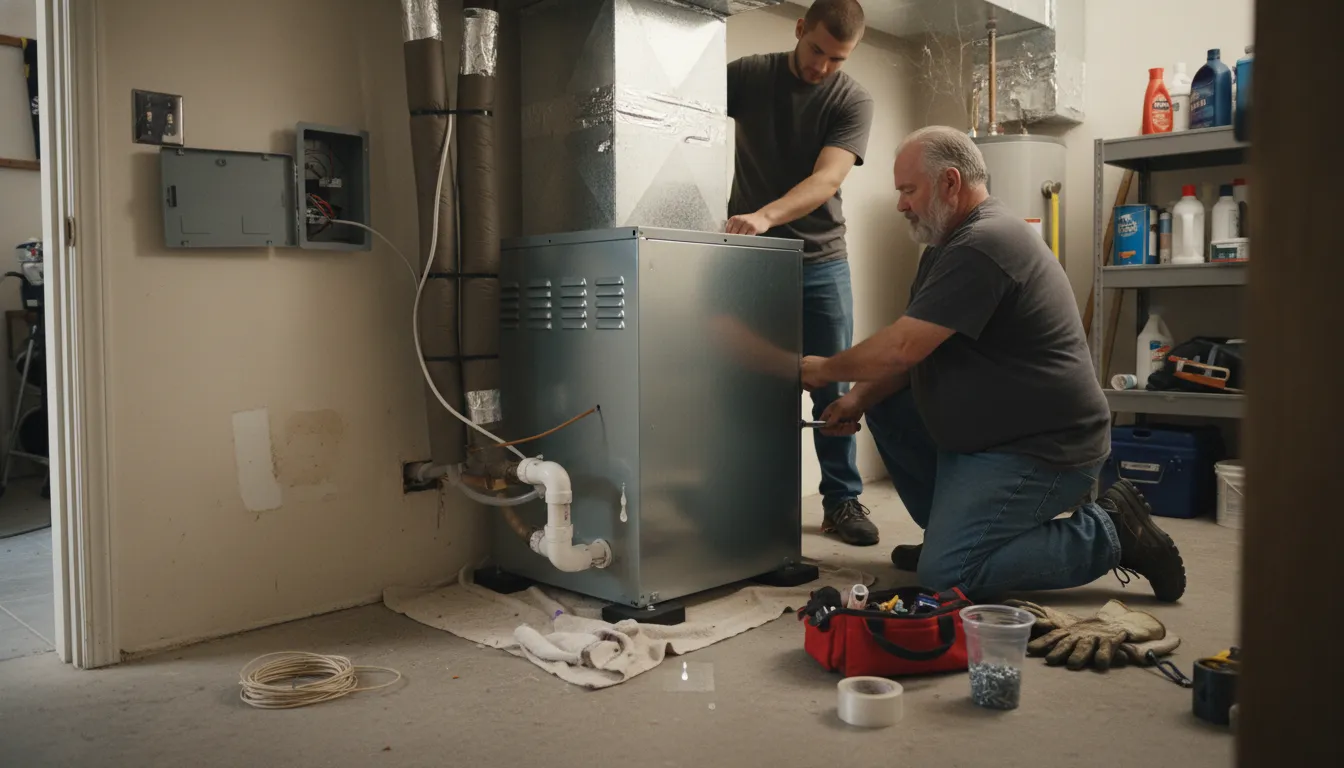
Find the Best HVAC Installers for Your Business
No obligation • Fast responses • Nationwide coverage

Why you can trust HVAC Firms
HVAC Firms is a leading United States resource for evaluating HVAC service providers. Our team researches companies, checks credentials, and reviews customer feedback to present clear, unbiased information. Listings and rankings are based on merit, and companies cannot pay to change our editorial content.
Search providers near you
Best HVAC Installers in Idaho Ranked
Choosing the right heating and cooling system is a significant decision for any Idaho homeowner. The right HVAC installation ensures year-round comfort, manages energy costs, and adds value to your property. This guide provides clear, practical information on the types of systems available, efficiency standards, and cost considerations specific to Idaho's climate. Use this information to make an informed choice and connect with qualified local professionals for your project.
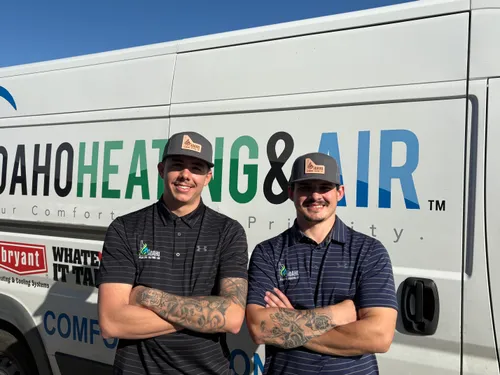
Bill's Heating & A/C
3920 E Lanark St STE 100, Meridian, ID 83642
Bill's Heating & A/C is a full-service HVAC contractor based in Boise, ID, serving the Treasure Valley including Meridian, Eagle, and Garden City. With over 35 years of experience, they provide heating repair, air conditioning service, furnace installation, and heat pump installation for both residential and commercial customers. Their technicians are skilled in handling complex HVAC issues and offer 24/7 emergency services to ensure timely assistance.
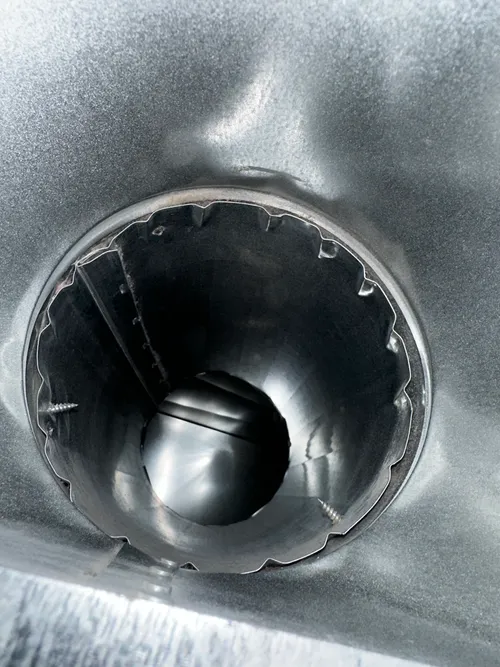
Apex Clean Air
6060 Corporal Ln, Boise, ID 83704
Apex Clean Air is a heating and air conditioning company serving Boise, ID, and surrounding areas in Utah, Colorado, and Idaho. They provide a range of services including furnace and heat pump installation, repair, and maintenance, as well as thermostat installation and HVAC tune-ups. Apex Clean Air emphasizes safety with thorough inspections to prevent issues like cracked heat exchangers that can cause carbon monoxide leaks. The company supports customers with financing options and offers a membership club for scheduled maintenance and priority service.

Peppy Heating and Cooling Boise
590 N Maple Grove Rd Ste #7, Boise, ID 83704
Peppy Heating and Cooling Boise is an HVAC company based in Boise, ID, offering a wide range of services including air conditioning, furnace, and heat pump repair and installation, as well as mini split systems, duct cleaning, thermostat installation, and indoor air quality solutions. They serve residential customers in the Boise area with expertise in installing and maintaining Trane systems and other reliable equipment. The company is known for thorough diagnostics and repairs, such as identifying and fixing ductwork issues and refrigerant leaks. Peppy Heating and Cooling Boise has built a reputation for honest, detailed service and clear communication with customers. They also provide maintenance plans and have experience with advanced air quality products like UV air scrubbers. While no specific business history or special availability is stated, customer feedback highlights their professionalism and technical knowledge.
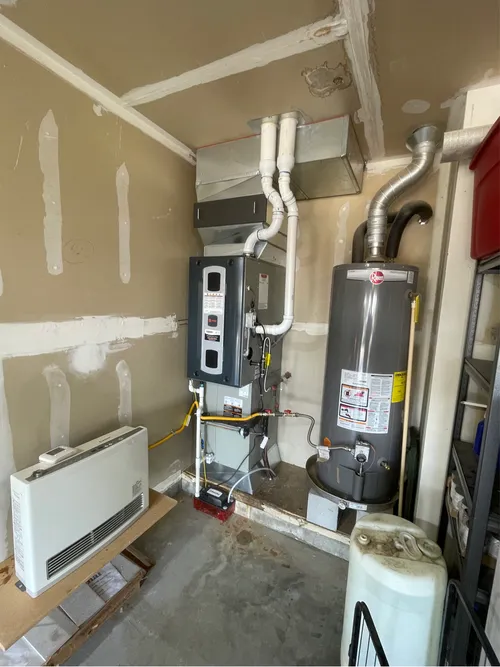
Top Shelf Heating and Cooling
2251 W Chinden Blvd, Meridian, ID 83646
Top Shelf Heating and Cooling is an HVAC contractor based in Boise, ID, specializing in the installation of air conditioning units, furnaces, heat pumps, and indoor air quality systems. They provide tailored HVAC solutions to fit various home types and sizes, helping customers select the most suitable system for their needs. Their services include installing hybrid heat systems and air quality products such as electronic air cleaners, UV lights, and humidifiers.
Wickstrom Plumbing Heating & Cooling
125 W Taylor Ave #100, Meridian, ID 83642
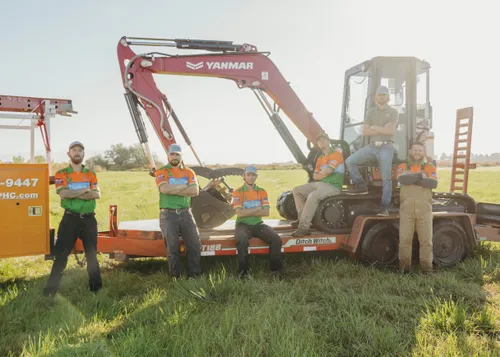
Wickstrom Plumbing Heating & Cooling is a family-owned HVAC and plumbing company serving Boise, ID, and nearby areas since 1992. They provide a range of services including air conditioning and furnace repair, installation, and HVAC tune-ups. The company is known for its team of certified technicians who handle plumbing emergencies, routine HVAC maintenance, and system replacements. Wickstrom emphasizes honest pricing and customer satisfaction, reflecting its Idahoan roots and commitment to the local community.
Understanding Your HVAC System Options in Idaho
Idaho's climate, with its hot summers and cold winters, demands a reliable and efficient home comfort system. The primary residential options include traditional central systems, modern heat pumps, and ductless solutions. Each has distinct advantages depending on your home's layout, existing infrastructure, and comfort goals.
- Central Air Conditioning & Gas Furnace: This is a common split-system setup where a central air conditioner handles summer cooling and a separate gas furnace provides winter heat. It's a proven solution for whole-home comfort in homes with existing ductwork. The furnace is particularly effective for generating high heat output during Idaho's coldest snaps.
- Heat Pumps: An increasingly popular choice for Idaho, a heat pump is a single unit that provides both heating and cooling by transferring heat. In summer, it moves heat from inside your home to the outside. In winter, it reverses the process, extracting heat from the outdoor air (even in cold weather) and moving it indoors. Modern cold-climate heat pumps are engineered to operate efficiently in Idaho's winter temperatures, making them a versatile and energy-efficient option for year-round climate control 1.
- Ductless Mini-Split Systems: These systems consist of an outdoor compressor unit connected to one or more indoor air handlers mounted on walls or ceilings. They are an excellent solution for homes without existing ductwork, for room additions, or for providing zoned comfort control in specific areas of a home. Installation is often less invasive than central systems and can be more cost-effective for targeted heating and cooling needs 2.
Efficiency Ratings: What SEER2, HSPF2, and AFUE Mean for You
Federal regulations set minimum efficiency standards for HVAC equipment, but opting for higher-rated models can lead to substantial energy savings, especially given Idaho's temperature extremes. Understanding these ratings is key to selecting the right system.
- Air Conditioner & Heat Pump (Cooling) Efficiency - SEER2: The Seasonal Energy Efficiency Ratio 2 (SEER2) measures cooling efficiency. A higher number means greater efficiency and lower operating costs.
- Federal Minimum (2023): 13.4 SEER2 for air conditioners; 14.3 SEER2 for heat pumps (cooling mode).
- Recommended for Idaho: For significant long-term savings, consider systems rated 16 SEER2 or higher. The investment in a higher-efficiency unit often pays for itself through reduced energy bills over the system's lifespan.
- Heat Pump (Heating) Efficiency - HSPF2: The Heating Seasonal Performance Factor 2 (HSPF2) measures a heat pump's heating efficiency.
- Federal Minimum: 7.5 HSPF2 3.
- Cold-Climate Performance: When evaluating heat pumps for Idaho, look for models specifically rated for cold climates, as they maintain better heating capacity and efficiency at lower outdoor temperatures.
- Furnace Efficiency - AFUE: The Annual Fuel Utilization Efficiency (AFUE) measures how efficiently a gas furnace converts fuel into heat.
- Federal Minimum: 81% AFUE. High-efficiency condensing furnaces can achieve 90% to 98.5% AFUE, meaning very little fuel is wasted 4.
Find the perfect hvac installers for your needs
Get personalized recommendations and expert advice
Cost Considerations for HVAC Installation
The total cost of a new HVAC system in Idaho varies widely based on the system type, efficiency rating, home size, and complexity of the installation. Obtaining multiple detailed quotes from licensed contractors is the best way to understand your specific project cost.
- General Cost Range: Installation projects can range from $2,000 to over $18,000, with most full-system replacements falling between $4,900 and $10,800+.
- Central Air Conditioner & Gas Furnace System: Replacing both a central AC and a gas furnace typically costs between $9,000 and $14,000, depending on capacities and efficiencies.
- Heat Pump System: Installing a whole-home heat pump system generally ranges from $8,000 to $13,000. High-efficiency or cold-climate models may be at the upper end of this range or higher.
- High-Efficiency Systems: Systems with very high SEER2 or HSPF2 ratings (e.g., 18+ SEER2) often involve advanced technology and can cost $12,000 to $18,000 or more.
- Ductless Mini-Split System: The cost for a ductless system depends on the number of indoor units (zones). A single-zone system may start around $4,000, while multi-zone installations can reach $10,000 or more 5.
Key Factors for Idaho Homeowners
Beyond the basic equipment choice, several factors are crucial for a successful installation in Idaho's unique environment.
- Sizing is Critical: An improperly sized system-too large or too small-will lead to comfort issues, frequent cycling, reduced efficiency, and higher costs. A professional contractor should perform a Manual J load calculation to determine the precise heating and cooling needs of your home.
- Prioritize Quality Installation: Even the most efficient equipment will underperform if installed incorrectly. Proper sealing of ducts, correct refrigerant charge, and optimal placement of components are essential for efficiency, longevity, and safety. Always verify a contractor's licenses, insurance, and references.
- Explore Rebates and Incentives: Investing in high-efficiency equipment may qualify you for financial incentives. Check for current federal tax credits and any state-specific or utility rebates available in Idaho for qualifying HVAC upgrades 6. Your contractor should be able to inform you of available programs.
- Plan for the Long Term: Consider the total cost of ownership, not just the upfront price. A more expensive, high-efficiency system will have lower monthly operating costs. Ask contractors for estimates on annual energy use to compare options over a 10-15 year period.
Frequently asked questions
Sources
Footnotes
-
What is the most efficient residential HVAC system? - AC Direct - https://www.acdirect.com/blog/what-is-the-most-efficient-residential-hvac-system/ ↩
-
How Much Does an Air Conditioner Cost for a 1,500-Square-Foot Home? - https://www.thisoldhouse.com/heating-cooling/air-conditioner-cost-for-1500-square-foot-home ↩
-
2023 HVAC SEER Ratings In Idaho | What You Need To Know - https://mydadcandothat.com/blog/seer-rating-changes-in-idaho/ ↩
-
Your Guide to Energy-Efficient HVAC Systems in Eagle, Idaho - https://www.7thelementhvac.com/your-guide-to-energy-efficient-hvac-systems-in-eagle-idaho/ ↩
-
HVAC Installation in Boise, ID - Costs 12 / 2025 - Homeyou - https://www.homeyou.com/id/hvac-installation-boise-costs ↩
-
Idaho Solar Incentives, Tax Credits & Rebates 2025 | EnergySage - https://www.energysage.com/local-data/solar-rebates-incentives/id/ ↩