Find the Best HVAC Installers for Your Business
No obligation • Fast responses • Nationwide coverage

Why you can trust HVAC Firms
HVAC Firms is a leading United States resource for evaluating HVAC service providers. Our team researches companies, checks credentials, and reviews customer feedback to present clear, unbiased information. Listings and rankings are based on merit, and companies cannot pay to change our editorial content.
Search providers near you
Best HVAC Installers in South Carolina Ranked
Choosing the right heating and cooling system is a critical decision for any South Carolina homeowner. The state's hot, humid summers and mild but occasionally chilly winters demand a reliable, efficient HVAC system to maintain comfort year-round. This guide provides a detailed overview of HVAC installation options, costs, and efficiency considerations specific to South Carolina's climate, helping you understand the process and make an informed choice for your home.
Understanding South Carolina's Climate and HVAC Needs
South Carolina's climate is classified as humid subtropical, characterized by long, hot summers and short, relatively mild winters. This environment places a significant load on air conditioning systems for much of the year, while heating remains a necessary consideration. The high humidity levels also make proper dehumidification a key function of any effective cooling system. An HVAC system that is correctly sized and selected for this specific climate will not only provide superior comfort but also operate more efficiently, leading to lower energy bills and reduced wear and tear.
Common HVAC System Types for South Carolina Homes
Several types of HVAC systems are well-suited for residential use in the Palmetto State. The best choice depends on your home's existing infrastructure, layout, and your specific comfort goals.
Ducted Split Systems
This is the most common residential HVAC configuration in South Carolina. It consists of an outdoor unit (a condenser for air conditioning or a heat pump) paired with an indoor air handler and a network of ducts that distribute conditioned air throughout the home. These systems are versatile, can provide both heating and cooling, and are compatible with a wide range of efficiency ratings and technologies like variable-speed motors.
Heat Pump Systems
Heat pumps are highly recommended for South Carolina due to the state's climate. They function as both an air conditioner and a heater by moving heat rather than generating it. In summer, they extract heat from inside your home and release it outdoors. In winter, the process reverses, pulling heat from the outside air (even when it's cold) and moving it indoors. This method of heating is significantly more efficient than traditional electric resistance heating, such as electric furnaces, offering substantial energy savings.
Ductless Mini-Split Systems
For homes without existing ductwork, room additions, or for creating independent temperature zones, ductless mini-splits are an excellent option. These systems feature one or more indoor air-handling units mounted on walls or ceilings, connected by a small conduit to an outdoor compressor. They offer high efficiency and allow for precise control over different areas of the home, eliminating energy waste in unused rooms 1.
Systems with Advanced Technology
Modern systems often include features that enhance comfort and efficiency:
- Variable-Speed Compressors and Blowers: Unlike traditional single-speed systems that simply turn on and off, variable-speed technology allows the system to adjust its output incrementally. This results in more consistent temperatures, better humidity control, quieter operation, and improved energy efficiency 2.
- Smart Thermostats: These devices learn your schedule, can be controlled remotely via smartphone, and provide detailed energy usage reports, helping you optimize your system's performance.
Efficiency Standards and Recommendations
Understanding efficiency ratings is crucial for selecting a system that will keep your energy costs in check.
SEER2: The New Federal Standard
As of 2023, the U.S. Department of Energy implemented new minimum efficiency standards using an updated metric called SEER2 (Seasonal Energy Efficiency Ratio 2). This standard replaces the older SEER rating and uses more realistic testing conditions. A higher SEER2 number indicates greater cooling efficiency 3.
What Efficiency Level is Right for South Carolina?
While federal law sets a minimum SEER2, South Carolina's hot climate makes investing in a higher-efficiency system a wise financial decision. A SEER2 rating of 14 or higher is generally recommended for effective and efficient cooling in this region. For heat pumps, look for both a high SEER2 rating for cooling and a high HSPF2 (Heating Seasonal Performance Factor 2) rating for heating efficiency.
ENERGY STAR® Certification
Always look for the ENERGY STAR label. This certification, backed by the U.S. Environmental Protection Agency, indicates that the product meets strict energy efficiency guidelines set by the federal government. Choosing an ENERGY STAR certified HVAC system ensures you are getting a unit that will save energy and money 4.
Find the perfect hvac installers for your needs
Get personalized recommendations and expert advice
Cost Considerations for HVAC Installation
The cost of a new HVAC system in South Carolina varies widely based on several factors. Having a realistic budget expectation is an important part of the planning process.
Typical Cost Ranges
For a standard system replacement in an existing home with functional ductwork, homeowners can expect a range of approximately $8,000 to $11,000 5 6. This typically covers a mid-efficiency, properly sized split system. If the project requires new or modified ductwork, the price can increase significantly, ranging from $7,000 to $16,000 or more, depending on the home's size and layout 7 6.
Factors Influencing Final Cost
- System Size (Tonnage): An improperly sized unit is inefficient and costly. A professional will perform a Manual J load calculation to determine the exact size needed for your home's square footage, insulation, windows, and local climate 8.
- Efficiency Rating: Higher SEER2 systems have a higher upfront cost but offer lower monthly operating expenses.
- Equipment Brand and Features: Premium brands and models with advanced technology (like variable-speed compressors) command higher prices.
- Installation Complexity: The difficulty of the install, such as roof or attic work, accessibility, and integrating with existing components, affects labor costs.
- Additional Components: Items like air purifiers, humidifiers/dehumidifiers, or advanced thermostats will add to the total project cost.
Maximizing Efficiency and Savings
The right system is only part of the equation. Proper supporting measures are essential for peak performance.
- Professional Sizing is Non-Negotiable: Never guess on system size. An oversized system will short-cycle (turn on and off frequently), failing to dehumidify properly and wearing out quickly. An undersized system will run constantly, struggling to maintain temperature on extreme days. A professional load calculation is the foundation of an efficient installation.
- Seal and Insulate the Ductwork: Leaky ducts in a hot attic or crawlspace can waste 20-30% of the energy used to condition your air. Having ducts professionally sealed and insulated is one of the most cost-effective efficiency upgrades you can make 9.
- Improve Home Envelope Efficiency: Your HVAC system works in tandem with your home's "envelope." Ensuring your attic has adequate insulation, sealing air leaks around windows and doors, and using window treatments to block summer sun can dramatically reduce the workload on your new system, leading to greater savings.
- Prioritize High-Efficiency Heat Pumps: For homes using electric heat, switching from a standard air conditioner and electric furnace to a high-efficiency heat pump can lead to "huge savings" on annual energy bills, according to research from the National Renewable Energy Laboratory (NREL).
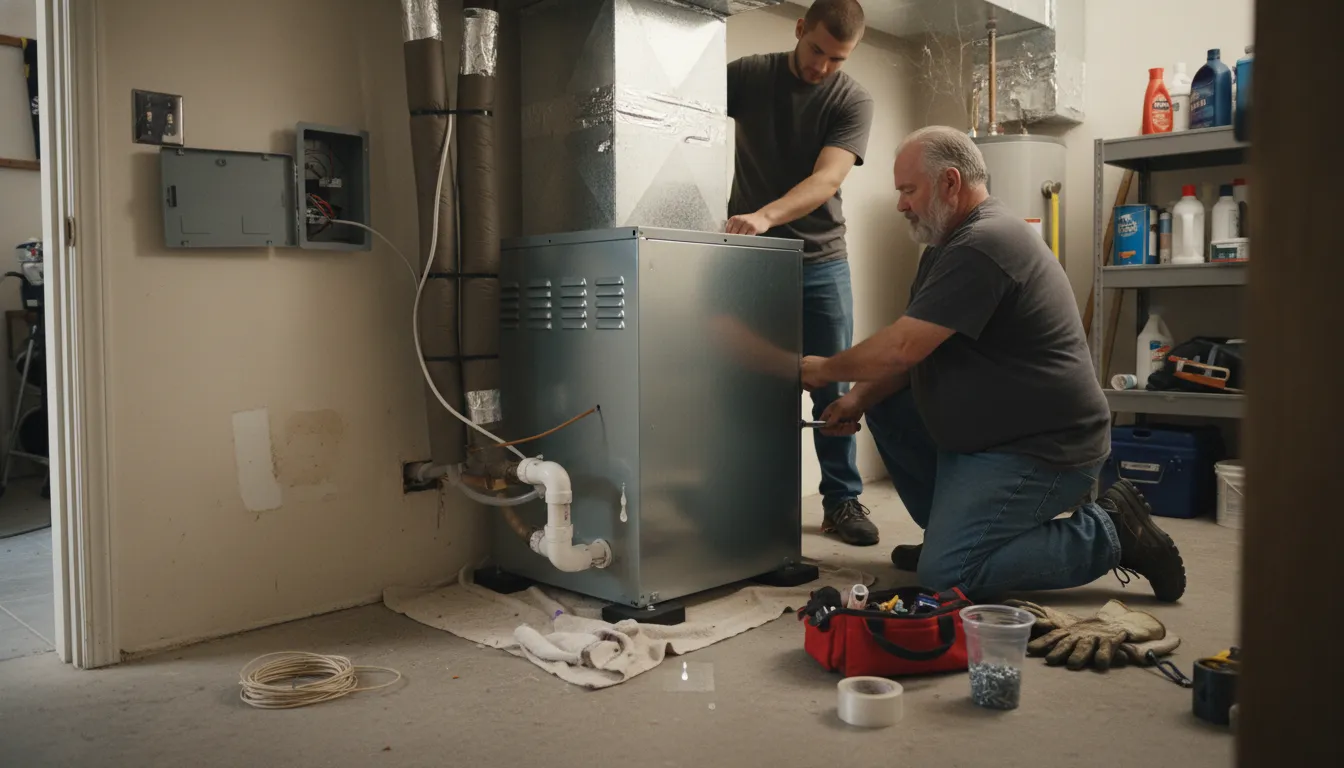
The Importance of Professional Installation
Even the highest-quality HVAC equipment will underperform if it is not installed correctly. Professional installation ensures:
- Correct Sizing and Selection: A certified technician will assess your entire home, not just the old unit.
- Proper Refrigerant Charge and Airflow: These technical details are critical for efficiency, capacity, and the longevity of the equipment.
- Code Compliance: Installation will meet all local building codes and manufacturer specifications to ensure safety and validate warranties.
- System Balancing and Testing: The professional will test the complete system to ensure it delivers the promised comfort and efficiency.
Frequently asked questions
Sources
Footnotes
-
Comparing 8 Common Types of HVAC Systems - BigRentz - https://www.bigrentz.com/blog/types-of-hvac-systems ↩
-
Types of HVAC Systems: A Guide to Heating & Cooling Options - Bryant - https://www.bryant.com/en/us/products/types-of-hvac-systems/ ↩
-
SEER Changes in 2023 - Charleston Heating & Air LLC - https://charlestonheatingandair.com/seer-changes-2023/ ↩
-
Picking the Most Efficient HVAC System for Your Home - https://heatingandairspartanburgsc.com/picking-the-most-efficient-hvac-system-for-your-home/ ↩
-
The Ultimate Guide to Choosing the Right HVAC System for ... - https://viperservices.com/the-ultimate-guide-to-choosing-the-right-hvac-system-for-your-home-in-south-carolina/ ↩
-
2023 HVAC System Cost in Columbia SC - AAA Heating & Air - https://callaaatoday.com/hvac-blog/2022-hvac-system-cost/ ↩ ↩2
-
HVAC System for Your Low Country Home - https://temperatureprolowcountry.com/blog/hvac-system-for-your-lowcountry-home ↩
-
5 Steps on How To Size an HVAC System for Your New Installation - https://easternshorehvac.com/blog/how-size-hvac-system/ ↩
-
South Carolina Residential Energy Efficiency Potential - https://resstock.nrel.gov/factsheets/SC ↩