
Find the Best Geothermal Heat Pump Contractors for Your Business
No obligation • Fast responses • Nationwide coverage

Why you can trust HVAC Firms
HVAC Firms is a leading United States resource for evaluating HVAC service providers. Our team researches companies, checks credentials, and reviews customer feedback to present clear, unbiased information. Listings and rankings are based on merit, and companies cannot pay to change our editorial content.
Search providers near you
Top Geothermal Heat Pump Contractors in Union City, California Ranked
Geothermal heat pumps, also known as ground-source heat pumps, are a highly efficient method for heating and cooling your home by leveraging the earth's stable underground temperature. This technology matters because it can dramatically reduce your energy bills and environmental footprint, offering a clean, long-term solution for Union City's climate. You can use this guide to understand how these systems work, what installation involves, and how to connect with qualified local specialists for your property.
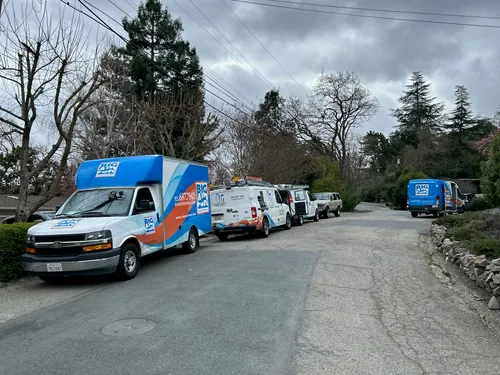
Big Air Heating & Air Conditioning
1000 Detroit Ave, Concord, CA 94518
Big Air Heating & Air Conditioning is an HVAC company serving Oakland, CA, with over 20 years of experience. They provide installation, repair, and tune-up services for air conditioning, furnaces, heat pumps, boilers, mini splits, and geothermal heat pumps. Their technicians are certified, drug screened, and background checked, ensuring professional and knowledgeable service. The company works with both commercial and residential clients, offering clear pricing by the job.
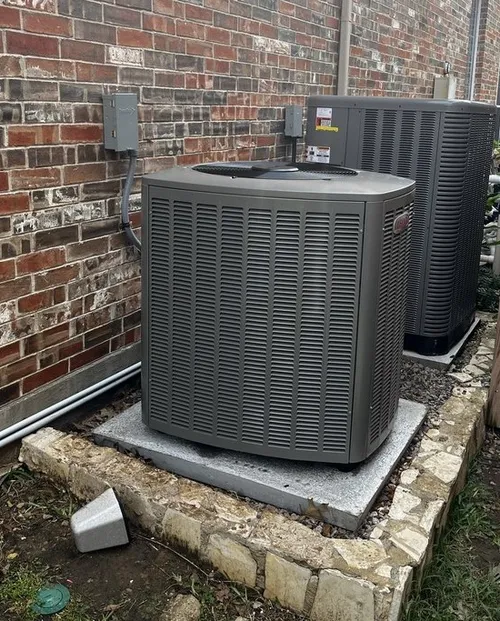
Metro Heating pro
37886 Filbert St, Newark, CA 94560
Metro Heating pro provides heating and air conditioning services in Fremont, CA. They offer repairs, installations, replacements, and maintenance for HVAC systems including furnaces, boilers, heat pumps, mini splits, and geothermal heat pumps. The company serves all brands and models, focusing on clear communication about the work process and timing. Metro Heating pro has built a reputation in the Newark area through years of consistent HVAC service.
Clean Air HVAC INC
428 N Buchanan Cir #1, Pacheco, CA 94553
Clean Air HVAC INC is an HVAC contractor based in Oakland, CA, providing heating and cooling solutions for residential customers. The company offers a wide range of services including installation, repair, and maintenance of furnaces, air conditioners, heat pumps, mini-split systems, and geothermal heat pumps. They also provide indoor air quality services such as air filtration, humidifiers, and ventilation systems. Clean Air HVAC INC serves the East Bay area and is experienced in handling various HVAC systems, including Lennox Healthy Climate Solutions and zoning systems.
Best HVAC
Stockton, CA
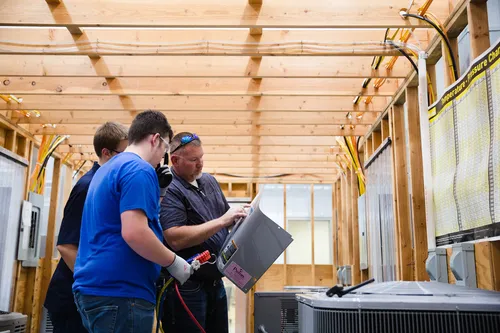
Best HVAC is an HVAC company serving Stockton, CA, and the surrounding areas, including Modesto. They provide a wide range of services such as air conditioning installation, repair, and maintenance, heating system services including furnaces, heat pumps, ductless mini splits, and geothermal systems, as well as indoor air quality solutions like duct cleaning and air purifier installation. The company also offers commercial HVAC services, including new system installation and maintenance programs. With over 25 years of experience, Best HVAC emphasizes problem-solving and offers a lifetime warranty on new system installations.
Air Heating Masters San Jose
313 Piercy Rd, San Jose, CA 95138
Air Heating Masters San Jose is a geothermal heat pump and HVAC installation contractor based in San Jose, CA. They specialize in home temperature control systems that offer energy efficiency and low maintenance by using geothermal technology. Their services include installation, maintenance, and repair of heating and cooling systems that transfer energy between the home and the earth through an underground loop system. With over fifty years of experience in geothermal technology, they provide systems that operate quietly and reliably. The company also offers 24-hour emergency service for urgent needs.
How Geothermal Systems Work: Tapping into Earth's Constant Energy
At the core of geothermal technology is a simple principle: a few feet below the surface, the ground maintains a nearly constant temperature of around 55°F year-round. A geothermal system uses this stable resource as a heat source in winter and a heat sink in summer. Instead of burning fuel to create heat, it moves existing heat from one place to another, which is a far more efficient process.
The system has three main components:
- The Ground Loop: A network of pipes buried in your yard, circulating a water-based fluid.
- The Heat Pump Unit: An indoor unit that contains a compressor and heat exchanger.
- The Distribution System: Your home's existing ductwork or radiant floor system to deliver conditioned air.
In heating mode, fluid in the underground loop absorbs the earth's warmth and carries it to the heat pump. The pump then concentrates this heat and distributes it throughout your home. In cooling mode, the process reverses: the system extracts heat from your home's air, transfers it to the fluid in the loop, and disperses it into the cooler earth.
Types of Ground-Source Heat Pump Systems
Choosing the right configuration for your Union City property depends on your lot size, soil conditions, and budget. The most common setups are closed-loop systems.
Closed-Loop Systems
This is the standard for residential installations in New Jersey. A sealed, continuous loop of high-density polyethylene pipe is buried and filled with an environmentally friendly antifreeze solution.
- Vertical Loops: This is the most common choice for urban and suburban areas like Union City where yard space is limited. Contractors drill deep boreholes, typically 100 to 400 feet down, and insert U-shaped loop pipes into each hole. The vertical design requires less land area and is often well-suited to the local geology.
- Horizontal Loops: If you have sufficient land, this can be a more economical option. Trenches are dug about four to six feet deep, and pipes are laid out in a series of parallel lines or coiled slinky patterns1 2. This method requires more square footage of open land but may involve lower drilling costs.
Open-Loop Systems
Less common in this region, an open-loop system uses groundwater directly from a well as the heat exchange fluid. After circulating through the heat pump, the water is discharged back into a second well or a suitable surface drainage area 3. This system is highly efficient but depends on having a sufficient supply of clean, high-quality groundwater and complying with local codes.
The Installation Process for Union City Homes
Installing a geothermal heating and cooling system is a significant project that requires professional expertise. Here's what a typical installation entails:
- Site Assessment and Design: A certified installer will evaluate your property, considering soil composition, rock content, available space, and your home's heating and cooling loads. This assessment determines the optimal loop type and size.
- Loop Installation: For a vertical system, a drilling rig will create the necessary boreholes. For a horizontal system, a backhoe will dig the trenches. This is the most disruptive phase of the project but is usually completed within a few days.
- Loop and System Hookup: The pipe loops are placed, connected into a manifold, and pressure-tested. Inside your home, the new geothermal heat pump unit (which replaces your old furnace and air conditioner) is installed and connected to your ductwork and the loop manifold.
- Testing and Startup: The loop is filled with fluid, purged of air, and pressurized. The entire system is then started, tested for performance, and balanced to ensure optimal efficiency4.
Find the perfect geothermal heat pump contractors for your needs
Get personalized recommendations and expert advice
Key Considerations for Union City Property Owners
Before investing in a geothermal system, several local factors are important to consider:
- Space and Geology: The feasibility of a horizontal loop depends entirely on available yard space. Vertical loops are the go-to for smaller lots but require drilling that can be impacted by the area's bedrock. A professional site survey is essential.
- Upfront Investment vs. Long-Term Savings: The installation cost for a ground-source heat pump is higher than for a traditional HVAC system, primarily due to the ground loop work. However, the operational savings are substantial. Homeowners can expect to save 30% to 70% on heating costs and 20% to 50% on cooling costs compared to conventional systems5 6 7. This translates to significantly lower monthly utility bills.
- Durability and Incentives: The underground piping often comes with warranties of 50 years or more and can last generations. The indoor heat pump unit typically lasts 20-25 years, longer than standard air conditioners8 9. Furthermore, the New Jersey Department of Environmental Protection (NJDEP) actively promotes geothermal technology as a key clean energy solution for reducing emissions. State and federal incentives, such as tax credits, can substantially offset the initial installation cost, improving the return on investment10.
Benefits Beyond Energy Savings
The advantages of installing a geothermal system in your home extend well beyond a smaller energy bill.
- Environmental Leadership: By using renewable thermal energy from the ground, you drastically reduce your home's reliance on fossil fuels and its associated carbon footprint. It's a direct contribution to New Jersey's clean energy goals.
- Consistent Comfort: These systems provide exceptionally even heating and cooling, without the hot blasts or cold drafts associated with traditional furnaces and air conditioners. They also maintain efficiency even during Union City's coldest winters and hottest, most humid summers.
- Quiet Operation and Low Maintenance: With no noisy outdoor condenser unit (like a standard AC has), geothermal systems operate very quietly. The indoor unit and the buried loops also require minimal maintenance compared to combustion-based systems11.
- Increased Home Value: A permanently installed, high-efficiency geothermal system is an attractive feature for future homebuyers, often increasing property value due to the promise of low operating costs.
Frequently asked questions
Sources
Footnotes
-
How to Choose the Right System for Your Home - Morrison Inc. - https://morrisongeothermal.com/how-to-choose-the-right-system-for-your-home/ ↩
-
Different Types of Residential Geothermal Systems - https://brackettheatingandair.com/different-types-of-residential-geothermal-systems/ ↩
-
What Are Geothermal Systems? - https://www.arpis.com/blog/what-are-geothermal-systems/ ↩
-
Geothermal System Operations and Installation Process - https://www.geothermalbydesign.com/geothermal-process ↩
-
NJDEP| Clean Buildings | GSHP - https://dep.nj.gov/cleanbuildings/gshp/ ↩
-
5 Things You Should Know about Geothermal Heat Pumps - https://www.energy.gov/cmei/articles/5-things-you-should-know-about-geothermal-heat-pumps ↩
-
Should I Choose a Geothermal System Over Traditional HVAC? - https://aspenaireinc.com/should-i-choose-geothermal-system/ ↩
-
Geothermal Heat Pumps - EnergySmart CNY - https://www.energysmartcny.org/heat-pumps/geothermal/ ↩
-
Geothermal Heating Systems in New Jersey - https://connmechanical.com/services/geothermal/ ↩
-
New Jersey Ground Source Heat Pump Baseline Report - https://dep.nj.gov/wp-content/uploads/cleanenergy/new-jersey-ground-source-heat-pump-baseline-report_final.pdf ↩
-
All You Need to Know About Home Geothermal Heating & ... - https://dandelionenergy.com/all-you-need-to-know-about-home-geothermal-heating-cooling ↩