Find the Best Geothermal Heat Pump Contractors for Your Business
No obligation • Fast responses • Nationwide coverage

Why you can trust HVAC Firms
HVAC Firms is a leading United States resource for evaluating HVAC service providers. Our team researches companies, checks credentials, and reviews customer feedback to present clear, unbiased information. Listings and rankings are based on merit, and companies cannot pay to change our editorial content.
Search providers near you
Top Geothermal Heat Pump Contractors in Riverside, California Ranked
A geothermal heat pump, often called a ground-source heat pump, is a highly efficient system for heating and cooling your home by exchanging heat with the stable temperature of the earth. In Riverside's climate, where summer temperatures soar, this technology offers a reliable and sustainable way to maintain indoor comfort while dramatically reducing energy consumption. This guide explains how these systems work, their benefits, and what to consider for installation, helping you connect with qualified local experts for your project.
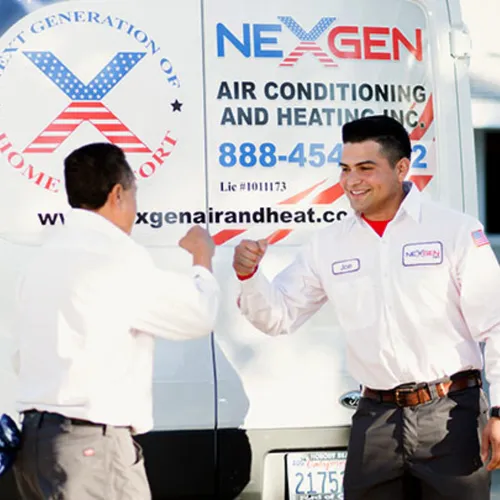
NexGen HVAC & Plumbing
10820 Mulberry Ave, Fontana, CA 92337
NexGen HVAC & Plumbing is a full-service contractor based in Riverside, CA, offering a wide range of heating, cooling, and plumbing services. They handle installation, repair, and maintenance of air conditioners, heat pumps, furnaces, ductless mini-splits, and geothermal systems. Their plumbing services include leak detection, drain cleaning, sewer repair, and gas line inspection. NexGen is equipped to service both residential and commercial properties and uses advanced technology such as high-tech camera inspections for plumbing diagnostics. They provide 24/7 emergency service to address urgent HVAC and plumbing issues promptly.
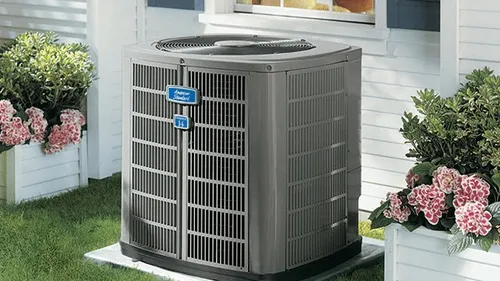
Nelson Air Heating & Air Conditioning
5062 Casa Oro Dr, Yorba Linda, CA 92886
Nelson Air Heating & Air Conditioning provides HVAC installation services in Anaheim, CA. They handle installation for a variety of systems including air conditioners, furnaces, heat pumps, boilers, mini splits, and geothermal heat pumps for both residential and commercial clients. The company installs all major HVAC brands and emphasizes quality materials, efficiency, and workmanship.
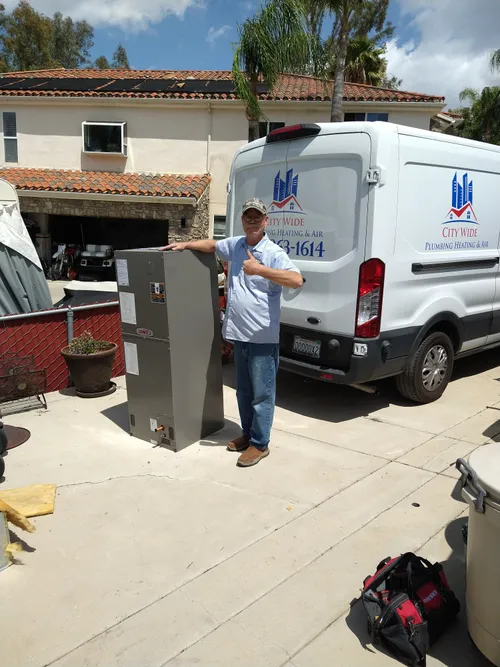
Thomas Brothers HVAC & Plumbing
12625 Frederick St, Moreno Valley, CA 92553
Thomas Brothers HVAC & Plumbing is a heating and cooling company located in Riverside, CA. They provide a range of services including installation and repair of air conditioners, furnaces, heat pumps, boilers, mini splits, and geothermal heat pumps. The company also offers HVAC tune-up services to maintain system efficiency. Thomas Brothers HVAC & Plumbing is bonded, insured, and licensed, ensuring compliance with industry standards.
How Geothermal Energy Works for Your Home
The core principle behind a geothermal system is remarkably simple: it uses the earth as a giant thermal battery. Just a few feet below the surface, the ground maintains a nearly constant temperature between 50°F and 60°F year-round, regardless of the summer heat or winter chill in Riverside 1. A geothermal heat pump leverages this stable temperature to provide heating, cooling, and even hot water.
The process involves a loop of pipes, called a ground loop, buried in your yard. A water-based solution circulates through these pipes, absorbing the earth's warmth in the winter and carrying excess heat from your home back into the ground in the summer 2. This fluid is then pumped to an indoor unit-the heat pump itself-where a refrigerant cycle concentrates the thermal energy and distributes comfortable air through your existing ductwork or a radiant floor system. Because it's moving existing heat rather than generating it by burning fuel, a ground-source heat pump operates with exceptional efficiency.
Types of Geothermal Loop Systems
Choosing the right loop configuration is a critical step, dependent on your property's soil composition, lot size, and local geology. There are two primary categories: closed-loop and open-loop systems.
Closed-Loop Systems This is the most common residential setup, using a continuous loop of high-density polyethylene (HDPE) pipe buried underground and filled with an environmentally safe antifreeze mixture 3. There are two main configurations:
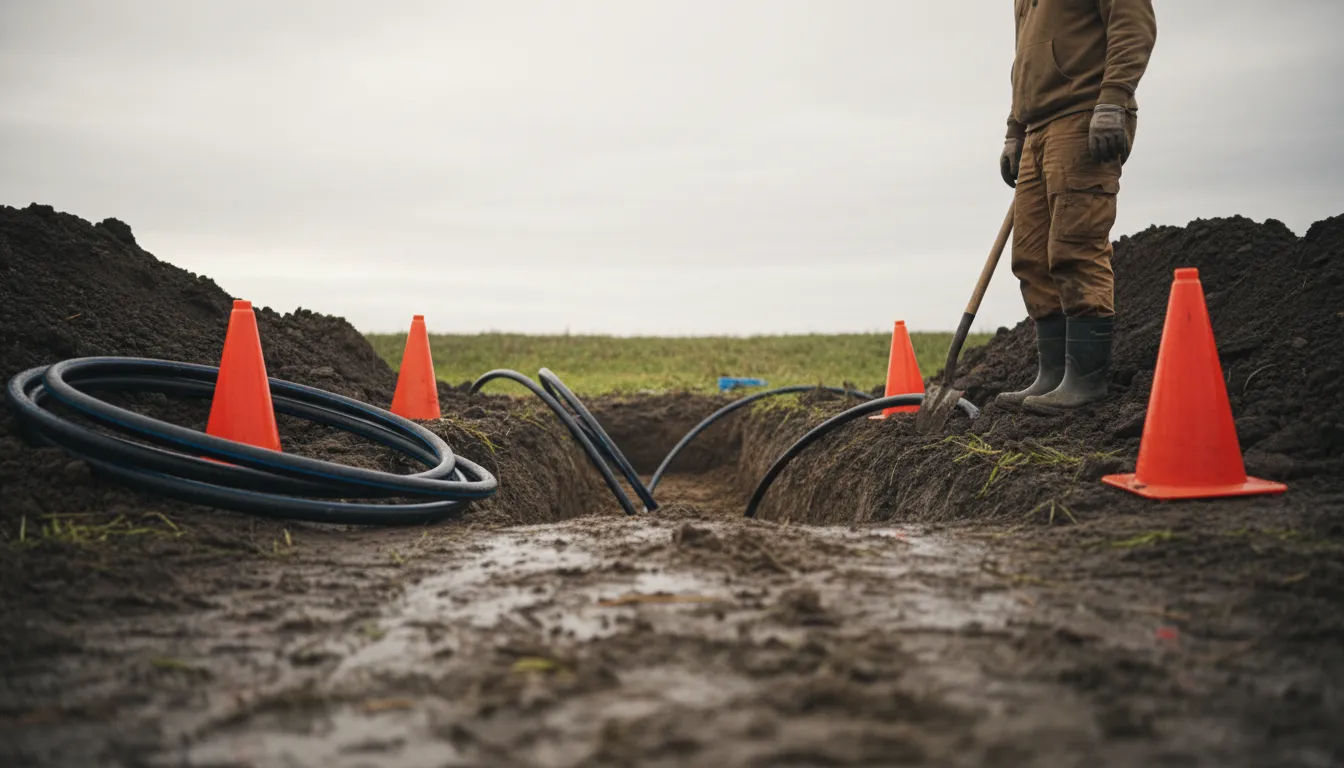
- Horizontal Closed-Loop: Pipes are laid in trenches dug 4 to 6 feet deep. This requires a significant amount of open yard space but is often less expensive than vertical drilling where space allows.
- Vertical Closed-Loop: For homes with smaller lots, like many in Riverside, vertical loops are the ideal solution. Contractors drill boreholes typically 150 to 450 feet deep and insert U-shaped loop pipes. This minimizes landscape disruption to a small area for the drilling rig.
Open-Loop Systems An open-loop system uses groundwater from a well as the heat exchange fluid. After passing through the heat pump, the water is returned to the ground via a second well or a suitable discharge point like a pond 4. While potentially more efficient, this system requires an abundant supply of clean water, specific permits, and is subject to local groundwater regulations, making it less common than closed-loop options.
The Installation Process: What to Expect
Installing a geothermal heating and cooling system is a significant project that requires professional expertise. Understanding the steps can help you prepare.
- Site Assessment: A qualified installer will evaluate your property to determine soil conditions, available space, and the best loop type. This assessment dictates the design and length of the ground loop needed for your home's heating and cooling load.
- Ground Loop Installation: This is the most invasive phase. For a horizontal system, a backhoe will dig long trenches across your yard. For a vertical system, a drilling rig will create the necessary boreholes. The HDPE pipe is then placed and the trenches or boreholes are backfilled 5 6.
- Indoor Unit Installation: The geothermal heat pump unit, which is typically about the size of a small furnace, is installed inside your home-often in a garage, basement, or utility closet. It is connected to your home's ductwork and to the pipes leading to the ground loop 7.
- System Startup & Commissioning: The loop is filled and pressurized, the indoor unit is connected electrically, and the entire system is tested and balanced to ensure optimal performance.
Find the perfect geothermal heat pump contractors for your needs
Get personalized recommendations and expert advice
Benefits of a Geothermal System in Riverside
Investing in a ground-source heat pump offers compelling advantages, particularly in a region with high cooling demands.
- Extreme Energy Efficiency: Geothermal systems are 400% to 600% efficient, meaning they move three to five units of heat for every one unit of electricity used to run the system. This far surpasses the efficiency of even the best conventional air conditioners and furnaces.
- Substantial Utility Savings: By leveraging the earth's free energy, homeowners can save up to 70% on heating, cooling, and hot water costs compared to standard systems 8 9 10. These savings can amount to thousands of dollars annually, directly offsetting the higher upfront cost.
- Quiet, Clean, and Reliable Operation: With no noisy outdoor condenser unit (like a traditional AC has), the system operates very quietly. It also reduces your home's carbon footprint by using electricity and emits no on-site combustion gases.
- Exceptional Longevity: The underground loop system is incredibly durable, with a lifespan often exceeding 50 years. The indoor heat pump unit typically lasts 20 to 25 years, which is longer than most conventional HVAC equipment.
Understanding Costs and Financial Considerations
The primary barrier for most homeowners is the initial investment. A complete geothermal system installation in Riverside typically ranges from $20,000 to $40,000 or more for an average single-family home 11 12 13. The final cost depends heavily on the loop type (vertical drilling is more expensive than horizontal trenching), your home's size, and the existing ductwork.
It's vital to view this as a long-term investment. The dramatic reduction in monthly energy bills creates a payback period. Over time, the accumulated savings can cover the initial premium. Furthermore, these systems may increase property value and are eligible for federal tax credits and potentially local utility rebates, which can significantly reduce the net cost. Consulting the California Buyers Guide to Geothermal Heat Pump Systems is an excellent way to explore current financial incentives 14.
Is Your Riverside Property Suitable?
Most properties can accommodate a geothermal system with the right loop design. Key considerations include:
- Lot Size: Vertical loops are designed for limited space, making them feasible for many standard residential lots in Riverside.
- Soil and Rock Conditions: The thermal conductivity of your soil affects loop length. Drilling through certain rock types can increase installation complexity and cost.
- Landscaping Plans: While installers can work around existing trees and structures, the drilling or trenching area will be temporarily disrupted.
- Existing HVAC System: The geothermal heat pump will connect to your existing air ducts. Homes without ducts may require a ductless mini-split version or the installation of a new air distribution system.
Frequently asked questions
Sources
Footnotes
-
How Geothermal Heat Pumps Work - https://www.youtube.com/watch?v=XxlTnBukweI&t=37 ↩
-
How a Geothermal Heat Pump Works | This Old House - https://www.youtube.com/watch?v=d5Tbsx3R2T8 ↩
-
Geothermal Heating Systems - https://earthrivergeothermal.com/geothermal-heating-systems/ ↩
-
How Does A Geothermal Heat Pump Work? Complete 2025 Guide - https://solartechonline.com/blog/how-does-geothermal-heat-pump-work/ ↩
-
FAQs • What types of ground-source heat pumps and configurat - https://concordma.gov/FAQ.aspx?QID=484 ↩
-
Geothermal Heat Pumps - EnergySmart CNY - https://www.energysmartcny.org/heat-pumps/geothermal/ ↩
-
Geothermal Installation Steps Explained - https://ultrageothermal.com/geothermal-installation-steps-explained/ ↩
-
All You Need to Know About Home Geothermal Heating & ... - https://dandelionenergy.com/all-you-need-to-know-about-home-geothermal-heating-cooling ↩
-
How Geothermal Heating and Cooling Systems Work | Belle Air - https://www.belleairservices.com/how-geothermal-heating-and-cooling-systems-work/ ↩
-
How Do Geothermal Systems Work for Residential Homes? - https://www.davisheat.com/blog/how-do-geothermal-systems-work-for-residential-homes/ ↩
-
How Does a Geothermal System Work? - ClimateMaster - https://www.climatemaster.com/homeowner/side-links/how-it-works ↩
-
The California Buyers Guide to Geothermal Heat Pump Systems - https://www.californiageo.org/wp-content/uploads/CA-Buyers-Guide-for-Geothermal-HP-revised-12-13-24.pdf ↩
-
Geothermal Heat Pump Guide: Installation Costs, Types And Benefits - https://modernize.com/hvac/heating-repair-installation/heat-pump/geothermal ↩
-
Low-Temperature Geothermal - https://www.earthdate.org/episodes/low-temperature-geothermal ↩