
Find the Best Geothermal Heat Pump Contractors for Your Business
No obligation • Fast responses • Nationwide coverage

Why you can trust HVAC Firms
HVAC Firms is a leading United States resource for evaluating HVAC service providers. Our team researches companies, checks credentials, and reviews customer feedback to present clear, unbiased information. Listings and rankings are based on merit, and companies cannot pay to change our editorial content.
Search providers near you
Top Geothermal Heat Pump Contractors in Fresno, California Ranked
Geothermal heat pumps, also known as ground-source heat pumps, are a highly efficient heating and cooling technology that leverages the earth's stable underground temperature. For Fresno homeowners, this system offers a powerful way to combat extreme summer heat and mild winter chills while significantly reducing energy bills. This guide explains how geothermal works, its benefits for the Central Valley, and how you can find qualified local experts for installation and service.
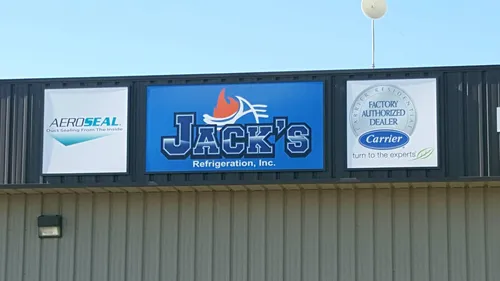
Jack's Refrigeration
2539 Simpson St, Kingsburg, CA 93631
Jack's Refrigeration is an HVAC company serving Fresno, CA, and the surrounding Central Valley communities. They provide a range of services including air conditioning and furnace repair, installation of HVAC and geothermal heat pump systems, duct cleaning, and indoor air quality improvements. With over 60 years of experience, Jack's Refrigeration offers expertise in duct sealing using Aeroseal technology to enhance comfort and energy efficiency. They serve both residential and commercial customers and have a long history of supporting local homes and businesses.

Indoor Quality Services
340 W Fallbrook Ave #104, Fresno, CA 93711
Indoor Quality Services is an HVAC company based in Fresno, CA, serving the Central Valley and surrounding communities. Since 1998, they have provided a wide range of heating and cooling services including air conditioning and furnace installation and repair, duct cleaning, thermostat installation, and indoor air quality solutions. Their expertise includes installing energy-efficient systems such as ductless mini-splits and geothermal heat pumps, along with offering seasonal maintenance programs to support system longevity and performance.
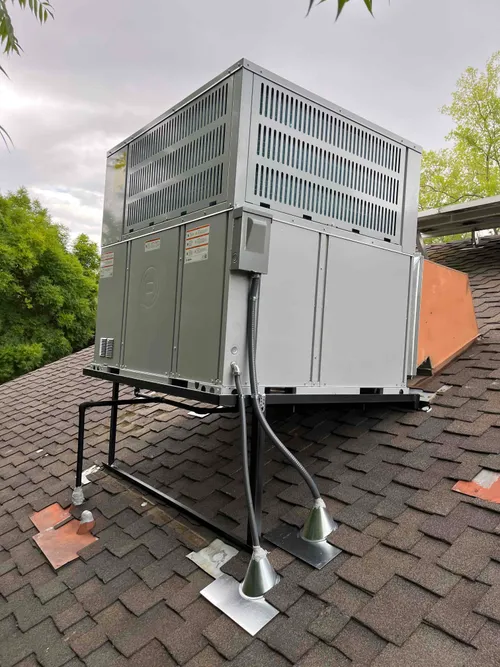
Mitchell Aire
4281 W Shaw Ave, Fresno, CA 93722
Mitchell Aire is a family-operated HVAC company serving Fresno, CA, with over 80 years of experience since 1936. The company offers a wide range of services including repair and installation of air conditioning, furnaces, heat pumps, boilers, mini splits, and geothermal heat pumps. Their NATE Certified Technicians handle everything from minor repairs to major installations and regular maintenance, working with all types of models and makes. Mitchell Aire is known for quality workmanship and honest pricing, serving both residential and commercial customers in the Central Valley community.
How Geothermal Heating and Cooling Works in Fresno
Unlike traditional air-source systems that battle Fresno's scorching summer air, a geothermal system uses the earth's constant temperature as a heat source in winter and a heat sink in summer. Just a few feet below the surface, the ground in the Central Valley maintains a relatively stable temperature of around 60°F year-round. This thermal stability is the key to the system's remarkable efficiency.
The process centers on a closed loop of pipes, called a ground loop, buried in your yard. A water-based fluid circulates through this loop:
- In Winter (Heating Mode): The fluid absorbs the earth's latent heat as it travels through the buried pipes. This warmed fluid is carried to an indoor heat pump unit, which concentrates the heat and distributes warm air throughout your home via your existing ductwork1.
- In Summer (Cooling Mode): The process reverses. The system extracts heat and humidity from your home's air. The now-warmed fluid carries this excess heat back through the ground loop, where it is dissipated into the cooler earth, providing efficient air conditioning 2.
This elegant heat exchange process avoids the extreme temperature differentials that force conventional systems to work harder, which is why geothermal heat pumps are 3.5 to 5 times more energy-efficient.
Types of Ground Loop Systems for Fresno Properties
The ground loop is the heart of the system, and its installation type depends on your property's characteristics. The two most common configurations are closed-loop systems.
Vertical Closed-Loop Systems
This is often the preferred method for urban and suburban Fresno homes with limited yard space. Contractors drill deep boreholes, typically between 150 to 500 feet deep, and insert U-shaped loops of high-density polyethylene pipe3 4. The holes are then grouted. A vertical system requires less horizontal land but involves specialized drilling equipment, which can influence the upfront cost. It's an excellent solution for smaller lots common in many Fresno neighborhoods.
Horizontal Closed-Loop Systems
If you have more ample land, such as a quarter to three-quarters of an acre, a horizontal loop may be more cost-effective to install. Contractors excavate trenches four to six feet deep and lay pipes in a series of parallel rows or slinky coils5 6. This method is often less expensive than drilling and is ideal for new construction projects where the yard is already being excavated.
Choosing between vertical and horizontal loops is a critical decision best made with a qualified local installer who can assess your soil composition, lot size, and local geology.
The Financial and Environmental Benefits for Fresno Homeowners
Investing in a geothermal system in Fresno delivers substantial long-term rewards, primarily through dramatic energy savings.
- Significant Utility Savings: By tapping into the earth's consistent temperature, these systems can reduce your heating and cooling energy consumption by 50% to 65% compared to conventional systems7 8. Research specific to the region, including studies from Fresno State, indicates that typical annual savings can be around $1,100 for a single-family home8 9.
- Strong Return on Investment: While the initial installation cost is higher than a standard HVAC system, the payoff period in Fresno's climate is often between 5 to 8 years due to the lower operating costs 10. Over the system's lifespan of 20+ years, the total savings are substantial.
- Enhanced Comfort and Stability: Geothermal systems provide even, draft-free heating and cooling and excel at dehumidification in the summer. They also operate very quietly since the noisiest component (the compressor) is located indoors.
- Environmental Leadership: By using electricity to move heat rather than create it, and by eliminating on-site combustion of fossil fuels, a ground-source heat pump drastically reduces your household's carbon footprint. When paired with a solar panel system, you can approach a net-zero energy home.
Find the perfect geothermal heat pump contractors for your needs
Get personalized recommendations and expert advice
What to Expect During Geothermal Installation
Installing a geothermal system is a significant project that requires careful planning and expert execution. The process generally follows these steps:
- Site Evaluation and Design: A certified installer will assess your property, evaluate soil and rock conditions, and calculate your home's heating and cooling loads to design an appropriately sized system.
- Ground Loop Installation: This is the most intensive phase. For a vertical system, a drilling rig will create the boreholes. For a horizontal system, a backhoe will dig the trenches. The polyethylene pipe is then placed and the trenches or holes are backfilled.
- Indoor Unit and Connection: The indoor heat pump unit, which is about the size of a traditional furnace, is installed and connected to the ground loop and your home's ductwork or hydronic distribution system.
- System Startup and Testing: The loop is filled and purged, the refrigerant circuit is charged, and the entire system is tested for optimal performance and efficiency.
Maintaining Your Geothermal System
One of the advantages of geothermal technology is its low maintenance requirements. The protected, underground loop typically carries a warranty of 25 to 50 years and rarely needs service. Annual maintenance focuses on the indoor heat pump unit, similar to a conventional system, including checking filters, coils, and electrical connections. Regular professional check-ups ensure the system continues to operate at peak efficiency for decades.
Frequently asked questions
Sources
Footnotes
-
5 Things You Should Know about Geothermal Heat Pumps - https://www.energy.gov/cmei/articles/5-things-you-should-know-about-geothermal-heat-pumps ↩
-
Geothermal (Ground Source) Heat Pumps - NY.gov - https://cleanheat.ny.gov/geothermal-heat-pumps/ ↩
-
All You Need to Know About Home Geothermal Heating & ... - https://dandelionenergy.com/all-you-need-to-know-about-home-geothermal-heating-cooling ↩
-
Geothermal Installation Steps Explained - https://ultrageothermal.com/geothermal-installation-steps-explained/ ↩
-
How Does A Geothermal Heat Pump Work? Complete 2025 Guide - https://solartechonline.com/blog/how-does-geothermal-heat-pump-work/ ↩
-
FAQs • What types of ground-source heat pumps and configurat - https://concordma.gov/FAQ.aspx?QID=484 ↩
-
Geothermal Heat Pumps - EnergySmart CNY - https://www.energysmartcny.org/heat-pumps/geothermal/ ↩
-
Civil Engineering - https://engineering.fresnostate.edu/civil-geomatics/documents/Groundsource%20Heat%20Pumps%20in%20the%20Central%20Valley.pdf ↩ ↩2
-
The California Buyers Guide to Geothermal Heat Pump Systems - https://www.californiageo.org/wp-content/uploads/CA-Buyers-Guide-for-Geothermal-HP-revised-12-13-24.pdf ↩
-
Geothermal Heating, Cooling, and Hot Water Systems - https://igshpa.org/wp-content/uploads/Homeowners-Guide-to-Geothermal.pdf ↩