
Find the Best Geothermal Heat Pump Contractors for Your Business
No obligation • Fast responses • Nationwide coverage

Why you can trust HVAC Firms
HVAC Firms is a leading United States resource for evaluating HVAC service providers. Our team researches companies, checks credentials, and reviews customer feedback to present clear, unbiased information. Listings and rankings are based on merit, and companies cannot pay to change our editorial content.
Search providers near you
Top Geothermal Heat Pump Contractors in Tracy, California Ranked
Geothermal heat pumps, also known as ground-source heat pumps, are a highly efficient method for heating and cooling your home by leveraging the stable temperature of the earth. For Tracy residents, this technology offers a way to significantly reduce energy bills and environmental impact while ensuring year-round comfort. This guide explains how these systems work, what installation entails, and how you can find qualified local experts to assess your property for a geothermal solution.
Cam's Heating & Air
5300 Claus Rd Bldg 34a, Riverbank, CA 95367
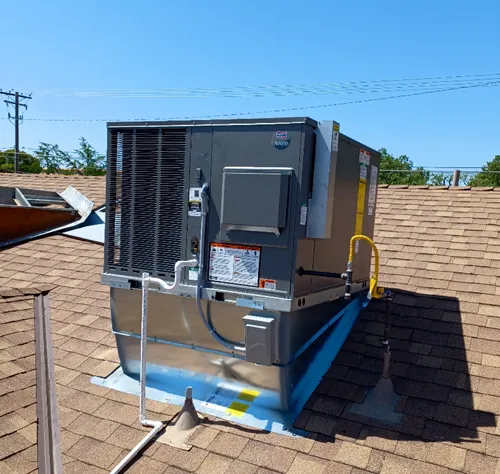
Cam's Heating & Air provides HVAC installation, repair, and maintenance services in Stockton, CA. They handle a variety of systems including air conditioners, furnaces, heat pumps, boilers, mini splits, and geothermal heat pumps. Their services focus on ensuring efficient performance and lasting comfort through expert installations and regular tune-ups.
Fairview Heating & Air Conditioning Inc.
100 Brownstone Rd, Oakley, CA 94561
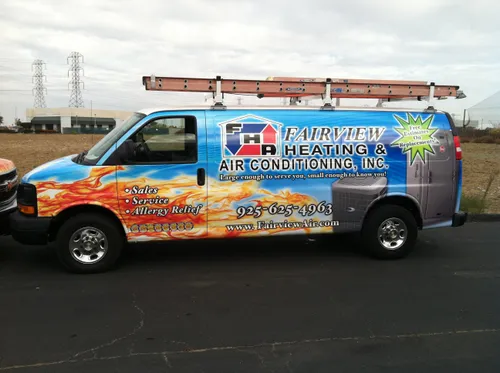
Fairview Heating & Air Conditioning Inc. is an HVAC contractor based in Oakland, CA, offering a range of services including air conditioning repair and installation, furnace and heat pump services, indoor air quality improvements, and ductless mini-split system installations. They provide solutions tailored to the local climate, including American-made equipment designed for East County conditions. With over 30 years of experience maintaining and installing HVAC systems, Fairview also addresses new energy efficiency standards affecting heating equipment in California. Their services include advanced capabilities such as air scrubbers and ultraviolet lights to enhance indoor air quality.
How Geothermal Systems Work: Tapping into Tracy's Earth
A geothermal heating and cooling system doesn't create heat by burning fuel; instead, it moves existing heat. The core principle relies on the fact that just a few feet below the surface, the earth maintains a relatively constant temperature, typically between 50°F and 60°F in this region, regardless of the season above ground. A geothermal system uses this stable resource as a heat source in winter and a heat sink in summer.
The process centers on a closed loop of pipes, called the ground loop, buried in your yard. A water-based solution circulates through these pipes, absorbing the earth's moderate temperature 1. In heating mode, the fluid, now warmed by the ground, returns to a heat pump unit inside your home. The heat pump concentrates this low-grade heat and transfers it to your home's air or water distribution system, such as existing ductwork. For cooling, the cycle simply reverses: the system extracts heat from your indoor air and transfers it into the cooler fluid, which then dissipates the heat into the ground 2. This elegant heat exchange process is what delivers exceptional efficiency, as moving heat requires far less energy than generating it.
Types of Ground Loops: Choosing the Right System for Your Property
The design of the underground loop field is a critical decision that depends on your land availability, soil composition, and budget. There are several common configurations for ground-source heat pump systems.
Horizontal Closed Loops: This is often the most cost-effective installation method. Contractors dig trenches, typically 4 to 6 feet deep, across a substantial area of your property. Pipes are laid in these trenches in a slinky-coil or straight-run configuration before being backfilled 3 4. This option requires a larger, clear plot of land but generally involves lower excavation costs compared to drilling.
Vertical Closed Loops: For homes in Tracy with smaller lots, a vertical loop system is usually the preferred choice. Installers drill boreholes about 150 to 400 feet deep and insert U-shaped pipe loops into each hole 5. The holes are then grouted. While the drilling process is more specialized and expensive, a vertical ground source heat pump system has a minimal surface footprint and can be very effective in most soil and rock types found locally.
Pond/Lake Loops: If you have access to a sufficiently deep and large body of water, this can be an excellent low-cost option. Coils of pipe are submerged at the bottom of the pond or lake, using the water as the heat exchange medium 6. This eliminates the need for extensive digging or drilling.
Open Loop Systems: Less common for residential use, an open loop system uses groundwater from a well as the direct heat exchange fluid. After passing through the heat pump, the water is discharged, typically back into a second well or a suitable drainage area. This system requires an abundant, clean water source and may involve more complex permitting.
Find the perfect geothermal heat pump contractors for your needs
Get personalized recommendations and expert advice
The Installation Process: What to Expect in Tracy
Installing a geothermal HVAC system is a significant project that requires professional expertise. Understanding the steps can help you prepare.
-
Site Evaluation and Design: A qualified installer will first assess your property. They'll evaluate soil conditions, land size, and accessibility to determine the best loop type (horizontal vs. vertical) and size the system correctly for your home's heating and cooling loads 7. This stage is crucial for long-term efficiency and performance.
-
Loop Field Installation: This is the most disruptive phase. For a horizontal system, excavators will dig the necessary trenches. For a vertical system, a drilling rig will be brought in to create the boreholes. The high-density polyethylene pipes are then placed, connected into a continuous loop, and pressure-tested to ensure there are no leaks.
-
Indoor Unit Connection: The ground loop is connected to the heat pump unit, which is installed inside your home-often in a basement, utility closet, or garage. This unit is then connected to your home's existing ductwork or hydronic distribution system 8. The system is charged with refrigerant and the circulation pump is activated.
-
System Startup and Restoration: Once the mechanical work is complete, the installer will backfill the trenches or boreholes and restore your landscaping as agreed. The entire system is then commissioned: the thermostat is set, controls are programmed, and the system is tested in both heating and cooling modes to ensure optimal operation.
Costs, Savings, and Key Considerations
The decision to invest in a geothermal system involves weighing a higher upfront cost against substantial long-term benefits.
- Initial Investment: The total installed cost for a residential geothermal heat pump system in Tracy typically ranges from $15,000 to over $40,000 9. The wide range depends on your home's size, the chosen loop type (vertical loops are more expensive), property conditions, and the complexity of connecting to your existing ductwork.
- Operational Savings: This is where geothermal systems shine. By using the earth's stable temperature, they operate with remarkable efficiency, often reducing energy consumption for heating and cooling by 25% to 65% compared to conventional systems 10 11. This can lead to dramatically lower monthly utility bills.
- Payback Period: The time it takes for energy savings to recoup the initial investment varies, but many homeowners see a return in 4 to 15 years. The payback is faster if you are replacing an old, inefficient electric or propane system, or if you are building a new home and can factor the cost into your mortgage.
- Perfect for New Construction or Renovation: The installation process is inherently invasive, making it logistically easier and sometimes less expensive to integrate during new home construction or a major renovation where the landscape is already being altered.
For Tracy homeowners, a ground-source heat pump represents a forward-thinking upgrade. It leverages local geology to provide ultra-efficient, reliable comfort while offering significant savings on energy bills for decades, making the initial investment a compelling long-term value proposition 12.
Frequently asked questions
Sources
Footnotes
-
How Do Geothermal Systems Work for Residential Homes? - https://www.davisheat.com/blog/how-do-geothermal-systems-work-for-residential-homes/ ↩
-
How it Works - https://www.climatemaster.com/homeowner/side-links/how-it-works ↩
-
Geothermal heat pumps: The ultimate guide to ground-source ... - https://termo-plus.com/blog/geothermal-ultimate-guide-to-ground-source-heat-pumps/ ↩
-
How It Works: Ground Source Heat Pumps - Aztech Geothermal - https://aztechgeo.com/residential-geothermal/how-it-works/ ↩
-
Geothermal Heat Pumps - Department of Energy - https://www.energy.gov/energysaver/geothermal-heat-pumps ↩
-
Geothermal Heat Pumps - EnergySmart CNY - https://www.energysmartcny.org/heat-pumps/geothermal/ ↩
-
Clean Energy 101: Geothermal Heat Pumps - RMI - https://rmi.org/clean-energy-101-geothermal-heat-pumps/ ↩
-
Geothermal Heat Pumps: How They Work | AHRI - https://www.ahrinet.org/scholarships-education/education/homeowners/how-things-work/geothermal-heat-pumps-how-they-work ↩
-
Everything You Need to Know About Geothermal Heat Pumps - https://www.familyhandyman.com/article/everything-you-need-to-know-about-geothermal-heat-pumps/ ↩
-
5 Things You Should Know about Geothermal Heat Pumps - https://www.energy.gov/cmei/articles/5-things-you-should-know-about-geothermal-heat-pumps ↩
-
How Geothermal Heating and Cooling Systems Work | Belle Air - https://www.belleairservices.com/how-geothermal-heating-and-cooling-systems-work/ ↩
-
The California Buyers Guide to Geothermal Heat Pump Systems - https://www.californiageo.org/wp-content/uploads/CA-Buyers-Guide-for-Geothermal-HP-revised-12-13-24.pdf ↩