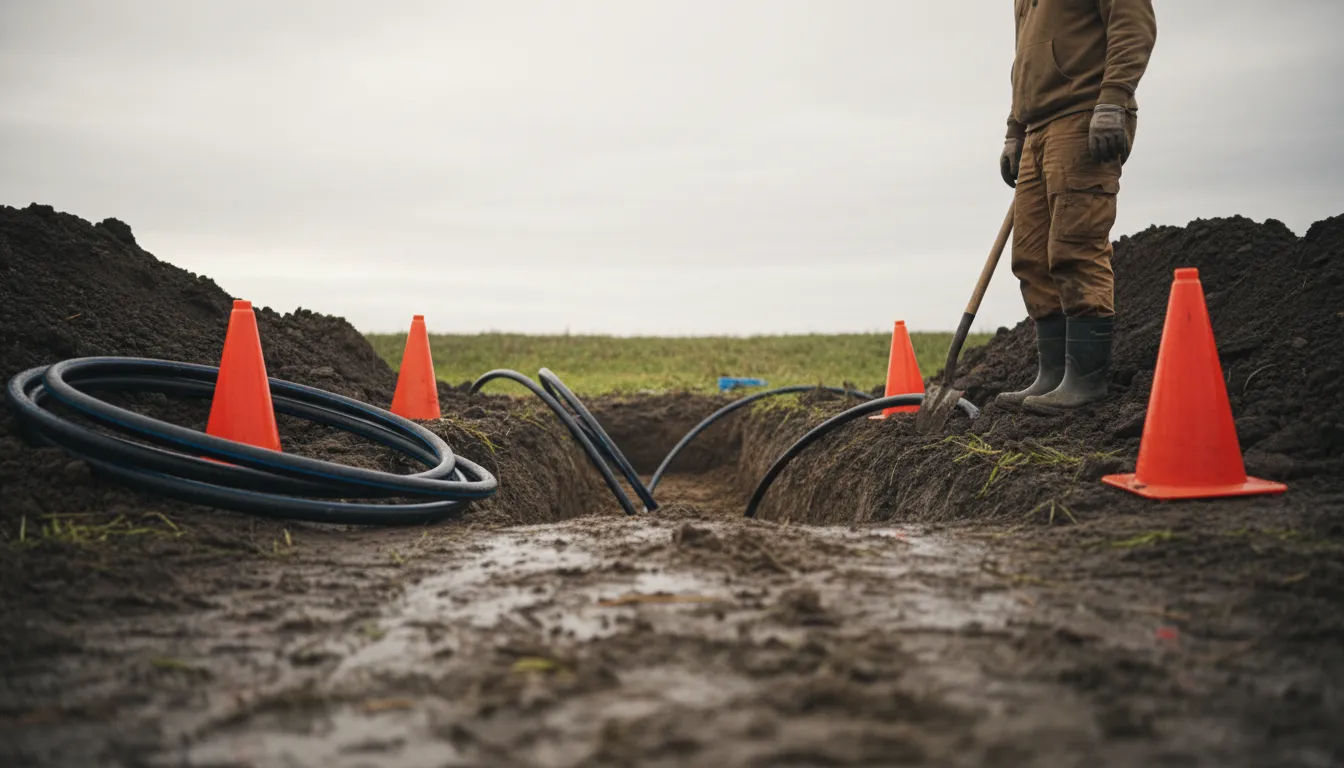
Find the Best Geothermal Heat Pump Contractors for Your Business
No obligation • Fast responses • Nationwide coverage

Why you can trust HVAC Firms
HVAC Firms is a leading United States resource for evaluating HVAC service providers. Our team researches companies, checks credentials, and reviews customer feedback to present clear, unbiased information. Listings and rankings are based on merit, and companies cannot pay to change our editorial content.
Search providers near you
Top Geothermal Heat Pump Contractors in San Leandro, California Ranked
A geothermal heat pump is a highly efficient home comfort system that uses the stable temperature of the earth to provide heating and cooling. For San Leandro homeowners, this technology offers a path to significant energy savings, enhanced comfort, and a reduced carbon footprint. This guide explains how ground-source heat pumps work, what installation involves locally, and how you can find qualified specialists to evaluate your property for this sustainable upgrade.
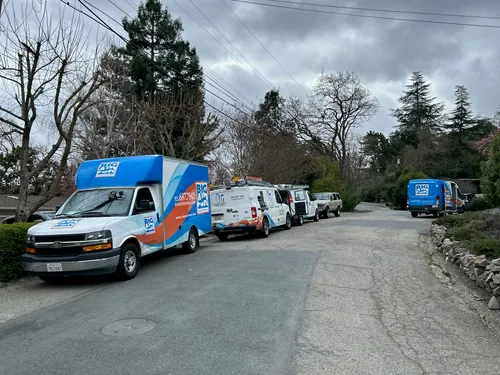
Big Air Heating & Air Conditioning
1000 Detroit Ave, Concord, CA 94518
Big Air Heating & Air Conditioning is an HVAC company serving Oakland, CA, with over 20 years of experience. They provide installation, repair, and tune-up services for air conditioning, furnaces, heat pumps, boilers, mini splits, and geothermal heat pumps. Their technicians are certified, drug screened, and background checked, ensuring professional and knowledgeable service. The company works with both commercial and residential clients, offering clear pricing by the job.
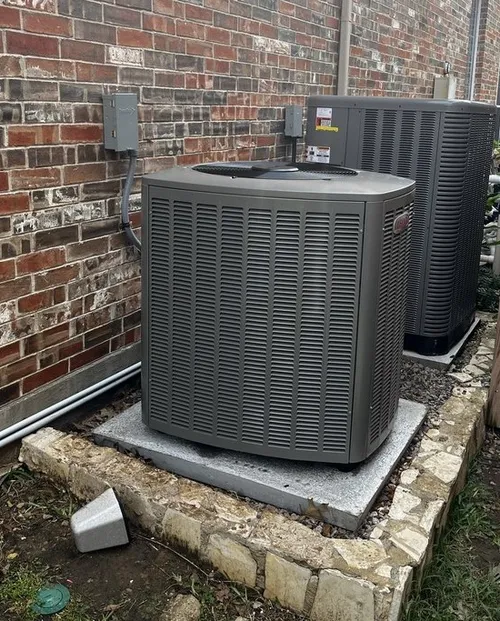
Metro Heating pro
37886 Filbert St, Newark, CA 94560
Metro Heating pro provides heating and air conditioning services in Fremont, CA. They offer repairs, installations, replacements, and maintenance for HVAC systems including furnaces, boilers, heat pumps, mini splits, and geothermal heat pumps. The company serves all brands and models, focusing on clear communication about the work process and timing. Metro Heating pro has built a reputation in the Newark area through years of consistent HVAC service.
Clean Air HVAC INC
428 N Buchanan Cir #1, Pacheco, CA 94553
Clean Air HVAC INC is an HVAC contractor based in Oakland, CA, providing heating and cooling solutions for residential customers. The company offers a wide range of services including installation, repair, and maintenance of furnaces, air conditioners, heat pumps, mini-split systems, and geothermal heat pumps. They also provide indoor air quality services such as air filtration, humidifiers, and ventilation systems. Clean Air HVAC INC serves the East Bay area and is experienced in handling various HVAC systems, including Lennox Healthy Climate Solutions and zoning systems.
Harry Clark Plumbing and Heating Inc
3026 Broadway, Oakland, CA 94611
Harry Clark Plumbing and Heating Inc is an HVAC and plumbing service provider located in San Francisco, CA. The company offers a range of services including air conditioning, furnace, heat pump, boiler repair and installation, as well as mini split and geothermal heat pump installation. With a history dating back to the 1940s, the business has evolved through family ownership and continues to operate with a focus on local service. The company is known for maintaining a strong presence in the Oakland and Berkeley area, operating two separate entities for plumbing and heating/air conditioning services.
East Bay Hydronics
Oakland, CA
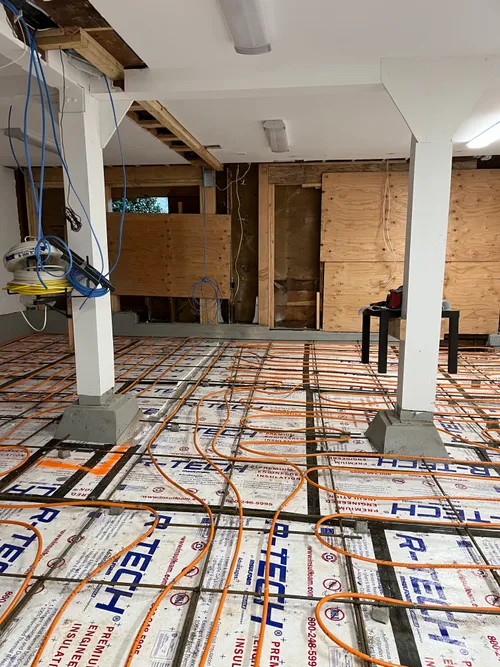
East Bay Hydronics is a heating and cooling contractor based in Oakland, CA, serving the Bay Area. They specialize in hydronic systems for both residential and commercial properties, including radiant heating and cooling, boilers, water heaters, solar thermal, and geothermal heat pumps. With over 17 years of experience, they support new construction and remodeling projects.
How Geothermal Heating and Cooling Works
A geothermal system, often called a ground-source heat pump (GSHP), leverages the earth's constant underground temperature-a steady 50 to 60 degrees Fahrenheit just a few feet below the surface in our region. This consistency is the key to its remarkable efficiency.
The core of the system is a loop of durable pipe buried in the ground, filled with a water-based solution. During the winter, this fluid circulates through the underground loop, absorbing the earth's natural warmth. It then travels to an indoor heat pump unit, which concentrates that low-grade heat and distributes warm air throughout your home via standard ductwork. In the summer, the process simply reverses: the system extracts heat from your indoor air and transfers it into the cooler ground loop, leaving your home comfortably cooled 1.
This elegant heat exchange process is incredibly efficient. For every single unit of electricity used to run the compressor and pumps, a geothermal system can move three to five units of heating or cooling energy, achieving efficiencies of 300% to 500% 2 3. This starkly contrasts with even the best traditional furnaces and air conditioners, which convert energy rather than move it.
Types of Ground Loops for San Leandro Properties
The underground portion, or ground loop, is the heart of the system. The right type for your San Leandro home depends on your lot size, soil composition, and budget. A professional site assessment is essential to determine the best approach.
Horizontal Closed Loops: This is often the most cost-effective option if space allows. Trenches are dug about four to six feet deep in your yard, and pipes are laid in a series of parallel runs or slinky coils. This method requires a significant amount of open land, typically between a quarter to three-quarters of an acre4 5 6.
Vertical Closed Loops: For properties with limited yard space, like many in established San Leandro neighborhoods, vertical loops are the ideal solution. A drilling rig creates boreholes 150 to 400 feet deep, and U-shaped pipe loops are inserted into each hole. While the drilling process is more specialized and can involve more permitting, it minimizes surface disruption and is excellent for rocky soil.
Open Loop Systems: Less common in residential settings, an open loop system uses groundwater from a well as the direct heat exchange fluid. After passing through the heat pump, the water is returned to a second well or a suitable discharge point. This system is highly efficient but requires an adequate, consistent supply of clean groundwater and compliance with local water regulations.
The Installation Process: What to Expect
Installing a geothermal system is a significant project that requires expertise in excavation, plumbing, and HVAC. Understanding the steps can help you prepare.
- Comprehensive Site Evaluation: A qualified installer will assess your property's soil conditions, available space, existing ductwork, and heating/cooling loads. This evaluation determines the optimal loop type and size for your home's needs.
- Loop Field Installation: For horizontal systems, this involves trenching with excavators. For vertical systems, a drill rig will be brought in to create the boreholes. The high-density polyethylene pipes are then placed, connected into a manifold, and pressure-tested.
- Indoor Unit Installation: The geothermal heat pump unit, which is typically about the size of a small furnace, is installed in your garage, basement, or utility closet. It connects to your home's existing ductwork or a new air distribution system.
- System Connection and Commissioning: The ground loops are connected to the indoor unit via buried supply and return lines. The entire loop is filled with the heat-transfer fluid, purged of air, and pressurized. Finally, the system is started, tested, and balanced to ensure optimal performance7 8.
Find the perfect geothermal heat pump contractors for your needs
Get personalized recommendations and expert advice
Financial Benefits and Incentives
The upfront investment for a geothermal heat pump system is higher than for a conventional HVAC system, often ranging from $20,000 to $40,000 or more, depending on the home's size and loop type9. However, the long-term financial picture is compelling due to dramatic operational savings and available incentives.
Substantial Energy Savings: Homeowners typically see a 30% to 65% reduction in their heating and cooling bills10 11. In San Leandro's mild climate, where temperature extremes are rare, the system operates at peak efficiency year-round, maximizing these savings. This can translate to hundreds or even thousands of dollars saved annually12 13.
Favorable Payback Period: The combination of high energy savings and financial incentives means the initial premium is often recouped in a 5- to 10-year payback period. After that, the continued savings go directly into your pocket for the system's long lifespan, which can exceed 25 years for the indoor unit and 50+ years for the underground loops14.
Available Financial Incentives:
- Federal Tax Credit: The federal government offers a significant tax credit for qualifying geothermal heat pump installations, which can directly reduce your federal income tax liability.
- California-Specific Programs: The state of California and local utilities often have additional rebates, loans, or incentive programs to promote clean energy technologies like geothermal. A local installer will be knowledgeable about the current opportunities, such as those outlined in the California Buyers Guide.
Why Geothermal is a Smart Choice for San Leandro
San Leandro's climate and environmental ethos make it an excellent location for geothermal technology. The Bay Area's temperate weather means your ground-source system rarely has to work against extreme outdoor temperatures, allowing it to maintain its ultra-high efficiency with less strain 15. Furthermore, by switching to a geothermal system, you are eliminating on-site fossil fuel combustion for heating, significantly reducing your household's carbon emissions and contributing to California's clean energy goals.
Choosing a local installer with experience in the East Bay is crucial. They will understand the specific permitting requirements for drilling in Alameda County, be familiar with local soil conditions, and can expertly navigate the interconnection with your existing home infrastructure 16 17.
Frequently asked questions
Sources
Footnotes
-
How it Works: Ground Source (Geothermal) Heat Pumps (GSHP) - https://www.youtube.com/watch?v=uhXUV2Xm5fQ ↩
-
Geothermal (Ground Source) Heat Pumps - NY.gov - https://cleanheat.ny.gov/geothermal-heat-pumps/ ↩
-
Guide to Geothermal Heat Pumps - https://www.energy.gov/sites/prod/files/guide_to_geothermal_heat_pumps.pdf ↩
-
How Does A Geothermal Heat Pump Work? Complete 2025 Guide - https://solartechonline.com/blog/how-does-geothermal-heat-pump-work/ ↩
-
Geothermal heat pumps: The ultimate guide to ground-source ... - https://termo-plus.com/blog/geothermal-ultimate-guide-to-ground-source-heat-pumps/ ↩
-
Ground Source Heat Pumps: 10 Benefits And Other Amazing Facts - https://www.greenbuildingrenewables.co.uk/ground-source-heat-pumps-benefit/ ↩
-
Geothermal Heat Pump Installation: What To Expect For Your Property - https://jomory.com/geothermal-heat-pump-installation-what-to-expect-for-your-property/ ↩
-
How Geothermal Heat Pumps Work - https://www.youtube.com/watch?v=XxlTnBukweI&t=37 ↩
-
Geothermal Heat Pump Guide: Installation Costs, Types And Benefits - https://modernize.com/hvac/heating-repair-installation/heat-pump/geothermal ↩
-
Geothermal Heat Pumps - Department of Energy - https://www.energy.gov/energysaver/geothermal-heat-pumps ↩
-
5 Things You Should Know about Geothermal Heat Pumps - https://www.energy.gov/cmei/articles/5-things-you-should-know-about-geothermal-heat-pumps ↩
-
The California Buyers Guide to Geothermal Heat Pump Systems - https://www.californiageo.org/wp-content/uploads/CA-Buyers-Guide-for-Geothermal-HP-revised-12-13-24.pdf ↩
-
Geothermal Heat Pumps - EnergySmart CNY - https://www.energysmartcny.org/heat-pumps/geothermal/ ↩
-
All You Need to Know About Home Geothermal Heating & ... - https://dandelionenergy.com/all-you-need-to-know-about-home-geothermal-heating-cooling ↩
-
How Geothermal Heating and Cooling Systems Work | Belle Air - https://www.belleairservices.com/how-geothermal-heating-and-cooling-systems-work/ ↩
-
Geothermal Installer | San Jose, CA | Coldcraft Inc. - https://coldcraft.com/renewable-hvac/geothermal-residential/ ↩
-
Hybrid Heating Systems - Raypak - https://www.raypak.com/tech-corner/hybrid-heating-systems/ ↩