Find the Best Geothermal Heat Pump Contractors for Your Business
No obligation • Fast responses • Nationwide coverage

Why you can trust HVAC Firms
HVAC Firms is a leading United States resource for evaluating HVAC service providers. Our team researches companies, checks credentials, and reviews customer feedback to present clear, unbiased information. Listings and rankings are based on merit, and companies cannot pay to change our editorial content.
Search providers near you
Top Geothermal Heat Pump Contractors in San Clemente, California Ranked
A geothermal heat pump is a highly efficient heating and cooling system that uses the stable temperature of the earth to regulate your home's climate. For San Clemente residents, this technology offers a powerful way to reduce energy bills, increase comfort, and lower your environmental footprint. This guide explains how ground-source heat pumps work, what installation involves, and how you can find qualified local experts to assess your property for this sustainable upgrade.
NexGen HVAC & Plumbing
23221 Peralta Dr Ste C, Laguna Hills, CA 92653
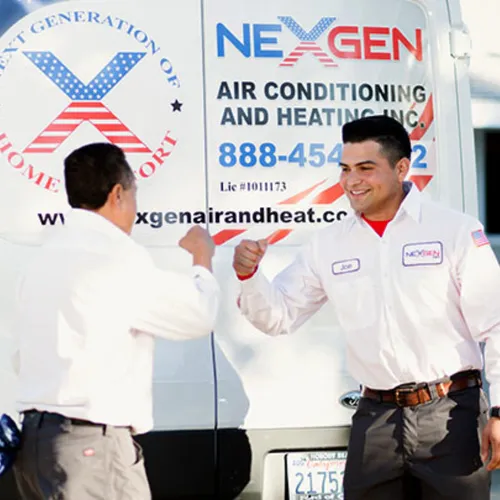
NexGen HVAC & Plumbing is a full-service heating and cooling company based in Irvine, CA. They provide installation, repair, and maintenance for a wide range of HVAC systems including traditional, electric, ductless, rooftop units, heat pumps, and geothermal systems. Their services also include air duct cleaning, thermostat installation, and HVAC tune-ups to improve system performance. NexGen HVAC & Plumbing offers insulation services for air ducts, walls, attics, and crawlspaces to enhance comfort and address issues such as mold and water leaks.
Comfort Elite HVAC
1080 N Batavia St Ste N, Orange, CA 92867
Comfort Elite HVAC provides a wide range of heating, air conditioning, and indoor air quality services in Los Angeles, CA. With over 10 years of experience, they handle installation, repair, and maintenance for systems including heat pumps, furnaces, mini splits, and geothermal heating. Their services cover air duct cleaning, air purification, and refrigerant recharge, aiming to improve home comfort and air quality. Comfort Elite HVAC offers 24/7 emergency repair services and same-day responses to HVAC issues, ensuring timely assistance for heating and cooling needs.
Cooling & Heating Repair
Long Beach, CA
Cooling & Heating Repair is an HVAC company serving Long Beach, CA, offering a wide range of services including air conditioning and furnace repair, heat pump and boiler maintenance, and installation of mini splits and geothermal systems. They provide emergency heating and AC services, central system installations, and HVAC tune-ups. The company has maintained a 5-star customer rating for 11 years, reflecting their experience in the local climate control industry. Their technicians are skilled in diagnosing and repairing common HVAC issues such as faulty thermostats, refrigerant leaks, and compressor problems, ensuring systems operate efficiently and safely.
How Geothermal Systems Work: Tapping into Earth's Constant Temperature
The core principle behind a geothermal or ground-source heat pump is remarkably simple: it leverages the earth's near-constant underground temperature. Just a few feet below the surface in San Clemente, the ground maintains a stable temperature of approximately 50-60°F year-round, regardless of the summer heat or occasional cooler winter nights. This stability is the system's powerhouse.
Here's the basic process:
- Heat Exchange: A loop of pipes, called a ground loop, is buried in your yard. A water-based fluid circulates through these pipes.
- Winter Heating: In heating mode, the fluid absorbs the earth's natural warmth. This warmed fluid is brought to a heat pump unit inside your home, where the heat is concentrated and distributed through your existing ductwork or radiant floor system.
- Summer Cooling: In cooling mode, the system reverses. It extracts heat from your home and transfers it into the cooler ground loop fluid, which then dissipates the heat into the earth. The now-chilled air is circulated inside your home.
This elegant exchange of heat with the ground is far more efficient than generating heat through combustion or fighting the outdoor air temperature with a standard air conditioner.
Types of Ground Loops: Finding the Right Fit for Your Property
The buried pipe system, or ground loop, is the heart of the installation. The right type for your San Clemente home depends on your lot size, soil conditions, and local geology. The main categories are closed-loop and open-loop systems.
Closed-Loop Systems (Most Common) These systems continuously circulate a sealed mixture of water and antifreeze through a network of durable, high-density polyethylene pipes.
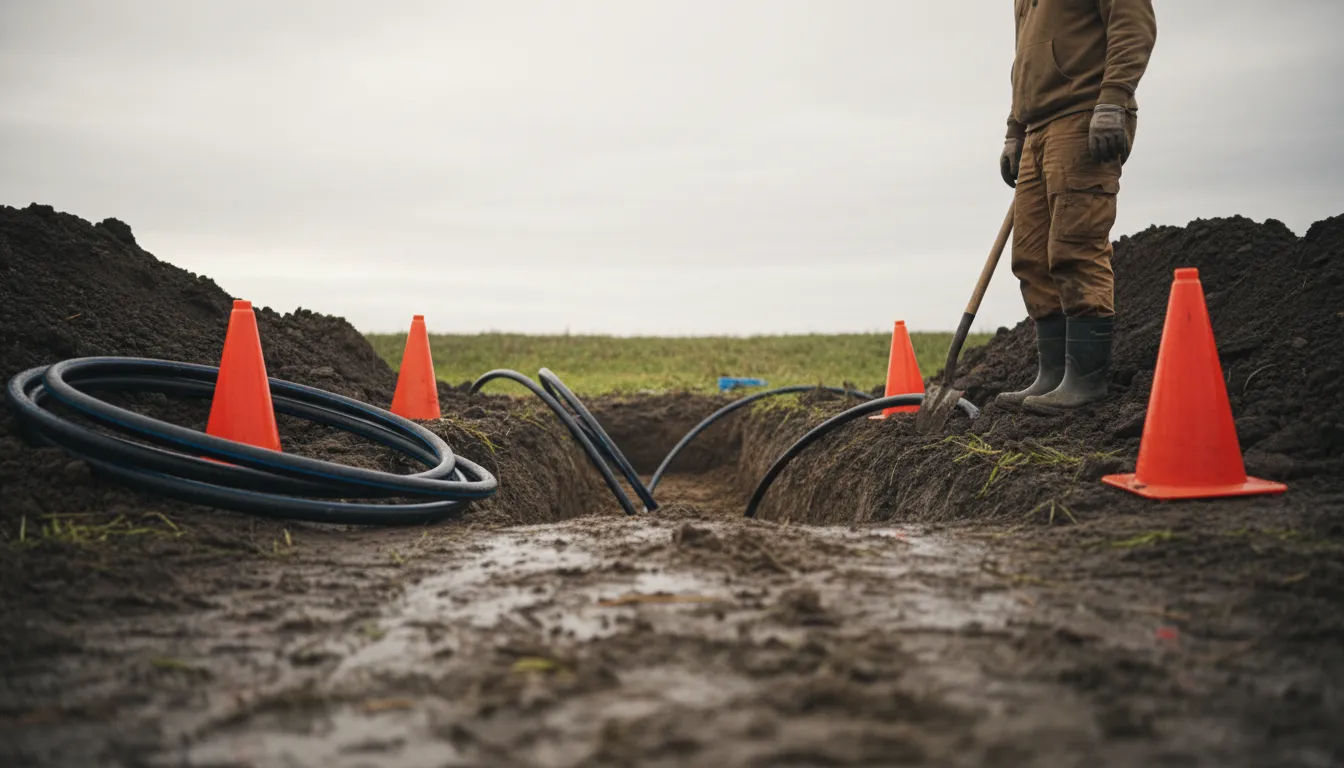
- Horizontal Loop: Pipes are laid in trenches typically 4 to 6 feet deep. This is often the most cost-effective method but requires a significant amount of available land 1.
- Vertical Loop: For homes with smaller yards, like many in San Clemente, vertical loops are the standard solution. Contractors drill boreholes 150 to 250 feet deep and insert U-shaped loop pipes. While drilling increases upfront costs, it minimizes landscape disruption and is ideal for limited space 2 3.
- Pond/Lake Loop: If you have access to a sufficient body of water, coils of pipe can be submerged at the bottom. This can be a very efficient and lower-cost option, but it requires a nearby, suitable pond or lake 4.
Open-Loop Systems This method uses groundwater directly from a well or aquifer. Water is pumped through the heat pump unit and then discharged back into a second well or a suitable surface drainage area. While potentially very efficient, open-loop systems require an abundant, high-quality water source and are subject to more stringent local permitting and environmental regulations.
Find the perfect geothermal heat pump contractors for your needs
Get personalized recommendations and expert advice
The Installation Process: From Assessment to Activation
Installing a geothermal system is a significant project that requires specialized expertise. Understanding the steps can help you know what to expect when working with a local provider.
- Comprehensive Site Assessment: A qualified installer will start with a detailed evaluation of your property. They'll assess your home's heating and cooling loads, examine your soil and rock composition, evaluate available space, and check local water table conditions. This assessment is critical for designing an optimally sized and configured system 5.
- System Design & Permitting: The installer will design the loop field and specify the indoor heat pump unit. They will also handle securing the necessary permits from local building and planning departments in Orange County, which are especially important for drilling and water use 6.
- Ground Loop Installation: This is the major excavation phase. For a vertical system, a drilling rig will create the boreholes. For a horizontal system, a backhoe will dig the trenches. The pipe is then placed, connected, and pressure-tested before the trenches or boreholes are backfilled 7.
- Indoor Unit & Connection: The geothermal heat pump unit, which is typically about the size of a small refrigerator, is installed in your garage, basement, or utility closet. It is connected to your home's ductwork and to the fluid lines running from the ground loop. An experienced technician will also integrate the system with your home's electrical panel and thermostat controls.
- System Charging, Testing, & Startup: The loop is filled with fluid, and the entire system is purged of air. The installer will then start up the system, calibrate it for peak performance, and ensure all components-from the pump to the thermostat-are communicating correctly.
Financial Benefits: Savings, Payback, and Incentives
The primary advantage of a geothermal heat pump is long-term economic gain, despite a higher initial investment.
- Substantial Energy Savings: By moving heat rather than creating it, geothermal systems operate with exceptional efficiency. Homeowners can typically reduce their energy consumption for heating and cooling by 40% to 65% compared to conventional systems, translating to savings of hundreds or even thousands of dollars on annual utility bills 8 9 10.
- Understanding Payback Period: The total installed cost for a residential geothermal system can be two to three times that of a high-efficiency conventional system. However, the dramatic reduction in monthly operating costs means the initial premium is often recouped through savings within 5 to 10 years. After this payback period, the ongoing savings go directly into your pocket for the system's remaining 20+ year lifespan.
- Leveraging Incentives: To improve affordability, significant financial incentives are available:
- Federal Tax Credit: The federal Residential Clean Energy Credit offers a 30% tax credit on the total installed cost of a qualifying geothermal heat pump system, with no upper limit 11.
- State & Local Rebates: California and local utilities, such as Southern California Edison, often offer additional rebates or incentive programs. Your local installer should be well-versed in the latest available offers to help maximize your savings 12.
Why Geothermal is a Smart Choice for San Clemente
San Clemente's climate and community values make it an excellent location for geothermal technology. The moderate coastal temperatures mean the system works efficiently year-round. For homes on smaller lots, vertical borehole installations are a proven, space-saving solution. By reducing dependence on the electrical grid for air conditioning and avoiding natural gas for heating, homeowners not only save money but also significantly reduce their household carbon footprint 13.
With potential monthly savings that can offset a large portion of the higher upfront cost over time, a geothermal installation represents a strategic investment in both home comfort and long-term value.
Frequently asked questions
Sources
Footnotes
-
Geothermal Heat Pump and Ground Loop Technologies - https://efiling.energy.ca.gov/GetDocument.aspx?tn=73451 ↩
-
Geothermal heat pumps: The ultimate guide to ground-source ... - https://termo-plus.com/blog/geothermal-ultimate-guide-to-ground-source-heat-pumps/ ↩
-
Geothermal Installation Steps Explained - https://ultrageothermal.com/geothermal-installation-steps-explained/ ↩
-
Geothermal heating & cooling, heat pumps, heat exchange ... - https://aztechgeo.com/residential-geothermal/how-it-works/ ↩
-
All You Need to Know About Home Geothermal Heating & ... - https://dandelionenergy.com/all-you-need-to-know-about-home-geothermal-heating-cooling ↩
-
Training - Ground Source Heat Pumps Guide - https://vivatraining.co.uk/blog/training/ground-source-heat-pumps-guide/ ↩
-
Geothermal Heat Pumps | WBDG - https://www.wbdg.org/resources/geothermal-heat-pumps ↩
-
The California Buyers Guide to Geothermal Heat Pump Systems - https://www.californiageo.org/wp-content/uploads/CA-Buyers-Guide-for-Geothermal-HP-revised-12-13-24.pdf ↩
-
5 Things You Should Know about Geothermal Heat Pumps - https://www.energy.gov/cmei/articles/5-things-you-should-know-about-geothermal-heat-pumps ↩
-
Guide to Geothermal Heat Pumps - https://www.energy.gov/sites/prod/files/guide_to_geothermal_heat_pumps.pdf ↩
-
Geothermal Heat Pumps - Department of Energy - https://www.energy.gov/energysaver/geothermal-heat-pumps ↩
-
Geothermal Heat Pumps - EnergySmart CNY - https://www.energysmartcny.org/heat-pumps/geothermal/ ↩
-
How Does A Geothermal Heat Pump Work? Complete 2025 Guide - https://solartechonline.com/blog/how-does-geothermal-heat-pump-work/ ↩