Find the Best Geothermal Heat Pump Contractors for Your Business
No obligation • Fast responses • Nationwide coverage

Why you can trust HVAC Firms
HVAC Firms is a leading United States resource for evaluating HVAC service providers. Our team researches companies, checks credentials, and reviews customer feedback to present clear, unbiased information. Listings and rankings are based on merit, and companies cannot pay to change our editorial content.
Search providers near you
Top Geothermal Heat Pump Contractors in San Bruno, California Ranked
A geothermal heat pump, also known as a ground-source heat pump, is a highly efficient heating and cooling system that leverages the Earth's stable underground temperature. For San Bruno homeowners, this technology offers a path to drastically lower energy bills and a reduced carbon footprint while providing consistent, quiet comfort year-round. This guide explains how these systems work, what installation entails, and how you can find qualified local specialists to evaluate your property for this long-term investment.
Metro Heating pro
37886 Filbert St, Newark, CA 94560
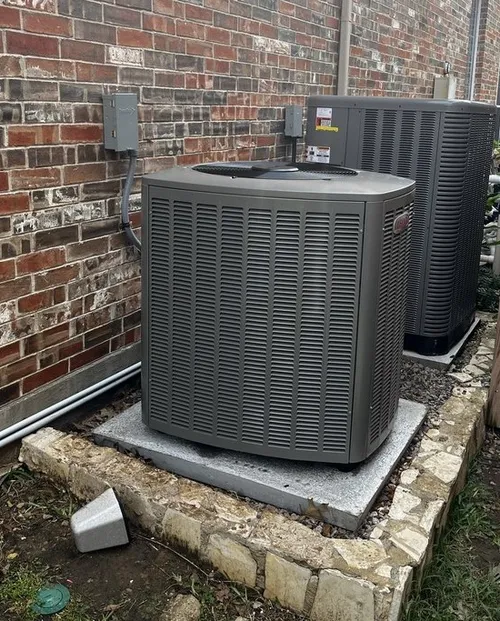
Metro Heating pro provides heating and air conditioning services in Fremont, CA. They offer repairs, installations, replacements, and maintenance for HVAC systems including furnaces, boilers, heat pumps, mini splits, and geothermal heat pumps. The company serves all brands and models, focusing on clear communication about the work process and timing. Metro Heating pro has built a reputation in the Newark area through years of consistent HVAC service.
Harry Clark Plumbing and Heating Inc
3026 Broadway, Oakland, CA 94611
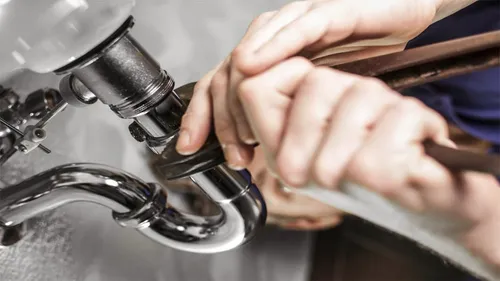
Harry Clark Plumbing and Heating Inc is an HVAC and plumbing service provider located in San Francisco, CA. The company offers a range of services including air conditioning, furnace, heat pump, boiler repair and installation, as well as mini split and geothermal heat pump installation. With a history dating back to the 1940s, the business has evolved through family ownership and continues to operate with a focus on local service. The company is known for maintaining a strong presence in the Oakland and Berkeley area, operating two separate entities for plumbing and heating/air conditioning services.
East Bay Hydronics
Oakland, CA
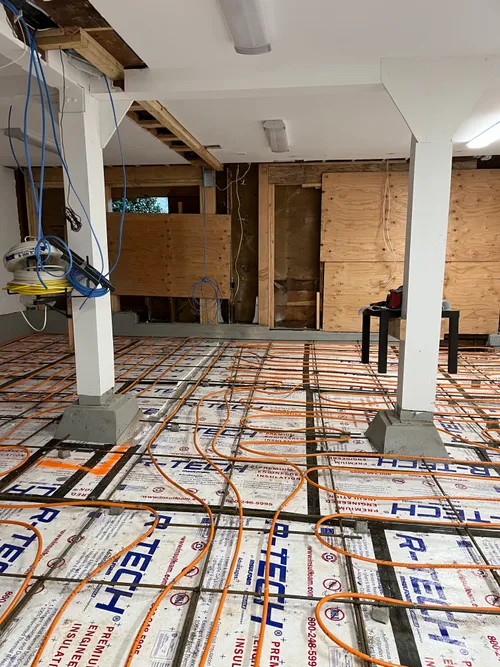
East Bay Hydronics is a heating and cooling contractor based in Oakland, CA, serving the Bay Area. They specialize in hydronic systems for both residential and commercial properties, including radiant heating and cooling, boilers, water heaters, solar thermal, and geothermal heat pumps. With over 17 years of experience, they support new construction and remodeling projects.
MCL Heating & Air Conditioning, Inc.
San Francisco, CA
MCL Heating & Air Conditioning, Inc. is an HVAC contractor serving San Francisco, CA. They provide a full range of heating, ventilation, air conditioning, and refrigeration repair and installation services. Their expertise includes working with furnaces, heat pumps, boilers, mini splits, geothermal heat pumps, and HVAC tune-ups. The company has built a reputation over many years for professionalism and quality work.
How a Geothermal System Works
Unlike traditional air-source heat pumps or furnaces that exchange heat with the outside air, a ground-source heat pump uses the Earth as its heat source and heat sink. A few feet below the surface, the ground maintains a nearly constant temperature of 50-60°F year-round, regardless of San Bruno's weather. This stable thermal resource is the key to the system's remarkable efficiency.
The process involves three main components:
- The Ground Loop: A closed loop of high-density polyethylene pipe is buried in your yard. It circulates a water-based fluid (often mixed with antifreeze).
- The Heat Pump Unit: This indoor unit, similar in size to a traditional furnace, contains a compressor and heat exchanger.
- The Distribution System: Your home's existing ductwork or a hydronic (water-based) system delivers conditioned air or heat.
In winter, the fluid in the underground pipes absorbs the Earth's natural heat. This warmed fluid is pumped to the indoor heat pump unit, which extracts the heat, concentrates it, and distributes warm air throughout your home 1. In summer, the process reverses: the system extracts heat from your home's air and transfers it into the cooler ground loop fluid, which then dissipates the heat into the Earth, leaving your home comfortably cooled 2.
Types of Ground Loop Systems
The design of the underground piping, or "ground loop," is critical and depends on your property's characteristics. There are three primary configurations used in residential geothermal installations.
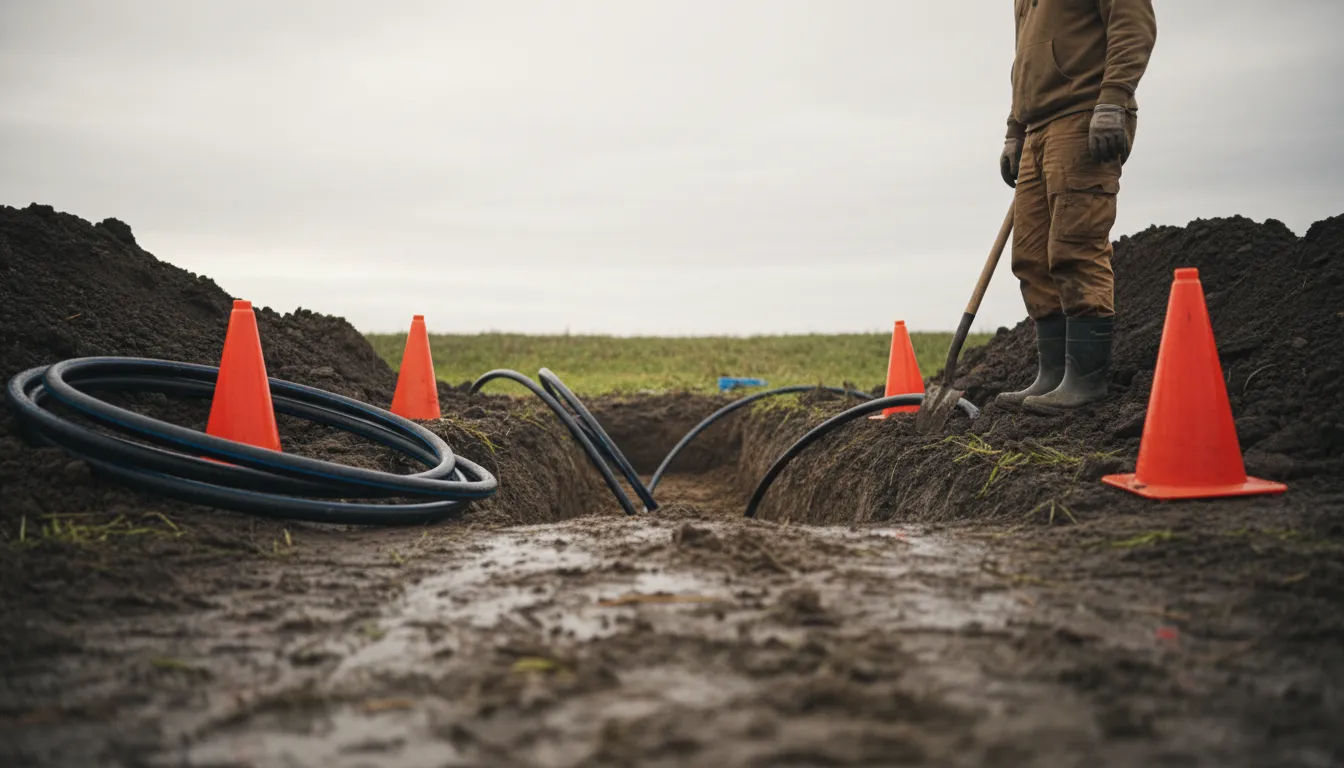
Horizontal Closed Loop This is often the most cost-effective option if sufficient land is available. Contractors dig trenches four to six feet deep, typically requiring a lot area several times the size of your home's footprint 3. Multiple pipes are laid in these trenches before they are backfilled. This method is commonly employed in new construction where the yard can be easily excavated before landscaping is established.
Vertical Closed Loop For homes in San Bruno with smaller lots, a vertical loop system is the standard solution. Contractors use a drilling rig to bore holes 150 to 400 feet deep 4 5. A single U-shaped pipe is inserted into each borehole, which are then spaced about 20 feet apart and grouted for optimal thermal conductivity. While drilling costs are higher, this method minimizes landscape disruption and is ideal for retrofit projects.
Open Loop System This less common system uses groundwater from a well or a pond as the direct heat exchange fluid. After passing through the heat pump, the water is returned to a second well or discharged to the surface. Its feasibility depends entirely on having an adequate supply of clean water and complying with local codes regarding water discharge.
The Installation Process for San Bruno Homes
Installing a geothermal heating and cooling system is a significant project that requires careful planning and expert execution. The process generally follows these key stages:
- Site Evaluation and Design: A qualified installer will conduct a thorough assessment of your property. This includes evaluating soil composition, rock content, available land, and your home's heating and cooling loads. This data is used to design the most effective and efficient loop field and select the correctly sized heat pump unit.
- Loop Field Installation: This is the most disruptive phase. For a horizontal system, trenching equipment will be used. For a vertical system, a drilling rig will be on site. This work temporarily affects your yard but is completed within a few days to a week.
- Indoor Unit Installation: The geothermal heat pump unit is installed inside your home, typically in a basement, garage, or utility closet. Your installer will connect it to your existing ductwork or radiant floor system. This part of the job is similar to installing a conventional HVAC system.
- System Charging and Startup: The loop is pressure-tested, filled with fluid, and purged of air. The heat pump and controls are then commissioned, tested, and balanced to ensure optimal performance.
Find the perfect geothermal heat pump contractors for your needs
Get personalized recommendations and expert advice
Benefits and Long-Term Value
The decision to install a geothermal system is an investment that pays dividends for decades. The primary advantages include:
- Substantial Energy Savings: By tapping into the Earth's consistent temperature, geothermal heat pumps operate with exceptional efficiency. Homeowners typically see a 30% to 60% reduction in energy use for heating and cooling compared to conventional systems, which can translate to savings of up to 65% on related utility bills 6 7 8.
- Long System Lifespan: The underground loop piping is incredibly durable, with a lifespan often exceeding 50 years. The indoor heat pump unit typically lasts 20 to 24 years-significantly longer than the average air conditioner or furnace 9.
- Quiet Operation and Comfort: With no noisy outdoor condenser unit, geothermal systems operate very quietly. They also provide more consistent temperatures and better humidity control than forced-air systems reliant on outside air temperatures 10.
- Environmental Impact: Geothermal systems have a minimal carbon footprint, especially when paired with renewable electricity. They use no combustion on-site and simply move existing heat, making them one of the cleanest heating and cooling technologies available 11.
- Financial Payback: While the upfront installation cost is higher than traditional HVAC, the combination of massive energy savings, exceptional durability, and available rebates (like federal tax credits) can lead to a payback period of 5 to 10 years for many homeowners 12 13. After that, the ongoing savings contribute directly to your household budget.
Is Geothermal Right for Your Home?
Geothermal heat pump technology is a premier choice for eco-conscious homeowners in the Bay Area seeking ultimate efficiency and long-term value. It is an excellent fit for new construction projects, where loop field installation can be seamlessly integrated into the site work. It's also a compelling option for major remodels or homeowners planning to stay in their homes long enough to realize the full financial return.
The key considerations are having adequate space for the ground loop (even a small lot can often accommodate vertical bores) and being prepared for the initial excavation or drilling work. For those who qualify, it represents a permanent upgrade to your home's infrastructure that delivers comfort, savings, and sustainability for generations.
Frequently asked questions
Sources
Footnotes
-
Cold Climate Ground Source Heat Pumps: Ultimate Guide - https://igshpa.org/igshpa-blog/cold-climate-ground-source-heat-pumps-ultimate-guide/ ↩
-
Unlocking Underground Energy: Ground Source Heat Pumps - https://www.ncsl.org/energy/unlocking-underground-energy-ground-source-heat-pumps ↩
-
Geothermal heating & cooling, heat pumps, heat exchange ... - https://aztechgeo.com/residential-geothermal/how-it-works/ ↩
-
Geothermal Heat Pumps, Explained - Bosch Home Comfort - https://www.bosch-homecomfort.com/us/en/residential/connect/blog/geothermal-heat-pumps-go-green-save-green/ ↩
-
Geothermal Heat Pump and Ground Loop Technologies - https://efiling.energy.ca.gov/GetDocument.aspx?tn=73451 ↩
-
How Geothermal Heating and Cooling Systems Work | Belle Air - https://www.belleairservices.com/how-geothermal-heating-and-cooling-systems-work/ ↩
-
Geothermal Heat Pumps - Department of Energy - https://www.energy.gov/energysaver/geothermal-heat-pumps ↩
-
5 Things You Should Know about Geothermal Heat Pumps - https://www.energy.gov/cmei/articles/5-things-you-should-know-about-geothermal-heat-pumps ↩
-
Geothermal Heat Pump Guide: Installation Costs, Types And Benefits - https://modernize.com/hvac/heating-repair-installation/heat-pump/geothermal ↩
-
Comprehensive Guide to Heat Pumps for California ... - https://www.calljazz.com/blog/comprehensive-guide-to-heat-pumps-for-california-homeowners/ ↩
-
The California Buyers Guide to Geothermal Heat Pump Systems - https://www.californiageo.org/wp-content/uploads/CA-Buyers-Guide-for-Geothermal-HP-revised-12-13-24.pdf ↩
-
Geothermal Heat Pumps - EnergySmart CNY - https://www.energysmartcny.org/heat-pumps/geothermal/ ↩
-
Guide to Geothermal Heat Pumps - https://www.energy.gov/sites/prod/files/guide_to_geothermal_heat_pumps.pdf ↩