Find the Best Geothermal Heat Pump Contractors for Your Business
No obligation • Fast responses • Nationwide coverage

Why you can trust HVAC Firms
HVAC Firms is a leading United States resource for evaluating HVAC service providers. Our team researches companies, checks credentials, and reviews customer feedback to present clear, unbiased information. Listings and rankings are based on merit, and companies cannot pay to change our editorial content.
Search providers near you
Top Geothermal Heat Pump Contractors in Rancho Santa Margarita, California Ranked
A geothermal heat pump is one of the most efficient and sustainable ways to heat and cool your home. By tapping into the earth's stable underground temperature, these systems provide exceptional comfort year-round while dramatically reducing energy use. This guide explains how geothermal systems work in Rancho Santa Margarita, the installation process, and how you can find qualified local experts to assess your property.
Moffett Plumbing & Air
13950 Milton Ave, Westminster, CA 92683
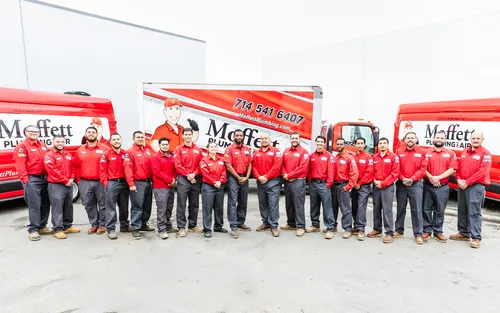
Moffett Plumbing & Air is a plumbing and HVAC company serving Long Beach, CA, and the surrounding Orange County area. They offer a wide range of services including air conditioning, furnace, heat pump, and boiler repair and installation, as well as duct cleaning, thermostat installation, indoor air quality services, and geothermal heat pump work. Established in 1969, Moffett Plumbing & Air has built a reputation for dependable service and community focus, treating customers with respect and care. Their team is known for professional workmanship and efficiency.
NexGen HVAC & Plumbing
23221 Peralta Dr Ste C, Laguna Hills, CA 92653
NexGen HVAC & Plumbing is a full-service heating and cooling company based in Irvine, CA. They provide installation, repair, and maintenance for a wide range of HVAC systems including traditional, electric, ductless, rooftop units, heat pumps, and geothermal systems. Their services also include air duct cleaning, thermostat installation, and HVAC tune-ups to improve system performance. NexGen HVAC & Plumbing offers insulation services for air ducts, walls, attics, and crawlspaces to enhance comfort and address issues such as mold and water leaks.
NexGen HVAC & Plumbing
10820 Mulberry Ave, Fontana, CA 92337
NexGen HVAC & Plumbing is a full-service contractor based in Riverside, CA, offering a wide range of heating, cooling, and plumbing services. They handle installation, repair, and maintenance of air conditioners, heat pumps, furnaces, ductless mini-splits, and geothermal systems. Their plumbing services include leak detection, drain cleaning, sewer repair, and gas line inspection. NexGen is equipped to service both residential and commercial properties and uses advanced technology such as high-tech camera inspections for plumbing diagnostics. They provide 24/7 emergency service to address urgent HVAC and plumbing issues promptly.
Nelson Air Heating & Air Conditioning
5062 Casa Oro Dr, Yorba Linda, CA 92886
Nelson Air Heating & Air Conditioning provides HVAC installation services in Anaheim, CA. They handle installation for a variety of systems including air conditioners, furnaces, heat pumps, boilers, mini splits, and geothermal heat pumps for both residential and commercial clients. The company installs all major HVAC brands and emphasizes quality materials, efficiency, and workmanship.
Thomas Brothers HVAC & Plumbing
12625 Frederick St, Moreno Valley, CA 92553
Thomas Brothers HVAC & Plumbing is a heating and cooling company located in Riverside, CA. They provide a range of services including installation and repair of air conditioners, furnaces, heat pumps, boilers, mini splits, and geothermal heat pumps. The company also offers HVAC tune-up services to maintain system efficiency. Thomas Brothers HVAC & Plumbing is bonded, insured, and licensed, ensuring compliance with industry standards.
How a Ground Source Heat Pump Works in Our Climate
Geothermal heat pump (GHP) systems, also known as ground-source heat pumps, work by leveraging the earth's stable underground temperature, which in our region typically remains between 40° and 70°F year-round 1 2. This consistency is the key to their remarkable efficiency. Unlike traditional systems that generate heat through combustion or fight against extreme outdoor air temperatures, a geothermal unit simply moves heat.
The process relies on three main components: the ground loop system buried on your property, the indoor heat pump unit, and your home's existing air distribution system (like ductwork) 3.
- In Winter (Heating Mode): A fluid (a mix of water and environmentally friendly antifreeze) circulates through the buried ground loop, absorbing heat from the naturally warmer earth. This warmed fluid travels to the indoor heat pump, where a compressor concentrates the heat and a fan transfers it into your home's air.
- In Summer (Cooling Mode): The process reverses. The heat pump extracts excess heat and humidity from your indoor air and transfers it into the cooler ground via the loop system. This is far more efficient than standard air conditioning because the ground is a much more effective "heat sink" than hot outdoor air 4 5 6.
This elegant heat exchange mechanism is what delivers significant energy bill savings, often 30-70% on heating and 20-50% on cooling for California homeowners.
Types of Geothermal Loop Systems for Local Properties
The most common GHP configurations are closed-loop systems, where the fluid continuously circulates through sealed, high-density polyethylene pipes. The ideal type for your Rancho Santa Margarita home depends on your lot size, soil conditions, and landscape.
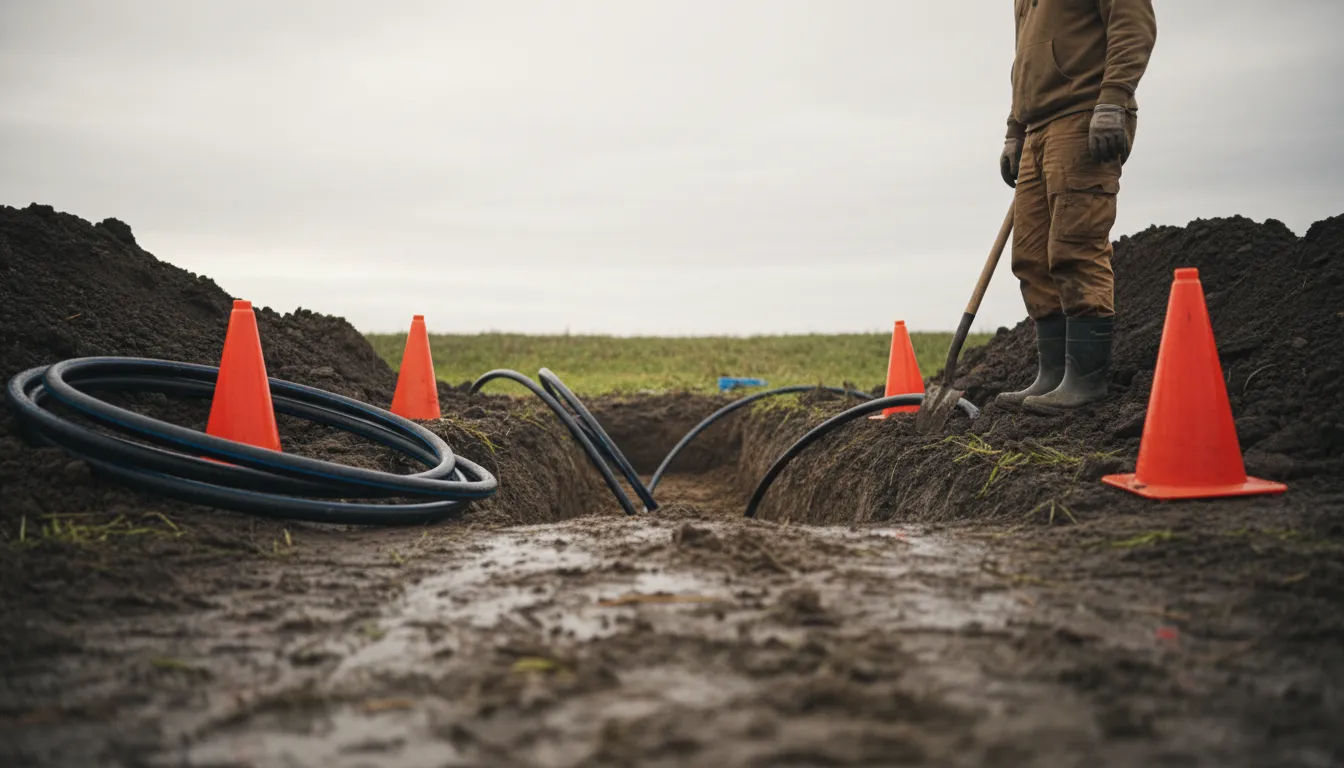
- Horizontal Ground Loops: This is often the most cost-effective option for properties with ample land. Contractors dig trenches roughly 4 to 6 feet deep and 100-350 feet long per ton of system capacity. The pipes are laid in these trenches before backfilling 7 8 9 10 11.
- Vertical Loops: Ideal for urban or smaller lots where space is limited, or where the soil is too shallow for trenching. Installation involves drilling deep, narrow boreholes (100 to 400 feet deep) and inserting U-shaped pipe loops. This method minimizes disruption to existing landscaping like lawns and gardens 12 13 14.
- Pond/Lake Loops: If your property has a suitable body of water nearby (meeting specific depth and quality requirements), coiled pipes can be submerged at least eight feet below the surface. This can be the most economical installation method when feasible.
- Open-Loop Systems: These systems draw groundwater from a well, run it through the heat pump, and then discharge it back into an aquifer or a second well. They are highly efficient but require an adequate source of clean water and must comply with local environmental regulations.
A professional site assessment is crucial to determine the best loop configuration for your specific situation, balancing performance, cost, and property impact 15 16 17.
The Geothermal Installation Process: What to Expect
Installing a geothermal heating and cooling system is a significant project that requires careful planning and expert execution. The process generally follows these key steps:
- Site Assessment and System Design: An accredited contractor will evaluate your home's heating and cooling load, inspect your property's soil conditions and available space, and design the optimal ground loop configuration and heat pump size.
- Ground Loop Installation: This is the major excavation phase.
- For horizontal systems, a backhoe or trencher digs the required network of trenches.
- For vertical systems, a drilling rig creates the necessary boreholes. Pipes are then laid or inserted, and the trenches or boreholes are carefully backfilled or grouted with a special material to ensure good thermal conductivity between the pipe and the earth 18 19.
- Indoor Unit Installation: The indoor heat pump unit is installed in a location like a basement, garage, or mechanical room. It is connected to your home's existing ductwork and to the newly installed underground loops.
- System Testing and Commissioning: The closed-loop system is pressurized to test for leaks, flushed to remove any debris, and filled with fluid. Finally, the entire geothermal system is started, calibrated, and balanced to ensure quiet, efficient operation 20 21 22.
Find the perfect geothermal heat pump contractors for your needs
Get personalized recommendations and expert advice
Understanding Costs, Savings, and Incentives
The initial investment for a geothermal system is higher than for a conventional furnace and air conditioner, with average installation costs around $25,000, though this varies widely based on system size, loop type, and property specifics. However, the long-term financial and environmental benefits are substantial.
- Energy Bill Savings: By leveraging the earth's free thermal energy, homeowners can see dramatic reductions in utility bills. The high efficiency of these systems means you use significantly less electricity to move heat than you would to create it, leading to the potential for over $1,000 in annual savings 23 24 25.
- Return on Investment & Longevity: The energy savings typically lead to a payback period of 5 to 15 years. Furthermore, the underground piping has a lifespan of over 50 years, and the indoor heat pump components often last 20-25 years-much longer than conventional HVAC equipment 26 27.
- Available Incentives: To help offset the upfront cost, federal tax credits are available for qualified geothermal heat pump installations. It's also wise to check the DSIREUSA database for any current California-specific or local utility rebate programs that can provide additional financial support 28.
Is a Geothermal System Right for Your Home?
A ground-source heat pump is an excellent choice for homeowners in Rancho Santa Margarita who plan to stay in their home long enough to realize the long-term savings, are interested in reducing their carbon footprint, and want the ultimate in home comfort with a quiet, draft-free system. It's particularly advantageous for new construction or major renovations, where the loop field can be integrated into the site plan from the beginning. For existing homes, a professional assessment will determine the feasibility and best approach for integrating this renewable technology.
Frequently asked questions
Sources
Footnotes
-
What Are Geothermal Heat Pumps and How Do They Work? - https://www.ges.energy/post/what-are-geothermal-heat-pumps-and-how-do-they-work ↩
-
Geothermal Heat Pumps - Department of Energy - https://www.energy.gov/energysaver/geothermal-heat-pumps ↩
-
Geothermal for Consumers - CaliforniaGeoCaliforniaGeo - https://www.californiageo.org/geothermal-for-consumers/ ↩
-
Geothermal Heat Pumps | WBDG - https://www.wbdg.org/resources/geothermal-heat-pumps ↩
-
Comprehensive Guide to Heat Pumps for California ... - https://www.calljazz.com/blog/comprehensive-guide-to-heat-pumps-for-california-homeowners/ ↩
-
Geothermal Heating and Cooling Cost: A Comprehensive Guide by Summers PHC - https://summersphc.com/geothermal-heating-and-cooling-systems/ ↩
-
How Geothermal Heating and Cooling Systems Work | Belle Air - https://www.belleairservices.com/how-geothermal-heating-and-cooling-systems-work/ ↩
-
Geothermal Heat Pumps - Department of Energy - https://www.energy.gov/energysaver/geothermal-heat-pumps ↩
-
Geothermal Heat Pumps: Everything You Need to Know - EnergySage - https://www.energysage.com/heat-pumps/geothermal-heat-pumps/ ↩
-
4 Types of Geothermal Heat Pumps - https://executivecooling.com/blog/types-geothermal-heat-pumps ↩
-
Geothermal Ground Loop Design | Comfortworks, Inc. - https://comfort.works/ground-loop-design/ ↩
-
Geothermal Heat Pumps | Heating Installation & Maintenance - https://jacksref.com/geothermal-heat-pump-basics/ ↩
-
Geothermal Heat Pump Installation Process - https://earthrivergeothermal.com/geothermal-heat-pump-installation-process/ ↩
-
Geothermal Systems - Comac Pump & Well, LLC - https://www.comacpumpandwell.com/geothermal-systems/ ↩
-
Geothermal Heat Pumps | Definition, Benefits, Types & How to Install - https://www.carboncollective.co/sustainable-investing/geothermal-heat-pumps ↩
-
What is the Difference Between Horizontal & Vertical Closed Loop Ground Source Systems? - https://www.drilcorp.com/what-is-the-difference-between-horizontal-vertical-closed-loop-ground-source-systems/ ↩
-
Geothermal heat pumps for sustainable living. - Carrier - https://www.carrier.com/us/en/residential/geothermal-heat-pumps/ ↩
-
Geothermal Loop Design 101 - https://precisioncomfort.com/geothermal-loop-design-101/ ↩
-
Unlock Energy Savings with Geothermal HVAC for Commercial Buildings - https://galgonhvac.com/geothermal-hvac/ ↩
-
The Complete Guide To Geothermal Heat Pump Installation - https://ultrageothermal.com/the-complete-guide-to-geothermal-heat-pump-installation/ ↩
-
Geothermal Installation Steps Explained - https://ultrageothermal.com/geothermal-installation-steps-explained/ ↩
-
Residential Geothermal Loop Systems - https://www.geothermalsolutions.ca/residential-geothermal-loop-systems/ ↩
-
Ground Source Heat Pump Cost: How Much Will You Pay in ... - https://www.energysage.com/heat-pumps/costs-benefits-geothermal-heat-pumps/ ↩
-
Geothermal for Consumers - CaliforniaGeoCaliforniaGeo - https://www.californiageo.org/geothermal-for-consumers/ ↩
-
Geothermal Savings Calculator - https://www.geothermhvac.com/geothermal-heating/savings-calculator/ ↩
-
Geothermal Heat Pump Pros and Cons: Are They Worth It? - https://www.energysage.com/heat-pumps/pros-cons-geothermal-heat-pumps/ ↩
-
What sets WaterFurnace geothermal units apart from traditional systems? They aren't subjected to the punishing effects of outdoor weather or fuel combustion, so they last longer than nearly any other heating and cooling system. According to the American Society of Heating, Refrigerating, and Air- Conditioning Engineers, geothermal units have an average equipment life of 25 years while the underground loop system has a rated material life of more than 100 years. Ordinary air conditioners, furnaces, and heat pumps are rated for only 12-18 years. This is just one reason that geothermal is the reliable renewable. | WaterFurnace Geothermal Heating, Cooling & Hot Water - https://www.facebook.com/WaterFurnace/videos/how-does-geothermal-energy-work/348542092889233/ ↩
-
Geothermal Heat Pump - Rebates - EnergyRight - https://energyright.com/residential/rebates/geothermal-heat-pump/ ↩