
Find the Best Geothermal Heat Pump Contractors for Your Business
No obligation • Fast responses • Nationwide coverage

Why you can trust HVAC Firms
HVAC Firms is a leading United States resource for evaluating HVAC service providers. Our team researches companies, checks credentials, and reviews customer feedback to present clear, unbiased information. Listings and rankings are based on merit, and companies cannot pay to change our editorial content.
Search providers near you
Top Geothermal Heat Pump Contractors in Pomona, California Ranked
A geothermal heat pump is a highly efficient heating and cooling system that uses the Earth's stable underground temperature to regulate your home's climate. This technology, also known as a ground-source heat pump, matters because it can dramatically reduce energy bills and your home's carbon footprint. For Pomona residents exploring this sustainable option, this guide provides essential information to help you understand the technology, evaluate local installation considerations, and connect with qualified professionals for your project.
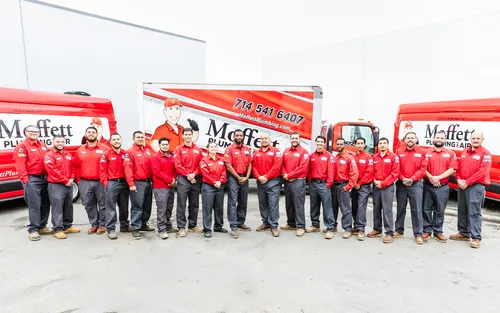
Moffett Plumbing & Air
13950 Milton Ave, Westminster, CA 92683
Moffett Plumbing & Air is a plumbing and HVAC company serving Long Beach, CA, and the surrounding Orange County area. They offer a wide range of services including air conditioning, furnace, heat pump, and boiler repair and installation, as well as duct cleaning, thermostat installation, indoor air quality services, and geothermal heat pump work. Established in 1969, Moffett Plumbing & Air has built a reputation for dependable service and community focus, treating customers with respect and care. Their team is known for professional workmanship and efficiency.
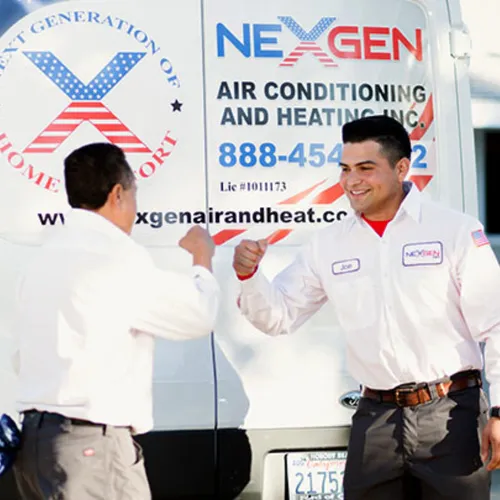
NexGen HVAC & Plumbing
23221 Peralta Dr Ste C, Laguna Hills, CA 92653
NexGen HVAC & Plumbing is a full-service heating and cooling company based in Irvine, CA. They provide installation, repair, and maintenance for a wide range of HVAC systems including traditional, electric, ductless, rooftop units, heat pumps, and geothermal systems. Their services also include air duct cleaning, thermostat installation, and HVAC tune-ups to improve system performance. NexGen HVAC & Plumbing offers insulation services for air ducts, walls, attics, and crawlspaces to enhance comfort and address issues such as mold and water leaks.
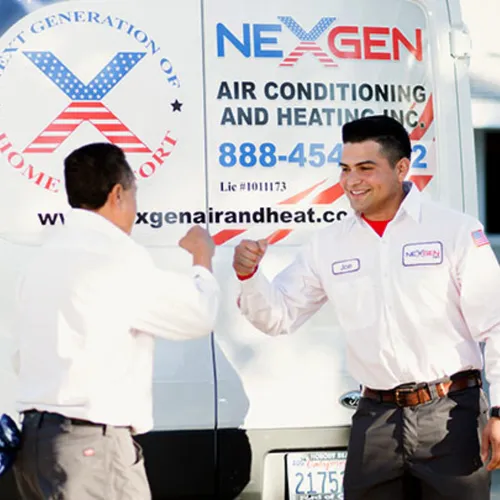
NexGen HVAC & Plumbing
10820 Mulberry Ave, Fontana, CA 92337
NexGen HVAC & Plumbing is a full-service contractor based in Riverside, CA, offering a wide range of heating, cooling, and plumbing services. They handle installation, repair, and maintenance of air conditioners, heat pumps, furnaces, ductless mini-splits, and geothermal systems. Their plumbing services include leak detection, drain cleaning, sewer repair, and gas line inspection. NexGen is equipped to service both residential and commercial properties and uses advanced technology such as high-tech camera inspections for plumbing diagnostics. They provide 24/7 emergency service to address urgent HVAC and plumbing issues promptly.
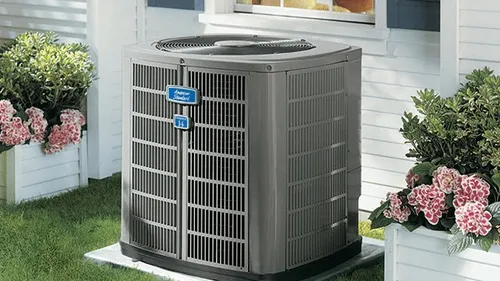
Nelson Air Heating & Air Conditioning
5062 Casa Oro Dr, Yorba Linda, CA 92886
Nelson Air Heating & Air Conditioning provides HVAC installation services in Anaheim, CA. They handle installation for a variety of systems including air conditioners, furnaces, heat pumps, boilers, mini splits, and geothermal heat pumps for both residential and commercial clients. The company installs all major HVAC brands and emphasizes quality materials, efficiency, and workmanship.
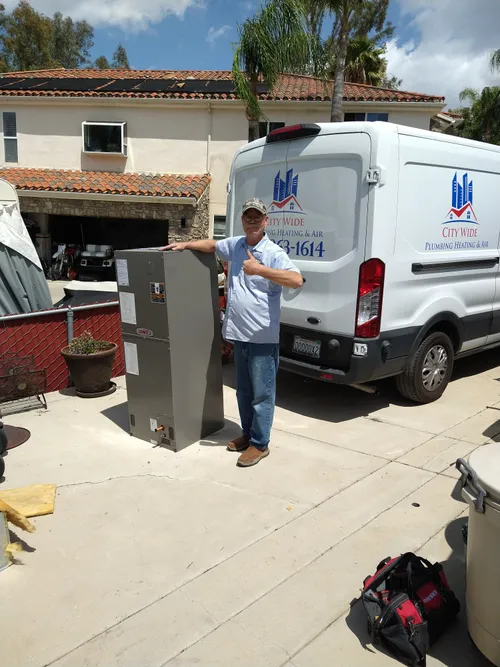
Thomas Brothers HVAC & Plumbing
12625 Frederick St, Moreno Valley, CA 92553
Thomas Brothers HVAC & Plumbing is a heating and cooling company located in Riverside, CA. They provide a range of services including installation and repair of air conditioners, furnaces, heat pumps, boilers, mini splits, and geothermal heat pumps. The company also offers HVAC tune-up services to maintain system efficiency. Thomas Brothers HVAC & Plumbing is bonded, insured, and licensed, ensuring compliance with industry standards.
How Geothermal Systems Work: Harnessing the Earth's Energy
At its core, a geothermal system is a heat exchange process. The Earth just a few feet below the surface maintains a relatively constant temperature, typically between 50-60°F year-round in many regions, including Southern California. A geothermal heat pump leverages this stable thermal resource.
The system has two main components: the ground loop and the heat pump unit. A fluid (often water or an antifreeze solution) circulates through a network of pipes buried underground, known as the ground loop. In the winter, this fluid absorbs heat from the warmer ground and carries it to the heat pump inside your home. The heat pump then concentrates this low-grade thermal energy and distributes warm air through your ductwork 1. For cooling, the process simply reverses: the system extracts heat from your home's air and transfers it into the cooler fluid in the ground loop, which then rejects the heat into the Earth 2. This elegant exchange is what makes ground-source heating and cooling so remarkably efficient.
Types of Ground Loops: Choosing the Right Configuration for Your Property
The ground loop is the critical, site-specific component of any geothermal installation. There are two primary categories: closed-loop and open-loop systems, with closed-loop being the most common for residential applications.
Closed-Loop Systems continuously circulate the same fluid through a sealed, underground pipe network. There are two main configurations:
- Horizontal Closed-Loop: Pipes are laid in trenches dug 4 to 6 feet deep across a large area of your yard. This is often the most cost-effective option but requires a significant amount of available land.
- Vertical Closed-Loop: Pipes are installed in deep boreholes, typically drilled 100 to 400 feet straight down. This configuration is ideal for properties with limited yard space, like many in Pomona, but involves more specialized drilling equipment and can have higher upfront costs 3 4.
Open-Loop Systems use groundwater from a well or a pond as the heat exchange fluid. The water is pumped through the heat pump and then discharged back into a well, recharge basin, or surface body of water. This option can be highly efficient but is entirely dependent on having an adequate supply of suitable water and complying with local groundwater regulations 5 6.
Geothermal Installation in Pomona: Key Local Considerations
Installing a geothermal system in Pomona involves specific site evaluations and logistical planning. The choice between trenching for a horizontal loop and drilling for a vertical loop is a major decision.
For horizontal loops, contractors will assess your property's soil composition and available space. This method is less disruptive to existing structures and landscaping if you have a large, open lot, but the trenching process is extensive. For vertical loops, the focus shifts to geological surveys and drilling access. Specialized rigs are needed to create the boreholes, which is a more technically complex process but minimizes surface disturbance-a key advantage for retrofitting an existing home on a standard city lot.
Whether for new construction or a retrofit, a professional installer will conduct a detailed load calculation for your home and a thorough site survey. This ensures the system is correctly sized and the most practical and efficient loop type is selected for your specific Pomona property.
The Financial Picture: Costs and Long-Term Savings
The primary consideration for most homeowners is the investment. The installed cost for a complete residential geothermal heat pump system typically ranges from $12,000 to over $45,000. This wide range depends heavily on your home's size, the chosen loop type (vertical drilling is more expensive than horizontal trenching), local labor rates, and the system's capacity.
While the initial price tag is higher than a conventional air-source heat pump or furnace, the operational savings are substantial. Geothermal systems can reduce energy consumption for heating and cooling by up to 65% compared to traditional HVAC systems 7 8. For a Pomona homeowner facing Southern California's high electricity rates, these savings can significantly offset the higher upfront cost over time. Furthermore, these systems are renowned for their durability, with ground loops often warrantied for 50 years and heat pump units lasting 20 years or more, leading to lower long-term maintenance and replacement costs 9.
Find the perfect geothermal heat pump contractors for your needs
Get personalized recommendations and expert advice
Environmental and Efficiency Benefits
Beyond personal savings, choosing a geothermal system is a powerful environmental decision. By using the renewable thermal energy stored in the ground, these systems drastically reduce reliance on fossil fuels for heating. In cooling mode, they are far more efficient than standard air conditioners because they reject heat into the much cooler ground instead of the hot outdoor air. This translates to a major reduction in greenhouse gas emissions and your home's overall carbon footprint.
The efficiency of a geothermal heat pump is measured by its Coefficient of Performance (COP) for heating and Energy Efficiency Ratio (EER) for cooling. It's common for these systems to achieve heating COPs of 3.0 to 5.0, meaning they deliver 3 to 5 units of heat energy for every 1 unit of electrical energy consumed. This level of efficiency is unmatched by any standard furnace or boiler 10.
Is a Geothermal System Right for Your Home?
Geothermal technology offers a compelling, long-term solution for home comfort. It is an excellent fit for homeowners who:
- Plan to stay in their home long enough to realize the full payback from energy savings.
- Are building a new home or undertaking a major renovation where the ground loop can be installed with minimal added complexity.
- Prioritize environmental sustainability and want to minimize their home's operational carbon emissions.
- Seek the ultimate in home comfort with a system that provides consistent, even temperatures and can also integrate with domestic hot water heating.
For Pomona residents, the local climate is highly favorable. The moderate ground temperatures allow a geothermal system to operate at peak efficiency for both heating and cooling throughout the year, maximizing those energy bill savings 11 12.
Frequently asked questions
Sources
Footnotes
-
FAQs • What types of ground-source heat pumps and configurat - https://concordma.gov/FAQ.aspx?QID=484 ↩
-
How a Geothermal Heat Pump Works | This Old House - https://www.youtube.com/watch?v=d5Tbsx3R2T8 ↩
-
Geothermal Heat Pump and Ground Loop Technologies - https://efiling.energy.ca.gov/GetDocument.aspx?tn=73451 ↩
-
Ground source heat pumps: horizontal collectors Vs. vertical boreholes - https://www.mesh-energy.com/insights/ground-source-heat-pumps-horizontal-collectors-vs-vertical-boreholes ↩
-
All You Need to Know About Home Geothermal Heating & ... - https://dandelionenergy.com/all-you-need-to-know-about-home-geothermal-heating-cooling ↩
-
Geothermal Heating and Cooling Systems - MN Dept. of Health - https://www.health.state.mn.us/communities/environment/water/wells/geothermal.html ↩
-
5 Things You Should Know about Geothermal Heat Pumps - https://www.energy.gov/cmei/articles/5-things-you-should-know-about-geothermal-heat-pumps ↩
-
Geothermal Heat Pump Guide: Installation Costs, Types And Benefits - https://modernize.com/hvac/heating-repair-installation/heat-pump/geothermal ↩
-
How Does A Geothermal Heat Pump Work? Complete 2025 Guide - https://solartechonline.com/blog/how-does-geothermal-heat-pump-work/ ↩
-
Geothermal (Ground Source) Heat Pumps - NY.gov - https://cleanheat.ny.gov/geothermal-heat-pumps/ ↩
-
The California Buyers Guide to Geothermal Heat Pump Systems - https://www.californiageo.org/wp-content/uploads/CA-Buyers-Guide-for-Geothermal-HP-revised-12-13-24.pdf ↩
-
How Geothermal Heating and Cooling Systems Work | Belle Air - https://www.belleairservices.com/how-geothermal-heating-and-cooling-systems-work/ ↩