Find the Best Geothermal Heat Pump Contractors for Your Business
No obligation • Fast responses • Nationwide coverage

Why you can trust HVAC Firms
HVAC Firms is a leading United States resource for evaluating HVAC service providers. Our team researches companies, checks credentials, and reviews customer feedback to present clear, unbiased information. Listings and rankings are based on merit, and companies cannot pay to change our editorial content.
Search providers near you
Top Geothermal Heat Pump Contractors in Pleasanton, California Ranked
A geothermal heat pump, also known as a ground-source heat pump, is a highly efficient system for heating and cooling your home by exchanging heat with the earth. For Pleasanton residents, this technology offers a sustainable way to achieve year-round comfort while dramatically reducing energy consumption and utility bills. This guide explains how these systems work, what to expect from installation, and how you can find qualified local specialists to evaluate your property and provide a solution tailored to your needs.
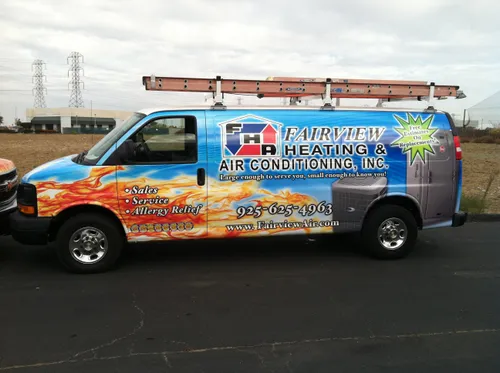
Fairview Heating & Air Conditioning Inc.
100 Brownstone Rd, Oakley, CA 94561
Fairview Heating & Air Conditioning Inc. is an HVAC contractor based in Oakland, CA, offering a range of services including air conditioning repair and installation, furnace and heat pump services, indoor air quality improvements, and ductless mini-split system installations. They provide solutions tailored to the local climate, including American-made equipment designed for East County conditions. With over 30 years of experience maintaining and installing HVAC systems, Fairview also addresses new energy efficiency standards affecting heating equipment in California. Their services include advanced capabilities such as air scrubbers and ultraviolet lights to enhance indoor air quality.
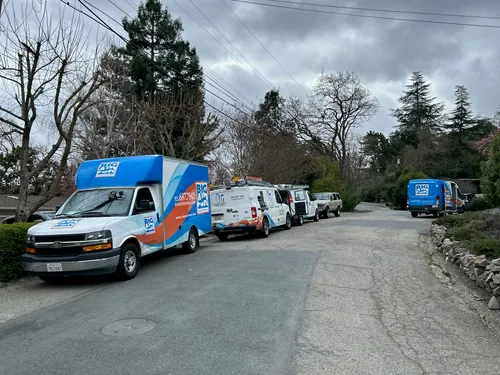
Big Air Heating & Air Conditioning
1000 Detroit Ave, Concord, CA 94518
Big Air Heating & Air Conditioning is an HVAC company serving Oakland, CA, with over 20 years of experience. They provide installation, repair, and tune-up services for air conditioning, furnaces, heat pumps, boilers, mini splits, and geothermal heat pumps. Their technicians are certified, drug screened, and background checked, ensuring professional and knowledgeable service. The company works with both commercial and residential clients, offering clear pricing by the job.
Metro Heating pro
37886 Filbert St, Newark, CA 94560
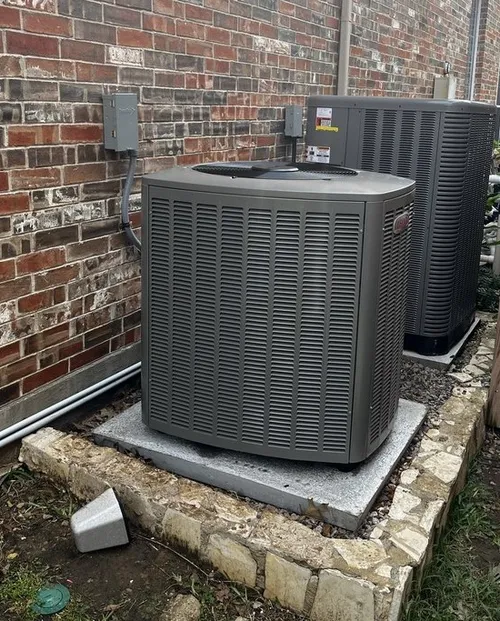
Metro Heating pro provides heating and air conditioning services in Fremont, CA. They offer repairs, installations, replacements, and maintenance for HVAC systems including furnaces, boilers, heat pumps, mini splits, and geothermal heat pumps. The company serves all brands and models, focusing on clear communication about the work process and timing. Metro Heating pro has built a reputation in the Newark area through years of consistent HVAC service.

Clean Air HVAC INC
428 N Buchanan Cir #1, Pacheco, CA 94553
Clean Air HVAC INC is an HVAC contractor based in Oakland, CA, providing heating and cooling solutions for residential customers. The company offers a wide range of services including installation, repair, and maintenance of furnaces, air conditioners, heat pumps, mini-split systems, and geothermal heat pumps. They also provide indoor air quality services such as air filtration, humidifiers, and ventilation systems. Clean Air HVAC INC serves the East Bay area and is experienced in handling various HVAC systems, including Lennox Healthy Climate Solutions and zoning systems.
Best HVAC
Stockton, CA
Best HVAC is an HVAC company serving Stockton, CA, and the surrounding areas, including Modesto. They provide a wide range of services such as air conditioning installation, repair, and maintenance, heating system services including furnaces, heat pumps, ductless mini splits, and geothermal systems, as well as indoor air quality solutions like duct cleaning and air purifier installation. The company also offers commercial HVAC services, including new system installation and maintenance programs. With over 25 years of experience, Best HVAC emphasizes problem-solving and offers a lifetime warranty on new system installations.
How Ground-Source Heating and Cooling Works in Pleasanton
The core principle of a geothermal system is elegant in its simplicity: it moves heat rather than creating it by burning fuel. The earth just a few feet below the surface maintains a remarkably stable temperature, typically between 50°F and 60°F in our region, all year round. A geothermal heat pump leverages this constant temperature to provide efficient climate control.
In the winter, a fluid (usually water mixed with antifreeze) circulates through a loop of pipes buried underground. As it travels, it absorbs the earth's natural warmth. This slightly warmed fluid is brought into the home where the heat pump unit concentrates the thermal energy and distributes it through your home's ductwork or radiant heating system. In the summer, the process reverses. The system extracts heat and humidity from your indoor air and transfers it into the cooler ground loop fluid, which then deposits that heat into the earth, leaving your home comfortably cooled 1 2. This efficient heat exchange process is why geothermal systems can reduce heating costs by 50-70% and cooling costs by 40-50% compared to conventional systems 3 4.
Types of Geothermal Loop Systems for Local Homes
The underground portion of the system, called the ground loop, is the critical component that facilitates heat exchange. The right type for your Pleasanton property depends on your lot size, soil composition, and local geology. There are three primary configurations:
Vertical Closed Loop: This is the most common choice for residential properties with limited yard space, which is often the case in Pleasanton neighborhoods. Contractors use a drilling rig to bore holes 150 to 500 feet deep. U-shaped pipes are inserted into each borehole, which are then backfilled with a special grout to ensure good thermal conductivity. Multiple boreholes are connected in parallel to form the complete loop field.
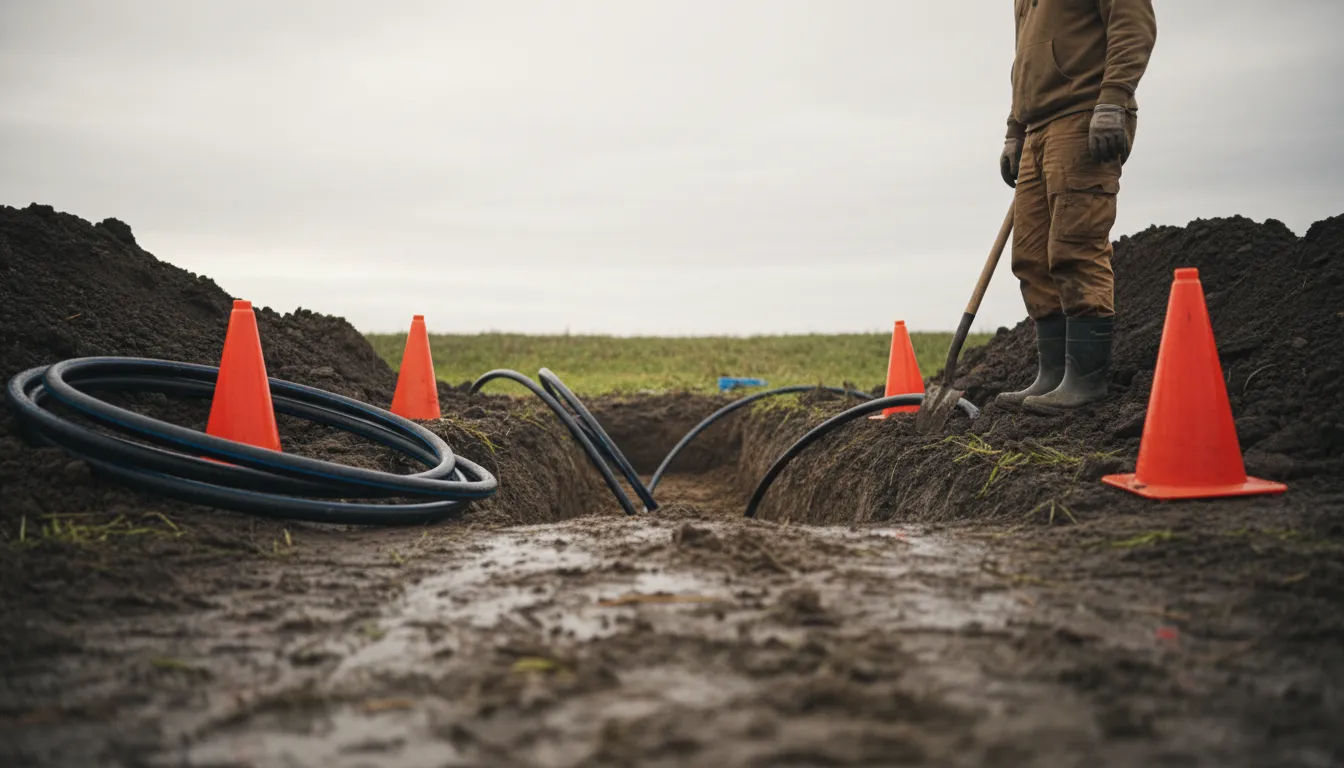
Horizontal Closed Loop: If you have ample, unobstructed land, a horizontal loop can be more cost-effective. Trenches are dug 4 to 6 feet deep, and pipes are laid in a slinky-coil or straight-run configuration before the trenches are backfilled. This method requires significantly more surface area than a vertical system but typically involves lower drilling costs 5 6.
Open Loop System: This system is less common and requires a sufficient supply of clean groundwater, such as from a well or pond. Water is pumped directly from the source, passes through the heat pump to exchange heat, and is then discharged back into a well, recharge basin, or surface body of water. This option has the lowest installation cost if suitable water is available but requires careful consideration of local water rights and quality regulations 7 8.
The Installation Process: What Pleasanton Homeowners Can Expect
Installing a geothermal heating and cooling system is a significant project that requires professional expertise. Understanding the steps can help you prepare.
-
Site Assessment and Design: A qualified installer will first conduct a thorough evaluation of your property. This includes assessing soil and rock composition, available space, your home's heating and cooling load calculations, and local permitting requirements. This information is used to design the most efficient and cost-effective loop system and select the properly sized heat pump unit 9 10.
-
Loop Field Installation: This is the most disruptive phase. For a vertical system, a drilling rig will be brought in to create the boreholes. For a horizontal system, a backhoe will dig the necessary trenches. This work can impact landscaping, so discussing restoration plans with your contractor is important. The pipes are then placed, connected, and pressure-tested to ensure there are no leaks before being buried or grouted.
-
Indoor Unit and Connection: Inside your home, typically in the basement or garage, the geothermal heat pump unit is installed. This unit houses the compressor, heat exchanger, and fan coil. The underground loops are connected to this unit, and it is integrated with your home's existing ductwork or hydronic distribution system. Finally, the system is charged with refrigerant, connected to electrical power, and thoroughly tested.
Due to the excavation and drilling involved, installation is often best timed with new home construction or a major renovation. However, retrofits are entirely possible with careful planning 11.
Find the perfect geothermal heat pump contractors for your needs
Get personalized recommendations and expert advice
Understanding Costs, Savings, and Incentives
The upfront investment for a geothermal system is higher than for a traditional furnace and air conditioner. For a typical Pleasanton home, complete installation costs generally range from $20,000 to over $40,000, with a common benchmark being $2,500 to $3,000 per ton of capacity 12. The final price is highly dependent on your chosen loop type, soil conditions, system size, and the complexity of connecting to your home's distribution system.
The compelling value lies in the long-term operational savings and available financial incentives. Homeowners often see their annual energy bills drop by $1,000 or more, thanks to the system's extreme efficiency 13 14. To help offset the initial cost, a 30% federal tax credit is available for qualified geothermal heat pump installations through 2034, which can translate to thousands of dollars in savings on your federal income tax 14 15. It's essential to consult with a tax professional and ensure your installer provides the necessary documentation.
Benefits Beyond Energy Savings
While lower utility bills are a major advantage, geothermal systems offer other significant benefits for Pleasanton residents:
- Durability and Longevity: The underground loop piping is often warranted for 50+ years and can last generations. The indoor heat pump unit typically has a lifespan of 20-25 years, significantly longer than conventional outdoor air conditioners.
- Quiet Operation: With no loud outdoor condenser unit, geothermal systems operate very quietly. The main components are indoors, and the loop pump produces minimal sound.
- Safety and Cleanliness: There is no combustion, so there's no risk of carbon monoxide poisoning, no need for a gas line or fuel storage, and no flame or flue emissions.
- Low Maintenance: These systems have fewer mechanical components exposed to the weather, resulting in relatively low maintenance requirements-usually just annual checks of the pump, filters, and refrigerant levels.
- Environmental Stewardship: By using renewable thermal energy from the ground and electricity, geothermal systems drastically reduce your home's carbon footprint and reliance on fossil fuels 16.
Is a Geothermal System Right for Your Home?
A ground-source heat pump can be an excellent investment for many Pleasanton homeowners, particularly those planning to stay in their homes long enough to realize the full payback from energy savings. It is especially worth considering if you are building a new home, replacing an aging and inefficient HVAC system, or are committed to maximizing your home's sustainability. The key to a successful project is partnering with an experienced, certified installer who can provide an accurate load calculation, a thoughtful system design, and a transparent cost estimate that includes all available rebates and tax credits.
Frequently asked questions
Sources
Footnotes
-
How Do Geothermal Systems Work for Residential Homes? - https://www.davisheat.com/blog/how-do-geothermal-systems-work-for-residential-homes/ ↩
-
Geothermal Heat Pump Basics - Visalia, CA - https://jacksref.com/geothermal-heat-pump-basics/ ↩
-
The California Buyers Guide to Geothermal Heat Pump Systems - https://www.californiageo.org/wp-content/uploads/CA-Buyers-Guide-for-Geothermal-HP-revised-12-13-24.pdf ↩
-
Geothermal Systems - Wally Falke's Heating & Air Conditioning - https://wallyfalkes.com/geothermal-heat-pumps/ ↩
-
Geothermal Installation Steps Explained - https://ultrageothermal.com/geothermal-installation-steps-explained/ ↩
-
Ground source heat pumps: horizontal collectors Vs. vertical boreholes - https://www.mesh-energy.com/insights/ground-source-heat-pumps-horizontal-collectors-vs-vertical-boreholes ↩
-
Geothermal Heat Pumps - Department of Energy - https://www.energy.gov/energysaver/geothermal-heat-pumps ↩
-
Exploring Geothermal Systems: Advantages and Considerations - https://dilandroandrews.com/understanding-geothermal-systems/ ↩
-
All You Need to Know About Home Geothermal Heating & ... - https://dandelionenergy.com/all-you-need-to-know-about-home-geothermal-heating-cooling ↩
-
How Geothermal Heating and Cooling Systems Work | Belle Air - https://www.belleairservices.com/how-geothermal-heating-and-cooling-systems-work/ ↩
-
Installation of a Ground Source Heat Pump in the UK - https://www.renewableenergyhub.co.uk/main/heat-pumps-information/how-to-install-a-ground-source-heat-pump ↩
-
Geothermal Heating and Cooling in Salt Lake City, UT - https://www.designcomfortco.com/hvac/heating/geothermal ↩
-
How Does A Geothermal Heat Pump Work? Complete 2025 Guide - https://solartechonline.com/blog/how-does-geothermal-heat-pump-work/ ↩
-
Geothermal Heat Pump Guide: Installation Costs, Types And Benefits - https://modernize.com/hvac/heating-repair-installation/heat-pump/geothermal ↩ ↩2
-
Guide to Geothermal Heat Pumps - https://www.energy.gov/sites/prod/files/guide_to_geothermal_heat_pumps.pdf ↩
-
5 Things You Should Know about Geothermal Heat Pumps - https://www.energy.gov/cmei/articles/5-things-you-should-know-about-geothermal-heat-pumps ↩