Find the Best Geothermal Heat Pump Contractors for Your Business
No obligation • Fast responses • Nationwide coverage

Why you can trust HVAC Firms
HVAC Firms is a leading United States resource for evaluating HVAC service providers. Our team researches companies, checks credentials, and reviews customer feedback to present clear, unbiased information. Listings and rankings are based on merit, and companies cannot pay to change our editorial content.
Search providers near you
Top Geothermal Heat Pump Contractors in Orange, California Ranked
A geothermal heat pump, often called a ground-source heat pump, is a highly efficient system that uses the Earth's stable underground temperature to heat and cool your home. This technology matters because it can dramatically cut energy bills and reduce your carbon footprint, offering a clean, long-term solution for indoor comfort. For homeowners in Orange, this page provides the essential information to understand how these systems work, what installation entails, and how to connect with qualified local professionals for your project.
Moffett Plumbing & Air
13950 Milton Ave, Westminster, CA 92683
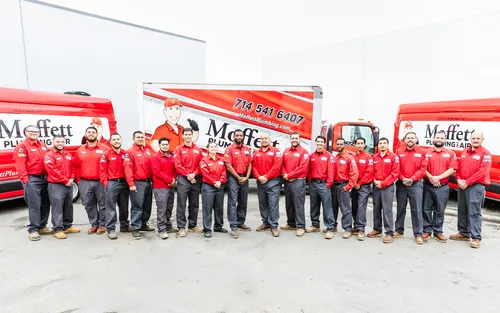
Moffett Plumbing & Air is a plumbing and HVAC company serving Long Beach, CA, and the surrounding Orange County area. They offer a wide range of services including air conditioning, furnace, heat pump, and boiler repair and installation, as well as duct cleaning, thermostat installation, indoor air quality services, and geothermal heat pump work. Established in 1969, Moffett Plumbing & Air has built a reputation for dependable service and community focus, treating customers with respect and care. Their team is known for professional workmanship and efficiency.
NexGen HVAC & Plumbing
23221 Peralta Dr Ste C, Laguna Hills, CA 92653
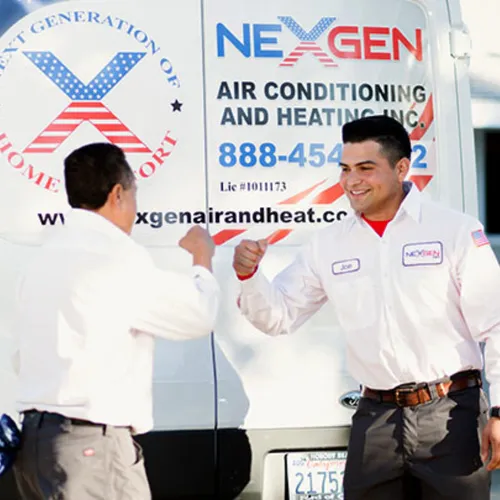
NexGen HVAC & Plumbing is a full-service heating and cooling company based in Irvine, CA. They provide installation, repair, and maintenance for a wide range of HVAC systems including traditional, electric, ductless, rooftop units, heat pumps, and geothermal systems. Their services also include air duct cleaning, thermostat installation, and HVAC tune-ups to improve system performance. NexGen HVAC & Plumbing offers insulation services for air ducts, walls, attics, and crawlspaces to enhance comfort and address issues such as mold and water leaks.
NexGen HVAC & Plumbing
10820 Mulberry Ave, Fontana, CA 92337
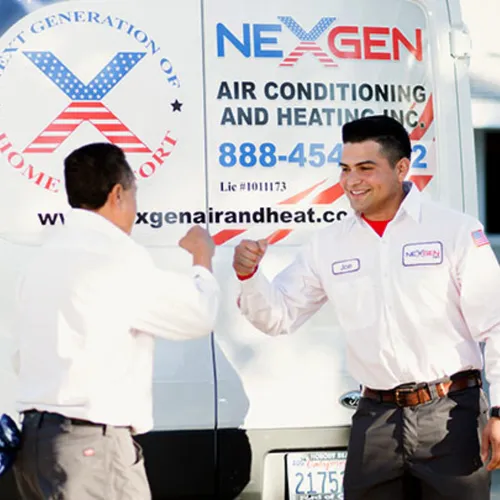
NexGen HVAC & Plumbing is a full-service contractor based in Riverside, CA, offering a wide range of heating, cooling, and plumbing services. They handle installation, repair, and maintenance of air conditioners, heat pumps, furnaces, ductless mini-splits, and geothermal systems. Their plumbing services include leak detection, drain cleaning, sewer repair, and gas line inspection. NexGen is equipped to service both residential and commercial properties and uses advanced technology such as high-tech camera inspections for plumbing diagnostics. They provide 24/7 emergency service to address urgent HVAC and plumbing issues promptly.
Nelson Air Heating & Air Conditioning
5062 Casa Oro Dr, Yorba Linda, CA 92886
Nelson Air Heating & Air Conditioning provides HVAC installation services in Anaheim, CA. They handle installation for a variety of systems including air conditioners, furnaces, heat pumps, boilers, mini splits, and geothermal heat pumps for both residential and commercial clients. The company installs all major HVAC brands and emphasizes quality materials, efficiency, and workmanship.
Rancho Palos Verdes AC and Heating Pro
28120 Peacock Ridge Dr, Rancho Palos Verdes, CA 90275
Rancho Palos Verdes AC and Heating Pro provides heating and air conditioning services in Long Beach, CA. They offer repair, installation, and maintenance for furnaces, air conditioners, heat pumps, and geothermal systems. The company is equipped to handle HVAC tune-ups and replacements, tailoring systems to meet customer needs and budgets. Since 1997, they have served the area with a focus on quality workmanship and integrity. They also provide 24/7 emergency service with a manager available at all times for support.
How Geothermal Systems Work in Orange's Climate
The core principle behind a geothermal heating and cooling system is remarkably simple: it exchanges heat with the ground, which maintains a nearly constant temperature year-round. In Orange, the ground temperature stays in a stable range of 55-65°F, providing a reliable thermal resource just beneath your feet 1.
During the winter, a water-based solution circulating through underground pipes, called a ground loop, absorbs the Earth's natural heat. This warmed fluid is carried inside to a heat pump unit, which concentrates the thermal energy and distributes it through your home's ductwork or radiant system. In the summer, the process reverses. The system acts as a heat mover, extracting warmth and humidity from your indoor air and transferring it into the cooler fluid in the loop, where it is dissipated into the ground. This elegant exchange, powered by electricity, is what makes geothermal technology several times more efficient than standard air conditioners and furnaces.
Types of Ground Loop Systems
The underground portion, or ground loop, is the critical component that connects your home to the Earth's energy. The right type for your Orange property depends on available land, soil conditions, and budget. There are four primary configurations:
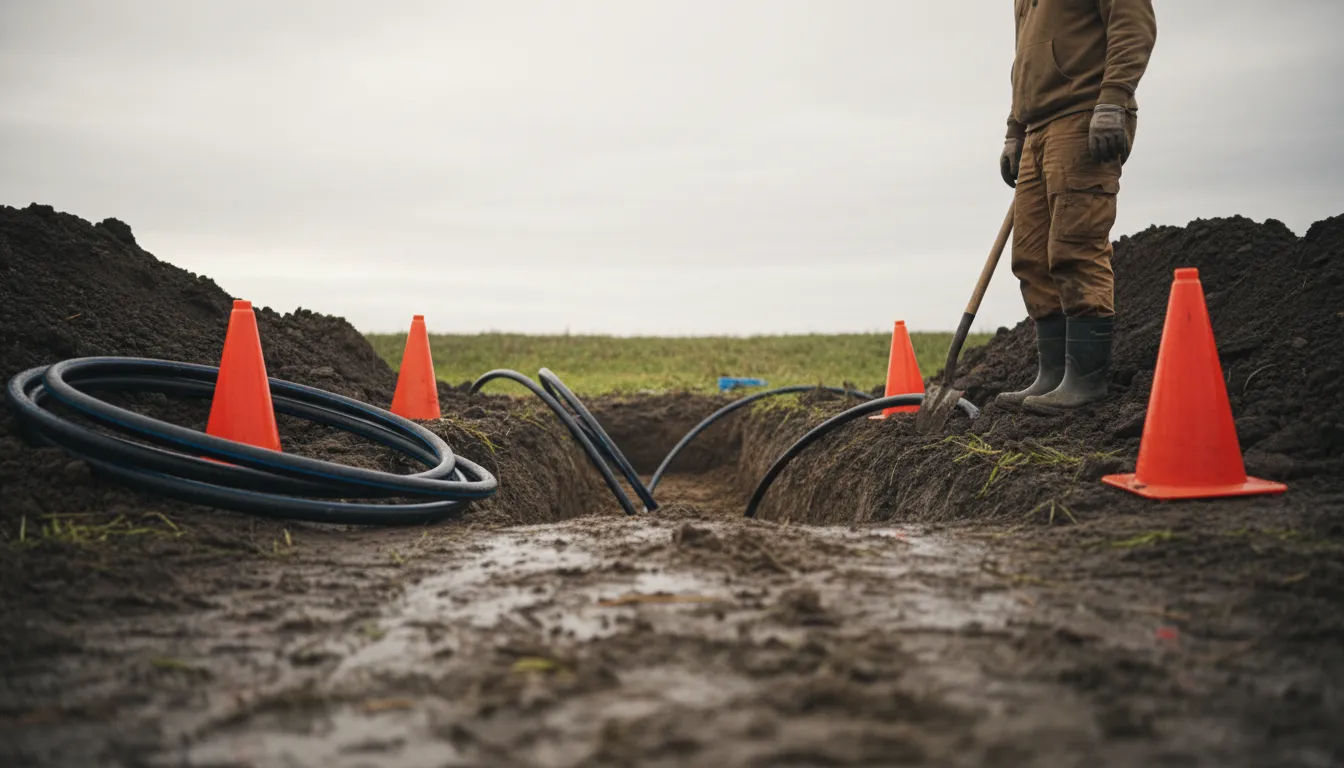
- Horizontal Closed Loop: This is often the most cost-effective option if space allows. Pipes are laid in trenches dug 5 to 10 feet deep, typically requiring a significant amount of yard area 2.
- Vertical Closed Loop: Ideal for homes with smaller lots, this system uses boreholes drilled 150 to 200 feet deep. While drilling costs are higher, the vertical loop requires minimal surface area and can be very effective in various soil types 3 4.
- Pond/Lake Loop: If you have access to a sufficient body of water, this can be a very economical choice. Coils of pipe are submerged at a depth that ensures adequate heat transfer throughout the year.
- Open Loop System: This system uses groundwater from a well as the heat exchange fluid. After circulating through the heat pump, the water is returned to the ground via a discharge well. It's highly efficient but requires an adequate supply of clean water and compliance with local regulations.
A professional installer will conduct a detailed site assessment to recommend the best loop type for your specific situation, considering your yard space, local geology, and your home's heating and cooling demands 5 6.
The Installation Process: What to Expect
Installing a geothermal heat pump is a significant project that involves both indoor and outdoor work. Understanding the steps can help you prepare for the process.
- Site Assessment & Design: A qualified contractor will evaluate your property, calculate your home's heating and cooling load, and design the optimal system, including loop type and size.
- Excavation or Drilling: For a horizontal system, trenches are dug. For a vertical system, a specialized drill rig creates the boreholes. This is typically the most visible phase of the project.
- Loop Installation: High-density polyethylene pipes are laid in the trenches or inserted into the boreholes. The pipes are connected in a continuous loop, pressure-tested for leaks, and then filled with the heat-transfer fluid.
- Connection & Backfilling: The ground loop is connected to the indoor heat pump unit via underground piping. Trenches are carefully backfilled, and the drilling site is restored.
- Indoor Unit Setup: The geothermal heat pump unit is installed inside your home (often in a basement, garage, or utility closet) and connected to your existing ductwork or hydronic system 7.
- System Startup & Testing: The entire system is charged, powered on, and thoroughly tested to ensure it operates efficiently and delivers comfort as designed 8.
Find the perfect geothermal heat pump contractors for your needs
Get personalized recommendations and expert advice
Energy Savings and Long-Term Value
The primary motivation for many homeowners is the substantial reduction in energy usage. By leveraging the Earth's consistent temperature, geothermal heat pumps operate with exceptional efficiency. Homeowners often report energy bill reductions of 30% to 65% compared to conventional HVAC systems 9 10. While the upfront investment for a complete geothermal system is higher than for a standard system-often ranging from $20,000 to $40,000 or more depending on loop type and home size-the long-term economics are compelling 10 11.
The low operating costs mean the initial premium can often be recouped through utility savings in 5 to 10 years 12. Furthermore, the components are built to last. The indoor heat pump unit typically has a lifespan of 20 years or more, while the underground piping is often warranted for 50 years and can last for generations 13. This combination of deep energy savings, durability, and increased property value makes a ground-source heat pump a wise financial and environmental investment for the long haul.
Benefits for Orange Homeowners
Choosing a geothermal system in Orange offers a suite of advantages beyond just lower bills:
- Superior Comfort: These systems provide consistent, even heating and cooling without the drafts and temperature swings common with fossil fuel systems. They also excel at dehumidification in cooling mode.
- Quiet Operation: With no loud outdoor condenser unit (like a traditional air conditioner), the system runs very quietly. The main mechanical components are located indoors.
- Safety and Cleanliness: There is no combustion, meaning no risk of carbon monoxide poisoning, no pilot light, and no need for a flue or fuel storage.
- Reduced Environmental Impact: By using renewable thermal energy from the ground and electricity, your home's carbon footprint for heating and cooling can drop significantly. It's a clean, local energy source 14.
- Reliability: With fewer mechanical parts exposed to the elements and a stable heat source, geothermal systems are known for their reliability and require less maintenance than conventional systems.
Frequently asked questions
Sources
Footnotes
-
How Efficient Is Geothermal Heating - https://bratchercomfort.com/how-efficient-is-geothermal-heating/ ↩
-
How Geothermal Heating and Cooling Systems Work | Belle Air - https://www.belleairservices.com/how-geothermal-heating-and-cooling-systems-work/ ↩
-
Geothermal Installation Steps Explained - https://ultrageothermal.com/geothermal-installation-steps-explained/ ↩
-
Geothermal Ground Loop FAQs - Dandelion Energy - https://dandelionenergy.com/geothermal-ground-loop-frequently-asked-questions ↩
-
Research Conference Proceedings - https://igshpa.org/wp-content/uploads/2017-IGSHPA-Research-Track-Proceedings-1.pdf ↩
-
Installations - California Geothermal Heat Pump Association - https://www.californiageo.org/geothermal-heat-pump-installations-in-california/installations/ ↩
-
Geothermal Systems - Wally Falke's Heating & Air Conditioning - https://wallyfalkes.com/geothermal-heat-pumps/ ↩
-
How Does a Geothermal System Work? - ClimateMaster - https://www.climatemaster.com/homeowner/side-links/how-it-works ↩
-
All You Need to Know About Home Geothermal Heating & ... - https://dandelionenergy.com/all-you-need-to-know-about-home-geothermal-heating-cooling ↩
-
Geothermal Heat Pump Guide: Installation Costs, Types And Benefits - https://modernize.com/hvac/heating-repair-installation/heat-pump/geothermal ↩ ↩2
-
Guide to Geothermal Heat Pumps - https://www.energy.gov/sites/prod/files/guide_to_geothermal_heat_pumps.pdf ↩
-
Geothermal Heat Pumps - EnergySmart CNY - https://www.energysmartcny.org/heat-pumps/geothermal/ ↩
-
5 Things You Should Know about Geothermal Heat Pumps - https://www.energy.gov/cmei/articles/5-things-you-should-know-about-geothermal-heat-pumps ↩
-
The California Buyers Guide to Geothermal Heat Pump Systems - https://www.californiageo.org/wp-content/uploads/CA-Buyers-Guide-for-Geothermal-HP-revised-12-13-24.pdf ↩