Find the Best Geothermal Heat Pump Contractors for Your Business
No obligation • Fast responses • Nationwide coverage

Why you can trust HVAC Firms
HVAC Firms is a leading United States resource for evaluating HVAC service providers. Our team researches companies, checks credentials, and reviews customer feedback to present clear, unbiased information. Listings and rankings are based on merit, and companies cannot pay to change our editorial content.
Search providers near you
Top Geothermal Heat Pump Contractors in Ontario, California Ranked
A geothermal heat pump is a highly efficient, renewable energy system that uses the earth's stable underground temperature to heat and cool your home or business. Unlike traditional HVAC systems that burn fuel or rely on fluctuating outdoor air temperatures, a ground-source heat pump transfers heat to and from the ground, offering significant energy savings and environmental benefits. This guide will help you understand how these systems work, what installation entails, and how to connect with qualified local professionals for your project.
NexGen HVAC & Plumbing
10820 Mulberry Ave, Fontana, CA 92337
NexGen HVAC & Plumbing is a full-service contractor based in Riverside, CA, offering a wide range of heating, cooling, and plumbing services. They handle installation, repair, and maintenance of air conditioners, heat pumps, furnaces, ductless mini-splits, and geothermal systems. Their plumbing services include leak detection, drain cleaning, sewer repair, and gas line inspection. NexGen is equipped to service both residential and commercial properties and uses advanced technology such as high-tech camera inspections for plumbing diagnostics. They provide 24/7 emergency service to address urgent HVAC and plumbing issues promptly.
Nelson Air Heating & Air Conditioning
5062 Casa Oro Dr, Yorba Linda, CA 92886
Nelson Air Heating & Air Conditioning provides HVAC installation services in Anaheim, CA. They handle installation for a variety of systems including air conditioners, furnaces, heat pumps, boilers, mini splits, and geothermal heat pumps for both residential and commercial clients. The company installs all major HVAC brands and emphasizes quality materials, efficiency, and workmanship.
Thomas Brothers HVAC & Plumbing
12625 Frederick St, Moreno Valley, CA 92553
Thomas Brothers HVAC & Plumbing is a heating and cooling company located in Riverside, CA. They provide a range of services including installation and repair of air conditioners, furnaces, heat pumps, boilers, mini splits, and geothermal heat pumps. The company also offers HVAC tune-up services to maintain system efficiency. Thomas Brothers HVAC & Plumbing is bonded, insured, and licensed, ensuring compliance with industry standards.
Comfort Elite HVAC
1080 N Batavia St Ste N, Orange, CA 92867
Comfort Elite HVAC provides a wide range of heating, air conditioning, and indoor air quality services in Los Angeles, CA. With over 10 years of experience, they handle installation, repair, and maintenance for systems including heat pumps, furnaces, mini splits, and geothermal heating. Their services cover air duct cleaning, air purification, and refrigerant recharge, aiming to improve home comfort and air quality. Comfort Elite HVAC offers 24/7 emergency repair services and same-day responses to HVAC issues, ensuring timely assistance for heating and cooling needs.
How Geothermal Systems Work: Tapping into Earth's Constant Temperature
The core principle behind a geothermal heating and cooling system is remarkably simple: it leverages the fact that just a few feet below the surface, the earth maintains a nearly constant temperature of 50-60°F year-round, regardless of the weather above ground. A geothermal system, or ground-source heat pump, uses this stable thermal resource as a source of heat in the winter and a place to reject heat in the summer.
Heating Mode: During colder months, a fluid (typically water mixed with antifreeze) circulates through a loop of pipes buried in the ground, absorbing the earth's natural heat. This warmed fluid is pumped to an indoor heat pump unit. The heat pump concentrates this low-grade thermal energy using a refrigeration cycle and distributes it as warm air through your ductwork or as hot water through radiant floor systems 1 2.
Cooling Mode: In the summer, the process reverses. The system extracts heat from your indoor air and transfers it into the cooler fluid circulating in the ground loops. The now-cooled air is then circulated throughout your home. Essentially, the ground acts as a giant, free heat sink 3.
This elegant process is incredibly efficient because the system moves existing heat rather than generating it through combustion. For every unit of electrical energy used to power the compressor and pumps, a geothermal system can move three to five units of thermal energy, resulting in efficiencies of 300-500% 4 5. This is why homeowners can see reductions in their heating and cooling energy bills of up to 65% compared to conventional systems 6.
Types of Ground Loop Systems
The underground portion of the system, called the ground loop or ground heat exchanger, is the critical link to the earth's energy. The right configuration for your Ontario property depends on soil conditions, land availability, and budget. The two most common types are closed-loop systems.
Horizontal Ground Loops
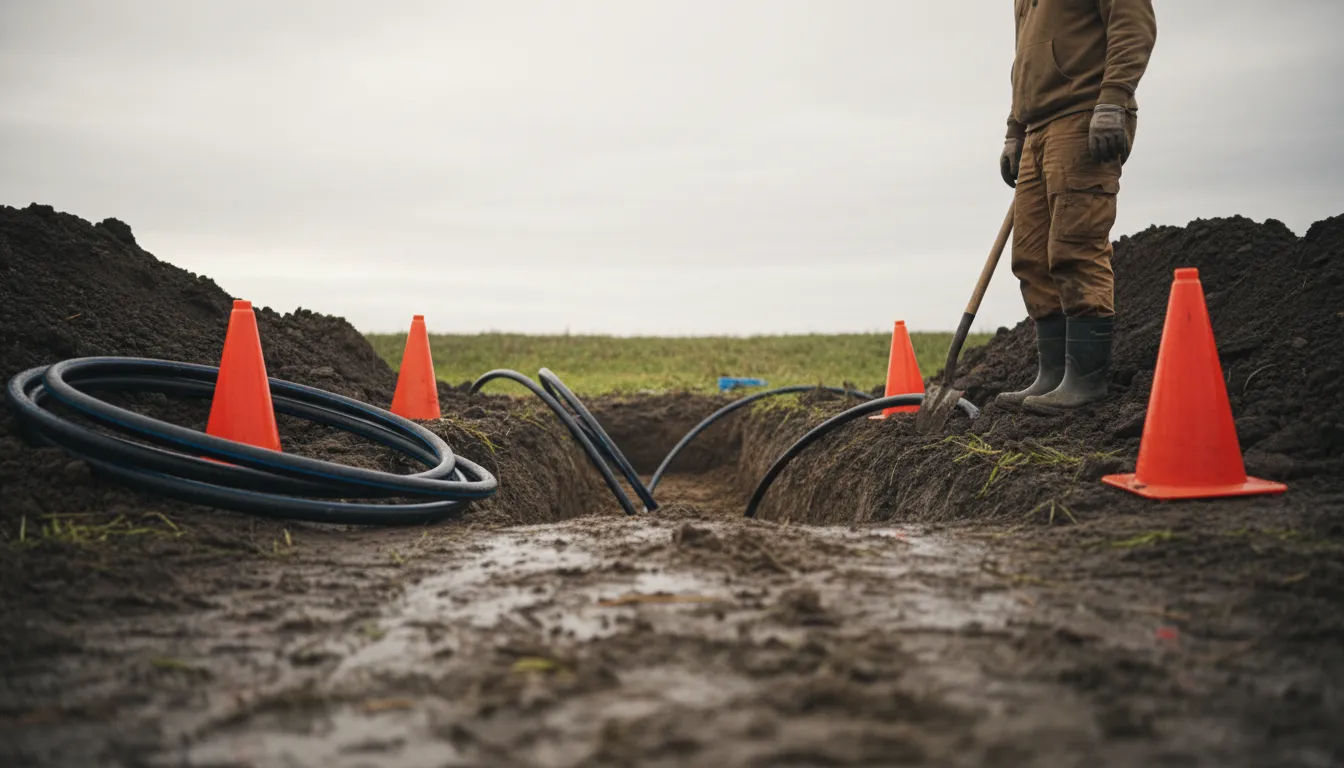
This configuration involves digging trenches four to six feet deep in your yard. Pipes are laid in parallel lines in these trenches before being backfilled. Horizontal loops require a significant amount of available land area but are often less expensive to install than vertical loops because trenching is typically less costly than drilling. They are an excellent choice for properties with ample, unobstructed yard space 7.
Vertical Ground Loops
For properties with limited space, such as smaller urban or suburban lots common in parts of Ontario, vertical loops are the ideal solution. Installers use drilling rigs to bore holes 150 to 500 feet deep. U-shaped pipes are inserted into each borehole, which are then grouted to ensure good thermal contact with the earth. While the drilling process is more specialized, vertical loops have a smaller surface footprint and can offer superior performance in certain soil types 8.
The choice between horizontal and vertical configurations is a key decision that a qualified local installer will help you make after assessing your site.
The Installation Process for Your Home
Installing a geothermal system is a significant project that requires careful planning and expert execution. Understanding the steps involved can help you prepare.
- Site Evaluation and Design: A certified installer will first assess your property. They'll evaluate soil composition, available land, your home's existing heating/cooling distribution system (ductwork or hydronic), and your household's energy needs. This information is used to design a properly sized loop field and select the correct indoor heat pump unit.
- Loop Field Installation: This is the major excavation or drilling phase. For a horizontal system, a backhoe will dig the necessary trenches. For a vertical system, a drilling rig will be brought on-site to create the boreholes. The high-density polyethylene pipes are then placed and connected into a continuous loop.
- Indoor Unit Integration: The indoor heat pump unit, which is about the size of a traditional furnace, is installed. The ground loop is connected to this unit. The installer will then integrate the system with your home's existing air ducts or radiant heating piping. An experienced technician will also set up the system's controls and thermostat.
- Testing and Commissioning: Once everything is connected, the system is filled with fluid, purged of air, and pressurized. The installer will test all components, check for leaks, and verify that the heating and cooling cycles are operating correctly and efficiently before handing the system over to you.
Find the perfect geothermal heat pump contractors for your needs
Get personalized recommendations and expert advice
Key Benefits for Ontario Homeowners
Investing in a geothermal heat pump system offers a compelling array of advantages that go beyond just monthly savings.
- Substantial Energy Savings: By leveraging the earth's free thermal energy, these systems can cut your heating and cooling energy consumption by 50-60%. This translates directly into lower utility bills, providing a buffer against rising energy costs.
- Exceptional Reliability and Longevity: The ground loop is built from durable materials with a lifespan often exceeding 50 years. The indoor heat pump unit typically lasts 20-25 years, which is significantly longer than the 15-year average lifespan of a standard air conditioner or furnace. This means decades of comfortable, low-maintenance operation.
- Environmental Leadership: Geothermal systems have the smallest carbon footprint of any space conditioning technology available today. They use renewable thermal energy from the ground and eliminate the need for on-site combustion of fossil fuels like natural gas, propane, or oil. By switching, you significantly reduce your household's greenhouse gas emissions.
- Quiet and Comfortable Operation: Since there is no noisy outdoor condenser unit (like a traditional air conditioner has), geothermal systems operate very quietly. They also provide more consistent, even heating and cooling without the drafts or hot/cold spots associated with some forced-air systems 9.
- All-in-One Solution: A single geothermal system provides heating, air conditioning, and can often be equipped to supply a significant portion of your home's domestic hot water at high efficiency, further increasing your overall energy savings 10.
Understanding Costs and Financial Considerations
The upfront cost of a residential geothermal installation in Ontario typically ranges from $20,000 to $40,000 for a complete system 11. This investment is higher than that of a conventional HVAC system primarily due to the cost of drilling or trenching and installing the ground loop.
However, this initial cost must be viewed in the context of total lifecycle cost. The dramatic reduction in monthly energy bills means the system often pays for itself through savings within 5-10 years, after which you enjoy essentially free heating and cooling for the life of the system 12 13. Furthermore, various federal tax credits, state incentives, and special financing options for renewable energy are frequently available, which can reduce the net installed cost by 30% or more. A local geothermal provider can give you the most current information on available incentives.
Is Geothermal Right for Your Property?
Several factors specific to your home and land will influence the feasibility and design of your system:
- Land Availability: Do you have sufficient yard space for horizontal trenches, or will your property require vertical boreholes?
- Soil and Rock Conditions: The thermal conductivity of your soil affects loop design. Local installers are familiar with the geology in the Ontario area and can plan accordingly.
- Existing Infrastructure: Installing the indoor unit and connecting to ductwork is generally straightforward. Homes without ducts may require a ductless mini-split version or a hydronic (water-based) system.
- New Construction vs. Retrofit: Integrating geothermal is most cost-effective during new home construction, but retrofits into existing homes are very common and successful.
Frequently asked questions
Sources
Footnotes
-
Geothermal Heat Pumps - EnergySmart CNY - https://www.energysmartcny.org/heat-pumps/geothermal/ ↩
-
How Geothermal Heating and Cooling Systems Work | Belle Air - https://www.belleairservices.com/how-geothermal-heating-and-cooling-systems-work/ ↩
-
How Geothermal Works - Ontario WaterFurnace - http://www.waterfurnace.ca/how-geothermal-works.php ↩
-
All You Need to Know About Home Geothermal Heating & ... - https://dandelionenergy.com/all-you-need-to-know-about-home-geothermal-heating-cooling ↩
-
Guide to Geothermal Heat Pumps - https://www.energy.gov/sites/prod/files/guide_to_geothermal_heat_pumps.pdf ↩
-
Geothermal Heat Pumps - Department of Energy - https://www.energy.gov/energysaver/geothermal-heat-pumps ↩
-
Geothermal Installation Steps Explained - https://ultrageothermal.com/geothermal-installation-steps-explained/ ↩
-
FAQs • What types of ground-source heat pumps and configurat - https://concordma.gov/FAQ.aspx?QID=484 ↩
-
Geothermal Heating, Cooling, and Hot Water Systems - https://igshpa.org/wp-content/uploads/Homeowners-Guide-to-Geothermal.pdf ↩
-
About Geothermal - https://igshpa.org/about-geothermal/ ↩
-
Geothermal Heat Pump Guide: Installation Costs, Types And Benefits - https://modernize.com/hvac/heating-repair-installation/heat-pump/geothermal ↩
-
5 Things You Should Know about Geothermal Heat Pumps - https://www.energy.gov/cmei/articles/5-things-you-should-know-about-geothermal-heat-pumps ↩
-
The California Buyers Guide to Geothermal Heat Pump Systems - https://www.californiageo.org/wp-content/uploads/CA-Buyers-Guide-for-Geothermal-HP-revised-12-13-24.pdf ↩