
Find the Best Geothermal Heat Pump Contractors for Your Business
No obligation • Fast responses • Nationwide coverage

Why you can trust HVAC Firms
HVAC Firms is a leading United States resource for evaluating HVAC service providers. Our team researches companies, checks credentials, and reviews customer feedback to present clear, unbiased information. Listings and rankings are based on merit, and companies cannot pay to change our editorial content.
Search providers near you
Top Geothermal Heat Pump Contractors in Novato, California Ranked
A geothermal heat pump is a highly efficient heating and cooling system that leverages the stable temperature of the earth to regulate your home's climate. Unlike conventional systems that burn fuel or use outside air, a ground-source heat pump simply moves heat, offering significant energy savings and environmental benefits. For Novato residents, this guide explains how these systems work, what installation entails, and how you can find qualified local professionals to assess your property.
Clean Air HVAC INC
428 N Buchanan Cir #1, Pacheco, CA 94553
Clean Air HVAC INC is an HVAC contractor based in Oakland, CA, providing heating and cooling solutions for residential customers. The company offers a wide range of services including installation, repair, and maintenance of furnaces, air conditioners, heat pumps, mini-split systems, and geothermal heat pumps. They also provide indoor air quality services such as air filtration, humidifiers, and ventilation systems. Clean Air HVAC INC serves the East Bay area and is experienced in handling various HVAC systems, including Lennox Healthy Climate Solutions and zoning systems.
Harry Clark Plumbing and Heating Inc
3026 Broadway, Oakland, CA 94611
Harry Clark Plumbing and Heating Inc is an HVAC and plumbing service provider located in San Francisco, CA. The company offers a range of services including air conditioning, furnace, heat pump, boiler repair and installation, as well as mini split and geothermal heat pump installation. With a history dating back to the 1940s, the business has evolved through family ownership and continues to operate with a focus on local service. The company is known for maintaining a strong presence in the Oakland and Berkeley area, operating two separate entities for plumbing and heating/air conditioning services.
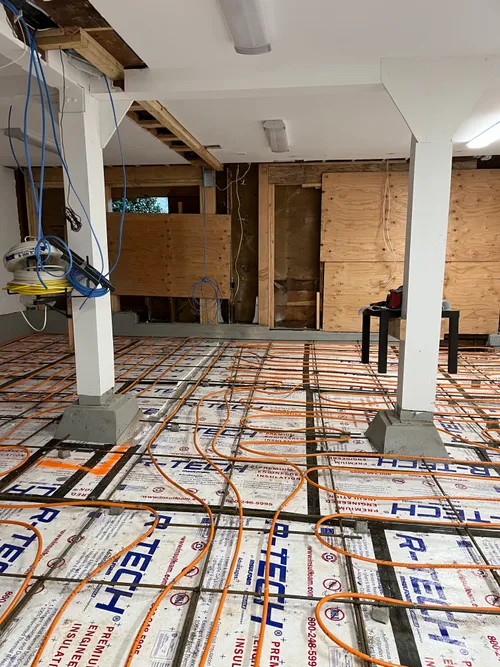
East Bay Hydronics
Oakland, CA
East Bay Hydronics is a heating and cooling contractor based in Oakland, CA, serving the Bay Area. They specialize in hydronic systems for both residential and commercial properties, including radiant heating and cooling, boilers, water heaters, solar thermal, and geothermal heat pumps. With over 17 years of experience, they support new construction and remodeling projects.
MCL Heating & Air Conditioning, Inc.
San Francisco, CA
MCL Heating & Air Conditioning, Inc. is an HVAC contractor serving San Francisco, CA. They provide a full range of heating, ventilation, air conditioning, and refrigeration repair and installation services. Their expertise includes working with furnaces, heat pumps, boilers, mini splits, geothermal heat pumps, and HVAC tune-ups. The company has built a reputation over many years for professionalism and quality work.
How Geothermal Systems Work: Tapping into Earth's Constant Temperature
The core principle behind a geothermal heating and cooling system is remarkably simple: a few feet below the surface, the earth maintains a nearly constant temperature between 50°F and 60°F year-round, regardless of the weather above ground 1. A geothermal system, or ground-source heat pump, uses this stable thermal resource as a source of heat in the winter and a place to dump excess heat in the summer.
Here's the basic cycle:
- For Heating: In winter, a fluid (usually water mixed with antifreeze) circulates through a loop of pipes buried in the ground, absorbing the earth's stored warmth. This slightly warmed fluid returns to the heat pump unit inside your home. The unit uses a compressor to concentrate that low-grade heat, raising it to a temperature high enough to comfortably warm your home, which is then distributed via your ductwork or radiant floor system.
- For Cooling: The process reverses in summer. The heat pump extracts warm air from your home, transferring the heat into the fluid circulating in the ground loops. The now-cooled fluid absorbs more heat from your home, and the cycle continues, effectively using the earth as a heat sink to provide air conditioning.
Because these systems move heat rather than generate it through combustion, they achieve remarkable efficiencies, often cutting heating and cooling energy use by 30% to 70% compared to traditional systems.
Types of Ground Loop Systems for Novato Properties
The underground pipe network, called the ground loop, is the critical link between your home and the earth's energy. The right type for your Novato home depends largely on your lot size, soil composition, and budget. There are three primary configurations:
Horizontal Closed-Loop This is often the most cost-effective option if space allows. Contractors dig trenches about six feet deep and lay a series of pipes in a horizontal configuration. This method requires a substantial amount of open land-typically a yard that's at least several hundred square feet per ton of system capacity 2. It's less expensive than drilling but involves significant excavation.
Vertical Closed-Loop For homes with smaller yards, like many in Novato, vertical loops are the ideal solution. Contractors use a drilling rig to bore holes 200 to 500 feet deep. U-shaped pipes are inserted into each borehole, which are then grouted. While the drilling cost is higher, this method requires minimal surface area and is less disruptive to existing landscaping 3 4 5. It also tends to perform very consistently due to the stable temperature at greater depths.
Open-Loop System This less common setup uses groundwater from a well or a pond as the heat exchange fluid. After passing through the heat pump, the water is returned to the ground via a discharge well or back to the surface body of water. This system can be highly efficient but depends entirely on having a sufficient supply of clean water and complying with local codes regarding water discharge 6 7.
Find the perfect geothermal heat pump contractors for your needs
Get personalized recommendations and expert advice
The Geothermal Installation Process: From Assessment to Comfort
Installing a residential geothermal system is a significant project that requires careful planning and expert execution. Understanding the steps can help you know what to expect when working with a local installer.
- Site Evaluation and Design: A qualified installer will first conduct a thorough assessment of your property. They'll evaluate your home's heating and cooling loads, examine your yard's size and soil conditions (which affect heat transfer), and check local permitting requirements. This information is used to design the system, specifying the loop type, size, and the capacity of the indoor heat pump unit.
- Ground Loop Installation: This is the most intensive phase. For a horizontal system, crews will use trenching equipment to dig the necessary network. For a vertical system, a drilling rig will be brought in to create the boreholes. Pipes are carefully placed, connected, and pressure-tested to ensure there are no leaks before the trenches are backfilled or the boreholes are grouted.
- Heat Pump and Ductwork Connection: The indoor heat pump unit is installed, typically in a basement, garage, or utility closet. The ground loop pipes are connected to this unit. The system is then integrated with your home's existing ductwork to distribute conditioned air. If you don't have ducts, some geothermal systems can be paired with ductless mini-split heads for zoning 8.
- System Startup and Commissioning: Once everything is connected, the installer will charge the system with refrigerant, power it up, and test all components. They will calibrate the thermostat and ensure the heating and cooling cycles are operating efficiently and quietly before handing the system over to you.
Costs, Savings, and Incentives for Novato Homeowners
The decision to install a geothermal system involves weighing a higher initial investment against long-term operational savings and available financial incentives.
Understanding the Investment The upfront cost for a complete geothermal heat pump system is higher than that of a standard air-source heat pump or furnace/AC combo. Total installed costs can range widely, from approximately $15,000 to over $35,000, influenced by your home's size, the chosen loop type (vertical drilling is more expensive than horizontal trenching), and the complexity of the installation. It's important to view this as a long-term investment in your home's infrastructure.
Long-Term Energy Savings This is where geothermal systems shine. By drastically reducing the amount of electricity needed for heating and cooling-by up to 65% according to some estimates-homeowners can see a substantial reduction in their monthly utility bills 9 10. Over the 20+ year lifespan of the indoor heat pump unit (the underground loops can last 50 years or more), these savings can offset the initial premium, leading to significant net savings 11 12.
Financial Incentives To encourage the adoption of this clean energy technology, significant incentives are available:
- Federal Tax Credit: The federal Residential Clean Energy Credit offers a tax credit for 30% of the cost of a qualifying geothermal heat pump installation, with no upper limit 13 14.
- California-Specific Programs: The state of California often has additional rebates or incentives for energy-efficient upgrades. Homeowners should consult the latest resources from state energy agencies or their installer for current offers.
These incentives can reduce the net cost of a system by thousands of dollars, improving the payback period and making geothermal a more accessible option.
Why Geothermal is a Smart Choice for Novato
Novato's climate, with its warm, dry summers and cool, wet winters, is well-suited for the consistent performance of a ground-source heat pump. While summer temperatures rise, the earth a few hundred feet down remains cool, providing an efficient heat sink for air conditioning. In the mild winter, the earth's warmth is a reliable heat source, allowing the system to operate efficiently without the steep performance drop that air-source heat pumps can experience in colder air 15.
Beyond personal savings, choosing a geothermal system reduces your household's carbon footprint and reliance on the electrical grid during peak demand periods. It's a quiet, reliable, and sustainable comfort solution that adds value to your home while aligning with California's clean energy goals.
Frequently asked questions
Sources
Footnotes
-
How a Geothermal Heat Pump Works | This Old House - https://www.youtube.com/watch?v=d5Tbsx3R2T8 ↩
-
Geothermal Heat Pumps - Department of Energy - https://www.energy.gov/energysaver/geothermal-heat-pumps ↩
-
All You Need to Know About Home Geothermal Heating & ... - https://dandelionenergy.com/all-you-need-to-know-about-home-geothermal-heating-cooling ↩
-
Everything You Need to Know About Geothermal Heat Pumps - https://www.familyhandyman.com/article/everything-you-need-to-know-about-geothermal-heat-pumps/ ↩
-
Ground source heat pumps: horizontal collectors Vs. vertical boreholes - https://www.mesh-energy.com/insights/ground-source-heat-pumps-horizontal-collectors-vs-vertical-boreholes ↩
-
Geothermal Heat Pump and Ground Loop Technologies - https://efiling.energy.ca.gov/GetDocument.aspx?tn=73451 ↩
-
Geothermal HVAC Systems: Harnessing the Earth for Sustainable Comfort - ICC - https://www.iccsafe.org/building-safety-journal/bsj-technical/geothermal-hvac-systems-harnessing-the-earth-for-sustainable-comfort/ ↩
-
Geothermal Heat Pumps | WBDG - https://www.wbdg.org/resources/geothermal-heat-pumps ↩
-
How Does A Geothermal Heat Pump Work? Complete 2025 Guide - https://solartechonline.com/blog/how-does-geothermal-heat-pump-work/ ↩
-
5 Things You Should Know about Geothermal Heat Pumps - https://www.energy.gov/cmei/articles/5-things-you-should-know-about-geothermal-heat-pumps ↩
-
Guide to Geothermal Heat Pumps - https://www.energy.gov/sites/prod/files/guide_to_geothermal_heat_pumps.pdf ↩
-
How Geothermal Heating and Cooling Systems Work | Belle Air - https://www.belleairservices.com/how-geothermal-heating-and-cooling-systems-work/ ↩
-
The California Buyers Guide to Geothermal Heat Pump Systems - https://www.californiageo.org/wp-content/uploads/CA-Buyers-Guide-for-Geothermal-HP-revised-12-13-24.pdf ↩
-
Geothermal Heat Pump Guide: Installation Costs, Types And Benefits - https://modernize.com/hvac/heating-repair-installation/heat-pump/geothermal ↩
-
Geothermal Heat Pumps - EnergySmart CNY - https://www.energysmartcny.org/heat-pumps/geothermal/ ↩