Find the Best Geothermal Heat Pump Contractors for Your Business
No obligation • Fast responses • Nationwide coverage

Why you can trust HVAC Firms
HVAC Firms is a leading United States resource for evaluating HVAC service providers. Our team researches companies, checks credentials, and reviews customer feedback to present clear, unbiased information. Listings and rankings are based on merit, and companies cannot pay to change our editorial content.
Search providers near you
Top Geothermal Heat Pump Contractors in Murrieta, California Ranked
A geothermal heat pump, or ground-source heat pump, is a highly efficient system for heating and cooling your home by exchanging heat with the earth. This technology matters because it can dramatically reduce your energy bills and environmental impact by using the planet's stable underground temperature instead of burning fossil fuels. This guide explains how these systems work, what installation involves in Murrieta, and how you can connect with qualified local professionals to explore this long-term investment for your home.
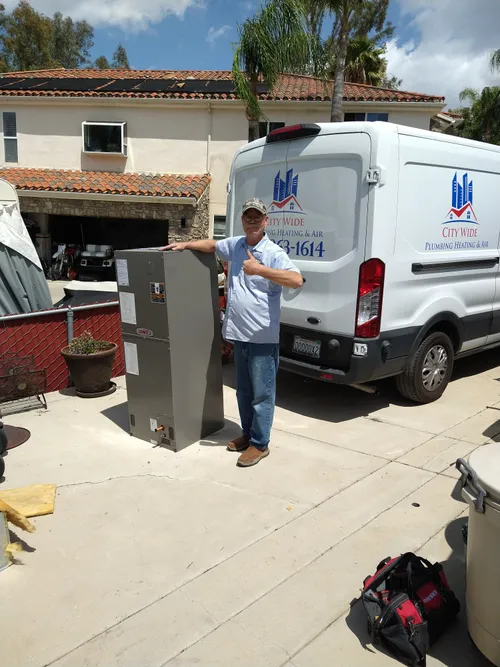
Thomas Brothers HVAC & Plumbing
12625 Frederick St, Moreno Valley, CA 92553
Thomas Brothers HVAC & Plumbing is a heating and cooling company located in Riverside, CA. They provide a range of services including installation and repair of air conditioners, furnaces, heat pumps, boilers, mini splits, and geothermal heat pumps. The company also offers HVAC tune-up services to maintain system efficiency. Thomas Brothers HVAC & Plumbing is bonded, insured, and licensed, ensuring compliance with industry standards.
All American Heating and Air (Veteran owned)
Chula Vista, CA
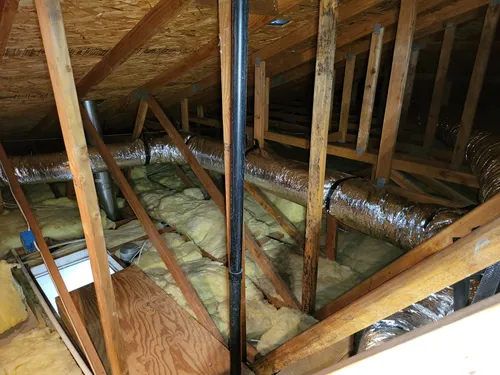
All American Heating and Air (Veteran owned) is an HVAC contractor based in Chula Vista, CA. They provide a range of services including installation, repair, and tune-ups for air conditioning, furnaces, heat pumps, boilers, mini splits, and geothermal heat pumps. The company serves the San Diego and Temecula areas, focusing on quality workmanship and customer satisfaction.
How Geothermal Heating and Cooling Works
A geothermal system leverages the earth's constant temperature, which remains around 50-60°F year-round just a few feet below the surface in Murrieta. This stability is the key to its efficiency. Unlike a traditional furnace that creates heat by burning fuel, a ground-source heat pump simply moves existing heat from one place to another.
- In Winter (Heating Mode): A fluid circulating through pipes buried in your yard absorbs the earth's natural warmth. This warmed fluid travels to the heat pump unit inside your home. The pump then concentrates this low-grade heat and distributes it as warm air through your existing ductwork 1.
- In Summer (Cooling Mode): The process reverses. The system extracts heat and humidity from your indoor air. This heat is transferred to the fluid in the ground loops, which then carries it into the cooler earth, effectively using the ground as a heat sink 2.
This "heat exchange" process is what makes geothermal technology so efficient, often delivering three to five units of heating or cooling for every one unit of electricity used to run the system.
Types of Ground Loop Systems
The underground pipe network, called the ground loop, is the heart of the system. The right type for your Murrieta property depends on your lot size, soil conditions, and budget. There are three primary configurations:
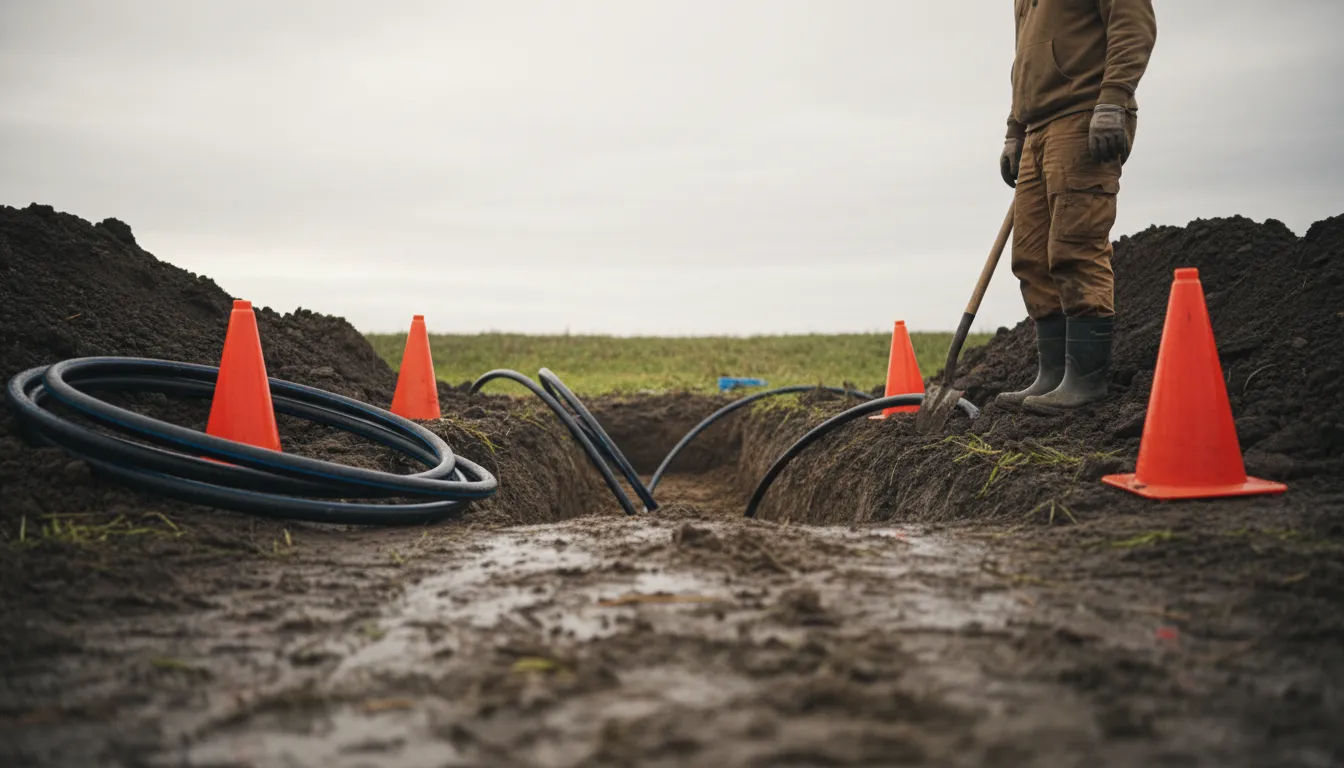
Horizontal Closed Loops This is often the most cost-effective option for residential properties with sufficient land. Trenches are dug about four to six feet deep, and pipes are laid in a series of loops. This method requires a larger, open yard area but generally involves lower installation costs than drilling 3 4.
Vertical Closed Loops For homes with smaller lots, vertical loops are the standard solution. Contractors drill boreholes 200 to 500 feet deep and insert U-shaped pipe loops. While the drilling equipment makes this method more expensive upfront, it requires minimal surface area, making it ideal for many established Murrieta neighborhoods 5.
Open-Loop Systems Less common in residential settings, an open-loop system uses groundwater from a well or pond as the heat exchange fluid. After circulating through the heat pump, the water is returned to the ground via a second well or discharge point. This option is highly efficient but depends on having an adequate, consistent water source and complying with local water regulations, which can be a consideration in drier inland areas 6 7.
The Geothermal Installation Process in Murrieta
Installing a residential geothermal system is a significant project that requires careful planning and expert execution. Understanding the steps can help you prepare.
- Site Evaluation and Design: A qualified installer will assess your property, evaluating soil composition, available space, and your home's heating and cooling needs. This assessment determines the optimal loop type and size for maximum efficiency.
- Ground Loop Installation: This is the major excavation phase. For horizontal loops, a trenching machine will dig the necessary trenches. For vertical loops, a drilling rig will create the boreholes. The high-density polyethylene pipes are then placed and connected into a continuous loop 8.
- Connection to the Home: A trench is dug to bring the loop pipes from the yard to the house, where they connect to the heat pump unit.
- Indoor Unit Setup: The geothermal heat pump itself is installed inside your home, typically in a garage, basement, or mechanical closet. It resembles a traditional furnace or air handler.
- System Integration: The installer connects the heat pump to your home's electrical system and existing ductwork. For homes without ducts, the system can be connected to ductless mini-split heads.
Find the perfect geothermal heat pump contractors for your needs
Get personalized recommendations and expert advice
Why Geothermal is a Smart Choice for Murrieta Homes
Murrieta's climate and environmental conditions are particularly well-suited for geothermal heat pump technology.
- Favorable Climate: Southern California's mild winters and warm summers mean the temperature difference between the ground and the desired indoor air is relatively small. This allows a geothermal system to operate at peak efficiency year-round with less strain than in extreme climates 9.
- Significant Energy Savings: Homeowners typically see a reduction of 30% to 65% on their heating and cooling bills compared to conventional systems 10. This translates to substantial long-term savings that help offset the higher initial investment.
- Reduced Carbon Footprint: By drastically cutting the use of natural gas or propane for heating and using electricity more efficiently for cooling, you significantly lower your household's greenhouse gas emissions 11 12.
- Longevity and Reliability: The indoor heat pump components have a life expectancy of 20 years or more, while the buried ground loop is often guaranteed for 25-50 years, as it is protected from weather and wear 13.
Understanding Costs and Long-Term Value
The upfront cost of a complete geothermal system in Murrieta is higher than that of a standard air conditioner and furnace. Prices can range widely, from approximately $12,000 to over $45,000, depending on your home's size, the loop type chosen, and the property's characteristics 14.
It's essential to view this as a long-term investment in your home's comfort, efficiency, and value:
- Utility Savings: The monthly savings on your energy bills will accumulate over time, often paying back the initial premium within 5-10 years.
- Increased Home Value: A permanent, high-efficiency geothermal system is an attractive feature for future homebuyers.
- Potential Incentives: Federal tax credits for geothermal heat pumps are available, which can reduce your net cost by 30% 15. Always check for current state or local utility rebates as well.
Key Considerations Before You Install
Before moving forward with a ground-source heat pump, keep these factors in mind:
- Property Suitability: Do you have enough yard space for horizontal trenches, or will your lot require vertical drilling? A professional site survey is the first step.
- Existing Infrastructure: The system works best with existing ductwork. If you don't have ducts, discuss the added cost of a ductless (hydronic) distribution system with your installer.
- Choosing the Right Contractor: Installation quality is critical for performance and longevity. Look for experienced, certified geothermal contractors who are familiar with Murrieta's specific geology and permitting requirements.
Frequently asked questions
Sources
Footnotes
-
How a Geothermal Heat Pump Works | This Old House - https://www.youtube.com/watch?v=d5Tbsx3R2T8 ↩
-
How Geothermal Heat Pumps Work - https://www.youtube.com/watch?v=XxlTnBukweI&t=37 ↩
-
Geothermal Heat Pump Installation: What To Expect For Your ... - https://jomory.com/geothermal-heat-pump-installation-what-to-expect-for-your-property/ ↩
-
Geothermal Heat Pumps - Department of Energy - https://www.energy.gov/energysaver/geothermal-heat-pumps ↩
-
All You Need to Know About Home Geothermal Heating & ... - https://dandelionenergy.com/all-you-need-to-know-about-home-geothermal-heating-cooling ↩
-
Geothermal Heat Pump and Ground Loop Technologies - https://efiling.energy.ca.gov/GetDocument.aspx?tn=73451 ↩
-
How Geothermal Heating and Cooling Systems Work | Belle Air - https://www.belleairservices.com/how-geothermal-heating-and-cooling-systems-work/ ↩
-
What is Geothermal? - https://www.thermalcreek.com/what-is-geothermal/ ↩
-
How to Choose the Right Heating System in So Cal - https://comfortbros.com/blog/how-to-choose-the-right-heating-system-in-southern-california/ ↩
-
How Does A Geothermal Heat Pump Work? Complete 2025 Guide - https://solartechonline.com/blog/how-does-geothermal-heat-pump-work/ ↩
-
5 Things You Should Know about Geothermal Heat Pumps - https://www.energy.gov/cmei/articles/5-things-you-should-know-about-geothermal-heat-pumps ↩
-
Geothermal Heat Pumps - EnergySmart CNY - https://www.energysmartcny.org/heat-pumps/geothermal/ ↩
-
Guide to Geothermal Heat Pumps - https://www.energy.gov/sites/prod/files/guide_to_geothermal_heat_pumps.pdf ↩
-
Geothermal Heat Pump Guide: Installation Costs, Types And Benefits - https://modernize.com/hvac/heating-repair-installation/heat-pump/geothermal ↩
-
The California Buyers Guide to Geothermal Heat Pump Systems - https://www.californiageo.org/wp-content/uploads/CA-Buyers-Guide-for-Geothermal-HP-revised-12-13-24.pdf ↩