
Find the Best Geothermal Heat Pump Contractors for Your Business
No obligation • Fast responses • Nationwide coverage

Why you can trust HVAC Firms
HVAC Firms is a leading United States resource for evaluating HVAC service providers. Our team researches companies, checks credentials, and reviews customer feedback to present clear, unbiased information. Listings and rankings are based on merit, and companies cannot pay to change our editorial content.
Search providers near you
Top Geothermal Heat Pump Contractors in Mountain View, California Ranked
A geothermal heat pump, also known as a ground-source heat pump, is a highly efficient heating and cooling system that leverages the earth's stable underground temperature. For Mountain View homeowners, this technology offers a path to dramatically lower energy bills and reduce environmental impact. This guide explains how these systems work, what installation involves, and how you can find qualified local specialists to evaluate your property for this long-term investment.
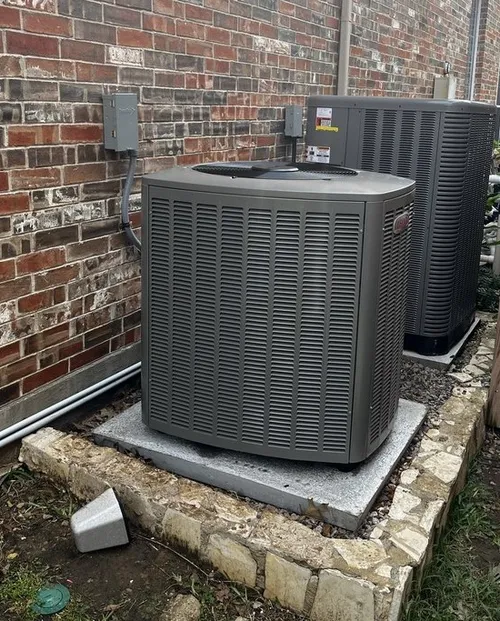
Metro Heating pro
37886 Filbert St, Newark, CA 94560
Metro Heating pro provides heating and air conditioning services in Fremont, CA. They offer repairs, installations, replacements, and maintenance for HVAC systems including furnaces, boilers, heat pumps, mini splits, and geothermal heat pumps. The company serves all brands and models, focusing on clear communication about the work process and timing. Metro Heating pro has built a reputation in the Newark area through years of consistent HVAC service.
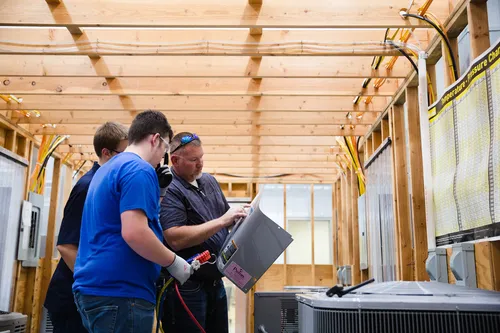
Best HVAC
Stockton, CA
Best HVAC is an HVAC company serving Stockton, CA, and the surrounding areas, including Modesto. They provide a wide range of services such as air conditioning installation, repair, and maintenance, heating system services including furnaces, heat pumps, ductless mini splits, and geothermal systems, as well as indoor air quality solutions like duct cleaning and air purifier installation. The company also offers commercial HVAC services, including new system installation and maintenance programs. With over 25 years of experience, Best HVAC emphasizes problem-solving and offers a lifetime warranty on new system installations.
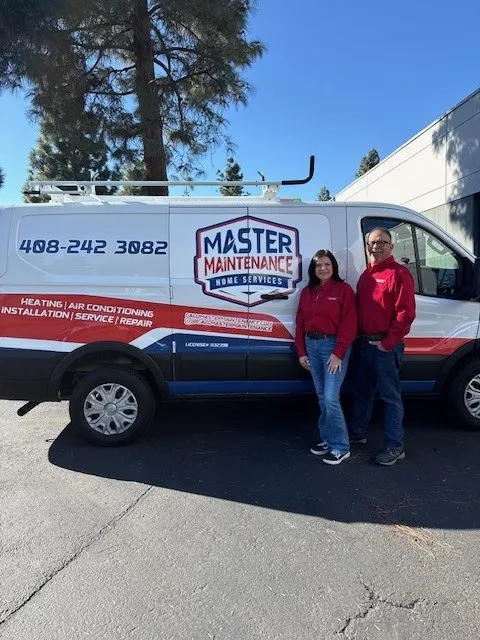
Air Heating Masters San Jose
313 Piercy Rd, San Jose, CA 95138
Air Heating Masters San Jose is a geothermal heat pump and HVAC installation contractor based in San Jose, CA. They specialize in home temperature control systems that offer energy efficiency and low maintenance by using geothermal technology. Their services include installation, maintenance, and repair of heating and cooling systems that transfer energy between the home and the earth through an underground loop system. With over fifty years of experience in geothermal technology, they provide systems that operate quietly and reliably. The company also offers 24-hour emergency service for urgent needs.
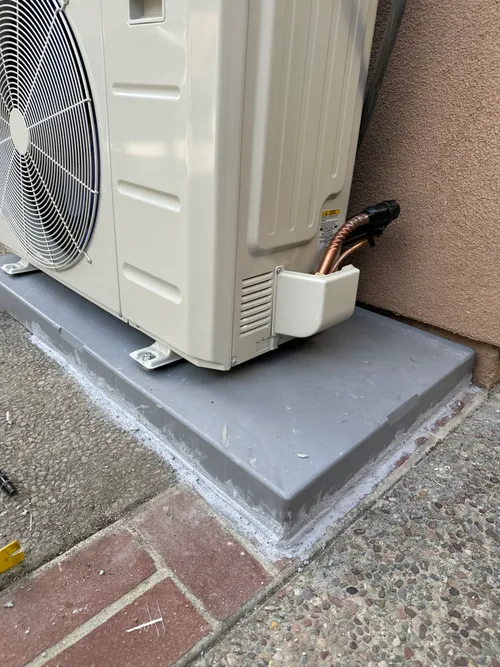
Kailey Air Systems
3633 Norwood Ave, San Jose, CA 95148
Kailey Air Systems is an HVAC company based in San Jose, CA, offering installation, repair, and maintenance services for a wide range of heating and cooling systems. They service major HVAC equipment including air conditioners, furnaces, heat pumps, boilers, mini splits, and geothermal heat pumps. Their certified technicians work throughout San Jose and nearby cities such as Santa Clara, Sunnyvale, Mountain View, and others, providing comprehensive HVAC solutions.

Cold Craft, Inc.
181 Lost Lake Ln, Campbell, CA 95008
Cold Craft, Inc. is a full-service HVAC company serving San Jose, CA, and the surrounding Silicon Valley area. Established in 1991, the company offers residential and commercial heating, ventilation, air conditioning, and refrigeration services, including installation, repair, and maintenance of furnaces, air conditioners, heat pumps, mini splits, geothermal systems, and wine cellar refrigeration. They also provide indoor air quality solutions and have an onsite sheet metal fabrication shop. Cold Craft specializes in complex systems like geothermal heating and wine cellar refrigeration, leveraging decades of experience to meet specialized needs.
How Geothermal Systems Work: Tapping into Earth's Constant Temperature
The core principle behind a geothermal heating and cooling system is remarkably simple: a few feet below the surface, the earth maintains a nearly constant temperature year-round, typically between 50°F and 60°F in the Mountain View area 1. A geothermal heat pump (GHP) uses this stable resource as a thermal exchange medium, rather than the highly variable outside air.
In the winter, a fluid (usually water or an antifreeze solution) circulates through a loop of pipes buried in the ground, absorbing the earth's stored heat2. This warm fluid is brought back to the indoor heat pump unit, which concentrates the heat and distributes it throughout your home via your existing ductwork or a hydronic system3. In the summer, the process reverses: the system extracts heat from your home and transfers it into the cooler ground, effectively providing air conditioning4 5. This elegant exchange with a consistent temperature source is what allows geothermal systems to achieve efficiencies 300-600% greater than traditional HVAC systems.
Types of Ground Loops: Choosing the Right Configuration for Your Property
The underground pipe system, or "ground loop," is the critical component that facilitates heat exchange with the earth. The right type for your Mountain View home depends primarily on your lot size, soil conditions, and local geology. There are three main configurations:
Closed-Loop Horizontal Systems This is often the most cost-effective option, especially for new construction projects with ample yard space6. Contractors excavate trenches four to six feet deep and lay loops of high-density polyethylene pipe7. While trenching requires significant land area, it typically avoids the need for specialized deep drilling equipment, keeping installation costs lower.
Closed-Loop Vertical Systems For properties with limited land, such as many urban and suburban lots in Mountain View, a vertical ground source heat pump is the standard solution. Installers drill boreholes ranging from 150 to 400 feet deep. U-shaped loops of pipe are inserted into each borehole, which are then grouted. A vertical field requires less surface area but involves more specialized drilling, which can increase the upfront installation cost.
Open-Loop Systems This configuration uses groundwater from a well as the direct heat exchange fluid. After passing through the heat pump, the water is returned to the ground via a recharge well or discharged on the surface (where local codes permit). Open-loop systems can be highly efficient but are entirely dependent on having a sufficient supply of acceptable quality water available, making them less common than closed-loop designs.
The Installation Process: From Site Assessment to System Startup
Installing a residential geothermal system is a significant project that requires careful planning and expert execution. Understanding the steps involved can help you know what to expect.
- Comprehensive Site Assessment: A qualified installer will evaluate your property to determine the best loop type. They'll assess soil composition, rock content, available space, and your home's heating and cooling loads8. This assessment is crucial for designing an efficient and properly sized system.
- Loop Field Installation: For a vertical system, a drilling rig will create the necessary boreholes. For a horizontal system, a backhoe will dig the trenches. The ground loop pipes are then placed, connected into a manifold, and pressure-tested to ensure there are no leaks.
- Indoor Unit Installation: The geothermal heat pump unit itself is installed inside your home, typically in a basement, utility closet, or garage. This unit is similar in size to a traditional furnace. Your installer will connect it to your home's existing ductwork or radiant floor system.
- Connection and Commissioning: The underground loops are connected to the indoor unit. The system is filled with fluid, purged of air, and started. A thorough commissioning process tests all components and controls to ensure everything operates at peak efficiency9.
Find the perfect geothermal heat pump contractors for your needs
Get personalized recommendations and expert advice
The Financial and Environmental Benefits: More Than Just Savings
The decision to install a geothermal system is a long-term investment that pays dividends in multiple ways.
Substantial Energy Savings Geothermal heat pumps are the most energy-efficient heating and cooling technology available today10. By moving heat rather than generating it through combustion, they can reduce energy consumption for heating and cooling by 30% to 60% compared to conventional systems11 12. For a typical Mountain View home, this can translate to monthly savings of $100 to $300 or more on combined heating and cooling costs13.
Longevity and Reliability The components of a geothermal system are known for their durability. The indoor heat pump unit often lasts 20 years or more, while the underground polyethylene piping has a lifespan exceeding 50 years-it's essentially a permanent part of your property14. This longevity, combined with fewer mechanical parts exposed to the elements, means lower maintenance costs and greater reliability over decades.
Environmental Impact By drastically reducing electricity or natural gas consumption for climate control, a ground-source heat pump significantly lowers your household's carbon footprint. The system uses electricity only to run the compressor, fan, and pump, not to create heat through resistance, making it an ideal partner for solar panels to create a nearly net-zero home energy system.
A Real-World Example for Mountain View
Consider a Mountain View home with a modest yard, making a vertical closed-loop system the practical choice. The installer might design a field with four to six boreholes, each drilled to a depth of 250-300 feet. A 3-ton geothermal heat pump unit would be installed in the garage.
While the upfront cost for this system is higher than a standard air conditioner and furnace, the operational savings begin immediately. The homeowner could see their combined heating and cooling energy use drop by over half. With significant monthly utility savings, the payback period often falls between 5 and 10 years. After that, the continued low operating costs and the system's decades-long lifespan represent pure financial and comfort benefit.
Frequently asked questions
Sources
Footnotes
-
Comprehensive Guide to Heat Pumps for California Homeowners 🌞🏠 - https://www.calljazz.com/blog/comprehensive-guide-to-heat-pumps-for-california-homeowners/ ↩
-
The California Buyers Guide to Geothermal Heat Pump Systems - https://www.californiageo.org/wp-content/uploads/CA-Buyers-Guide-for-Geothermal-HP-revised-12-13-24.pdf ↩
-
How Geothermal Heating and Cooling Systems Work | Belle Air - https://www.belleairservices.com/how-geothermal-heating-and-cooling-systems-work/ ↩
-
Geothermal Heat Pumps: How They Work | AHRI - https://www.ahrinet.org/scholarships-education/education/homeowners/how-things-work/geothermal-heat-pumps-how-they-work ↩
-
Ground source heat pumps: horizontal collectors Vs. vertical boreholes - https://www.mesh-energy.com/insights/ground-source-heat-pumps-horizontal-collectors-vs-vertical-boreholes ↩
-
How Does A Geothermal Heat Pump Work? Complete 2025 Guide - https://solartechonline.com/blog/how-does-geothermal-heat-pump-work/ ↩
-
All You Need to Know About Home Geothermal Heating & ... - https://dandelionenergy.com/all-you-need-to-know-about-home-geothermal-heating-cooling ↩
-
Understanding and Evaluating Geothermal Heat Pump Systems - https://www.nyserda.ny.gov/-/media/Project/Nyserda/Files/EERP/Residential/Geothermal/geothermal-manual.pdf ↩
-
Geothermal Heat Pumps - Department of Energy - https://www.energy.gov/energysaver/geothermal-heat-pumps ↩
-
5 Things You Should Know about Geothermal Heat Pumps - https://www.energy.gov/cmei/articles/5-things-you-should-know-about-geothermal-heat-pumps ↩
-
Geothermal Heat Pumps - EnergySmart CNY - https://www.energysmartcny.org/heat-pumps/geothermal/ ↩
-
Guide to Geothermal Heat Pumps - https://www.energy.gov/sites/prod/files/guide_to_geothermal_heat_pumps.pdf ↩
-
Making ground-source heat pumps more accessible - https://springwise.com/sustainable-infrastructure/innovation-agriculture-energy-affordable-geothermal-heating-and-cooling/ ↩
-
GEOTHERMAL POWER - https://booneelectric.coop/wp-content/uploads/2021/01/geo_power.pdf ↩