Find the Best Geothermal Heat Pump Contractors for Your Business
No obligation • Fast responses • Nationwide coverage

Why you can trust HVAC Firms
HVAC Firms is a leading United States resource for evaluating HVAC service providers. Our team researches companies, checks credentials, and reviews customer feedback to present clear, unbiased information. Listings and rankings are based on merit, and companies cannot pay to change our editorial content.
Search providers near you
Top Geothermal Heat Pump Contractors in Morgan Hill, California Ranked
Geothermal heat pumps are a highly efficient, sustainable technology for heating and cooling your home. By tapping into the Earth's stable underground temperature, these systems can dramatically reduce your energy bills and environmental impact. This guide explains how geothermal systems work, the installation process, and how you can find qualified local professionals to evaluate your property and provide a custom solution.
Best HVAC
Stockton, CA
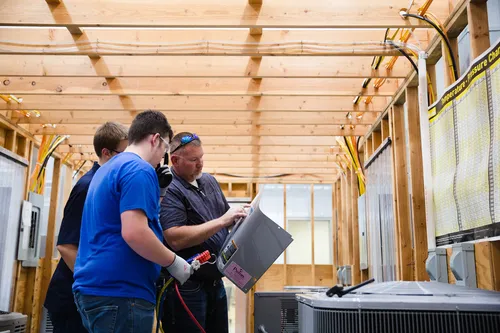
Best HVAC is an HVAC company serving Stockton, CA, and the surrounding areas, including Modesto. They provide a wide range of services such as air conditioning installation, repair, and maintenance, heating system services including furnaces, heat pumps, ductless mini splits, and geothermal systems, as well as indoor air quality solutions like duct cleaning and air purifier installation. The company also offers commercial HVAC services, including new system installation and maintenance programs. With over 25 years of experience, Best HVAC emphasizes problem-solving and offers a lifetime warranty on new system installations.
Air Heating Masters San Jose
313 Piercy Rd, San Jose, CA 95138
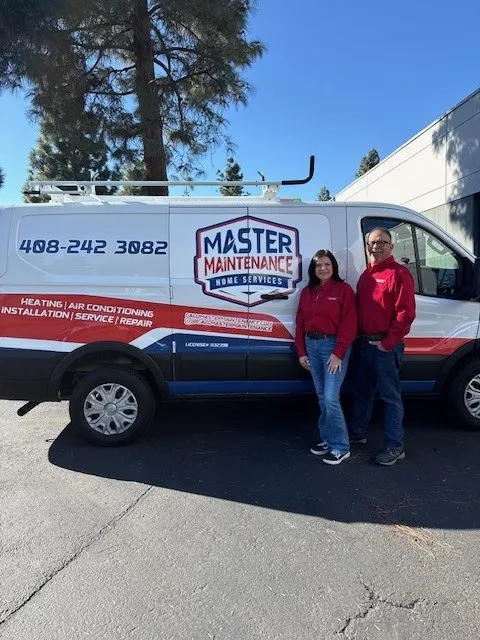
Air Heating Masters San Jose is a geothermal heat pump and HVAC installation contractor based in San Jose, CA. They specialize in home temperature control systems that offer energy efficiency and low maintenance by using geothermal technology. Their services include installation, maintenance, and repair of heating and cooling systems that transfer energy between the home and the earth through an underground loop system. With over fifty years of experience in geothermal technology, they provide systems that operate quietly and reliably. The company also offers 24-hour emergency service for urgent needs.
Kailey Air Systems
3633 Norwood Ave, San Jose, CA 95148
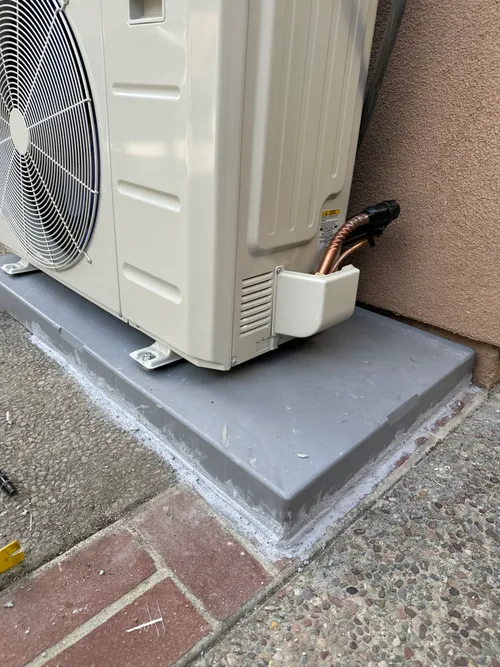
Kailey Air Systems is an HVAC company based in San Jose, CA, offering installation, repair, and maintenance services for a wide range of heating and cooling systems. They service major HVAC equipment including air conditioners, furnaces, heat pumps, boilers, mini splits, and geothermal heat pumps. Their certified technicians work throughout San Jose and nearby cities such as Santa Clara, Sunnyvale, Mountain View, and others, providing comprehensive HVAC solutions.

Cold Craft, Inc.
181 Lost Lake Ln, Campbell, CA 95008
Cold Craft, Inc. is a full-service HVAC company serving San Jose, CA, and the surrounding Silicon Valley area. Established in 1991, the company offers residential and commercial heating, ventilation, air conditioning, and refrigeration services, including installation, repair, and maintenance of furnaces, air conditioners, heat pumps, mini splits, geothermal systems, and wine cellar refrigeration. They also provide indoor air quality solutions and have an onsite sheet metal fabrication shop. Cold Craft specializes in complex systems like geothermal heating and wine cellar refrigeration, leveraging decades of experience to meet specialized needs.

J&J Air Conditioning
1086 N 11th St, San Jose, CA 95112
J&J Air Conditioning is a mechanical contractor based in San Jose, CA, serving the Silicon Valley since 1978. They provide a range of HVAC services including air conditioning, furnace, heat pump, boiler repair and installation, as well as mini split and geothermal heat pump systems. Their team handles preventive maintenance, emergency response, and the design and installation of advanced HVACR systems.
How Geothermal Systems Provide Year-Round Comfort
A geothermal heat pump, often called a ground-source heat pump, uses a network of underground pipes, known as a ground loop, to exchange heat with the earth. The temperature just a few feet below the surface in Morgan Hill remains a relatively constant 50 to 60 degrees Fahrenheit year-round, providing a perfect source for efficient climate control.
For Heating: During cooler months, a fluid circulating through the buried loop absorbs the Earth's natural warmth. This warmed fluid is brought inside where the heat pump concentrates the thermal energy and distributes it through your home's existing ductwork or radiant floor system.
For Cooling: In the summer, the process simply reverses. The system extracts heat from your home's air and transfers it into the cooler ground loop. The now-chilled refrigerant then circulates to provide air conditioning 1. This constant, high-efficiency operation is a key advantage over air-source heat pumps, whose performance can plummet during Morgan Hill's hottest days or coldest nights when you need them most.
Types of Geothermal Ground Loops
The heart of any geothermal installation is the ground loop. The right type for your Morgan Hill property depends on your land availability, soil composition, and local geology. The two primary categories are closed-loop and open-loop systems.
Closed-Loop Systems
This is the most common residential configuration, where a sealed loop of high-density polyethylene pipe is buried and filled with an environmentally safe antifreeze solution.
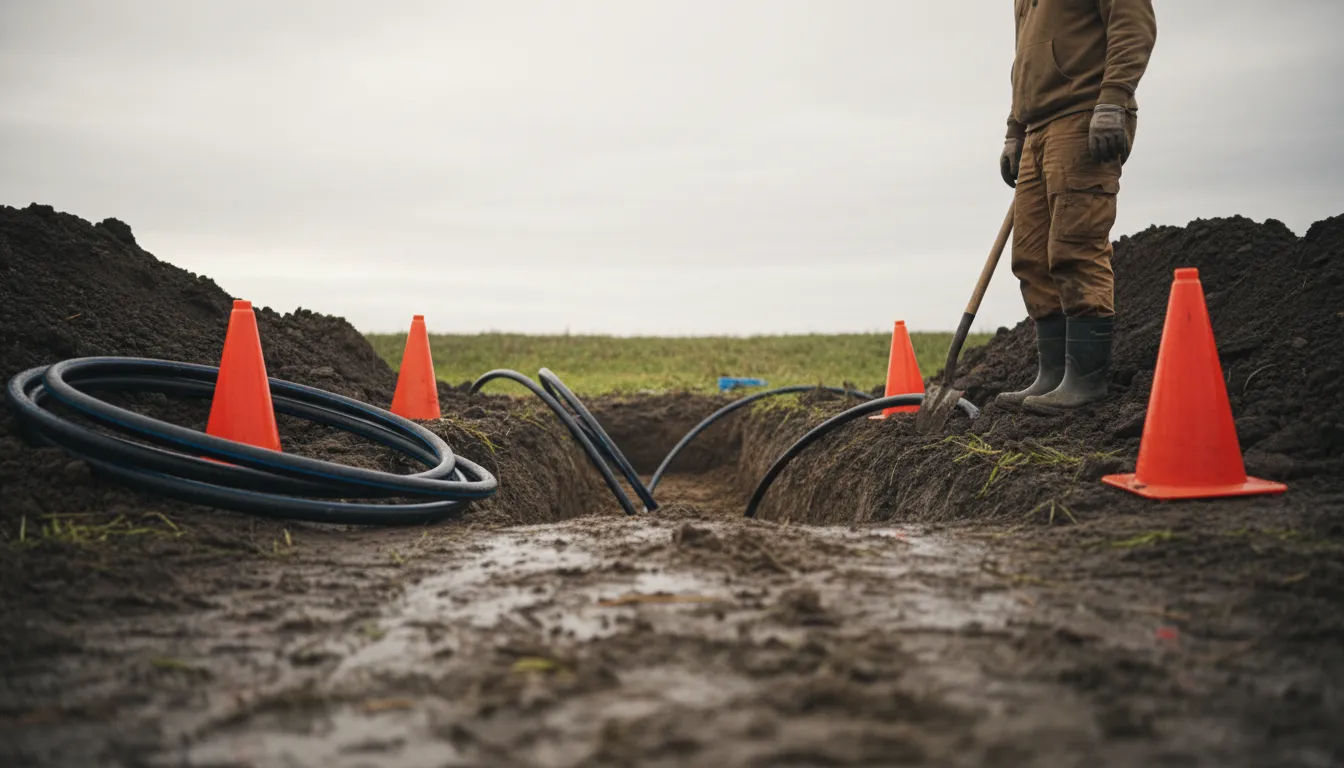
- Horizontal Closed-Loop: Ideal for properties with ample yard space. Trenches are excavated six to eight feet deep in long runs, and the loop pipes are laid inside before the trenches are backfilled2 3. This method typically has a lower excavation cost but requires more land.
- Vertical Closed-Loop: The best solution for smaller urban or suburban lots in Morgan Hill. Contractors use a drilling rig to bore vertical holes 150 to 400 feet deep. U-shaped loop pipes are inserted into each borehole, which are then grouted for optimal thermal conductivity. This method minimizes landscape disruption and is less dependent on surface area.
Open-Loop Systems
An open-loop configuration uses groundwater from a well or a suitable surface water body as the heat exchange fluid. Water is pumped directly through the heat pump unit and then returned to the ground via a second well or discharge point. While potentially very efficient, these systems require an adequate supply of clean water and are subject to more stringent local permitting and environmental regulations4.
The Geothermal Installation Process: What to Expect
Installing a geothermal heating and cooling system is a significant project that requires careful planning and expert execution. Here's a step-by-step overview of what a professional installation entails in Morgan Hill.
- Comprehensive Site Assessment: A qualified installer will visit your property to evaluate key factors. They will assess your home's heating and cooling loads, examine your yard's size and topography, and may conduct a soil thermal conductivity test. This evaluation determines the best loop type and size for optimal performance.
- Ground Loop Installation: This is the most substantial phase. For a horizontal system, an excavator will dig the necessary trenches. For a vertical system, a drilling rig will be brought in to create the boreholes. The specialized piping is then carefully placed and connected into a continuous loop5.
- Indoor Unit Installation: The geothermal heat pump unit itself, which is about the size of a traditional furnace, is installed in your garage, basement, or utility closet. It connects to the ground loop via entry pipes brought into your home.
- Connection to Distribution System: The heat pump is connected to your home's existing forced-air ductwork or to a hydronic system for radiant floor heating. Your installer will ensure the entire system is properly integrated and sealed6.
- System Startup and Landscape Restoration: After pressure-testing the loops and charging the system, the installer will commission the unit and ensure it operates correctly. Finally, the excavation areas are backfilled, and your landscaping is restored as closely as possible to its original condition 7.
Find the perfect geothermal heat pump contractors for your needs
Get personalized recommendations and expert advice
The Long-Term Value of a Geothermal Investment
The upfront cost for a geothermal heat pump system is typically higher than for a conventional HVAC system. However, this investment is offset by substantial long-term savings and benefits that make it a wise financial and environmental choice for many Morgan Hill homeowners.
- Significant Energy Savings: By leveraging the Earth's consistent temperature, geothermal systems operate with remarkable efficiency. Homeowners commonly report savings of 50% to 65% on their heating and cooling bills compared to conventional electric resistance or standard heat pump systems8 9.
- Favorable Payback Period: While installation can range from $20,000 to $50,000 or more depending on system size and loop type, the dramatic reduction in monthly utility bills leads to a typical payback period of 5 to 10 years10 11. Federal tax credits, along with potential state and local incentives, can significantly shorten this timeline12.
- Exceptional Durability and Low Maintenance: The underground piping loop is designed to last for more than 50 years. The indoor heat pump unit also boasts a long lifespan, often exceeding 24 years-roughly double that of a standard air conditioner or furnace. With few moving parts exposed to the elements, these systems require minimal maintenance.
- Enhanced Comfort and Quiet Operation: Geothermal systems provide consistent, draft-free temperatures and excellent dehumidification in cooling mode. Since there is no noisy outdoor condenser unit, operation is very quiet, with all major components located indoors.
Is Geothermal Right for Your Morgan Hill Home?
A ground-source heat pump is an excellent option for homeowners planning long-term residence who are interested in maximizing energy efficiency, reducing their carbon footprint, and gaining independence from fluctuating natural gas and electricity prices. It is particularly well-suited for new construction or major renovation projects where the loop field can be integrated into the site plan from the beginning. Even for existing homes, the long-term savings and increased property value can make retrofitting a compelling choice.
The key to a successful project is working with an experienced, certified installer who can provide an accurate load calculation, recommend the optimal system design, and execute a high-quality installation. Proper sizing and installation are critical to achieving the promised efficiency and comfort.
Frequently asked questions
Sources
Footnotes
-
How Does A Geothermal Heat Pump Work? Complete 2025 Guide - https://solartechonline.com/blog/how-does-geothermal-heat-pump-work/ ↩
-
Geothermal Heat Pump Installation: What To Expect For Your ... - https://jomory.com/geothermal-heat-pump-installation-what-to-expect-for-your-property/ ↩
-
Geothermal Heat Pumps - EnergySmart CNY - https://www.energysmartcny.org/heat-pumps/geothermal/ ↩
-
Geothermal Heat Pump and Ground Loop Technologies - https://efiling.energy.ca.gov/GetDocument.aspx?tn=73451 ↩
-
Geothermal Installation Steps Explained - https://ultrageothermal.com/geothermal-installation-steps-explained/ ↩
-
How Geothermal Heat Pumps Work - https://www.youtube.com/watch?v=XxlTnBukweI&t=37 ↩
-
How Does Geothermal Energy Work? - https://dynamichvac.net/how-does-geothermal-energy-work/ ↩
-
5 Things You Should Know about Geothermal Heat Pumps - https://www.energy.gov/cmei/articles/5-things-you-should-know-about-geothermal-heat-pumps ↩
-
Geothermal Heat Pumps - Department of Energy - https://www.energy.gov/energysaver/geothermal-heat-pumps ↩
-
Geothermal Heating, Cooling, and Hot Water Systems - https://igshpa.org/wp-content/uploads/Homeowners-Guide-to-Geothermal.pdf ↩
-
Geothermal Heat Pump Guide: Installation Costs, Types And Benefits - https://modernize.com/hvac/heating-repair-installation/heat-pump/geothermal ↩
-
The California Buyers Guide to Geothermal Heat Pump Systems - https://www.californiageo.org/wp-content/uploads/CA-Buyers-Guide-for-Geothermal-HP-revised-12-13-24.pdf ↩