Find the Best Geothermal Heat Pump Contractors for Your Business
No obligation • Fast responses • Nationwide coverage

Why you can trust HVAC Firms
HVAC Firms is a leading United States resource for evaluating HVAC service providers. Our team researches companies, checks credentials, and reviews customer feedback to present clear, unbiased information. Listings and rankings are based on merit, and companies cannot pay to change our editorial content.
Search providers near you
Top Geothermal Heat Pump Contractors in Modesto, California Ranked
A geothermal heat pump is a highly efficient heating and cooling system that uses the earth's constant underground temperature to regulate your home's climate. Unlike traditional HVAC systems that burn fuel or use outside air, these ground-source systems transfer heat to and from the ground, offering superior energy savings and environmental benefits. For Modesto homeowners, this technology provides a reliable, long-term solution for year-round comfort. This guide explains how geothermal systems work, their suitability for the Central Valley, and how you can connect with qualified local experts to explore your options.
How Geothermal Heating and Cooling Works
The principle behind a geothermal system, or ground-source heat pump (GSHP), is elegantly simple. Just a few feet below the surface, the earth maintains a stable temperature of approximately 50 to 60 degrees Fahrenheit year-round, regardless of Modesto's hot summers or mild winters. A geothermal system leverages this thermal stability as a free energy source.
Heating Mode: During the winter, a fluid (usually water or an antifreeze solution) circulates through a loop of pipes buried in your yard. This fluid absorbs the earth's gentle warmth. It then returns to the heat pump unit inside your home, where the system concentrates that low-grade heat and distributes warm air through your existing ductwork 1.
Cooling Mode: In the summer, the process reverses. The system extracts heat and humidity from your indoor air. This unwanted heat is transferred to the fluid in the ground loop, which then carries it into the cooler earth, effectively using the ground as a heat sink. The result is efficient, dehumidified air conditioning 2.
This heat exchange process is what makes geothermal technology so efficient. Instead of creating heat by burning fuel, it simply moves existing heat from one place to another, requiring significantly less electricity.
Types of Ground Loop Systems
The underground piping network, called the ground loop, is the critical component that connects your home to the earth's energy. The right type of loop for your Modesto property depends on your available land, soil conditions, and budget. There are three primary configurations:
Closed-Loop Systems: These are the most common for residential installations. A sealed mixture of water and antifreeze continuously circulates through high-density polyethylene pipes.
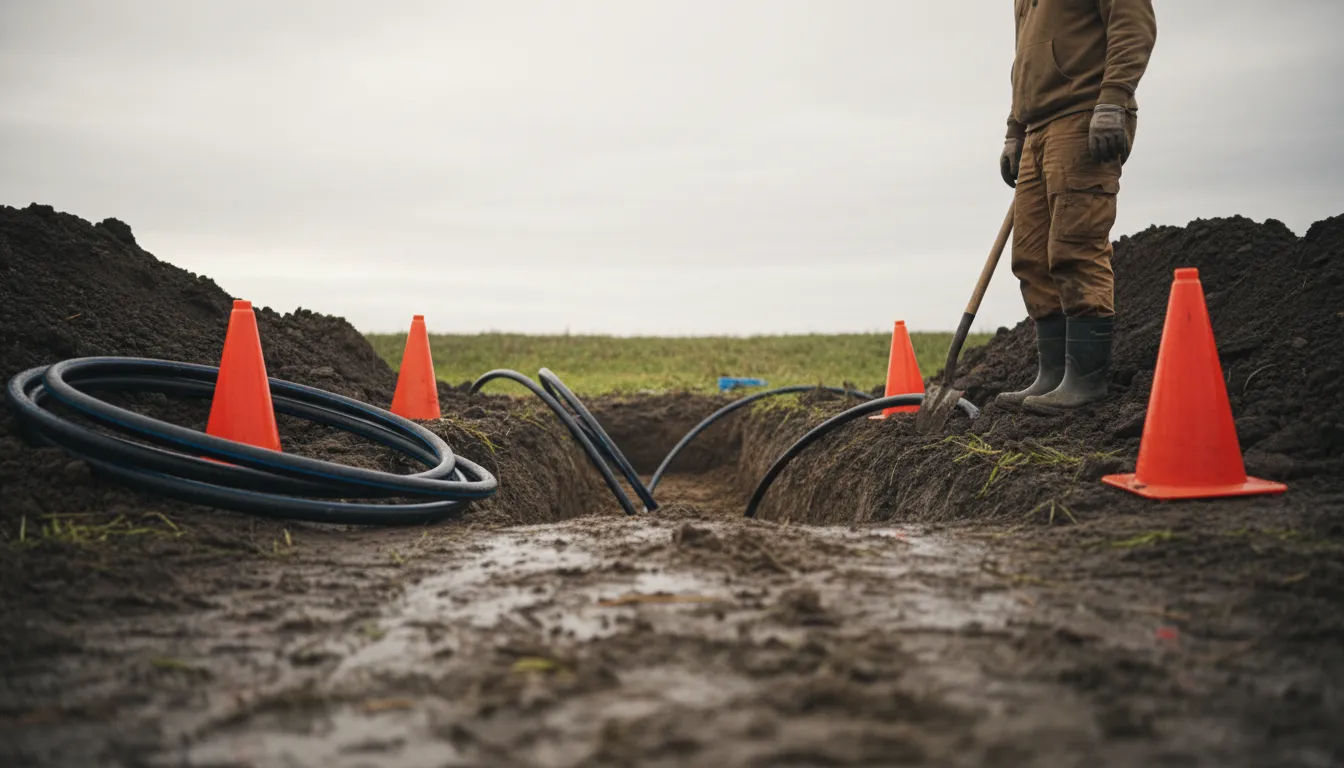
- Horizontal Closed-Loop: Pipes are laid in trenches dug 4 to 6 feet deep. This configuration requires a larger amount of land but is often less expensive to install than vertical loops where land is available 3.
- Vertical Closed-Loop: Pipes are installed in boreholes drilled hundreds of feet deep. This is the ideal solution for homes in Modesto with smaller lots, as it requires minimal surface area. The drilling process makes it a more expensive option upfront.
Open-Loop Systems: This system uses groundwater from a well or a pond as the heat exchange fluid. The water is pumped through the heat pump and then discharged back into the ground or a surface body of water. While potentially very efficient, open-loop systems require an adequate, clean water source and often involve more complex permitting4 5.
A qualified installer will conduct a thorough site assessment to determine the most effective and cost-efficient loop type for your specific property.
The Installation Process for Modesto Homes
Installing a geothermal heat pump is a significant project that involves both indoor and outdoor work. Understanding the steps can help you prepare for the process.
- Site Assessment and Design: A professional will evaluate your property's soil composition, lot size, and landscaping to recommend the optimal loop type (horizontal or vertical). They will also perform a heating and cooling load calculation for your home to properly size the system.
- Excavation or Drilling: For a horizontal loop, crews will use trenching equipment to dig the necessary network of trenches in your yard. For a vertical loop, a drilling rig will be brought in to create the deep boreholes. This is typically the most visually disruptive phase of the installation6.
- Loop Installation: The durable polyethylene piping is laid in the trenches or inserted into the boreholes. For vertical loops, the holes are then filled with a special grout to ensure good thermal conductivity between the pipe and the surrounding earth7 8.
- Indoor Unit Installation: The geothermal heat pump unit itself is installed inside your home, typically in a basement, garage, or utility closet. It resembles a traditional furnace. Your installer will connect it to your existing ductwork and, if applicable, to your domestic hot water system for additional efficiency.
- System Startup and Testing: Once all connections are made, the system is charged with refrigerant, filled with loop fluid, and powered on. The contractor will test and balance the entire system to ensure it operates at peak efficiency.
Find the perfect geothermal heat pump contractors for your needs
Get personalized recommendations and expert advice
Benefits of Choosing Geothermal in the Central Valley
For Modesto residents, investing in a ground-source heat pump offers a compelling array of advantages that align well with the region's climate and energy goals.
- Substantial Energy Savings: Geothermal systems are 300-600% efficient, meaning they move three to six units of heat for every one unit of electricity used. This can translate to savings of 50% to 65% on heating and cooling bills compared to conventional systems9 10. For many households, this can mean over $1,000 in annual utility savings.
- Exceptional Durability and Low Maintenance: The indoor heat pump unit typically lasts 20-25 years, similar to high-end conventional systems. The buried ground loop, however, is incredibly robust and often comes with warranties of 25 to 50 years, as it has no exposed mechanical parts subject to weathering11.
- Quiet, Clean, and Consistent Operation: With no noisy outdoor condenser unit (like an air-source heat pump or AC has), geothermal systems run very quietly. They provide steady, even heating and cooling without the drafts or temperature swings common with fossil fuel systems. They also have a very low carbon footprint, especially when paired with solar power.
- Ideal for Modesto's Climate: The Central Valley's deep, stable ground temperatures make it an excellent region for geothermal technology. The system efficiently handles our long, hot cooling season by rejecting heat into the relatively cool earth.
Understanding Costs and Financial Incentives
The primary barrier for many homeowners is the upfront cost. A complete residential geothermal system installation in Modesto typically ranges from $20,000 to $40,00012. This high initial investment is due to the cost of excavation, drilling, and the specialized piping.
However, it's crucial to view this as a long-term investment with a compelling payback period:
- Lower Operating Costs: The dramatic reduction in monthly energy bills starts immediately, offsetting the higher upfront cost.
- Federal Tax Credit: The federal government offers a 30% tax credit for qualified geothermal heat pump installations, which can significantly reduce your net cost13 14. This incentive is applied directly to your income tax liability.
- Potential Utility Rebates: It's worth checking with local Modesto utilities, such as Modesto Irrigation District (MID), for any available rebates or special financing options for energy-efficient upgrades.
- Increased Home Value: Studies have shown that homes with geothermal systems often have higher resale values and appeal to energy-conscious buyers.
When factoring in energy savings and available incentives, the payback period for many systems falls into the 5 to 8-year range, after which you enjoy decades of significantly lower-cost heating and cooling.
Frequently asked questions
Sources
Footnotes
-
Geothermal (Ground Source) Heat Pumps - NY.gov - https://cleanheat.ny.gov/geothermal-heat-pumps/ ↩
-
About Geothermal | International Ground Source Heat Pump ... - https://igshpa.org/about-geothermal/ ↩
-
Geothermal Heat Pumps - Department of Energy - https://www.energy.gov/energysaver/geothermal-heat-pumps ↩
-
How Does A Geothermal Heat Pump Work? Complete 2025 Guide - https://solartechonline.com/blog/how-does-geothermal-heat-pump-work/ ↩
-
FAQs • What types of ground-source heat pumps and configurat - https://concordma.gov/FAQ.aspx?QID=484 ↩
-
Geothermal Heating, Cooling, and Hot Water Systems - https://igshpa.org/wp-content/uploads/Homeowners-Guide-to-Geothermal.pdf ↩
-
Installing a Geothermal Heat Pump: A Step-by-Step Guide - Oreate AI - https://www.oreateai.com/blog/installing-a-geothermal-heat-pump-a-stepbystep-guide/cc40f3e6f94e7650273ecbd9332b7668 ↩
-
Geothermal Heat Pump and Ground Loop Technologies - https://efiling.energy.ca.gov/GetDocument.aspx?tn=73451 ↩
-
5 Things You Should Know about Geothermal Heat Pumps - https://www.energy.gov/cmei/articles/5-things-you-should-know-about-geothermal-heat-pumps ↩
-
Civil Engineering - https://engineering.fresnostate.edu/civil-geomatics/documents/Groundsource%20Heat%20Pumps%20in%20the%20Central%20Valley.pdf ↩
-
All You Need to Know About Home Geothermal Heating & Cooling - Dandelion Energy - https://dandelionenergy.com/all-you-need-to-know-about-home-geothermal-heating-cooling ↩
-
Geothermal Heat Pump Guide: Installation Costs, Types And Benefits - https://modernize.com/hvac/heating-repair-installation/heat-pump/geothermal ↩
-
The California Buyers Guide to Geothermal Heat Pump Systems - https://www.californiageo.org/wp-content/uploads/CA-Buyers-Guide-for-Geothermal-HP-revised-12-13-24.pdf ↩
-
Guide to Geothermal Heat Pumps - https://www.energy.gov/sites/prod/files/guide_to_geothermal_heat_pumps.pdf ↩