Find the Best Geothermal Heat Pump Contractors for Your Business
No obligation • Fast responses • Nationwide coverage

Why you can trust HVAC Firms
HVAC Firms is a leading United States resource for evaluating HVAC service providers. Our team researches companies, checks credentials, and reviews customer feedback to present clear, unbiased information. Listings and rankings are based on merit, and companies cannot pay to change our editorial content.
Search providers near you
Top Geothermal Heat Pump Contractors in Jurupa Valley, California Ranked
Geothermal heat pumps, also known as ground-source heat pumps, are a highly efficient technology for heating and cooling your home by leveraging the stable temperature of the earth. For Jurupa Valley residents, these systems offer a powerful way to combat seasonal temperature extremes while drastically reducing energy bills and environmental impact. This guide explains how geothermal heating and cooling works, what to expect from installation, and how you can find qualified local experts to evaluate your property for this sustainable upgrade.
NexGen HVAC & Plumbing
23221 Peralta Dr Ste C, Laguna Hills, CA 92653
NexGen HVAC & Plumbing is a full-service heating and cooling company based in Irvine, CA. They provide installation, repair, and maintenance for a wide range of HVAC systems including traditional, electric, ductless, rooftop units, heat pumps, and geothermal systems. Their services also include air duct cleaning, thermostat installation, and HVAC tune-ups to improve system performance. NexGen HVAC & Plumbing offers insulation services for air ducts, walls, attics, and crawlspaces to enhance comfort and address issues such as mold and water leaks.
NexGen HVAC & Plumbing
10820 Mulberry Ave, Fontana, CA 92337
NexGen HVAC & Plumbing is a full-service contractor based in Riverside, CA, offering a wide range of heating, cooling, and plumbing services. They handle installation, repair, and maintenance of air conditioners, heat pumps, furnaces, ductless mini-splits, and geothermal systems. Their plumbing services include leak detection, drain cleaning, sewer repair, and gas line inspection. NexGen is equipped to service both residential and commercial properties and uses advanced technology such as high-tech camera inspections for plumbing diagnostics. They provide 24/7 emergency service to address urgent HVAC and plumbing issues promptly.
Nelson Air Heating & Air Conditioning
5062 Casa Oro Dr, Yorba Linda, CA 92886
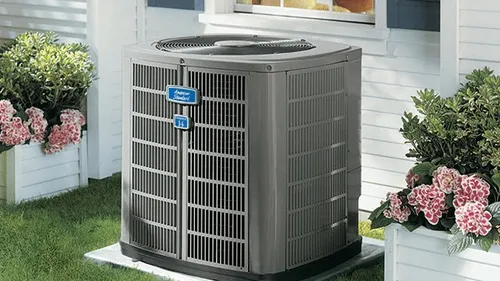
Nelson Air Heating & Air Conditioning provides HVAC installation services in Anaheim, CA. They handle installation for a variety of systems including air conditioners, furnaces, heat pumps, boilers, mini splits, and geothermal heat pumps for both residential and commercial clients. The company installs all major HVAC brands and emphasizes quality materials, efficiency, and workmanship.
Thomas Brothers HVAC & Plumbing
12625 Frederick St, Moreno Valley, CA 92553
Thomas Brothers HVAC & Plumbing is a heating and cooling company located in Riverside, CA. They provide a range of services including installation and repair of air conditioners, furnaces, heat pumps, boilers, mini splits, and geothermal heat pumps. The company also offers HVAC tune-up services to maintain system efficiency. Thomas Brothers HVAC & Plumbing is bonded, insured, and licensed, ensuring compliance with industry standards.
Comfort Elite HVAC
1080 N Batavia St Ste N, Orange, CA 92867
Comfort Elite HVAC provides a wide range of heating, air conditioning, and indoor air quality services in Los Angeles, CA. With over 10 years of experience, they handle installation, repair, and maintenance for systems including heat pumps, furnaces, mini splits, and geothermal heating. Their services cover air duct cleaning, air purification, and refrigerant recharge, aiming to improve home comfort and air quality. Comfort Elite HVAC offers 24/7 emergency repair services and same-day responses to HVAC issues, ensuring timely assistance for heating and cooling needs.
How Geothermal Systems Work: Tapping into the Earth's Constant Temperature
The core principle behind a geothermal heat pump system is simple: it uses the earth as a giant thermal battery. Just a few feet below the surface, the ground maintains a relatively constant temperature year-round, typically between 40°F and 90°F in this region. This temperature is warmer than the outside air in winter and cooler than the outside air in summer.
A geothermal system works like a refrigerator in reverse. It doesn't generate heat by burning fuel; instead, it moves existing heat from one place to another. Here's the basic process:
- Heat Exchange: A fluid (usually a water-antifreeze mixture) circulates through a loop of durable, high-density polyethylene pipe buried in the ground.
- Winter Heating: In heating mode, the fluid absorbs the earth's natural warmth as it travels through the underground loop. This warmed fluid is brought back to the heat pump unit inside the home.
- Concentration and Distribution: The heat pump concentrates this low-grade thermal energy and transfers it to the air circulating through your home's ductwork1 2.
- Summer Cooling: The process reverses for cooling. The system extracts heat from your home's air and transfers it into the cooler ground loop fluid, which then deposits the heat into the earth.
This elegant process results in remarkable efficiency, as the system uses a small amount of electricity to move a large amount of thermal energy.
Types of Ground Loop Systems for Jurupa Valley Properties
The underground piping, or ground loop, is the heart of the system. The right type for your Jurupa Valley home depends on your lot size, soil conditions, and local geology. The three main configurations are closed-loop and open-loop systems.
Closed-Loop Horizontal Systems
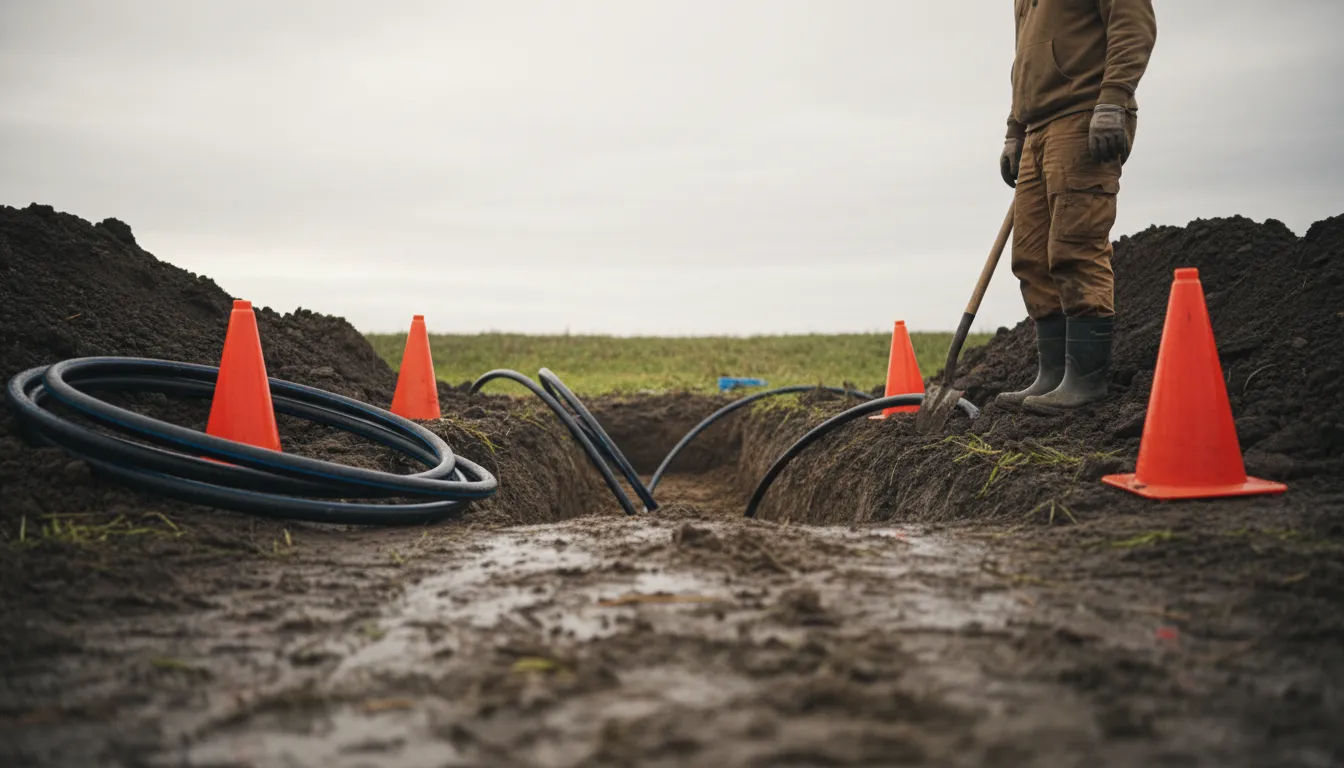
This is often the most cost-effective option if space allows. Contractors dig trenches five to eight feet deep across your property and lay the piping loops horizontally. This method requires a significant amount of land, typically around half an acre or more, making it a good fit for many properties in the Jurupa Valley area. The trenching work is less specialized than drilling, which can help manage installation costs.
Closed-Loop Vertical Systems
For homes with smaller yards, a vertical ground source heat pump system is the ideal solution. Installers use a drilling rig to bore holes 150 to 250 feet deep3 4. U-shaped loop pipes are inserted into each borehole, which are then grouted. This method requires less surface area but involves specialized drilling equipment and expertise, which can increase the upfront cost. It's an excellent choice for rocky soil or limited space.
Open-Loop Systems
An open-loop system uses groundwater from a well as the heat exchange fluid. After passing through the heat pump, the water is returned to the ground via a second well or a suitable discharge point like a pond5. While potentially very efficient, this option is highly site-specific. It requires an adequate supply of clean water and must comply with local regulations regarding groundwater use and discharge, which can be a significant consideration in California.
The Installation Process: From Assessment to Operation
Installing a geothermal heating and cooling system is a significant project that requires careful planning and professional execution. Understanding the steps involved can help you prepare.
- Site Assessment and Design: A qualified installer will evaluate your property, considering soil composition, lot layout, existing ductwork, and your home's heating and cooling loads. This analysis is critical for designing an appropriately sized and configured system6.
- Loop Field Installation: This is the major earthwork phase. For a horizontal system, trenches are dug. For a vertical system, boreholes are drilled. The polyethylene piping is carefully placed, connected, and pressure-tested to ensure integrity before being buried or grouted.
- Heat Pump and Indoor Unit Installation: The indoor heat pump unit, which is typically about the size of a traditional furnace, is installed and connected to the ground loop and your home's existing ductwork or hydronic distribution system. An air handler may also be installed to circulate conditioned air.
- System Charging and Startup: The loop is filled with the heat transfer fluid and purged of air. The entire system is then started, tested, and balanced to ensure optimal performance and efficiency7.
Find the perfect geothermal heat pump contractors for your needs
Get personalized recommendations and expert advice
Understanding Costs, Savings, and Incentives
The decision to invest in a geothermal system involves weighing a higher initial cost against substantial long-term benefits.
Upfront Investment
The installation cost for a geothermal heat pump system is significantly higher than that of a conventional air-source HVAC system. This is primarily due to the expense of the ground loop installation, which involves specialized labor and equipment for trenching or drilling. The total cost varies widely based on system type, property characteristics, and home size.
Long-Term Energy Savings
The payoff comes from dramatically lower operating costs. Geothermal systems are exceptionally efficient, often delivering three to four units of heating or cooling for every unit of electricity they consume. Homeowners can expect to save 30% to 70% on their heating and cooling energy bills 8 9. In the climate of the Central Valley, these savings can lead to a payback period on the initial investment in as little as 5 to 8 years9, after which you enjoy decades of significantly reduced utility costs.
Valuable Financial Incentives
To help offset the initial cost, several incentives are available:
- Federal Tax Credits: Homeowners may be eligible for a federal residential energy efficiency tax credit, which has historically covered 30% of the total installed cost10 11. It is crucial to verify the current credit amount and requirements with your installer or a tax professional.
- Local Utility Rebates: Always check with your local Jurupa Valley utility provider for any available rebates or special programs for installing geothermal technology.
Given the long system lifespan of 25 years or more for the ground loops and over 20 years for the heat pump unit itself 12, a geothermal system is a durable investment that enhances home comfort and value for decades.
Is a Geothermal System Right for Your Home?
A ground-source heat pump is an excellent choice for homeowners in Jurupa Valley who:
- Plan to stay in their home long enough to realize the long-term savings.
- Are building a new home or replacing an aging, inefficient HVAC system.
- Have suitable land for a horizontal trench or vertical boreholes.
- Are motivated by reducing their carbon footprint and energy independence.
- Want consistent, quiet, and draft-free comfort year-round.
The most important step is to consult with experienced, certified geothermal contractors in the Jurupa Valley area. They can provide a detailed site evaluation, accurate cost estimates, and projections of your energy savings based on your specific home and needs.
Frequently asked questions
Sources
Footnotes
-
Geothermal Heat Pumps | WBDG - https://www.wbdg.org/resources/geothermal-heat-pumps ↩
-
How Geothermal Heating and Cooling Systems Work | Belle Air - https://www.belleairservices.com/how-geothermal-heating-and-cooling-systems-work/ ↩
-
Geothermal Heat Pumps - Department of Energy - https://www.energy.gov/energysaver/geothermal-heat-pumps ↩
-
About Geothermal - https://northamericangeo.com/about-geothermal ↩
-
Should I Buy A Geothermal Heat Pump For My Home? - https://www.cincinkyrealestate.com/blog/should-i-buy-a-geothermal-heat-pump-for-my-home/ ↩
-
How A Ground Source Heat Pump Works - YouTube - https://www.youtube.com/watch?v=KE3SvNRmwcQ ↩
-
Geothermal System Operations and Installation Process - https://www.geothermalbydesign.com/geothermal-process ↩
-
Geothermal Heating, Cooling, and Hot Water Systems - https://igshpa.org/wp-content/uploads/Homeowners-Guide-to-Geothermal.pdf ↩
-
Civil Engineering - https://engineering.fresnostate.edu/civil-geomatics/documents/Groundsource%20Heat%20Pumps%20in%20the%20Central%20Valley.pdf ↩ ↩2
-
The California Buyers Guide to Geothermal Heat Pump Systems - https://www.californiageo.org/wp-content/uploads/CA-Buyers-Guide-for-Geothermal-HP-revised-12-13-24.pdf ↩
-
Guide to Geothermal Heat Pumps - https://www.energy.gov/sites/prod/files/guide_to_geothermal_heat_pumps.pdf ↩
-
Geothermal Heat Pump Basics - Visalia, CA - https://jacksref.com/geothermal-heat-pump-basics/ ↩