
Find the Best Geothermal Heat Pump Contractors for Your Business
No obligation • Fast responses • Nationwide coverage

Why you can trust HVAC Firms
HVAC Firms is a leading United States resource for evaluating HVAC service providers. Our team researches companies, checks credentials, and reviews customer feedback to present clear, unbiased information. Listings and rankings are based on merit, and companies cannot pay to change our editorial content.
Search providers near you
Top Geothermal Heat Pump Contractors in Highland, California Ranked
A geothermal heat pump is a highly efficient heating and cooling system that uses the earth's stable underground temperature to provide year-round comfort for your home. This technology matters because it can dramatically reduce your energy bills and environmental footprint while offering reliable, all-electric climate control. For Highland residents, finding the right local expert for installation or service is key to unlocking these benefits, and this guide will help you understand your options and connect with qualified professionals.
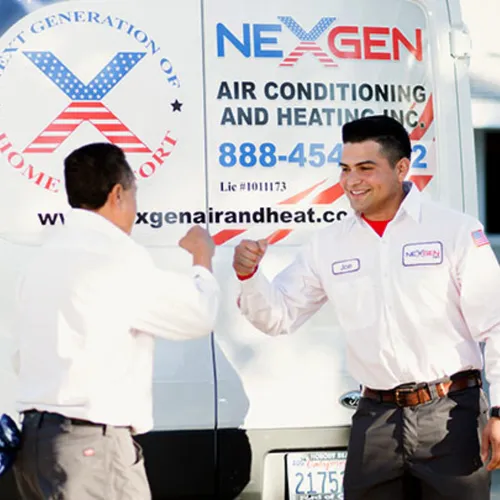
NexGen HVAC & Plumbing
10820 Mulberry Ave, Fontana, CA 92337
NexGen HVAC & Plumbing is a full-service contractor based in Riverside, CA, offering a wide range of heating, cooling, and plumbing services. They handle installation, repair, and maintenance of air conditioners, heat pumps, furnaces, ductless mini-splits, and geothermal systems. Their plumbing services include leak detection, drain cleaning, sewer repair, and gas line inspection. NexGen is equipped to service both residential and commercial properties and uses advanced technology such as high-tech camera inspections for plumbing diagnostics. They provide 24/7 emergency service to address urgent HVAC and plumbing issues promptly.
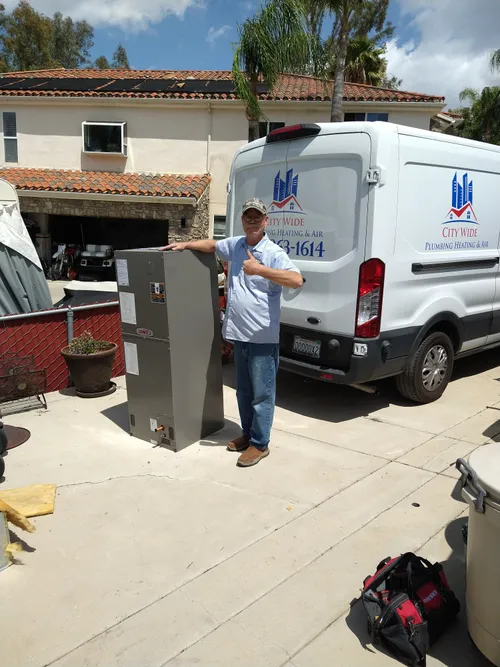
Thomas Brothers HVAC & Plumbing
12625 Frederick St, Moreno Valley, CA 92553
Thomas Brothers HVAC & Plumbing is a heating and cooling company located in Riverside, CA. They provide a range of services including installation and repair of air conditioners, furnaces, heat pumps, boilers, mini splits, and geothermal heat pumps. The company also offers HVAC tune-up services to maintain system efficiency. Thomas Brothers HVAC & Plumbing is bonded, insured, and licensed, ensuring compliance with industry standards.
How a Ground-Source Heat Pump Works
The core principle behind a geothermal system, also known as a ground-source heat pump (GSHP), is elegant in its simplicity. Just a few feet below the surface, the earth maintains a nearly constant temperature of about 50-60°F year-round, regardless of the summer heat or winter chill above ground. A geothermal system taps into this thermal battery.
The process involves a closed-loop of pipes, called the ground loop, buried in your yard. A water-based fluid circulates through these pipes. In the winter, this fluid absorbs the earth's gentle warmth and carries it to a heat pump unit inside your home. The indoor unit compresses the heat to a higher temperature and then distributes it through your ductwork as warm air. In the summer, the system reverses: it extracts heat from your home's air and transfers it into the cooler ground loop fluid, which then rejects the heat into the earth, leaving your home comfortably cooled 1 2. This efficient heat exchange process is what makes geothermal systems so effective and energy-saving.
Types of Ground Loop Systems for Highland Properties
The design of the underground loop field is a critical decision in any geothermal installation. The right choice depends heavily on your property's characteristics-its size, soil composition, and layout. There are three primary configurations.
Horizontal Ground Loops This is often the most cost-effective installation method if you have sufficient land. Contractors dig trenches 5 to 8 feet deep and several hundred feet long in which they lay pipes in a series of parallel runs or slinky coils 3. This approach requires a larger, open area but typically involves lower excavation costs compared to drilling. It's an excellent option for new construction projects or homes with ample yard space.
Vertical Ground Loops For properties with limited space, like many urban or suburban lots in Highland, vertical loops are the standard solution. Contractors use a drilling rig to bore holes 150 to 250 feet deep 4. U-shaped pipes are inserted into each borehole, which are then grouted for optimal heat transfer. While the drilling cost per foot is higher, this system minimizes landscape disruption and is ideal for smaller yards, as the boreholes are typically just 20 feet apart 5.
Pond or Lake Loops If your property has access to a sufficiently large and deep pond or lake, this can be a highly efficient and potentially lower-cost option. Coils of pipe are submerged at the bottom of the water body, where temperatures are also stable. The water acts as an excellent heat exchange medium. This option requires specific site conditions and permissions but can simplify the installation process significantly 6.
The Installation Process: What Highland Homeowners Can Expect
Installing a geothermal heating and cooling system is a significant project that transforms your home's infrastructure. Understanding the phases can help you prepare.
Phase 1: Site Evaluation and Loop Installation A qualified installer will first conduct a thorough site survey. They'll assess your yard's size, soil and rock composition, and accessibility for machinery. This evaluation determines the best loop type and size for your home's heating and cooling loads. Once planned, the loop installation begins. For horizontal systems, this means trenching equipment will be on-site for a day or more. For vertical systems, a drilling rig will be present. This phase is the most disruptive to your landscape but is a one-time event.
Phase 2: Indoor Unit and Connection While the ground loop is being installed, other technicians can work inside your home. The indoor heat pump unit, which is typically about the size of a traditional furnace, is placed in your utility room, basement, or garage. The installer will connect it to your home's existing ductwork or install new ducts if needed. The ground loop pipes are then connected to the indoor unit, and the system is filled with fluid, pressurized, and tested for leaks.
Important Local Considerations In Highland, local permits will be required, and your installer should handle this process. For retrofit projects (replacing an existing system), the installer will also need to properly decommission your old furnace and air conditioner. Clear communication with your contractor about the project timeline, areas of yard disruption, and restoration plans is essential for a smooth experience.
Find the perfect geothermal heat pump contractors for your needs
Get personalized recommendations and expert advice
Energy Savings and Financial Payback
The most compelling reason Highland homeowners choose geothermal is the dramatic reduction in energy bills. By leveraging the earth's free and consistent temperature, these systems operate with exceptional efficiency.
Substantial Utility Bill Reductions Homeowners with geothermal heat pumps typically see their heating and cooling energy consumption drop by 30% to 70% compared to conventional systems like furnaces and standard air conditioners 7 8. On average, this can translate to over $1,000 in annual savings on utility bills, with many reporting cuts to their heating and cooling costs by more than half 8 9. This is especially valuable in California's climate, where both heating and cooling are regularly needed.
Understanding the Investment and Return The upfront cost for a complete geothermal system is higher than installing a new furnace and air conditioner. Total installation can range from $10,000 to over $40,000, with the ground loop accounting for a significant portion of the expense 10 11. However, this is an investment with a clear financial return. The payback period-the time it takes for energy savings to equal the initial cost-often falls between 4 and 15 years 12 13. After that, the continued savings go directly into your pocket. Furthermore, a geothermal system can increase your property value and offers unparalleled longevity, with ground loops often guaranteed for 50 years and indoor units lasting 20 years or more.
Incentives and Choosing a Contractor in Highland
To improve affordability, it's crucial to explore available incentives. The federal government offers tax credits for qualified geothermal heat pump installations. Additionally, local utility companies or state programs may provide rebates. A reputable local installer will be knowledgeable about all current financial incentives and can help you apply for them.
Selecting the right contractor is the single most important step. Look for companies with specific experience in geothermal or ground-source heat pump installation. They should be licensed, insured, and ideally, accredited by organizations like the International Ground Source Heat Pump Association (IGSHPA). Ask for references from past geothermal customers and detailed, written estimates that break down all costs for the loop, equipment, and labor 14.
For a vetted list of professionals, a great resource is the California Buyers Guide for Geothermal Heat Pump Systems provided by the California Geothermal Heat Pump Association (CGHP). This guide is tailored to California residents and can help you start your search with confidence.
Frequently asked questions
Sources
Footnotes
-
How Geothermal Heat Pumps Work - https://www.youtube.com/watch?v=XxlTnBukweI&t=37 ↩
-
What is Geothermal heat and how does it work? - https://pondviewinspections.com/what-is-geothermal-heat-and-how-does-it-work/ ↩
-
Geothermal heat pumps: The ultimate guide to ground-source ... - https://termo-plus.com/blog/geothermal-ultimate-guide-to-ground-source-heat-pumps/ ↩
-
Geothermal Heat Pumps: How They Work | AHRI - https://www.ahrinet.org/scholarships-education/education/homeowners/how-things-work/geothermal-heat-pumps-how-they-work ↩
-
Geothermal Heat Pumps - Department of Energy - https://www.energy.gov/energysaver/geothermal-heat-pumps ↩
-
Geothermal Heat Pumps, Explained - Bosch Home Comfort - https://www.bosch-homecomfort.com/us/en/residential/connect/blog/geothermal-heat-pumps-go-green-save-green/ ↩
-
Geothermal Heating, Cooling, and Hot Water Systems - https://igshpa.org/wp-content/uploads/Homeowners-Guide-to-Geothermal.pdf ↩
-
How Does A Geothermal Heat Pump Work? Complete 2025 Guide - https://solartechonline.com/blog/how-does-geothermal-heat-pump-work/ ↩ ↩2
-
All You Need to Know About Home Geothermal Heating & ... - https://dandelionenergy.com/all-you-need-to-know-about-home-geothermal-heating-cooling ↩
-
5 Things You Should Know about Geothermal Heat Pumps - https://www.energy.gov/cmei/articles/5-things-you-should-know-about-geothermal-heat-pumps ↩
-
Geothermal Heat Pump Guide: Installation Costs, Types And Benefits - https://modernize.com/hvac/heating-repair-installation/heat-pump/geothermal ↩
-
How Geothermal Heating and Cooling Systems Work | Belle Air - https://www.belleairservices.com/how-geothermal-heating-and-cooling-systems-work/ ↩
-
Everything You Need to Know About Geothermal Heat Pumps - https://www.familyhandyman.com/article/everything-you-need-to-know-about-geothermal-heat-pumps/ ↩
-
The California Buyers Guide to Geothermal Heat Pump Systems - https://www.californiageo.org/wp-content/uploads/CA-Buyers-Guide-for-Geothermal-HP-revised-12-13-24.pdf ↩