Find the Best Geothermal Heat Pump Contractors for Your Business
No obligation • Fast responses • Nationwide coverage

Why you can trust HVAC Firms
HVAC Firms is a leading United States resource for evaluating HVAC service providers. Our team researches companies, checks credentials, and reviews customer feedback to present clear, unbiased information. Listings and rankings are based on merit, and companies cannot pay to change our editorial content.
Search providers near you
Top Geothermal Heat Pump Contractors in Hemet, California Ranked
Geothermal heat pumps, also known as ground-source heat pumps, are a highly efficient method for heating and cooling your home by leveraging the earth's stable underground temperature. For Hemet residents, this technology offers a powerful way to reduce energy bills and environmental impact while ensuring year-round comfort. This guide explains how these systems work, what installation entails, and how you can find qualified local experts to assess your property for a potential geothermal system.
How Geothermal Heating and Cooling Works
A geothermal system doesn't create heat by burning fuel; instead, it moves existing heat. The earth just a few feet below the surface maintains a nearly constant temperature between 50°F and 70°F year-round, regardless of the weather above ground. A ground-source heat pump uses this thermal reservoir as its exchange medium.
The system consists of three main parts: a ground loop (a network of pipes buried in the earth), a heat pump unit (located inside your home), and a distribution system (typically your existing ductwork or radiant floor tubing). A water-based solution circulates through the sealed ground loop, absorbing or dissipating heat from the ground.
- In the Winter: The fluid in the ground loop absorbs the earth's stored warmth. This slightly warmed fluid is pumped to the indoor heat pump unit, which uses a refrigeration cycle to concentrate that low-grade heat into warmer air, which is then distributed throughout your home 1.
- In the Summer: The process reverses. The heat pump extracts heat and humidity from your indoor air and transfers it into the circulating fluid. The now-warmed fluid travels through the ground loop, where the cooler earth absorbs the excess heat, effectively providing air conditioning 2 3.
This elegant exchange makes geothermal technology remarkably efficient, often moving three to five units of heat for every one unit of electrical energy used to run the system.
The Hemet Advantage for Ground-Source Systems
Southern California's climate is particularly well-suited for geothermal heat pumps. While Hemet experiences hot summers and mild winters, the ground temperature a few feet down remains consistently moderate. This consistency means the heat pump system operates at peak efficiency throughout the entire year, whether it's extracting heat from the ground on a chilly night or rejecting heat into it on a scorching afternoon 4 5.
The reliable performance translates directly into energy savings and system longevity, as the equipment isn't subjected to the extreme outdoor temperature swings that strain traditional air-source heat pumps or air conditioners.
Types of Ground Loop Systems
The design of the underground piping, or "ground loop," is critical and depends on your property's characteristics. There are four primary types of loops used in residential geothermal installations.
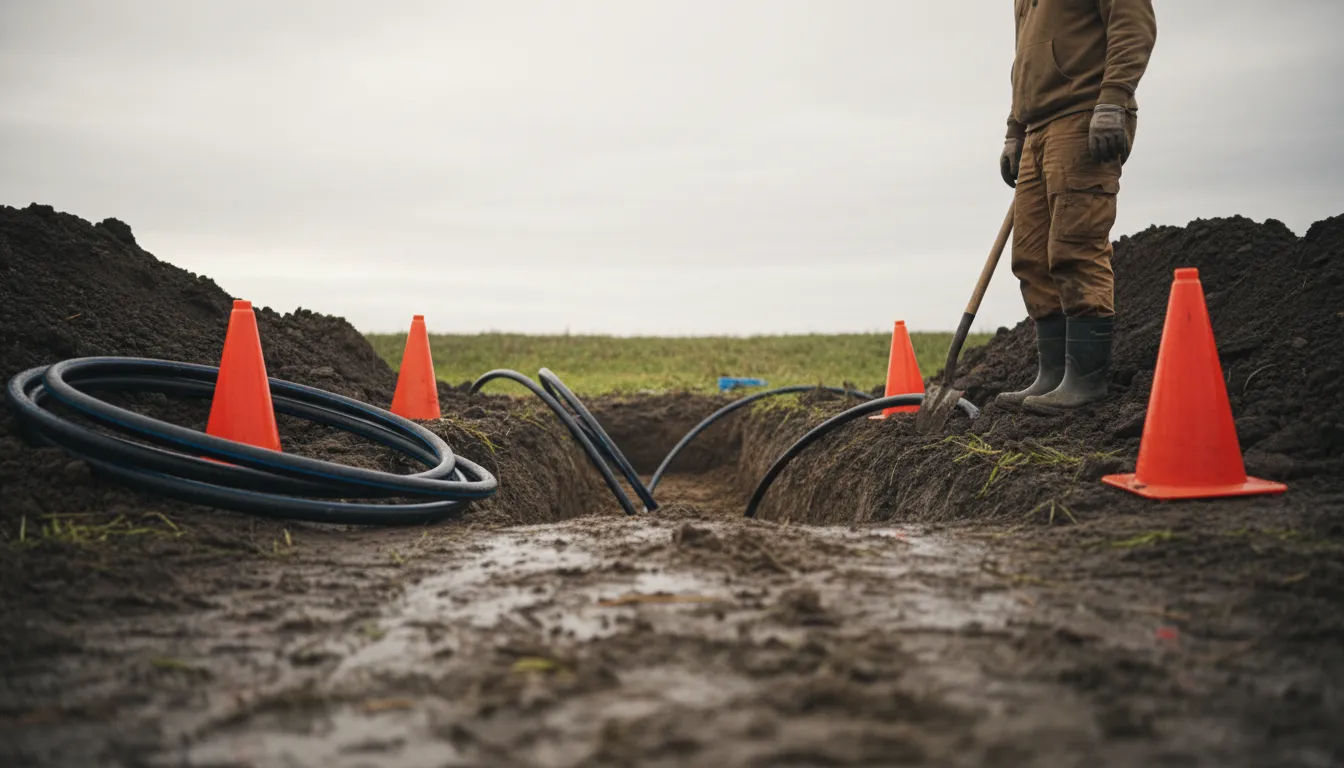
Horizontal Closed Loop This is often the most cost-effective option if sufficient land is available. Contractors dig trenches four to six feet deep, typically in a series of parallel lines or slinky-coil configurations. Pipes are laid in the trenches and then backfilled. This method requires a significant amount of open yard space-often between a quarter to three-quarters of an acre for an average home.
Vertical Closed Loop For homes with smaller lots or where preserving landscaping is a priority, vertical loops are the ideal solution. Contractors use drilling rigs to bore holes 150 to 400 feet deep. U-shaped pipe loops are inserted into each borehole, which are then grouted for optimal thermal conductivity. While the drilling process is more specialized, it minimizes surface disruption and is excellent for rocky soil 6.
Pond or Lake Loop If you have access to a sufficient body of water (one that meets depth and volume requirements), this can be an efficient option. Coils of pipe are submerged at the bottom of the pond or lake. The water acts as the heat exchange medium. This method typically has lower installation costs if the water source is very close to the home 7 8.
Open Loop System This system uses groundwater from a well as the direct heat exchange fluid. After passing through the heat pump, the water is discharged, typically back into a second "return" well or a suitable surface drainage. Open loop systems are less common due to local groundwater regulations, water quality considerations, and the need for a reliable, adequate well supply 9.
The Geothermal Installation Process in Hemet
Installing a geothermal heating and cooling system is a significant project that requires careful planning and expert execution. Here's a step-by-step overview of what homeowners can expect 10 11 12.
- Site Assessment and Design: A qualified installer will evaluate your property, considering soil composition, lot size, landscaping, and access. They will perform a Manual J load calculation to determine your home's precise heating and cooling needs and design the most effective loop field and system size.
- Ground Loop Installation:
- For Horizontal Loops: Excavation equipment digs the necessary trenches according to the engineered design.
- For Vertical Loops: A drilling rig creates the deep boreholes. This process is less disruptive to the surface but requires specialized equipment.
- Piping is carefully placed, connected, and pressure-tested to ensure there are no leaks before the trenches or boreholes are backfilled.
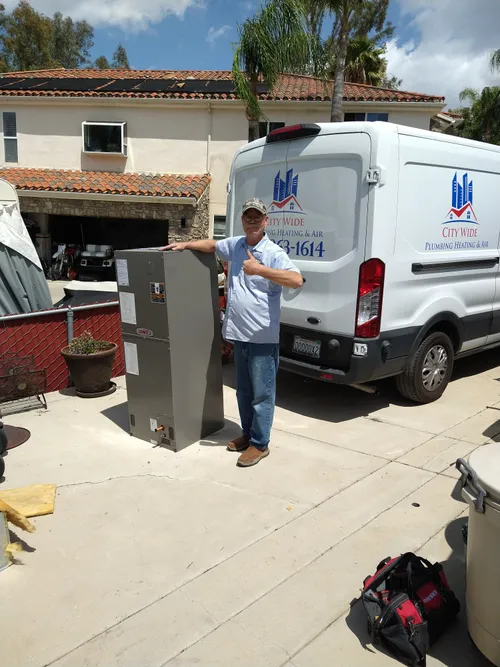
- Indoor Unit Installation: The geothermal heat pump unit-which resembles a traditional furnace-is installed in your garage, basement, or mechanical closet. It is connected to your home's existing ductwork or a new air distribution system.
- Connection and System Start-up: The ground loops are connected to the heat pump, forming a closed, pressurized circuit. The system is charged with fluid, and all electrical and control connections are made. The installer will then commission the system, checking all operations and balancing the airflow.
- Site Restoration: The contractor will restore your yard, grading the soil and reseeding grass as needed. For vertical loop systems, surface restoration is usually minimal.
Find the perfect geothermal heat pump contractors for your needs
Get personalized recommendations and expert advice
Evaluating Cost, Savings, and Value
The decision to invest in a geothermal system involves understanding the upfront costs against the long-term financial and comfort benefits.
Understanding Upfront Costs The installation cost for a complete geothermal system in Hemet for a typical 2,000-square-foot home can range from $20,000 to over $50,000 13. This wide range is due to variables like loop type (vertical drilling is more expensive than horizontal trenching), soil conditions, system size, and the complexity of connecting to your home's existing infrastructure. While this initial investment is higher than that of a standard HVAC system, it's crucial to view it in the context of total lifecycle cost.
Long-Term Energy Savings and Payback This is where geothermal heat pumps shine. By leveraging the earth's free thermal energy, these systems can reduce energy consumption for heating and cooling by up to 65% compared to conventional systems 14 15 16. The monthly savings on your utility bills directly offset the higher initial cost.
The payback period-the time it takes for energy savings to equal the installation cost-typically ranges from 4 to 15 years 17 18. Factors influencing payback include local electricity and gas rates, the efficiency of your old system, climate, and available incentives. Over a system's lifespan, the total savings can be substantial, often amounting to tens of thousands of dollars.
Durability and Lifespan Geothermal systems are known for their remarkable durability. The indoor heat pump unit often lasts 20 years or more. The underground loop system, with no moving parts and protected from the elements, has an even longer expected lifespan of 25 to 50-plus years. This longevity far exceeds that of traditional outdoor air conditioners and heat pumps.
Incentives and Financing Homeowners should investigate available financial incentives, which can significantly reduce the net cost. These may include federal tax credits, state-level rebates from California, or special loan programs from local utilities. A knowledgeable local installer will be up-to-date on the latest incentive programs.
Is a Geothermal System Right for Your Hemet Home?
Consider these key factors when exploring ground-source heat pumps:
- Available Space: Do you have enough usable land for horizontal trenches, or will your property require vertical drilling? A professional site survey is essential.
- Soil and Geology: The thermal conductivity of your soil affects loop design and efficiency. Rockier soil is better for vertical loops, while clay or moist soil is excellent for horizontal loops.
- Current Heating/Cooling Costs: Homes with high existing energy bills due to old electric resistance heat, propane, or oil systems often see the fastest payback.
- Long-Term Plans: If you plan to stay in your home for a decade or more, you are more likely to fully realize the financial benefits of the system's efficiency and durability.
- Environmental Goals: For homeowners prioritizing a reduced carbon footprint, geothermal systems offer one of the cleanest and most efficient ways to heat and cool a home, especially when paired with renewable electricity.
Frequently asked questions
Sources
Footnotes
-
How Geothermal Heating and Cooling Systems Work | Belle Air - https://www.belleairservices.com/how-geothermal-heating-and-cooling-systems-work/ ↩
-
How Do Geothermal Systems Work for Residential Homes? - https://www.davisheat.com/blog/how-do-geothermal-systems-work-for-residential-homes/ ↩
-
Introduction to Water Source Heat Pump Systems Part 5: Geothermal Systems - - https://jmpcoblog.com/hvac-blog/introduction-to-water-source-heat-pump-systems-part-5-geothermal-systems ↩
-
Geothermal Heating & Cooling - Department of Energy - https://www.energy.gov/eere/geothermal/geothermal-heating-cooling ↩
-
The California Buyers Guide to Geothermal Heat Pump Systems - https://www.californiageo.org/wp-content/uploads/CA-Buyers-Guide-for-Geothermal-HP-revised-12-13-24.pdf ↩
-
How Does a Geothermal System Work? - ClimateMaster - https://www.climatemaster.com/homeowner/side-links/how-it-works ↩
-
Geothermal heat pumps: The ultimate guide to ground-source ... - https://termo-plus.com/blog/geothermal-ultimate-guide-to-ground-source-heat-pumps/ ↩
-
Geothermal Heat Pumps - Department of Energy - https://www.energy.gov/energysaver/geothermal-heat-pumps ↩
-
How Does A Geothermal Heat Pump Work? Complete 2025 Guide - https://solartechonline.com/blog/how-does-geothermal-heat-pump-work/ ↩
-
Geothermal Heat Pump Installation: What To Expect For Your ... - https://jomory.com/geothermal-heat-pump-installation-what-to-expect-for-your-property/ ↩
-
All You Need to Know About Home Geothermal Heating & Cooling - Dandelion Energy - https://dandelionenergy.com/all-you-need-to-know-about-home-geothermal-heating-cooling ↩
-
Ground Source Heat Pump Installation - Process & Costs - https://iheat.co.uk/heat-pump-help/ground-source-heat-pump-installation ↩
-
Geothermal Heat Pump Guide: Installation Costs, Types And Benefits - https://modernize.com/hvac/heating-repair-installation/heat-pump/geothermal ↩
-
Geothermal Heat Pumps - EnergySmart CNY - https://www.energysmartcny.org/heat-pumps/geothermal/ ↩
-
Everything You Need to Know About Geothermal Heat Pumps - https://www.familyhandyman.com/article/everything-you-need-to-know-about-geothermal-heat-pumps/ ↩
-
5 Things You Should Know about Geothermal Heat Pumps - https://www.energy.gov/cmei/articles/5-things-you-should-know-about-geothermal-heat-pumps ↩
-
Guide to Geothermal Heat Pumps - https://www.energy.gov/sites/prod/files/guide_to_geothermal_heat_pumps.pdf ↩
-
Ground source heating guide - What is ground source heating? - https://ctc-heating.com/blog/ground-source-heating/ground-source-heating-guide-what-is-ground-source-heating ↩