
Find the Best Geothermal Heat Pump Contractors for Your Business
No obligation • Fast responses • Nationwide coverage

Why you can trust HVAC Firms
HVAC Firms is a leading United States resource for evaluating HVAC service providers. Our team researches companies, checks credentials, and reviews customer feedback to present clear, unbiased information. Listings and rankings are based on merit, and companies cannot pay to change our editorial content.
Search providers near you
Top Geothermal Heat Pump Contractors in Glendora, California Ranked
A geothermal heat pump, also known as a ground-source heat pump, is a highly efficient heating and cooling system that leverages the Earth's stable underground temperature. For Glendora homeowners, this technology offers a sustainable way to manage indoor climate while significantly reducing energy consumption. This guide explains how these systems work, what installation entails, and how you can find qualified local specialists to evaluate your property for a geothermal solution.
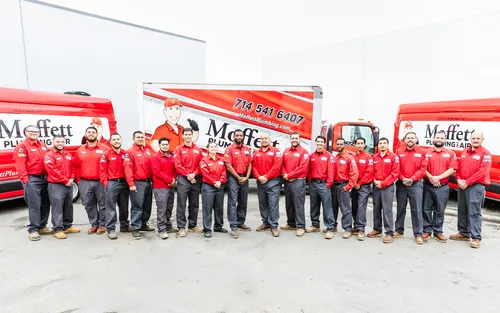
Moffett Plumbing & Air
13950 Milton Ave, Westminster, CA 92683
Moffett Plumbing & Air is a plumbing and HVAC company serving Long Beach, CA, and the surrounding Orange County area. They offer a wide range of services including air conditioning, furnace, heat pump, and boiler repair and installation, as well as duct cleaning, thermostat installation, indoor air quality services, and geothermal heat pump work. Established in 1969, Moffett Plumbing & Air has built a reputation for dependable service and community focus, treating customers with respect and care. Their team is known for professional workmanship and efficiency.
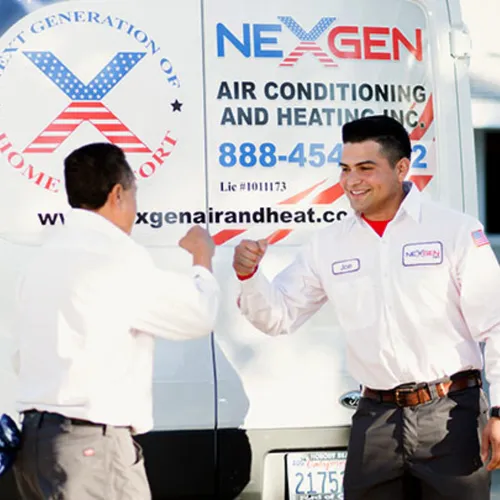
NexGen HVAC & Plumbing
10820 Mulberry Ave, Fontana, CA 92337
NexGen HVAC & Plumbing is a full-service contractor based in Riverside, CA, offering a wide range of heating, cooling, and plumbing services. They handle installation, repair, and maintenance of air conditioners, heat pumps, furnaces, ductless mini-splits, and geothermal systems. Their plumbing services include leak detection, drain cleaning, sewer repair, and gas line inspection. NexGen is equipped to service both residential and commercial properties and uses advanced technology such as high-tech camera inspections for plumbing diagnostics. They provide 24/7 emergency service to address urgent HVAC and plumbing issues promptly.
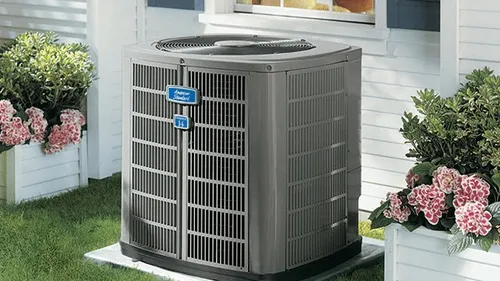
Nelson Air Heating & Air Conditioning
5062 Casa Oro Dr, Yorba Linda, CA 92886
Nelson Air Heating & Air Conditioning provides HVAC installation services in Anaheim, CA. They handle installation for a variety of systems including air conditioners, furnaces, heat pumps, boilers, mini splits, and geothermal heat pumps for both residential and commercial clients. The company installs all major HVAC brands and emphasizes quality materials, efficiency, and workmanship.
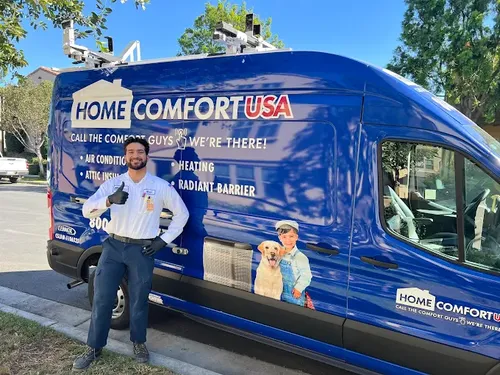
Comfort Elite HVAC
1080 N Batavia St Ste N, Orange, CA 92867
Comfort Elite HVAC provides a wide range of heating, air conditioning, and indoor air quality services in Los Angeles, CA. With over 10 years of experience, they handle installation, repair, and maintenance for systems including heat pumps, furnaces, mini splits, and geothermal heating. Their services cover air duct cleaning, air purification, and refrigerant recharge, aiming to improve home comfort and air quality. Comfort Elite HVAC offers 24/7 emergency repair services and same-day responses to HVAC issues, ensuring timely assistance for heating and cooling needs.
How a Geothermal System Works
Unlike traditional air-source heat pumps or furnaces that exchange heat with the outside air, a geothermal system uses the ground as its heat source in winter and its heat sink in summer. Just a few feet below the surface, the Earth maintains a nearly constant temperature of 50-60°F year-round, regardless of the weather above. A geothermal heat pump taps into this stable resource through a network of buried pipes called a ground loop.
- Heating in Winter: A water-based fluid circulates through the underground loop, absorbing the gentle warmth from the earth. This warmed fluid is carried to the indoor heat pump unit. The unit concentrates this low-grade heat and distributes it as warm air throughout your home via your existing ductwork.
- Cooling in Summer: The process reverses. The indoor heat pump extracts heat and humidity from your home's air. This unwanted heat is transferred to the fluid in the loop, which then carries it underground where it is dissipated into the cooler earth 1.
This elegant exchange of heat with the ground, rather than the hot summer or cold winter air, is what makes geothermal technology so remarkably efficient, often operating at 300-600% efficiency compared to the 95-98% of a high-efficiency furnace 2.
Types of Ground Loop Systems
The design of the underground piping is a critical component of any geothermal installation. The right type for your Glendora home depends primarily on your lot size, soil conditions, and budget. There are three primary configurations:
Horizontal Closed Loop This is often the most cost-effective option if you have sufficient land. Installers dig trenches four to six feet deep and several hundred feet long in your yard. Pipes are laid in these trenches in a slinky-like configuration to maximize surface area contact with the soil before the trenches are backfilled 3 4. This method requires a sizable, unobstructed plot of land.
Vertical Closed Loop For properties with limited yard space, like many in established Glendora neighborhoods, vertical loops are the ideal solution. Contractors use a drilling rig to bore holes 150 to 450 feet deep. U-shaped pipe loops are inserted into each borehole, which are then grouted shut. This method minimizes landscape disruption and is well-suited for retrofits, though drilling costs can be higher 5 6.
Pond/Lake Loop (Open Loop) If your property has access to a sufficiently large and deep pond or lake, this can be an efficient option. Pipes are run from the home to the water source, where they circulate water directly from the pond through the heat pump before returning it. This system requires specific water quality and volume, making it less common in residential settings.
The Geothermal Installation Process
Installing a ground-source heat pump is a significant project that requires careful planning and expert execution. Here's what you can expect from start to finish when working with a qualified installer:
- Site Assessment and Design: A geothermal contractor will visit your property to evaluate soil composition, lot size, landscaping, and your home's heating and cooling loads. This assessment determines the feasibility and optimal type of ground loop system.
- Ground Loop Installation: This is the most invasive phase. For a horizontal system, excavators will dig long trenches across your yard. For a vertical system, a drilling rig will be brought in to create the necessary boreholes. The high-density polyethylene piping is then placed and connected into a continuous loop.
- Indoor Unit Installation: The geothermal heat pump unit itself, which is about the size of a small refrigerator, is installed in your garage, basement, or utility closet. It is connected to the ground loop and integrated with your home's existing ductwork or hydronic distribution system 7.
- System Charging and Commissioning: The loop is filled with water or an eco-friendly antifreeze solution, and the entire system is pressurized and tested for leaks. The installer will then start up the system, calibrate it for optimal performance, and ensure your thermostat controls are functioning correctly.
- Restoration: Finally, the contractor will restore your landscaping as much as possible, backfilling trenches or patching drill sites. While some disruption is inevitable, a professional crew will leave your property tidy.
Find the perfect geothermal heat pump contractors for your needs
Get personalized recommendations and expert advice
Key Considerations for Glendora Homeowners
Before committing to a geothermal heating and cooling system, it's important to weigh several local and property-specific factors.
- Property Space and Layout: The amount of available land is the primary determinant for your loop type. A spacious yard may allow for a more economical horizontal loop, while a compact or landscaped lot will likely necessitate vertical drilling.
- Project Scope and Timing: The installation process involves substantial excavation or drilling. For this reason, integrating a geothermal system into a new construction project or during a major renovation is often ideal, as the disruption can be coordinated with other work. Retrofits are absolutely possible but require careful planning around existing structures and landscaping.
- Choosing the Right Contractor: Success hinges on working with an experienced specialist. Look for a licensed HVAC contractor with specific training and a proven track record in installing geothermal heat pumps. They should be familiar with Glendora's permitting process, local geology, and the specific demands of the Southern California climate 8.
Benefits and Long-Term Value
The upfront investment in a geothermal system is offset by substantial long-term savings and benefits, making it a compelling choice for energy-conscious residents.
- Dramatic Energy Savings: By leveraging the Earth's consistent temperature, geothermal heat pumps use significantly less electricity than conventional systems. Homeowners typically see a reduction of 50% to 70% on their heating and cooling energy bills, which can translate to savings of 65% or more annually 9.
- High Efficiency and Low Operating Costs: These systems are exceptionally efficient, delivering 3 to 5 units of heating or cooling energy for every 1 unit of electrical energy consumed. This Coefficient of Performance (COP) far exceeds that of the best air-source units, leading to consistently lower utility costs.
- Exceptional System Lifespan: The underground polyethylene piping loop is incredibly durable and is often warranted for 50 years, with a practical lifespan that can exceed it. The indoor heat pump unit typically lasts 20 to 24 years-about twice as long as the average outdoor compressor on a standard air conditioner 10.
- Quiet Operation and Increased Comfort: With no loud outdoor condenser unit, geothermal systems operate very quietly. They also provide more consistent, draft-free heating and cooling by delivering a steady stream of air at a moderate temperature, enhancing overall home comfort 11.
- Environmental Impact: By drastically reducing fossil fuel consumption or the strain on the electrical grid, a ground-source heat pump significantly lowers your household's carbon footprint, making it one of the cleanest heating and cooling technologies available.
While the initial installation cost for a complete residential system in Glendora can range from $20,000 to over $40,000, the combination of massive energy savings, low maintenance, and extraordinary longevity means the system can often pay for itself through utility savings in 5 to 10 years, after which you enjoy decades of nearly free heating and cooling 12 13 14.
Frequently asked questions
Sources
Footnotes
-
Geothermal (Ground Source) Heat Pumps : NYS Clean Heat - NY.Gov - https://cleanheat.ny.gov/geothermal-heat-pumps/ ↩
-
5 Things You Should Know about Geothermal Heat Pumps - https://www.energy.gov/cmei/articles/5-things-you-should-know-about-geothermal-heat-pumps ↩
-
Geothermal heating & cooling, heat pumps, heat exchange ... - https://aztechgeo.com/residential-geothermal/how-it-works/ ↩
-
Exploring Geothermal Systems: Advantages and Considerations - https://dilandroandrews.com/understanding-geothermal-systems/ ↩
-
Geothermal Heat Pumps: How They Work | AHRI - https://www.ahrinet.org/scholarships-education/education/homeowners/how-things-work/geothermal-heat-pumps-how-they-work ↩
-
Geothermal Heat Pump Guide: Installation Costs, Types And Benefits - https://modernize.com/hvac/heating-repair-installation/heat-pump/geothermal ↩
-
Geothermal Heat Pumps | WBDG - https://www.wbdg.org/resources/geothermal-heat-pumps ↩
-
The California Buyers Guide to Geothermal Heat Pump Systems - https://www.californiageo.org/wp-content/uploads/CA-Buyers-Guide-for-Geothermal-HP-revised-12-13-24.pdf ↩
-
Geothermal Heat Pump Guide: Installation Costs, Types And Benefits - https://modernize.com/hvac/heating-repair-installation/heat-pump/geothermal ↩
-
How Geothermal Heating and Cooling Systems Work | Belle Air - https://www.belleairservices.com/how-geothermal-heating-and-cooling-systems-work/ ↩
-
Clean Energy 101: Geothermal Heat Pumps - RMI - https://rmi.org/clean-energy-101-geothermal-heat-pumps/ ↩
-
Geothermal Heat Pumps - Department of Energy - https://www.energy.gov/energysaver/geothermal-heat-pumps ↩
-
Geothermal Heat Pumps - EnergySmart CNY - https://www.energysmartcny.org/heat-pumps/geothermal/ ↩
-
Guide to Geothermal Heat Pumps - https://www.energy.gov/sites/prod/files/guide_to_geothermal_heat_pumps.pdf ↩