
Find the Best Geothermal Heat Pump Contractors for Your Business
No obligation • Fast responses • Nationwide coverage

Why you can trust HVAC Firms
HVAC Firms is a leading United States resource for evaluating HVAC service providers. Our team researches companies, checks credentials, and reviews customer feedback to present clear, unbiased information. Listings and rankings are based on merit, and companies cannot pay to change our editorial content.
Search providers near you
Top Geothermal Heat Pump Contractors in Fontana, California Ranked
A geothermal heat pump, also known as a ground-source heat pump, is a highly efficient system for heating and cooling your Fontana home by exchanging heat with the stable temperature of the earth. This technology matters because it can dramatically reduce your energy bills while providing year-round comfort, regardless of Fontana's hot summers or cooler winters. You can use this guide to understand how these systems work, what installation entails, and to connect with qualified local professionals who can assess your property.
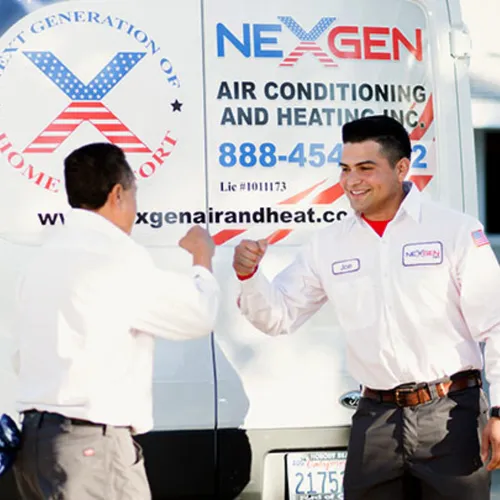
NexGen HVAC & Plumbing
10820 Mulberry Ave, Fontana, CA 92337
NexGen HVAC & Plumbing is a full-service contractor based in Riverside, CA, offering a wide range of heating, cooling, and plumbing services. They handle installation, repair, and maintenance of air conditioners, heat pumps, furnaces, ductless mini-splits, and geothermal systems. Their plumbing services include leak detection, drain cleaning, sewer repair, and gas line inspection. NexGen is equipped to service both residential and commercial properties and uses advanced technology such as high-tech camera inspections for plumbing diagnostics. They provide 24/7 emergency service to address urgent HVAC and plumbing issues promptly.
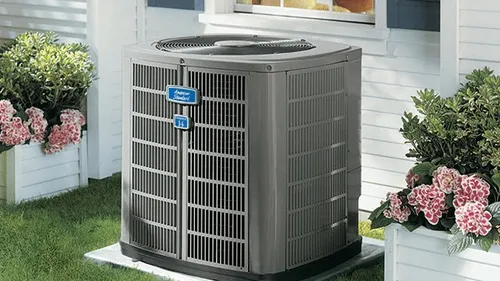
Nelson Air Heating & Air Conditioning
5062 Casa Oro Dr, Yorba Linda, CA 92886
Nelson Air Heating & Air Conditioning provides HVAC installation services in Anaheim, CA. They handle installation for a variety of systems including air conditioners, furnaces, heat pumps, boilers, mini splits, and geothermal heat pumps for both residential and commercial clients. The company installs all major HVAC brands and emphasizes quality materials, efficiency, and workmanship.
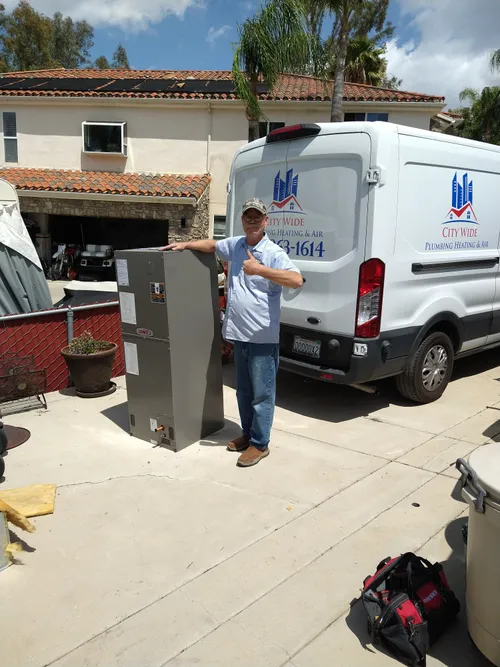
Thomas Brothers HVAC & Plumbing
12625 Frederick St, Moreno Valley, CA 92553
Thomas Brothers HVAC & Plumbing is a heating and cooling company located in Riverside, CA. They provide a range of services including installation and repair of air conditioners, furnaces, heat pumps, boilers, mini splits, and geothermal heat pumps. The company also offers HVAC tune-up services to maintain system efficiency. Thomas Brothers HVAC & Plumbing is bonded, insured, and licensed, ensuring compliance with industry standards.
How a Ground-Source Heat Pump Works
The core principle behind a geothermal heating and cooling system is remarkably simple: it uses the earth as a giant, free battery for thermal energy. Just a few feet below the surface, the ground in Fontana maintains a relatively constant temperature of 55-60°F year-round 1. A geothermal system taps into this stable resource.
In the winter, a fluid (typically a water and antifreeze mix) circulating through underground pipes, called a ground loop, absorbs the earth's natural warmth. This slightly warmed fluid is brought to a heat pump unit inside your home. The heat pump concentrates this low-grade heat and delivers it as warm air through your ductwork. The process reverses in the summer. The system extracts heat and humidity from your indoor air and transfers it into the cooler ground loop fluid, which then dissipates the heat into the earth, leaving your home comfortably cooled. This efficient transfer, rather than generating heat through combustion, is why these systems are so effective.
Types of Geothermal Loop Systems
The underground portion of the system, the ground loop, is the most critical installation component. The right type for your Fontana property depends on your land availability, soil conditions, and budget. There are two primary categories: closed-loop and open-loop systems.
Closed-Loop Systems
This is the most common configuration for residential properties. A sealed loop of high-density polyethylene (HDPE) pipe is buried and filled with a heat-transfer fluid. The fluid circulates continuously, exchanging heat with the ground without ever mixing with groundwater.
- Horizontal Ground Loops: This method involves digging trenches 4 to 6 feet deep across a large area of your yard. It's generally the most cost-effective closed-loop option but requires a significant amount of land-typically between a quarter to three-quarters of an acre 2. This makes it an excellent choice for new construction projects on larger lots where excavation is already planned.
- Vertical Ground Loops: For homes with smaller lots, like many in established Fontana neighborhoods, vertical loops are the standard solution. Contractors drill boreholes 60 to 140 meters deep and insert U-shaped loop pipes. While the drilling equipment is more specialized and the installation can involve more permitting, it minimizes landscape disruption and is ideal for retrofitting an existing home with limited yard space.
Open-Loop Systems
This configuration uses groundwater from a well or a surface water body like a pond as the direct heat exchange fluid. Water is pumped from the source, passes through the heat pump to exchange heat, and is then discharged back into a second well, a recharge basin, or the original pond 3. An open-loop system can be highly efficient but is entirely dependent on having a sufficient, consistent, and high-quality water source, which is a crucial consideration in California.
The Installation Process for Fontana Homes
Installing a geothermal HVAC system is a significant project that requires careful planning and expert execution. Understanding the steps can help you prepare.
- Site Evaluation and Design: A qualified installer will assess your property's soil composition, lot size, and layout. They will determine the best loop type (horizontal vs. vertical) and size the system correctly for your home's heating and cooling loads. This stage often includes checking local permitting requirements, especially for drilling.
- Loop Field Installation: This is the major exterior work. For a horizontal system, a backhoe will dig the network of trenches. For a vertical system, a drilling rig will be brought in to create the boreholes. The HDPE pipe is then placed, connected, and pressure-tested to ensure there are no leaks before the trenches or boreholes are backfilled.
- Indoor Unit and Connection: The ground loops are connected to the indoor heat pump unit, which is typically installed where your old furnace or air handler was located. The installer will integrate the new heat pump with your existing ductwork and electrical system. For homes without ducts, ductless options paired with geothermal are also available.
- System Startup and Commissioning: Once everything is connected, the system is filled with fluid, purged of air, and started. The technician will calibrate the controls, check all operations, and ensure the system is delivering heated or cooled air as designed.
Find the perfect geothermal heat pump contractors for your needs
Get personalized recommendations and expert advice
Key Considerations for Fontana Homeowners
Before investing in a geothermal system, several local factors should guide your decision.
- Land Availability: This is the primary determinant. A spacious, undeveloped yard may allow for a cost-effective horizontal loop. A compact urban lot will almost certainly require a vertical loop system, which has a higher installation cost but a smaller footprint 4 5.
- Upfront Cost vs. Long-Term Savings: The initial investment for a complete geothermal heating and cooling system in Fontana can range from $20,000 to over $40,000, depending on system size, loop type, and site conditions 6 7. This is significantly higher than a standard air-source heat pump or furnace. However, the operational savings are substantial. Homeowners can expect to reduce their heating and cooling energy bills by 30% to 70% due to the system's extraordinary efficiency 8 6 9. Over the system's lifespan of 20-25 years or more, these savings can fully offset the higher initial cost.
- System Efficiency: The efficiency of geothermal heat pumps is measured by their Coefficient of Performance (COP) for heating and Energy Efficiency Ratio (EER) for cooling. These systems are so efficient because they move existing heat rather than create it. For every unit of electrical energy they consume, they can move 3 to 5 units of thermal energy, resulting in COPs often between 3.0 and 5.0 10. This translates directly into lower utility bills.
- Property Disruption: Installing the ground loop is an invasive process. Your yard will be dug up for trenches or drilled for boreholes. While the landscape can be restored, it's a consideration, especially for mature gardens. Installation is often easiest during new home construction or a major renovation 11.
Benefits Beyond Energy Savings
While lower monthly bills are a major advantage, geothermal systems offer other compelling benefits for Fontana residents.
- Durability and Longevity: The underground loop system is made of durable HDPE plastic and is designed to last for 50 years or more. The indoor heat pump unit typically has a lifespan of 20-25 years, which is longer than most conventional HVAC equipment 12.
- Quiet Operation and Comfort: With no noisy outdoor condenser unit (like an air conditioner or air-source heat pump has), the system operates very quietly. It also provides exceptionally consistent, draft-free comfort because it operates in longer, steadier cycles rather than the short, forceful bursts of a conventional system.
- Safety and Air Quality: There is no combustion of fossil fuels inside your home, eliminating risks associated with carbon monoxide. The system also often includes enhanced air filtration and can integrate with devices for humidity control, improving indoor air quality.
- Environmental Impact: By using renewable thermal energy from the ground and electricity, a geothermal system drastically reduces your home's carbon footprint associated with heating and cooling. It's one of the cleanest and most sustainable comfort technologies available 13.
Frequently asked questions
Sources
Footnotes
-
Geothermal Heat Pumps - EnergySmart CNY - https://www.energysmartcny.org/heat-pumps/geothermal/ ↩
-
Geothermal Heat Pump and Ground Loop Technologies - https://efiling.energy.ca.gov/GetDocument.aspx?tn=73451 ↩
-
FAQs • What types of ground-source heat pumps and configurat - https://concordma.gov/FAQ.aspx?QID=484 ↩
-
How Does A Geothermal Heat Pump Work? Complete 2025 Guide - https://solartechonline.com/blog/how-does-geothermal-heat-pump-work/ ↩
-
Geothermal heat pumps: The ultimate guide to ground-source ... - https://termo-plus.com/blog/geothermal-ultimate-guide-to-ground-source-heat-pumps/ ↩
-
The California Buyers Guide to Geothermal Heat Pump Systems - https://www.californiageo.org/wp-content/uploads/CA-Buyers-Guide-for-Geothermal-HP-revised-12-13-24.pdf ↩ ↩2
-
Geothermal Heat Pump Guide: Installation Costs, Types And Benefits - https://modernize.com/hvac/heating-repair-installation/heat-pump/geothermal ↩
-
5 Things You Should Know about Geothermal Heat Pumps - https://www.energy.gov/cmei/articles/5-things-you-should-know-about-geothermal-heat-pumps ↩
-
Guide to Geothermal Heat Pumps - https://www.energy.gov/sites/prod/files/guide_to_geothermal_heat_pumps.pdf ↩
-
Harnessing Geothermal Solutions for Off-Grid Log Cabin Comfort - https://www.jorgensenloghomes.com/harnessing-geothermal-solutions-for-off-grid-log-cabin-comfort/ ↩
-
How Geothermal Heating and Cooling Systems Work | Belle Air - https://www.belleairservices.com/how-geothermal-heating-and-cooling-systems-work/ ↩
-
Geothermal Heating, Cooling, and Hot Water Systems - https://igshpa.org/wp-content/uploads/Homeowners-Guide-to-Geothermal.pdf ↩
-
Geothermal (Ground Source) Heat Pumps - NY.gov - https://cleanheat.ny.gov/geothermal-heat-pumps/ ↩