Find the Best Geothermal Heat Pump Contractors for Your Business
No obligation • Fast responses • Nationwide coverage

Why you can trust HVAC Firms
HVAC Firms is a leading United States resource for evaluating HVAC service providers. Our team researches companies, checks credentials, and reviews customer feedback to present clear, unbiased information. Listings and rankings are based on merit, and companies cannot pay to change our editorial content.
Search providers near you
Top Geothermal Heat Pump Contractors in Eastvale, California Ranked
Geothermal heat pumps, also known as ground-source heat pumps (GSHPs), are a highly efficient method for heating and cooling your Eastvale home by leveraging the earth's stable underground temperature. This technology matters because it can significantly reduce your energy bills while providing year-round comfort with a single, quiet system. You can use this guide to understand how these systems work, the installation process, and how to connect with qualified local experts to explore options for your property.
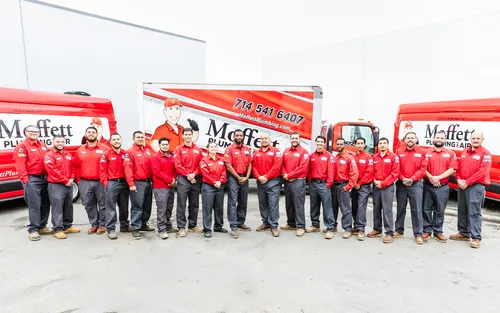
Moffett Plumbing & Air
13950 Milton Ave, Westminster, CA 92683
Moffett Plumbing & Air is a plumbing and HVAC company serving Long Beach, CA, and the surrounding Orange County area. They offer a wide range of services including air conditioning, furnace, heat pump, and boiler repair and installation, as well as duct cleaning, thermostat installation, indoor air quality services, and geothermal heat pump work. Established in 1969, Moffett Plumbing & Air has built a reputation for dependable service and community focus, treating customers with respect and care. Their team is known for professional workmanship and efficiency.
NexGen HVAC & Plumbing
23221 Peralta Dr Ste C, Laguna Hills, CA 92653
NexGen HVAC & Plumbing is a full-service heating and cooling company based in Irvine, CA. They provide installation, repair, and maintenance for a wide range of HVAC systems including traditional, electric, ductless, rooftop units, heat pumps, and geothermal systems. Their services also include air duct cleaning, thermostat installation, and HVAC tune-ups to improve system performance. NexGen HVAC & Plumbing offers insulation services for air ducts, walls, attics, and crawlspaces to enhance comfort and address issues such as mold and water leaks.
NexGen HVAC & Plumbing
10820 Mulberry Ave, Fontana, CA 92337
NexGen HVAC & Plumbing is a full-service contractor based in Riverside, CA, offering a wide range of heating, cooling, and plumbing services. They handle installation, repair, and maintenance of air conditioners, heat pumps, furnaces, ductless mini-splits, and geothermal systems. Their plumbing services include leak detection, drain cleaning, sewer repair, and gas line inspection. NexGen is equipped to service both residential and commercial properties and uses advanced technology such as high-tech camera inspections for plumbing diagnostics. They provide 24/7 emergency service to address urgent HVAC and plumbing issues promptly.
Nelson Air Heating & Air Conditioning
5062 Casa Oro Dr, Yorba Linda, CA 92886
Nelson Air Heating & Air Conditioning provides HVAC installation services in Anaheim, CA. They handle installation for a variety of systems including air conditioners, furnaces, heat pumps, boilers, mini splits, and geothermal heat pumps for both residential and commercial clients. The company installs all major HVAC brands and emphasizes quality materials, efficiency, and workmanship.
Thomas Brothers HVAC & Plumbing
12625 Frederick St, Moreno Valley, CA 92553
Thomas Brothers HVAC & Plumbing is a heating and cooling company located in Riverside, CA. They provide a range of services including installation and repair of air conditioners, furnaces, heat pumps, boilers, mini splits, and geothermal heat pumps. The company also offers HVAC tune-up services to maintain system efficiency. Thomas Brothers HVAC & Plumbing is bonded, insured, and licensed, ensuring compliance with industry standards.
How Geothermal Systems Work
Unlike traditional air-source heat pumps or furnaces that battle the fluctuating outside air temperatures, a geothermal exchange system uses the consistent thermal energy stored just below the earth's surface. In California, the ground temperature remains relatively constant, typically between 45°F and 75°F year-round 1. A geothermal HVAC system moves heat to or from this stable source.
The Heating Cycle: During winter, a fluid (usually a water and antifreeze mixture) circulates through a network of pipes buried in your yard, called a ground loop. This fluid absorbs heat from the warmer earth. The warmed fluid is then pumped to an indoor heat pump unit, which concentrates the thermal energy. A fan then distributes the warm air throughout your home via your existing ductwork 2 3.
The Cooling Cycle: In the summer, the process simply reverses. The indoor unit extracts heat from your home's warm air and transfers it into the cooler fluid circulating in the ground loop. The now-cooled fluid absorbs more heat from your home, effectively providing air conditioning as the heat is rejected into the earth 4 5. This elegant, reversible process is what makes a ground-source heat pump so efficient for both seasons.
Types of Ground Loop Systems
The buried pipe system, or earth loop, is the heart of a geothermal installation. The best type for your Eastvale home depends on your property's size, soil conditions, and budget 6. A professional assessment is essential to determine the optimal design.
Closed-Loop Systems
These are the most common configurations, where the fluid continuously circulates through sealed, high-density polyethylene pipes.
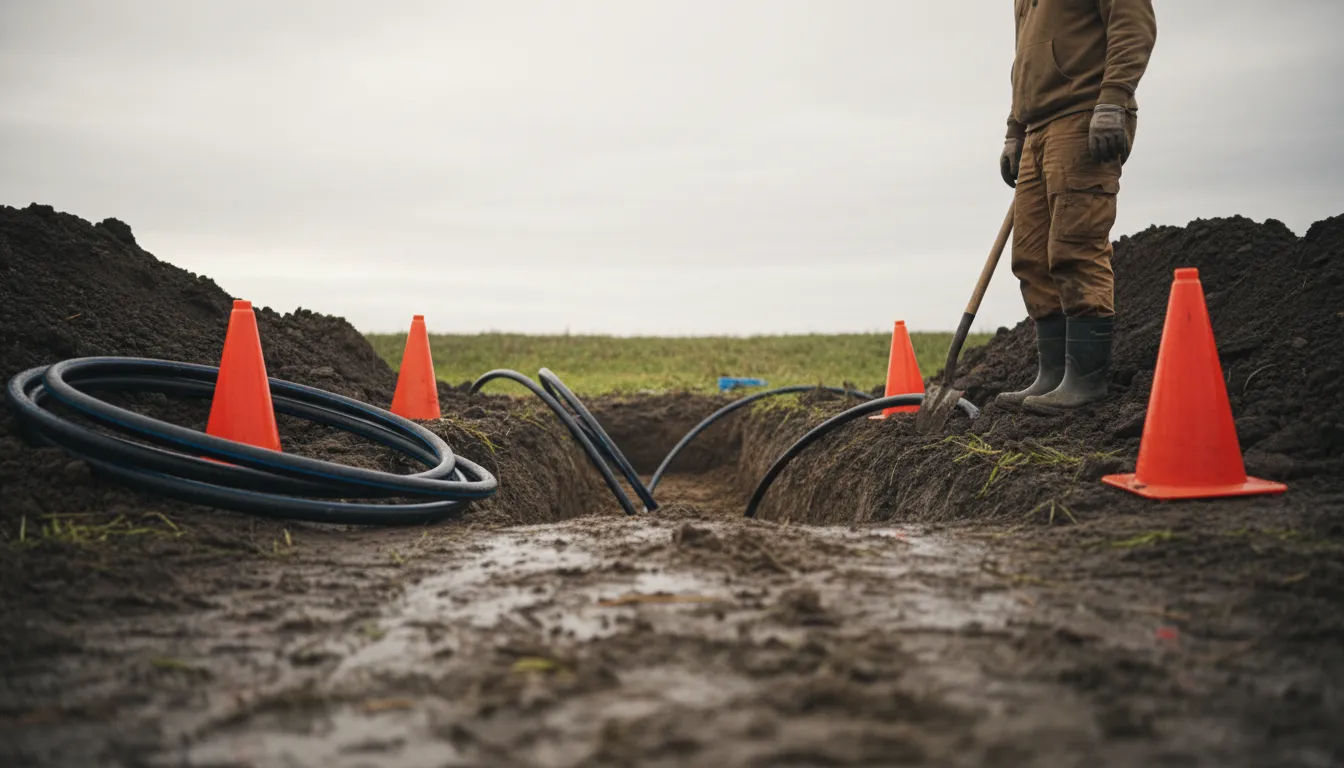
- Horizontal: Ideal for properties with ample land. Trenches are dug 4 to 6 feet deep and can be 100 to 300 feet long. Pipes are laid horizontally in these trenches before they are backfilled 7. This method is often less expensive than vertical drilling but requires more yard space.
- Vertical: The best choice for smaller lots or areas with rocky or shallow soil. This method involves drilling boreholes 100 to 400 feet deep, depending on soil and geology. U-shaped pipe loops are inserted into each borehole, which are then grouted. The small surface footprint means the area above can still be used for landscaping, driveways, or other structures 8 9.
- Pond/Lake: If your property has access to a suitable body of water (at least eight feet deep), this can be the most cost-effective option. Coils of pipe are submerged at the bottom of the pond or lake, utilizing the water as a heat exchange medium 10.
Open-Loop Systems
This system uses groundwater from a well or a clean surface water source directly. The water is pumped through the heat pump unit and then discharged, typically to a separate well or a approved surface location like a pond or drainage ditch 11. This option requires an abundant, clean water supply and must comply with all local water use and discharge regulations.
The Geothermal Installation Process in Eastvale
Installing a residential geothermal system is a significant project that a specialized contractor will coordinate. Understanding the steps can help you prepare.
- Site Assessment and System Design: A qualified installer will evaluate your home's heating and cooling loads, inspect your existing ductwork, and assess your property's soil conditions and available space. This information is used to design a correctly sized system. For example, a typical California home might require 200-foot-deep bores for each ton of heating/cooling capacity 12.
- Ground Loop Installation: This is the major excavation phase.
- Trenching (Horizontal): A backhoe is used to dig the long, shallow trenches for the pipe loops.
- Drilling (Vertical): Specialized drilling rigs create the deep boreholes for vertical loops. This is more common in suburban areas like Eastvale where lot sizes may be compact.
- Heat Pump Installation: The indoor heat pump unit, which is about the size of a small furnace, is installed in your garage, basement, or mechanical closet. It is connected to the ground loop piping and your home's air distribution system 13 14.
- Integration and Calibration: The system is connected to electrical and plumbing hookups. The entire loop is flushed and pressurized to check for leaks, and the system is charged with refrigerant. Finally, the contractor will calibrate the controls and thermostat for optimal performance 15 16.
Local Considerations for Eastvale: The specific soil conditions in our area will influence whether trenching or drilling is more viable or cost-effective. Research from the California Energy Commission has explored low-cost, shallow bore technologies that could be particularly effective in California's typical valley soil conditions 17 18. A local expert can advise on the best approach for your yard.
Cost, Savings, and Incentives
The upfront investment for a geothermal heating and cooling system is higher than for a conventional system. However, the long-term operational savings and available financial incentives make it a compelling investment with a strong return.
- Upfront Costs: The average total system cost can be around $25,000 or more, though this varies widely based on system size, loop type, and property characteristics 19.
- Energy Bill Savings: This is where geothermal shines. Homeowners typically see savings of 30-70% on heating costs and 20-50% on cooling costs compared to conventional systems like electric resistance, propane, or standard air conditioners 20 21. One analysis suggests an average annual savings of around $670 across various fuel types, with even higher savings for those switching from electric or propane heat 22 23.
- Return on Investment (ROI): The dramatic reduction in monthly energy bills allows many homeowners to recoup their initial investment through savings in 5 to 10 years. Furthermore, the underground ground loop is designed to last for over 50 years, while the indoor heat pump unit typically lasts 20-25 years 24.
- Financial Incentives:
- Federal Tax Credit: The Inflation Reduction Act provides a 30% federal tax credit on the total cost of purchasing and installing a qualifying geothermal heat pump system. This credit significantly reduces the net installed cost 25.
- Utility Rebates: Always check with your local utility company, as they may offer additional rebates for installing high-efficiency geothermal systems.
To get a personalized estimate of potential savings for your Eastvale home, you can use online tools like the Geothermal Savings Calculator or the one provided by ClimateMaster 26 27.
Find the perfect geothermal heat pump contractors for your needs
Get personalized recommendations and expert advice
Long-Term Benefits and Environmental Impact
Choosing a geothermal system extends beyond personal financial savings. It represents a commitment to sustainable living and increased home comfort.
Environmental Stewardship: By using the renewable thermal energy of the earth, geothermal systems drastically reduce your home's reliance on fossil fuels and the associated greenhouse gas emissions. They also use electricity very efficiently, often delivering 3 to 5 units of heating or cooling for every 1 unit of electrical energy consumed 28. This reduces the overall demand on the power grid, especially during peak cooling seasons.
Enhanced Comfort and Quiet Operation: Ground-source heat pumps provide exceptionally consistent temperatures without the hot or cold blasts common with traditional systems. They also eliminate outdoor condenser units, meaning no noisy fans disrupting your backyard peace or your neighbors'.
Increased Home Value: A permanently installed, high-efficiency geothermal system is a valuable upgrade that is often attractive to future homebuyers, who will appreciate the low operating costs and modern technology.
Durability and Low Maintenance: With most of the system protected underground or indoors, it is less susceptible to weather damage. The indoor components are also accessible and require only routine maintenance similar to a standard HVAC system, such as changing air filters and annual check-ups by a professional.
Is a Geothermal System Right for Your Home?
While the benefits are substantial, geothermal is not a one-size-fits-all solution. The ideal candidate is a homeowner planning to stay in their residence long enough to realize the long-term savings, has a suitable property for loop installation, and is prepared for the initial project scope. For new construction projects in Eastvale, integrating geothermal design from the start is often the most straightforward and cost-effective path.
If you are replacing an aging or inefficient furnace and air conditioner, it's the perfect time to compare all your options. The combination of high efficiency, significant incentives, and decades of reliable service makes geothermal heat pumps a smart choice for many Eastvale residents seeking to upgrade their home's comfort and efficiency.
Frequently asked questions
Sources
Footnotes
-
Geothermal for Consumers - CaliforniaGeo - https://www.californiageo.org/geothermal-for-consumers/ ↩
-
How Geothermal Heating and Cooling Systems Work | Belle Air - https://www.belleairservices.com/how-geothermal-heating-and-cooling-systems-work/ ↩
-
How it Works: Ground Source (Geothermal) Heat Pumps (GSHP) - https://www.youtube.com/watch?v=uhXUV2Xm5fQ&t=21 ↩
-
Geothermal heating & cooling, heat pumps, heat exchange ... - https://aztechgeo.com/residential-geothermal/how-it-works/ ↩
-
Geothermal HVAC Design: What Works Best For Your Property - https://procalcs.net/blog/hvac-101/geothermal-hvac-design-what-works-best-for-your-property/ ↩
-
Geothermal Heat Pumps - Department of Energy - https://www.energy.gov/energysaver/geothermal-heat-pumps ↩
-
Geothermal Heat Pumps: Everything You Need to Know - https://www.energysage.com/heat-pumps/geothermal-heat-pumps/ ↩
-
Geothermal heat pumps for sustainable living. - Carrier - https://www.carrier.com/us/en/residential/geothermal-heat-pumps/ ↩
-
Ground-Source Heat Pumps - Building America Solution Center - https://basc.pnnl.gov/resource-guides/ground-source-heat-pumps ↩
-
Geothermal HVAC Systems | King of Prussia - https://www.uniqueheatingandcooling.com/hvac-university/geothermal-heating-cooling ↩
-
Understanding Earth Loops for Geothermal Systems - https://www.tchvac.net/news/understanding-earth-loops ↩
-
The California Buyers Guide to Geothermal Heat Pump Systems - https://www.californiageo.org/wp-content/uploads/CA-Buyers-Guide-for-Geothermal-HP-revised-12-13-24.pdf ↩
-
Geothermal Heat Pump Installation Process - https://earthrivergeothermal.com/geothermal-heat-pump-installation-process/ ↩
-
Geothermal Installation Steps Explained - https://ultrageothermal.com/geothermal-installation-steps-explained/ ↩
-
Geothermal Heat Pumps | WBDG - https://www.wbdg.org/resources/geothermal-heat-pumps ↩
-
Geothermal heat pumps: The ultimate guide to ground-source ... - https://termo-plus.com/blog/geothermal-ultimate-guide-to-ground-source-heat-pumps/ ↩
-
Low-Cost, Large-Diameter Shallow Ground Loops for Ground ... - https://www.energy.ca.gov/publications/2021/low-cost-large-diameter-shallow-ground-loops-ground-coupled-heat-pumps ↩
-
Standing Column Well - https://link.springer.com/chapter/10.1007/978-1-4471-4273-7_7 ↩
-
Geothermal for Consumers - CaliforniaGeo - https://www.californiageo.org/geothermal-for-consumers/ ↩
-
Geothermal Cost Savings and Benefits - Energy Catalyst Tech - https://energycatalysttech.com/geothermal-cost-savings-and-benefits/ ↩
-
Heat Pumps Can Lower Energy Bills for Californians Today - https://rmi.org/heat-pumps-can-lower-energy-bills-for-californians-today/ ↩
-
Can A Geothermal System Really Save You Money? Here's ... - https://www.boehmerheating.com/blog/geothermal/can-a-geothermal-system-really-save-you-money-heres-the-math/ ↩
-
Calculate Your Energy Savings - Massmann Geothermal - https://www.massmanngeothermal.com/savings-calculator.html ↩
-
Ground-Source Heat Pumps | Building America Solution Center - https://basc.pnnl.gov/resource-guides/ground-source-heat-pumps ↩
-
Geothermal Savings Calculator - https://www.geothermhvac.com/geothermal-heating/savings-calculator/ ↩
-
Geothermal - https://precisioncomfort.com/geothermal/ ↩
-
Geothermal Savings Calculator | Calculate Geothermal Cost Savings - https://www.climatemaster.com/residential/geothermal-savings-calculator/sc01.php ↩
-
How Geothermal Heating and Cooling Systems Work | Belle Air - https://www.belleairservices.com/how-geothermal-heating-and-cooling-systems-work/ ↩