Find the Best Geothermal Heat Pump Contractors for Your Business
No obligation • Fast responses • Nationwide coverage

Why you can trust HVAC Firms
HVAC Firms is a leading United States resource for evaluating HVAC service providers. Our team researches companies, checks credentials, and reviews customer feedback to present clear, unbiased information. Listings and rankings are based on merit, and companies cannot pay to change our editorial content.
Search providers near you
Top Geothermal Heat Pump Contractors in Davis, California Ranked
Geothermal heat pumps, also known as ground-source heat pumps, are a highly efficient home comfort solution that leverages the Earth's stable underground temperature for both heating and cooling. This technology is particularly relevant for Davis homeowners looking to reduce their energy bills and environmental footprint. By using the ground as a heat source in winter and a heat sink in summer, these systems offer a sustainable alternative to traditional HVAC. This guide will help you understand how geothermal systems work, their benefits, and how to connect with qualified local professionals for installation and service.
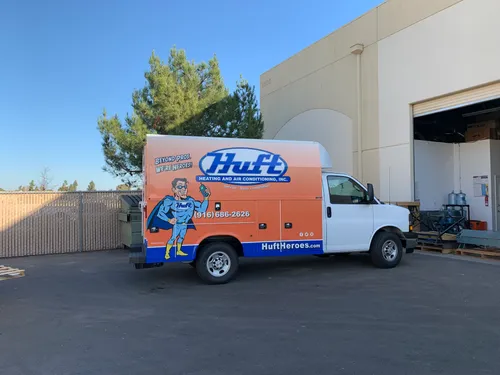
Huft Home Services Elk Grove
10103 Iron Rock Way, Elk Grove, CA 95624
Huft Home Services Elk Grove provides heating and cooling solutions in Sacramento, CA. They offer repair, installation, replacement, and maintenance services for a wide range of HVAC equipment including air conditioners, furnaces, heat pumps, boilers, mini splits, and geothermal heat pumps. The company is known for clear pricing and experienced technicians who provide advice tailored to each home's needs. Huft Home Services has been a preferred provider in the area for many years.
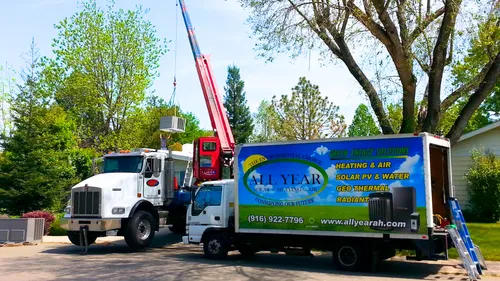
All Year Heating and Air
801 Plaza Ave, Sacramento, CA 95815
All Year Heating and Air is an HVAC contractor based in Sacramento, CA, serving Sacramento and surrounding counties including El Dorado and Placer. They provide a range of services such as heating, air conditioning, heat pump, geothermal system installation and repair, as well as duct cleaning and indoor air quality solutions. The company offers home performance assessments and specializes in high-efficiency systems integrated with solar energy options. Their capabilities include servicing gas, electric, and hybrid heating systems, and performing air duct cleaning to improve indoor air quality. They also supply and design solar energy equipment tailored to local homes and businesses.
How Geothermal Heating and Cooling Works
The core principle behind a geothermal system is remarkably simple: it uses the Earth's constant temperature to regulate your home's climate. Just a few feet below the surface, the ground maintains a stable temperature, typically between 50°F and 60°F, regardless of the season above ground. This is cooler than Davis's hot summer air and warmer than the chill of a winter night.
A geothermal heat pump system has three main components:
- The Ground Loop: A network of pipes buried in your yard, circulating a water-based fluid.
- The Heat Pump Unit: An indoor unit that concentrates thermal energy.
- The Distribution System: Your home's existing ductwork or radiant floor system.
In the winter, the fluid in the underground pipes absorbs heat from the warmer earth. This warmed fluid is pumped to the heat pump unit, which extracts the heat, concentrates it, and distributes it throughout your home 1. In the summer, the process reverses: the system extracts heat from your home's air, transfers it to the fluid in the loop, and disperses it into the cooler ground. This efficient heat exchange process, moving heat rather than creating it through combustion, is the key to the system's remarkable efficiency.
Types of Geothermal Loop Systems
The design of the underground piping, or "ground loop," is critical and depends on your property's characteristics. The most common type is the closed-loop system, where a sealed mixture of water and antifreeze circulates continuously through buried pipes. There are two primary configurations:
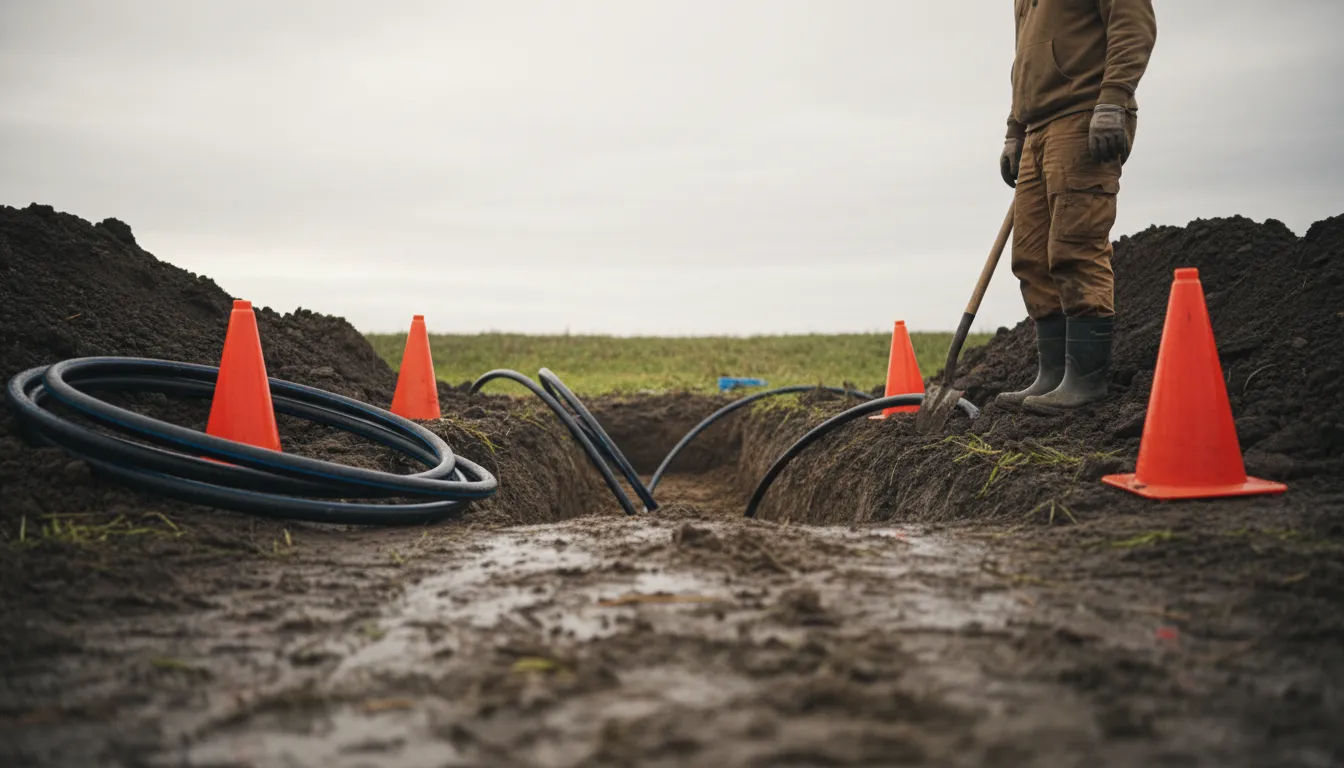
Horizontal Closed Loops This configuration involves digging trenches four to six feet deep and laying pipes in a series of loops. Horizontal loops require a larger amount of land but are often more cost-effective to install than vertical systems because trenching is typically less expensive than drilling 2 3. They are an excellent choice for homes in Davis with ample yard space.
Vertical Closed Loops For properties with limited land, such as many urban lots in Davis, vertical loops are the ideal solution. Contractors drill deep boreholes, typically 150 to 400 feet deep, and insert U-shaped pipe loops into each one. While the drilling process is more specialized, vertical loops use minimal surface area and can be very effective, as the deep ground temperature is very stable.
A less common option is an open-loop system, which uses well water or surface water as the heat exchange fluid directly, then returns it to a discharge well or body of water. These systems are highly efficient but require a sufficient supply of clean water and are subject to more local regulations.
The Installation Process for a Davis Home
Installing a geothermal heating and cooling system is a significant project that requires careful planning and expert execution. The process generally follows these key steps:
- Site Evaluation and Design: A qualified installer will assess your property, including soil composition, lot size, and existing HVAC infrastructure. This assessment is crucial for determining the best loop type and sizing the system correctly for your home's heating and cooling loads.
- Loop Installation: This is the major excavation phase. For a horizontal system, trenches are dug across the yard. For a vertical system, a drilling rig creates the necessary boreholes. The high-density polyethylene pipes are then placed and connected into a continuous loop 4 5.
- Heat Pump and Connection Installation: The indoor heat pump unit is installed in a garage, basement, or mechanical closet. The system is then connected to your home's distribution system, whether it's forced-air ductwork or a hydronic (water-based) system for radiant floors.
- System Startup and Testing: Once everything is connected, the system is filled with fluid, purged of air, and pressurized. The contractor will start the system, calibrate it for optimal performance, and ensure all components are working in harmony 6.
Find the perfect geothermal heat pump contractors for your needs
Get personalized recommendations and expert advice
Understanding Costs and Long-Term Savings
The most significant consideration for any Davis homeowner is the cost analysis. It's important to view a geothermal system as a long-term investment in your home's efficiency and comfort.
Upfront Investment The initial cost of a geothermal heat pump system is higher than that of a conventional air-source heat pump or furnace/AC combination. This premium is due primarily to the ground loop excavation or drilling, which involves specialized labor and equipment 7. However, this initial investment buys you the most efficient heating and cooling technology available.
Substantial Operational Savings Where geothermal systems shine is in their dramatically lower operating costs. By moving heat with exceptional efficiency, these systems can reduce your energy consumption for heating and cooling by 30% to 65% compared to conventional systems 8 9. For a typical Davis home, this can translate to savings of hundreds of dollars each month, especially given the region's hot, dry summers where standard air conditioners work extremely hard 10 11.
Return on Investment (ROI) and Incentives The combination of high energy savings and available financial incentives often results in a compelling payback period. Many homeowners see a return on their investment within 5 to 10 years through utility bill savings alone 12. Furthermore, federal tax credits for geothermal heat pumps can significantly offset the installed cost. California and local utility providers may also offer additional rebates or incentives, making the net cost more attractive.
Why Geothermal is a Smart Choice for Davis Climates
Davis's climate, characterized by very hot summers and mild, wet winters, is exceptionally well-suited for geothermal technology. A common misconception is that geothermal is only for cold climates, but its cooling efficiency is arguably even more valuable in hot regions like Northern California.
During a Davis summer, when outdoor temperatures regularly exceed 95°F, a standard air conditioner must fight to expel heat into the scorching outdoor air. A geothermal system, however, rejects that heat into the much cooler ground (around 55°F-60°F). This allows it to cool your home using significantly less electricity, providing enhanced comfort and reliability even during heat waves 13.
In the winter, the system efficiently extracts ample heat from the mild ground to warm your home comfortably. The result is a single, ultra-efficient system that provides year-round comfort, reduces greenhouse gas emissions by lowering electricity demand, and increases your home's value with a modern, sustainable feature 14 15.
Frequently asked questions
Sources
Footnotes
-
Geothermal (Ground Source) Heat Pumps - NY.gov - https://cleanheat.ny.gov/geothermal-heat-pumps/ ↩
-
Geothermal Heat Pumps - Department of Energy - https://www.energy.gov/energysaver/geothermal-heat-pumps ↩
-
4 Types of Geothermal Air Conditioning Systems for Your Home - https://gopaschal.com/resources/4-types-of-geothermal-systems-for-residential-use/ ↩
-
FAQs • What types of ground-source heat pumps and configurat - https://concordma.gov/FAQ.aspx?QID=484 ↩
-
How Do Geothermal Systems Work for Residential Homes? - Davis Heating & Air - https://www.davisheat.com/blog/how-do-geothermal-systems-work-for-residential-homes/ ↩
-
How Does A Geothermal Heat Pump Work? Complete 2025 Guide - https://solartechonline.com/blog/how-does-geothermal-heat-pump-work/ ↩
-
How Much Does a Geothermal Heat Pump Cost? [2025 Data] | Angi - https://www.angi.com/articles/geothermal-heating-and-cooling-cost.htm ↩
-
The California Buyers Guide to Geothermal Heat Pump Systems - https://www.californiageo.org/wp-content/uploads/CA-Buyers-Guide-for-Geothermal-HP-revised-12-13-24.pdf ↩
-
Geothermal Heat Pumps - EnergySmart CNY - https://www.energysmartcny.org/heat-pumps/geothermal/ ↩
-
Geothermal Heat Pumps: Ultimate Energy Savings - https://www.davisheatingac.com/2015/12/11/geothermal-heat-pumps-ultimate-energy-savings/ ↩
-
Guide to Geothermal Heat Pumps - https://www.energy.gov/sites/prod/files/guide_to_geothermal_heat_pumps.pdf ↩
-
5 Things You Should Know about Geothermal Heat Pumps - https://www.energy.gov/cmei/articles/5-things-you-should-know-about-geothermal-heat-pumps ↩
-
Is Geothermal Heating a Viable Option for Mild Climates? - https://whitemechanical.com/is-geothermal-heating-and-cooling-a-viable-option-for-homes-in-mild-climates/ ↩
-
Geothermal Heating and Cooling - https://geothermal.colorado.gov/geothermal-heating-and-cooling ↩
-
All You Need to Know About Home Geothermal Heating & Cooling - https://dandelionenergy.com/all-you-need-to-know-about-home-geothermal-heating-cooling ↩