Find the Best Geothermal Heat Pump Contractors for Your Business
No obligation • Fast responses • Nationwide coverage

Why you can trust HVAC Firms
HVAC Firms is a leading United States resource for evaluating HVAC service providers. Our team researches companies, checks credentials, and reviews customer feedback to present clear, unbiased information. Listings and rankings are based on merit, and companies cannot pay to change our editorial content.
Search providers near you
Top Geothermal Heat Pump Contractors in Citrus Heights, California Ranked
A geothermal heat pump is a highly efficient home comfort system that uses the Earth's stable underground temperature to provide heating, cooling, and even hot water. This technology matters because it can dramatically reduce your energy bills and environmental footprint by tapping into a renewable, local energy source. For Citrus Heights residents, finding the right local expert for a ground-source heat pump installation is key to unlocking these long-term benefits for your home.
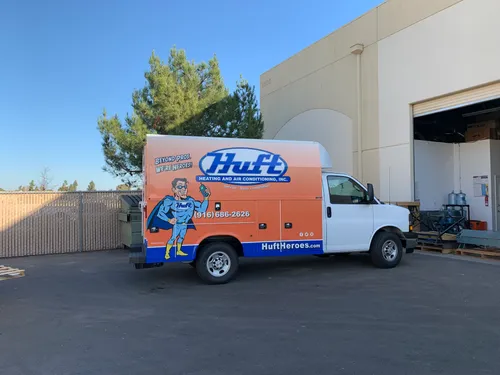
Huft Home Services Elk Grove
10103 Iron Rock Way, Elk Grove, CA 95624
Huft Home Services Elk Grove provides heating and cooling solutions in Sacramento, CA. They offer repair, installation, replacement, and maintenance services for a wide range of HVAC equipment including air conditioners, furnaces, heat pumps, boilers, mini splits, and geothermal heat pumps. The company is known for clear pricing and experienced technicians who provide advice tailored to each home's needs. Huft Home Services has been a preferred provider in the area for many years.
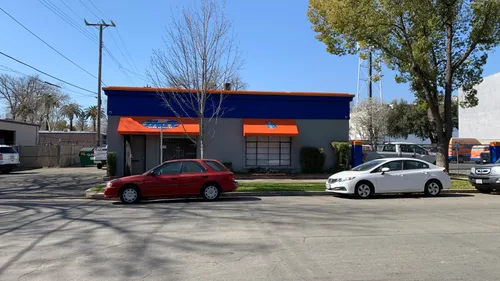
Huft Home Services Sacramento
Sacramento, CA
Huft Home Services Sacramento provides heating and cooling solutions in Sacramento, CA. Their team handles repairs, installations, replacements, and maintenance for a wide range of HVAC equipment including air conditioners, furnaces, heat pumps, boilers, mini splits, and geothermal heat pumps. The company is known for responding quickly to comfort needs and offers transparent pricing without hidden fees. With years of experience, Huft Home Services combines skilled technicians, plumbers, and comfort advisors to deliver knowledgeable and reliable service tailored to each home.
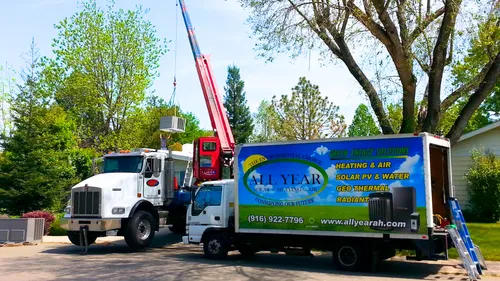
All Year Heating and Air
801 Plaza Ave, Sacramento, CA 95815
All Year Heating and Air is an HVAC contractor based in Sacramento, CA, serving Sacramento and surrounding counties including El Dorado and Placer. They provide a range of services such as heating, air conditioning, heat pump, geothermal system installation and repair, as well as duct cleaning and indoor air quality solutions. The company offers home performance assessments and specializes in high-efficiency systems integrated with solar energy options. Their capabilities include servicing gas, electric, and hybrid heating systems, and performing air duct cleaning to improve indoor air quality. They also supply and design solar energy equipment tailored to local homes and businesses.
How Geothermal Systems Work: The Earth as a Thermal Battery
The core principle behind a geothermal heating and cooling system is remarkably simple: it uses the ground as a source of heat in the winter and a place to dump excess heat in the summer. Below the frost line-about 6 to 10 feet deep in our region-the Earth maintains a nearly constant temperature year-round, close to the area's average annual air temperature. This stable thermal mass acts like a giant, free battery.
A ground-source heat pump leverages this by circulating a water or antifreeze solution through a loop of pipes buried in your yard, known as a ground loop 1. In heating mode, the fluid absorbs the Earth's warmth as it travels through these underground pipes. This slightly warmed fluid returns to the indoor heat pump unit, where a compressor concentrates the thermal energy to provide warm air for your home. The process reverses for cooling: the system extracts heat from your indoor air and transfers it into the cooler ground loop 2. Because it's moving existing heat rather than creating it by burning fuel, a geothermal system is exceptionally efficient, moving 3 to 5 times more energy than it consumes.
Types of Ground Loops for Citrus Heights Properties
The design of the underground piping is critical and depends entirely on your property's characteristics. Local geothermal installers will conduct a thorough site assessment to determine the best loop configuration for your land, soil composition, and water table.
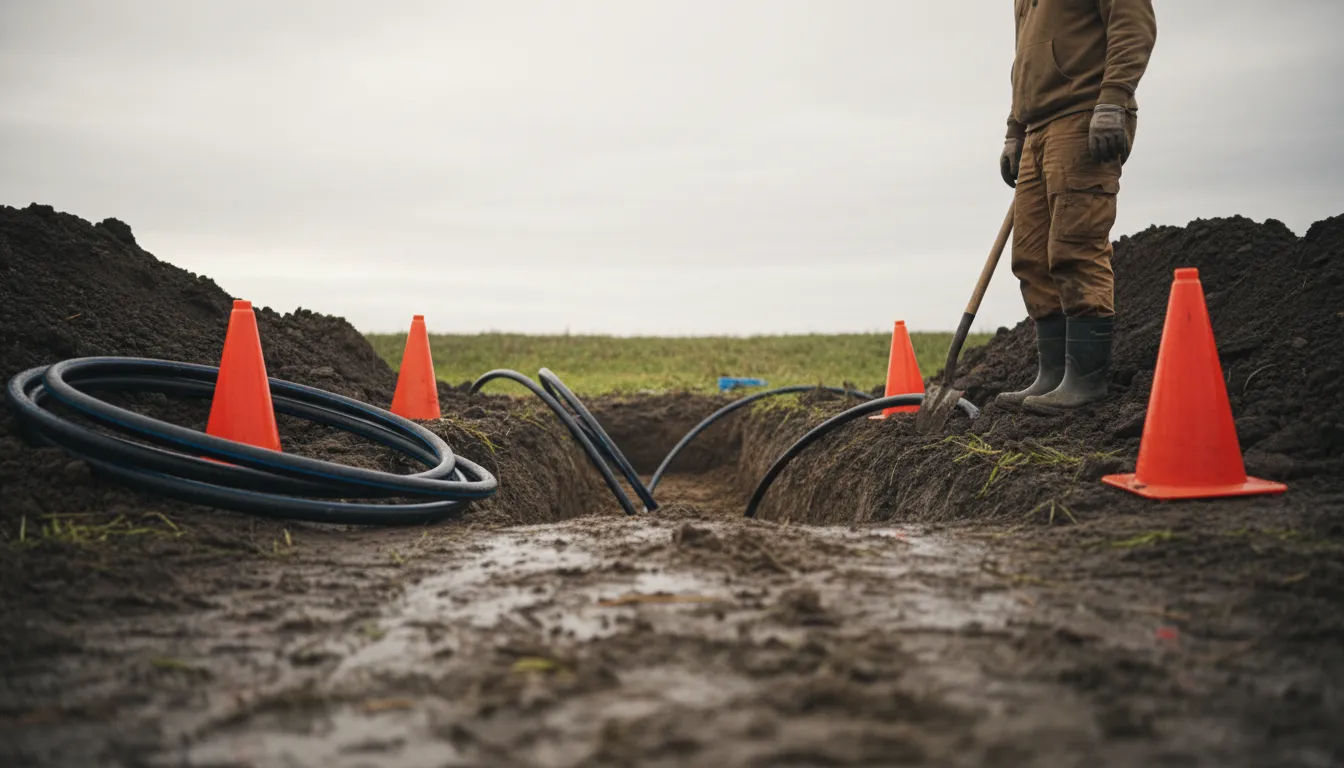
- Horizontal Ground Loops: This is often the most cost-effective option if you have sufficient land. Contractors dig trenches several feet deep and lay pipes in a series of loops. This design requires a larger, open yard space but typically involves lower excavation costs than drilling3.
- Vertical Ground Loops: For homes in Citrus Heights with smaller lots, a vertical loop system is the ideal solution. Installers use a drilling rig to create boreholes typically 200 to 500 feet deep. U-shaped pipes are inserted into each borehole, which are then grouted. This method minimizes landscape disturbance and is excellent for properties with rocky soil or limited space.
- Pond/Lake Loops: If you have a suitable, perennial body of water on your property, this can be a very efficient option. Coils of pipe are submerged at the bottom of the pond or lake, where the water temperature remains stable. This often has the lowest installation cost if the conditions are right4.
- Open-Loop Systems: This system uses groundwater directly from a well. Water is pumped through the heat pump and then discharged back into a second well, pond, or stream according to local regulations. It requires an abundant, clean water source and careful planning for discharge5.
The Installation Process: What to Expect
Installing a geothermal HVAC system is a significant project that requires specialized expertise. Understanding the steps can help you prepare.
- Comprehensive Site Evaluation: A qualified installer will visit your property to assess soil conditions, lot size, landscaping, and your home's existing ductwork or hydronic system. This evaluation determines the feasibility and optimal type of ground loop.
- Loop Field Installation: This is the major outdoor work. For a horizontal system, trenches are dug with excavators. For a vertical system, a drilling rig is brought in to create the boreholes. The high-density polyethylene pipe is then placed, connected, and pressure-tested to ensure there are no leaks before the trenches are backfilled or the boreholes are grouted.
- Indoor Unit Installation: The geothermal heat pump unit itself is installed inside your home, typically in a basement, garage, or utility closet. It resembles a traditional furnace or air handler. If you are replacing a forced-air system, the existing ductwork is often compatible. For homes without ducts, ductless mini-split heads can be used with a geothermal system6 7.
- Connection and Commissioning: The underground loops are connected to the indoor unit via buried lines entering your home. The system is filled with fluid, the electrical connections are made, and the entire system is started up, tested, and balanced to ensure optimal performance8.
Find the perfect geothermal heat pump contractors for your needs
Get personalized recommendations and expert advice
Financial Considerations: Costs, Savings, and Incentives
The decision to invest in a geothermal system involves evaluating upfront costs against long-term savings and available financial incentives.
Upfront Investment: The initial cost for a residential geothermal heat pump system is higher than for a conventional furnace and air conditioner, typically ranging from $20,000 to $40,000 or more9 10. The largest portion of this cost is for the ground loop installation, which requires heavy equipment and specialized labor.
Long-Term Energy Savings: This is where geothermal systems shine. By using significantly less electricity to move heat, homeowners can see reductions of up to 65% on their heating and cooling bills11. The system's efficiency translates directly into lower monthly utility costs, providing a buffer against rising energy prices.
Payback Period and System Life: The payback period-the time it takes for energy savings to recoup the initial investment-typically falls between 5 and 10 years for homes in California, depending on local energy rates and the system installed 12. It's important to consider the exceptional lifespan of the components: the underground piping often comes with warranties of 25 to 50 years and can last generations, while the indoor heat pump unit typically lasts 20 years or more.
Available Incentives: To encourage this clean energy technology, significant financial incentives are available:
- Federal Tax Credit: The federal Residential Clean Energy Credit offers a tax credit for 30% of the total installed cost of a qualifying geothermal heat pump system, with no upper limit13 14.
- Local Utility Rebates: It's essential to check with the Sacramento Municipal Utility District (SMUD) or other local providers for any current rebates or special financing programs for ground-source heat pump installations.
Why Geothermal is a Smart Choice for Citrus Heights
For homeowners in our community, a geothermal heating and cooling system represents a forward-thinking investment in comfort, savings, and sustainability. The climate and geology in our area are well-suited for this technology. The significant reduction in energy consumption not only lowers your carbon footprint but also provides exceptional independence from volatile fossil fuel prices. While the initial project requires careful planning and professional installation, the result is a quiet, reliable, and incredibly efficient home comfort system that leverages the constant temperature of the Earth beneath us for decades of service.
Frequently asked questions
Sources
Footnotes
-
How Does A Geothermal Heat Pump Work? Complete 2025 Guide - https://solartechonline.com/blog/how-does-geothermal-heat-pump-work/ ↩
-
How Geothermal Heat Pumps Work - https://www.youtube.com/watch?v=XxlTnBukweI&t=37 ↩
-
How Geothermal Heating and Cooling Systems Work | Belle Air - https://www.belleairservices.com/how-geothermal-heating-and-cooling-systems-work/ ↩
-
All You Need to Know About Home Geothermal Heating & ... - https://dandelionenergy.com/all-you-need-to-know-about-home-geothermal-heating-cooling ↩
-
Geothermal Heat Pump and Ground Loop Technologies - https://efiling.energy.ca.gov/GetDocument.aspx?tn=73451 ↩
-
Guide to Geothermal Heat Pumps - https://www.energy.gov/sites/prod/files/guide_to_geothermal_heat_pumps.pdf ↩
-
Comprehensive Guide to Heat Pumps for California ... - https://www.calljazz.com/blog/comprehensive-guide-to-heat-pumps-for-california-homeowners/ ↩
-
How a Geothermal Heat Pump Works | This Old House - https://www.youtube.com/watch?v=d5Tbsx3R2T8 ↩
-
Geothermal HVAC Systems: Harnessing the Earth for ... - https://www.iccsafe.org/building-safety-journal/bsj-technical/geothermal-hvac-systems-harnessing-the-earth-for-sustainable-comfort/ ↩
-
Geothermal Heat Pump Guide: Installation Costs, Types And Benefits - https://modernize.com/hvac/heating-repair-installation/heat-pump/geothermal ↩
-
5 Things You Should Know about Geothermal Heat Pumps - https://www.energy.gov/cmei/articles/5-things-you-should-know-about-geothermal-heat-pumps ↩
-
Civil Engineering - https://engineering.fresnostate.edu/civil-geomatics/documents/Groundsource%20Heat%20Pumps%20in%20the%20Central%20Valley.pdf ↩
-
The California Buyers Guide to Geothermal Heat Pump Systems - https://www.californiageo.org/wp-content/uploads/CA-Buyers-Guide-for-Geothermal-HP-revised-12-13-24.pdf ↩
-
Geothermal Heat Pumps - Department of Energy - https://www.energy.gov/energysaver/geothermal-heat-pumps ↩