
Find the Best Geothermal Heat Pump Contractors for Your Business
No obligation • Fast responses • Nationwide coverage

Why you can trust HVAC Firms
HVAC Firms is a leading United States resource for evaluating HVAC service providers. Our team researches companies, checks credentials, and reviews customer feedback to present clear, unbiased information. Listings and rankings are based on merit, and companies cannot pay to change our editorial content.
Search providers near you
Top Geothermal Heat Pump Contractors in Ceres, California Ranked
A geothermal heat pump, also known as a ground-source heat pump, is a highly efficient heating and cooling system that leverages the earth's stable underground temperature. For homeowners in Ceres, this technology offers a powerful way to manage the Central Valley's climate extremes while dramatically reducing energy consumption and utility bills. This resource explains how these systems work, their benefits, and how you can connect with qualified local professionals to explore if a geothermal installation is right for your property.
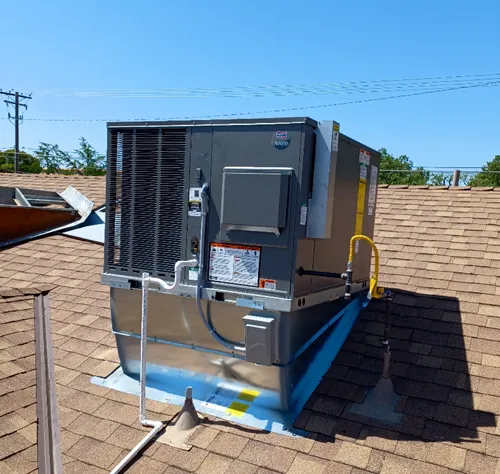
How Geothermal Systems Work: Tapping into Earth's Constant Temperature
The core principle behind a geothermal heating and cooling system is remarkably simple: a few feet below the surface, the earth maintains a nearly constant temperature year-round, typically between 55°F and 60°F in this region 1. A geothermal system uses this stable thermal resource as a source of heat in the winter and a place to dump excess heat in the summer.
The process involves a closed-loop system of pipes, called a ground loop, buried in your yard. A water-based solution circulates through these pipes, absorbing the earth's warmth in the winter. This warmed fluid is brought inside to a heat pump unit, which concentrates the heat and distributes it through your home's ductwork as warm air. In the summer, the system reverses: it extracts heat from your home's air, transfers it to the fluid in the loop, and disperses it into the cooler ground. This elegant exchange, powered entirely by electricity, eliminates the need for on-site fossil fuel combustion, significantly lowering your household's carbon footprint.
Types of Ground Loop Systems for Ceres Properties
The design of the underground loop field is a critical decision in any geothermal installation. The right choice depends heavily on your lot size, soil conditions, and local geology. There are three primary configurations:
-
Horizontal Ground Loops: This is often the most cost-effective option for new construction or properties with ample land. Contractors excavate trenches four to six feet deep, covering an area of roughly one-quarter to three-quarters of an acre. Pipes are laid in these trenches in a slinky or straight-line configuration 2 3. This method requires significant space but generally involves lower excavation costs than deep drilling.
-
Vertical Ground Loops: For homes in Ceres with smaller lots or rocky soil, vertical boreholes are the standard solution. Using a drilling rig, contractors bore holes 60 to 500 feet deep. U-shaped pipes are inserted into each hole, which are then grouted for optimal thermal transfer 4 5 6. While the drilling cost per foot is higher, this system minimizes landscape disruption and is ideal for retrofit projects on existing homes.
-
Pond or Lake Loops: If you have access to a sufficiently large and deep body of water, a closed-loop system can be coiled and submerged at the bottom. This can be a very efficient option, but it requires specific site conditions regarding water volume, depth, and quality.
A professional site assessment is essential to determine the best loop type, calculate the necessary length for your home's heating and cooling load, and identify any potential drilling or trenching challenges specific to your address.
The Installation Process: From Assessment to Comfort
Installing a ground-source heat pump is a significant project that requires specialized expertise. Understanding the steps involved can help you know what to expect when working with a local installer.
- Comprehensive Site Evaluation: A qualified contractor will assess your property, evaluate soil and rock conditions, review your home's existing ductwork and insulation, and perform a detailed heating/cooling load calculation. This step determines the feasibility, loop design, and system sizing.
- Loop Field Installation: For a vertical system, a drilling rig will create the necessary boreholes. For a horizontal system, a backhoe will dig the trench network. High-density polyethylene (HDPE) pipe is then placed in the trenches or boreholes, connected into a continuous loop, and pressure-tested.
- Indoor Unit Connection: The ground loop is connected to the indoor heat pump unit. This unit, which is typically quieter and more compact than a traditional furnace and air conditioner, is installed where your old equipment was, often connecting to your existing air ducts 7.
- System Charging and Startup: The loop is filled with the water-antifreeze solution, and the entire system is purged of air. The contractor will then start the system, check all components, and balance the airflow to ensure optimal performance.
It's important to note that local permitting will be required, and regulations for deep drilling (vertical loops) may be more stringent than for trenching 8.
Key Benefits for Ceres Homeowners
Investing in a geothermal system offers a compelling package of financial and comfort-related advantages, particularly in California's climate and energy market.
- Exceptional Efficiency and Savings: Geothermal heat pumps are incredibly efficient, moving three to five units of heat for every one unit of electricity used-an efficiency rate of 300% to 500% 9 10. This can translate into cutting your heating and cooling energy bills by up to 65% compared to conventional systems 11 12. In the Central Valley, where HVAC use is high, annual savings can potentially exceed $1,000 12.
- Long-Term Reliability and Value: The underground loop system is incredibly durable, with a lifespan often exceeding 50 years. The indoor heat pump unit typically lasts 20 to 25 years, much longer than standard air conditioners. This longevity, combined with massive energy savings, leads to a strong return on investment. Many systems pay for themselves through utility bill savings in 5 to 8 years.
- Superior Comfort and Quiet Operation: These systems provide consistent, even heating and cooling without the hot or cold blasts common with fossil fuel furnaces and standard air conditioners. They also operate very quietly, with the noisiest component (the ground loop circulator pump) often located away from living spaces.
- Environmental Leadership: By using renewable thermal energy from the ground and eliminating on-site combustion, a geothermal system drastically reduces your home's carbon emissions. It's a clean, all-electric technology that aligns with California's clean energy goals 13.
Find the perfect geothermal heat pump contractors for your needs
Get personalized recommendations and expert advice
Understanding Costs and Incentives
The upfront cost for a complete geothermal system is higher than that of a traditional HVAC system, primarily due to the ground loop installation. However, this initial investment must be viewed in the context of the dramatically lower operating costs and exceptional longevity. The payback period-the time it takes for energy savings to equal the initial cost-is typically 5 to 8 years in the Central Valley, after which you enjoy decades of significantly lower utility bills 14.
Furthermore, several financial incentives can make geothermal more accessible:
- Federal Tax Credits: The federal Residential Clean Energy Credit provides a significant tax credit for qualifying geothermal heat pump installations.
- State and Local Incentives: California and local utilities often offer rebates or other incentives for installing high-efficiency electric heating and cooling systems. Your installer should be knowledgeable about current programs.
- Increased Home Value: Studies have shown that homes with geothermal systems often have higher resale values, as buyers recognize the benefit of low energy costs.
When evaluating cost, always request detailed quotes that include the complete system: site work, loop installation, heat pump unit, duct modifications, and all labor. A reputable installer will provide a transparent breakdown and help you calculate your long-term savings.
Is a Geothermal System Right for Your Home?
While the benefits are substantial, geothermal is not a one-size-fits-all solution. It is an excellent fit for homeowners who:
- Plan to stay in their home long enough to realize the long-term savings.
- Have property suitable for a ground loop (adequate land or access for drilling).
- Are building a new home or replacing an aging, inefficient HVAC system.
- Prioritize comfort, quiet operation, and environmental impact.
For those with very small lots or complex soil conditions, the feasibility and cost of the ground loop need careful evaluation. The first step is always a professional consultation with an experienced, certified geothermal contractor who can assess your specific property.
Frequently asked questions
Sources
Footnotes
-
Geothermal (Ground Source) Heat Pumps - NY.gov - https://cleanheat.ny.gov/geothermal-heat-pumps/ ↩
-
Geothermal heat pumps: The ultimate guide to ground-source ... - https://termo-plus.com/blog/geothermal-ultimate-guide-to-ground-source-heat-pumps/ ↩
-
All You Need to Know About Home Geothermal Heating & ... - https://dandelionenergy.com/all-you-need-to-know-about-home-geothermal-heating-cooling ↩
-
How Does A Geothermal Heat Pump Work? Complete 2025 Guide - https://solartechonline.com/blog/how-does-geothermal-heat-pump-work/ ↩
-
Geothermal Heat Pumps - Department of Energy - https://www.energy.gov/energysaver/geothermal-heat-pumps ↩
-
Ground source heat pumps: horizontal collectors Vs. vertical boreholes - https://www.mesh-energy.com/insights/ground-source-heat-pumps-horizontal-collectors-vs-vertical-boreholes ↩
-
Geothermal Heat Pumps | WBDG - https://www.wbdg.org/resources/geothermal-heat-pumps ↩
-
Comprehensive Guide to Heat Pumps for California ... - https://www.calljazz.com/blog/comprehensive-guide-to-heat-pumps-for-california-homeowners/ ↩
-
Geothermal Heat Pumps - EnergySmart CNY - https://www.energysmartcny.org/heat-pumps/geothermal/ ↩
-
Guide to Geothermal Heat Pumps - https://www.energy.gov/sites/prod/files/guide_to_geothermal_heat_pumps.pdf ↩
-
5 Things You Should Know about Geothermal Heat Pumps - https://www.energy.gov/cmei/articles/5-things-you-should-know-about-geothermal-heat-pumps ↩
-
Civil Engineering - https://engineering.fresnostate.edu/civil-geomatics/documents/Groundsource%20Heat%20Pumps%20in%20the%20Central%20Valley.pdf ↩ ↩2
-
The California Buyers Guide to Geothermal Heat Pump Systems - https://www.californiageo.org/wp-content/uploads/CA-Buyers-Guide-for-Geothermal-HP-revised-12-13-24.pdf ↩
-
How Geothermal Heating and Cooling Systems Work | Belle Air - https://www.belleairservices.com/how-geothermal-heating-and-cooling-systems-work/ ↩