Find the Best Geothermal Heat Pump Contractors for Your Business
No obligation • Fast responses • Nationwide coverage

Why you can trust HVAC Firms
HVAC Firms is a leading United States resource for evaluating HVAC service providers. Our team researches companies, checks credentials, and reviews customer feedback to present clear, unbiased information. Listings and rankings are based on merit, and companies cannot pay to change our editorial content.
Search providers near you
Top Geothermal Heat Pump Contractors in Burbank, California Ranked
A geothermal heat pump, also known as a ground-source heat pump, is a highly efficient heating and cooling system that uses the Earth's stable underground temperature to regulate your home's climate. For Burbank residents, this technology offers a reliable way to slash energy bills while enjoying year-round comfort. This guide explains how these systems work, the installation process, and how you can find qualified local experts to evaluate your property for this sustainable upgrade.
Just Rite Air Heating & Cooling Santa Clarita
25030 Avenue Stanford suite 70, Santa Clarita, CA 91355
Just Rite Air Heating & Cooling Santa Clarita provides comprehensive HVAC services in Santa Clarita, CA. They specialize in the installation, repair, and maintenance of heating and cooling systems including furnaces, air conditioners, heat pumps, boilers, ductless mini-splits, and geothermal heat pumps. Their services also cover indoor air quality solutions such as air purifiers, humidifiers, and duct cleaning. The company handles diagnostics and repairs for various HVAC components and offers system tune-ups to maintain efficiency. They serve the entire Santa Clarita Valley including Valencia, Saugus, Canyon Country, and Newhall.
Rancho Palos Verdes AC and Heating Pro
28120 Peacock Ridge Dr, Rancho Palos Verdes, CA 90275
Rancho Palos Verdes AC and Heating Pro provides heating and air conditioning services in Long Beach, CA. They offer repair, installation, and maintenance for furnaces, air conditioners, heat pumps, and geothermal systems. The company is equipped to handle HVAC tune-ups and replacements, tailoring systems to meet customer needs and budgets. Since 1997, they have served the area with a focus on quality workmanship and integrity. They also provide 24/7 emergency service with a manager available at all times for support.
Circulating Air, Inc.
7337 Varna Ave, North Hollywood, CA 91605
Circulating Air, Inc. is an HVAC company based in Los Angeles, CA, providing a wide range of heating and cooling services. They handle air conditioning and furnace installation, repair, and maintenance, including ducted central systems, ductless mini splits, and geothermal heat pumps. The company also offers indoor air quality services to improve home comfort beyond temperature control. Circulating Air, Inc. serves residential, commercial, and industrial clients with experienced technicians equipped to manage complex HVAC systems. Their planned maintenance service helps ensure reliable operation of heating and cooling equipment when needed most.
How Geothermal Systems Work in Burbank's Climate
The core principle behind a geothermal system is remarkably simple: it moves heat rather than generating it. Beneath Burbank, the ground maintains a relatively constant temperature of 55-60°F year-round, regardless of the hot summer air or cooler winter nights 1. A geothermal heat pump leverages this stable thermal resource.
During the winter, a fluid circulating through pipes buried in the ground (called the ground loop) absorbs the Earth's heat. The heat pump then concentrates this low-grade heat and distributes it as warm air through your home's ductwork 2 3. In the summer, the process reverses: the system extracts heat from your home and transfers it into the cooler ground loop, providing efficient, dehumidified cooling 3. This "heat exchange" process is what makes ground-source heat pumps so efficient, often achieving 30-65% energy savings compared to traditional HVAC systems.
Types of Geothermal Loop Systems
The ground loop is the heart of the system, and its configuration depends on your property's characteristics. There are two primary types of closed-loop systems and one open-loop option.
Closed-Loop Systems: These are the most common. A mixture of water and antifreeze circulates through a continuous, sealed loop of high-density polyethylene (HDPE) pipe buried in the ground.
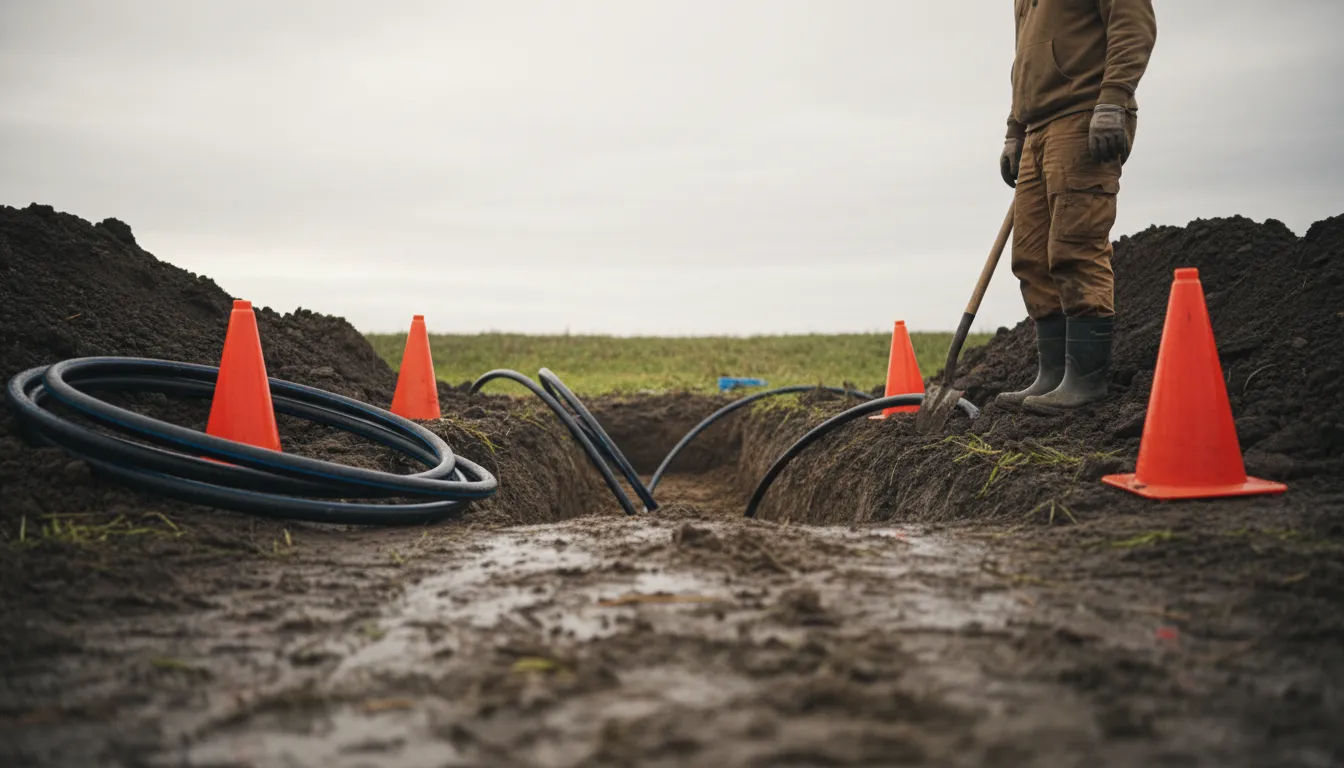
- Horizontal Closed-Loop: Pipes are laid in trenches typically 4 to 6 feet deep. This method requires a larger amount of available land but generally involves lower excavation costs than drilling 4.
- Vertical Closed-Loop: Pipes are installed in boreholes drilled 100 to 400 feet deep. This is ideal for properties with limited yard space, like many in Burbank, but involves higher drilling costs 5 6.
Open-Loop Systems: This configuration uses groundwater from a well or a pond as the heat exchange fluid. After circulating through the heat pump, the water is returned to the ground via a discharge well or surface drainage. This option is highly efficient but requires an adequate, clean water source and compliance with local codes 7 8.
The Geothermal Installation Process
Installing a residential geothermal system is a significant project that requires careful planning and professional execution. The process typically follows these key steps:
- Site Assessment and Design: A qualified installer will evaluate your property's soil conditions, available space, and existing ductwork or hydronic system. This assessment determines the best type and size of the ground loop and heat pump for your home's heating and cooling loads.
- Ground Loop Installation: This is the most substantial part of the project. For a horizontal system, trenches are dug. For a vertical system, a drilling rig creates the boreholes. The HDPE pipe is then placed and connected into a continuous loop before the trenches or boreholes are backfilled 9 10.
- Heat Pump and Connection Installation: The indoor heat pump unit is installed, often in a basement, garage, or mechanical closet. It is connected to the ground loop and to your home's existing air distribution ductwork. For homes without ducts, the system can be connected to a hydronic (water-based) distribution system like radiant floor heating 11.
- System Startup and Testing: Once everything is connected, the system is charged with fluid, powered up, and thoroughly tested to ensure it operates at peak efficiency and delivers comfort throughout your home.
Find the perfect geothermal heat pump contractors for your needs
Get personalized recommendations and expert advice
Costs, Savings, and Incentives for Burbank Homeowners
The upfront investment for a geothermal heating and cooling system is higher than for a conventional system. In Burbank, total installation costs typically range from $20,000 to over $40,000, with the ground loop work representing a major portion of the expense. The choice between trenching (horizontal) and drilling (vertical) directly impacts this cost, with drilling usually being more expensive 12 13.
However, the long-term financial picture is compelling. By reducing energy consumption for heating and cooling by 30-65%, homeowners can see a significant reduction in their utility bills, leading to operational savings that offset the initial cost over time 14 15 16. Furthermore, these systems are incredibly durable: the underground loops can last 50 years or more, and the heat pump unit itself often lasts 20 years or longer 16 17.
California Incentives and Rebates: The state of California offers strong financial incentives to make geothermal systems more accessible. These can include federal tax credits, as well as state and local utility rebates. Checking resources like the California Geothermal Heat Pump Association (californiageo.org) is essential for understanding the current incentives that can dramatically improve the cost-effectiveness of your installation 18 19.
Why Geothermal is a Smart Choice for Southern California
Burbank's climate is actually well-suited for geothermal technology. While the region is known for mild winters, the high cooling demand during long, hot summers plays to the strength of ground-source heat pumps 20. Moving heat from your home into the relatively cool ground is an extremely efficient process, often more so than standard air conditioners or air-source heat pumps that struggle in peak heat. The system provides consistent, quiet, and draft-free comfort year-round while also reducing your home's carbon footprint.
Additionally, installing a geothermal system can increase your property value. As energy efficiency and sustainability become higher priorities for homebuyers, a permanent, low-operating-cost heating and cooling solution is a valuable asset.
Finding the Right Local Professional
Selecting an experienced, certified installer is the most critical step in your geothermal project. Look for contractors who specialize in ground-source heat pumps and have a proven track record of installations in the Burbank area. They should be able to conduct a detailed load calculation and site evaluation, explain the different loop options suitable for your property, provide a clear and comprehensive quote, and guide you through the available incentive and rebate application processes.
Frequently asked questions
Sources
Footnotes
-
Feasibility of Geothermal Heating for Consumer Homes - http://large.stanford.edu/courses/2016/ph240/holmvik1/ ↩
-
Geothermal Heat Pumps - EnergySmart CNY - https://www.energysmartcny.org/heat-pumps/geothermal/ ↩
-
Geothermal (Ground Source) Heat Pumps : NYS Clean Heat - NY.Gov - https://cleanheat.ny.gov/geothermal-heat-pumps/ ↩ ↩2
-
Ground source heat pumps: horizontal collectors Vs. vertical boreholes - https://www.mesh-energy.com/insights/ground-source-heat-pumps-horizontal-collectors-vs-vertical-boreholes ↩
-
All You Need to Know About Home Geothermal Heating & ... - https://dandelionenergy.com/all-you-need-to-know-about-home-geothermal-heating-cooling ↩
-
Geothermal Heat Pump and Ground Loop Technologies - https://efiling.energy.ca.gov/GetDocument.aspx?tn=73451 ↩
-
Geothermal Heat Pumps - Department of Energy - https://www.energy.gov/energysaver/geothermal-heat-pumps ↩
-
Geothermal Installation Steps Explained - https://ultrageothermal.com/geothermal-installation-steps-explained/ ↩
-
Ground Source Heat Pump Installation - Process & Costs - https://iheat.co.uk/heat-pump-help/ground-source-heat-pump-installation ↩
-
Residential Geothermal Loop Systems - https://www.geothermalsolutions.ca/residential-geothermal-loop-systems/ ↩
-
FAQs • What types of ground-source heat pumps and configurat - https://concordma.gov/FAQ.aspx?QID=484 ↩
-
How My Geothermal Heat Pump Really Performed (2 Years) - https://www.youtube.com/watch?v=DTb7TKJzr5g&vl=en ↩
-
Geothermal Systems - Wally Falke's Heating & Air Conditioning - https://wallyfalkes.com/geothermal-heat-pumps/ ↩
-
5 Things You Should Know about Geothermal Heat Pumps - https://www.energy.gov/cmei/articles/5-things-you-should-know-about-geothermal-heat-pumps ↩
-
Guide to Geothermal Heat Pumps - https://www.energy.gov/sites/prod/files/guide_to_geothermal_heat_pumps.pdf ↩
-
Geothermal Heat Pump Guide: Installation Costs, Types And Benefits - https://modernize.com/hvac/heating-repair-installation/heat-pump/geothermal ↩ ↩2
-
The California Buyers Guide to Geothermal Heat Pump Systems - https://www.californiageo.org/wp-content/uploads/CA-Buyers-Guide-for-Geothermal-HP-revised-12-13-24.pdf ↩
-
How Geothermal Heating and Cooling Systems Work | Belle Air - https://www.belleairservices.com/how-geothermal-heating-and-cooling-systems-work/ ↩
-
Geothermal Energy Property: Legal Definition Explained | US Legal Forms - https://legal-resources.uslegalforms.com/g/geothermal-energy-property ↩
-
Is Geothermal Heating a Viable Option for Mild Climates? - https://whitemechanical.com/is-geothermal-heating-and-cooling-a-viable-option-for-homes-in-mild-climates/ ↩