Find the Best Mini-Split Installers for Your Business
No obligation • Fast responses • Nationwide coverage

Why you can trust HVAC Firms
HVAC Firms is a leading United States resource for evaluating HVAC service providers. Our team researches companies, checks credentials, and reviews customer feedback to present clear, unbiased information. Listings and rankings are based on merit, and companies cannot pay to change our editorial content.
Search providers near you
Top Mini-Split Installers in Temecula, California Ranked
For Temecula homeowners seeking efficient, targeted comfort, ductless mini-split systems offer a powerful solution. These systems provide zoned heating and cooling, making them ideal for room additions, garages, sunrooms, or even whole-home climate control without the need for extensive ductwork. This guide will help you understand the process, benefits, and key considerations for installing a mini-split in your home, empowering you to find the right local professional for the job.
Air Care
30211 Avenida de las Banderas #200, Rancho Santa Margarita, CA 92688
Air Care is a veteran-owned heating and air conditioning company based in Long Beach, CA. They provide residential HVAC services including air conditioning repair, furnace repair, mini split installation, HVAC tune-ups, and indoor air quality solutions. Serving Long Beach and the surrounding Orange County areas, Air Care offers 24/7 emergency services to address heating and cooling issues promptly. Their technicians are licensed, trained, and certified, ensuring professional and reliable workmanship. The company emphasizes quality and integrity in all their services and partners with top brands like Trane to deliver high-quality products.
Hush Air Heating & Air Conditioning
21790 Van Buren Boulevard Ste 104, Riverside, CA 92518
Hush Air Heating & Air Conditioning is a full-service HVAC company based in Riverside, CA. They offer a range of services including air conditioning and heat pump repair, installation of central AC systems, ductless mini splits, and heat pumps. The company also provides indoor air quality evaluations and installs whole-house air filtration and purification systems to improve home environments. Additionally, they service tankless water heaters and offer routine HVAC maintenance to ensure system efficiency and reliability.
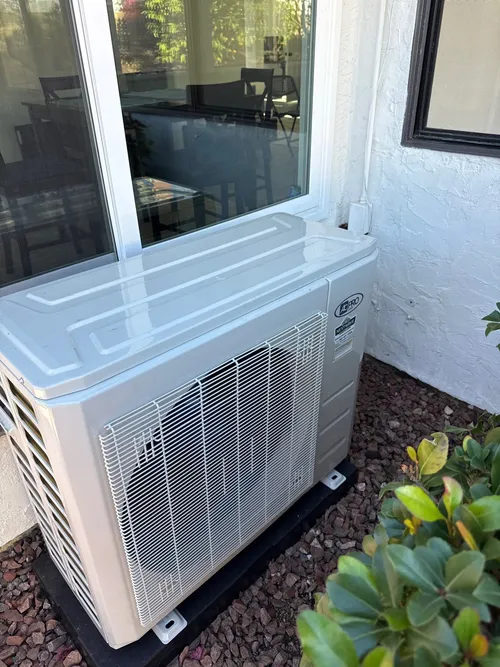
NextWave heating and air
28905 Olive Ln, Valley Center, CA 92082
NextWave Heating and Air is a family-owned HVAC company serving San Diego, CA, with over 40 years of experience. They offer a wide range of services including air conditioning, furnace, heat pump, and mini split installation and repair, as well as indoor air quality solutions. Their expertise includes custom HVAC system design for new construction and remodels, ensuring efficient and code-compliant installations. Founded in 1996 and passed down within the family, NextWave combines traditional values with modern technology to provide reliable home comfort solutions.

Lewis Air Services
30052 Aventura Ste A, Rancho Santa Margarita, CA 92688
Lewis Air Services is an HVAC company serving Irvine, CA, and the surrounding Orange County area. Established in 1989, they provide a range of heating and cooling services including air conditioner and furnace installation, repair, duct cleaning, and mini split system installation. Their team is NATE-certified and experienced in handling both residential and commercial HVAC needs. Lewis Air Services is equipped to manage large-scale installations and offers tailored commercial HVAC solutions to support business environments.
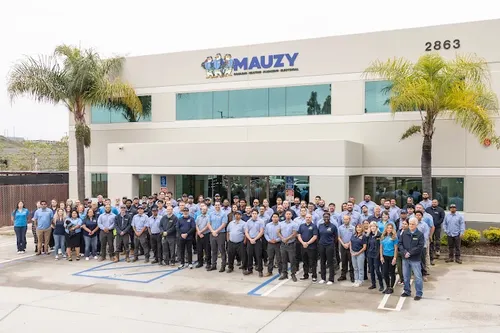
Mauzy Cooling, Heating, Plumbing, and Electrical
2863 Executive Pl, Escondido, CA 92029
Mauzy Cooling, Heating, Plumbing, and Electrical serves homeowners in San Diego, CA, providing comprehensive HVAC, plumbing, and electrical services. With over 50 years of experience, Mauzy offers air conditioning repair and installation, furnace and heat pump services, ductless mini-split solutions, indoor air quality improvements, plumbing repairs including hydro-jetting, and electrical system upgrades. Their licensed technicians use advanced diagnostic tools and maintain fully stocked trucks to address most issues on the first visit. Mauzy is known for serving the local community with expertise in heating and cooling systems as well as plumbing and electrical needs.
What is a Ductless Mini-Split System?
A ductless mini-split is a highly efficient heating and air conditioning system composed of two main components: an outdoor condenser/compressor and one or more indoor air-handling units. Unlike traditional central HVAC, these systems don't require ductwork. Instead, refrigerant lines run through a small hole in the wall to connect the indoor and outdoor units. This design eliminates the energy losses associated with ductwork, which can account for more than 30% of energy consumption for space conditioning, especially if the ducts are in an unconditioned space like an attic 1. The "mini-split" name refers to the split between the indoor and outdoor sections, and the "ductless" aspect is its key advantage for many Temecula applications.
Ideal Applications for Mini-Splits in Temecula Homes
The climate and housing styles in Temecula make ductless systems an excellent choice for a variety of situations. Their flexibility is a major selling point.
- Room Additions & Garages: Adding a sunroom, converting a garage into a living space, or building a new bedroom often presents a ductwork challenge. Extending existing ducts can be costly and invasive. A mini-split provides a dedicated, efficient climate control solution for the new space without impacting the rest of the home's system.
- Homes Without Ductwork: For older homes, historic properties, or certain types of construction that lack ductwork, installing a traditional forced-air system can be prohibitively expensive. A multi-zone ductless system can provide whole-home comfort without the need for major construction to install ducts.
- Zoning for Enhanced Comfort: Even in homes with central air, certain rooms may be consistently too hot or too cold. Installing a single-zone mini-split in a problematic room-like a south-facing bedroom or a home office over the garage-creates a "comfort zone" that can be controlled independently, saving energy by not overcooling or overheating the entire house.
- Supplemental Heating & Cooling: For spaces like workshops, studios, or guest casitas, a mini-split offers standalone, efficient temperature control.
Understanding System Types: Single-Zone vs. Multi-Zone
Choosing between a single-zone and multi-zone system is one of the first and most important decisions.
- Single-Zone Systems: This configuration consists of one outdoor condenser connected to one indoor air handler. It's perfect for conditioning a single, specific area such as a master bedroom, a home office, a sunroom, or a garage apartment 2. It's the most straightforward and often the most cost-effective option for targeted comfort.
- Multi-Zone Systems: A single outdoor condenser can be connected to multiple indoor units (typically 2 to 5 or more). This allows you to create customized climate zones throughout your home. For example, you could have one unit in the living room, one in the kitchen, and one in each bedroom 3. Each indoor unit can be controlled independently, allowing for different temperatures in different rooms based on occupancy and preference. This maximizes both comfort and energy efficiency in larger homes or open-concept spaces.
Key Factors Influencing Installation Cost
The cost of a mini-split installation in Temecula is not a single flat fee; it varies based on several interconnected factors. Understanding these will help you interpret estimates.
- Number of Zones: This is the primary cost driver. Adding more indoor units increases the equipment, materials, and labor required.
- System Efficiency (SEER2 Rating): The Seasonal Energy Efficiency Ratio (now measured as SEER2) indicates cooling efficiency. Higher SEER2 ratings (e.g., 20+ vs. 15) mean significantly lower operating costs, especially important in Temecula's warm summers, but come with a higher upfront equipment cost.
- Brand and Features: Premium brands with advanced inverter technology (which allows the compressor to run at variable speeds for consistent temperature and efficiency) may cost more than budget-oriented models. Additional features like Wi-Fi controls, advanced filtration, or ultra-quiet operation also affect price.
- Installation Complexity: Labor costs can vary based on the job's difficulty. Factors include the distance between indoor and outdoor units, the need to run new electrical circuits, the type of wall construction (e.g., stucco vs. wood siding), and whether a condensate pump is needed for drainage.
Find the perfect mini-split installers for your needs
Get personalized recommendations and expert advice
The Professional Installation Process: What to Expect
A proper ductless mini-split installation is a technical job best left to certified professionals. Here's a typical step-by-step process:
- Site Evaluation & Planning: A qualified technician will assess your home to determine the optimal placement for both indoor and outdoor units, calculate the correct system size (BTU requirements), and plan the routing for refrigerant lines and electrical wiring.
- Securing Permits: Most municipalities, including Temecula, require permits for HVAC installations. Your contractor should handle pulling these permits, which typically cost between $250 and $400, to ensure the work meets local building and safety codes 7.
- Installing the Indoor Unit(s): The technician will mount the wall-mounted indoor air handler bracket high on the wall, typically around 6-7 feet from the floor, in a central location for optimal airflow. They will ensure it's placed away from direct sunlight, heat sources, and obstructions like furniture or curtains by at least one foot.
- Drilling the Line Set Hole: A small, precisely drilled hole (usually 2-3 inches) is made through the exterior wall to connect the indoor and outdoor units.
- Placing the Outdoor Condenser: The outdoor unit is installed on a stable, level pad or a wall-mounted bracket. Critical clearances around the unit (as specified by the manufacturer) must be maintained for proper airflow and service access.
- Connecting the System: The technician will run the pre-charged refrigerant lines, electrical wiring, and condensate drain line through the wall hole and connect them to the respective units.
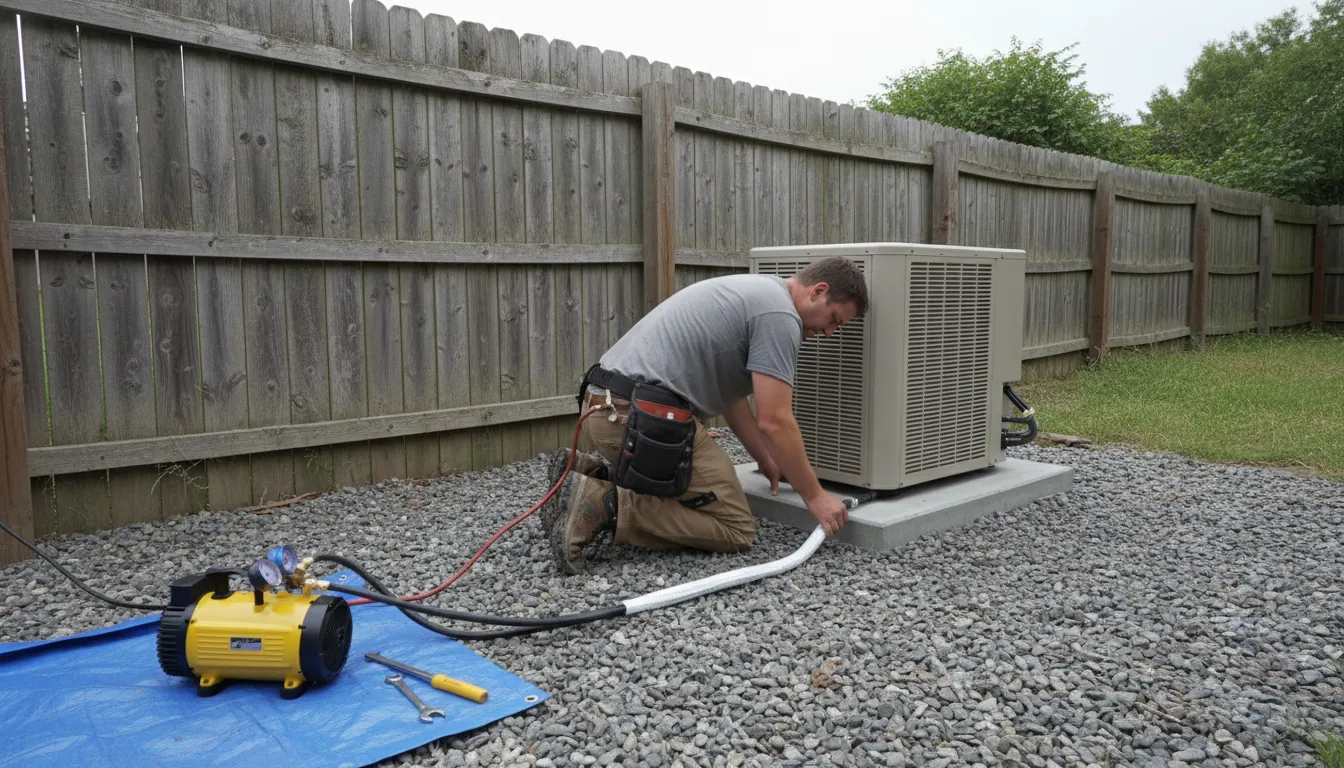
- Vacuum, Charge, and Test: This is a crucial step. The system is pressurized and tested for leaks. Then, a vacuum pump removes all moisture and air from the refrigerant lines before the system is charged. Finally, the technician will start the system, test all modes (cooling, heating, fan), and ensure it's operating at peak performance 8.
Critical Placement Guidelines for Optimal Performance
Where you install the components dramatically affects system efficiency, comfort, and longevity.
Indoor Unit Placement:
- Height: Install high on a wall, approximately 6-7 feet from the floor, to allow cooled air to mix effectively in the room.
- Location: Choose a central wall, away from corners, to prevent short-cycling and ensure even air distribution.
- Avoid: Do not install directly above heat-producing appliances (TVs, lamps), large furniture, or in a path where airflow will be immediately blocked. Keep it away from doors and direct drafts.
Outdoor Condenser Placement:
- Clearance: Ensure ample space on all sides (often 12-24 inches minimum) as per the manufacturer's instructions for unimpeded airflow.
- Stability: Must be placed on a level, durable concrete pad or a structurally sound wall bracket.
- Avoid: Shady spots are good, but avoid areas under dense foliage that can drop debris. Never install in an enclosed area, directly against a wall, or where exhaust heat can recirculate back into the unit 9 10.
Long-Term Value and Energy Savings
While the initial investment for a ductless mini-split can be higher than a window unit or basic portable AC, the long-term value is substantial. The high efficiency (SEER2) and inverter technology lead to significantly lower monthly energy bills, especially when used for zoning. By only conditioning occupied spaces, you avoid wasting energy on empty rooms. Over time, these savings can offset the upfront cost. Furthermore, the absence of ductwork eliminates a major source of energy loss and potential indoor air quality issues from leaky or dirty ducts. For Temecula residents, this means a more comfortable home, lower utility costs, and a reduced carbon footprint.
Frequently asked questions
Sources
Footnotes
-
Ductless Mini Split Installation Costs in 2026 - Carrier - https://www.carrier.com/residential/en/us/products/ductless-mini-splits/ductless-mini-split-installation-cost/ ↩
-
Understanding Mini Split Installation Costs A Complete Guide - https://armusmech.net/understanding-mini-split-installation-costs-a-complete-guide/ ↩
-
Understanding mini split installation costs: A quick guide - Homeaglow - https://www.homeaglow.com/hub/content/mini-split-installation-cost ↩
-
Ductless Mini-Split Installation Cost in 2025: Full Breakdown - https://osborneheatingncooling.com/ductless-mini-split-installation-cost/ ↩
-
Mini-Split AC Installation in California - Bonney: Plumbing - https://www.bonney.com/blog/mini-split-ac-cost-california/ ↩
-
Cost to Install Mini Split AC System in 2025 - https://dellahome.com/blogs/della-blog/cost-to-install-mini-split-ac-system ↩
-
How Much Does It Cost to Install a Mini-Split? [2026 Data] | Angi - https://www.angi.com/articles/how-much-does-it-cost-install-ductless-mini-split-ac.htm ↩
-
Ductless Mini Split Setup: An Ultimate Guide - Airflow Heating & Air - https://www.goairflow.com/blog/ductless-mini-split-installation/ ↩
-
Mini-Split Placement Guide: Best and Worst Spots for Installation - https://gulfshorecooling.com/mini-split-placement-guide/ ↩
-
Where Not to Install a Mini Split: Critical Areas to Avoid - https://www.richaircomfort.com/blog/avoid-areas-mini-split-installation-guide/ ↩