Find the Best Mini-Split Installers for Your Business
No obligation • Fast responses • Nationwide coverage

Why you can trust HVAC Firms
HVAC Firms is a leading United States resource for evaluating HVAC service providers. Our team researches companies, checks credentials, and reviews customer feedback to present clear, unbiased information. Listings and rankings are based on merit, and companies cannot pay to change our editorial content.
Search providers near you
Top Mini-Split Installers in Chula Vista, California Ranked
Adding a ductless mini-split system is a smart way to bring efficient, zoned comfort to your Chula Vista home. These systems provide targeted heating and cooling without the need for extensive ductwork, making them perfect for room additions, older homes, or spaces where your central air conditioning struggles to reach. This guide will help you understand the process, benefits, and key considerations for installing a ductless air conditioner, so you can confidently find the right local expertise for your project.
Ez Breezy Heating & Air
5160 Mercury Point Unit B, San Diego, CA 92111
Ez Breezy Heating & Air is an HVAC installation contractor based in San Diego, CA. They specialize in installing air conditioning systems, furnaces, heat pumps, mini splits, and thermostats. The company is an authorized dealer of Trane and Mitsubishi products and is recognized as a Google Nest Pro and Google Guaranteed contractor. Ez Breezy Heating & Air focuses on transparent communication and professional work to build lasting relationships with customers.
Flite Mechanical Heating & Air Professionals
3781 El Canto Dr, Spring Valley, CA 91977
Flite Mechanical Heating & Air Professionals provides HVAC installation, repair, and indoor air quality services in San Diego, CA. They handle air conditioning, furnace, mini split, and new construction HVAC systems. The company is equipped with skilled technicians who focus on accurate and reliable service to maintain comfortable indoor environments year-round. Serving homeowners and businesses in San Diego and nearby areas, Flite Mechanical is committed to supporting both residential and commercial HVAC needs.
Morey Plumbing, Heating, & Cooling, Inc.
7895 Convoy Ct SUITE 13, San Diego, CA 92111
Morey Plumbing, Heating, & Cooling, Inc. is a family-owned HVAC and plumbing contractor serving San Diego, CA. They offer a wide range of services including air conditioning and heating installation, repair, and maintenance, as well as plumbing and water filtration solutions. With over 25 years of experience, the company provides annual maintenance programs and 24-hour emergency service to help maintain system performance and address urgent needs. Their licensed and insured technicians are equipped to handle various HVAC and plumbing projects across the greater San Diego area.
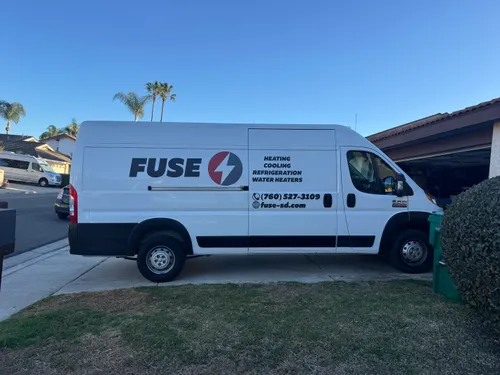
Amaze Service Electrical Air and Heating
9880 Saskatchewan Ave, San Diego, CA 92129
Amaze Service Electrical Air and Heating is an HVAC company based in San Diego, CA. They provide a range of services including air conditioner, furnace, heat pump, and mini split installation and repair, as well as duct cleaning and HVAC tune-ups. The company also offers commercial and residential refrigeration and appliance repair services. One notable capability is their expertise in installing multi-zone Mitsubishi ductless mini-split heat pump systems. The business is fully insured, licensed, and staffed with EPA-certified technicians. They serve San Diego and surrounding communities such as Del Mar, Lakeside, and Rancho San Diego.

G&G Indoor Services
9484 Black Mountain Rd Suite C, San Diego, CA 92126
G&G Indoor Services is a family-owned HVAC company serving San Diego, CA, with over 15 years of experience. They provide a wide range of heating and air conditioning services including installation, repair, and maintenance of AC units, furnaces, heat pumps, ductless systems, and ductwork. The company also offers indoor air quality solutions such as duct cleaning, insulation services, and rodent proofing to enhance home comfort and efficiency. G&G Indoor Services is EPA-certified and works with all major brands, offering manufacturer warranties and heat pump installation rebates to support energy-efficient upgrades.
What is a Ductless Mini-Split System?
A ductless mini-split system consists of two main components: a quiet outdoor compressor/condenser and one or more sleek indoor air-handling units. These are connected by a small conduit that houses refrigerant lines, power cables, and a condensate drain, which is run through a small hole in your wall 1. Unlike traditional central HVAC, there are no ducts. This design eliminates energy losses associated with ductwork, which can be as high as 30% in a forced-air system, leading to significant energy savings 2. For many homes in Chula Vista, this makes a ductless system an efficient solution for year-round climate control.
Ideal Applications for Chula Vista Homes
Ductless installation is particularly well-suited for specific scenarios common in our area. Understanding where these systems excel can help you decide if it's the right choice for your needs.
- Homes Without Existing Ductwork: This is the most common application. If you have a radiant heat system, a historic home, or a property where adding ducts is impractical or too expensive, a mini-split provides a perfect full-home or supplemental solution.
- Room Additions and Garages: Adding a sunroom, converting a garage, or finishing a basement? Extending existing ductwork can be complex and costly. A ductless system allows you to condition the new space independently and efficiently.
- Targeted Comfort Solutions: Do you have a room that's always too hot or too cold? Installing a single-zone mini-split can solve that problem without overworking your main system, creating a "comfort zone" exactly where you need it.
- Improving Home Efficiency: By providing zoned control, you can heat or cool only the rooms you're using. This avoids wasting energy on empty spaces, which is a direct way to lower utility bills, especially during Chula Vista's warm summers.
Types of Indoor Units
One of the advantages of a ductless air conditioner is the flexibility in how the indoor component is installed. The right type depends on your room's layout and your aesthetic preferences.
- Wall-Mounted: The most popular and cost-effective option. The unit is mounted high on an interior wall, providing excellent air distribution across the room. It requires a clear wall space free from obstructions like tall furniture 3 4.
- Ceiling Cassette: This model is recessed into the ceiling, with only a sleek vent panel visible. It provides a very discreet look and offers four-way air discharge for exceptionally even cooling and heating. Installation is more involved, requiring sufficient ceiling cavity space.
- Floor-Mounted: An ideal choice for rooms with sloped ceilings, large window walls, or limited wall space. Installed low on the wall, it delivers comfort at floor level and is often easier to service.
The Professional Installation Process
While DIY kits exist, professional installation is strongly recommended to ensure system efficiency, reliability, and warranty validity. The process involves precise technical work, including handling refrigerant and making electrical connections.
- Site Evaluation & Planning: A technician will assess your home to determine the optimal location for the outdoor unit and each indoor head. This involves calculating the correct BTU capacity for each zone and planning the routing of the line sets.
- Mounting & Drilling: The mounting bracket for the indoor unit is securely installed. A small hole (typically about 3 inches) is drilled through the exterior wall to pass the conduit.
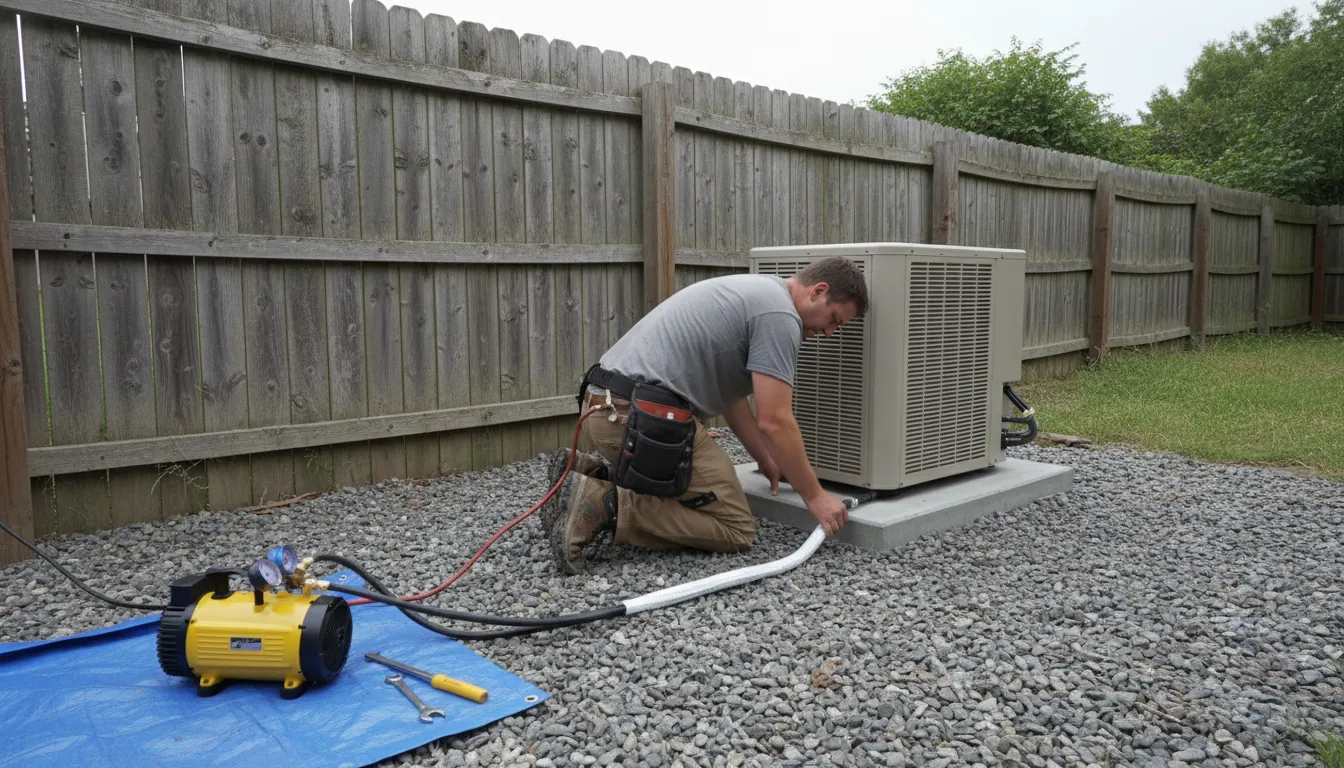
- Connecting the System: The refrigerant lines, drain hose, and electrical cables are connected between the indoor and outdoor units. A critical step is evacuating all air and moisture from the refrigerant lines with a vacuum pump before releasing the refrigerant. This step is essential for peak performance and longevity.
- Outdoor Unit Placement: The condenser is placed on a stable, level pad or mounted on a wall bracket outside. It must have adequate clearance on all sides (usually 1-2 feet minimum) for proper airflow and easy maintenance access.
- Electrical Hookup & Testing: A dedicated electrical circuit is connected to the outdoor unit. Finally, the system is charged with refrigerant, powered on, and thoroughly tested for proper operation in both cooling and heating modes.
Find the perfect mini-split installers for your needs
Get personalized recommendations and expert advice
Understanding Costs in Chula Vista
The cost of a ductless mini-split installation in Chula Vista varies widely based on the system's scope and complexity. Here's a general breakdown to help you budget:
- Single-Zone System: For cooling and heating one room or a small area, you can expect a range of $2,000 to $8,000. The final price depends on the unit's BTU capacity and efficiency (SEER rating), as well as the complexity of the installation run 5.
- Multi-Zone Systems: For a system with two indoor units (a two-zone system), costs typically start around $4,500 and can exceed $8,000. A whole-home solution with three or more zones can range from $6,500 to $15,000 or more for larger homes 6 7 8.
- Key Cost Factors: The major variables include the number of indoor units (zones), the total BTU capacity required, the energy efficiency of the selected models, the length and difficulty of running the refrigerant lines, and local labor rates 9.
Key Considerations for Your Installation
A successful installation hinges on a few crucial decisions made during the planning phase.
- Sizing is Critical: An undersized unit will struggle to maintain temperature, while an oversized unit will short-cycle, leading to poor humidity control, uneven temperatures, and higher energy costs. A professional load calculation is necessary to determine the correct BTU output for each space 10.
- Placement Matters: Indoor units should be placed where airflow is unobstructed, typically on an exterior wall. Avoid mounting directly above televisions, large furniture, or beds where the direct airflow could be a nuisance. The outdoor condenser needs a location with good airflow, away from debris and with proper clearance for noise and heat dissipation.
- Permits and Codes: A reputable installer will handle pulling any required local permits for electrical and mechanical work. This ensures the installation meets Chula Vista and California building codes, which is important for both safety and home insurance.
Benefits of a Professional Ductless Installation
Choosing a qualified professional for your mini-split installation brings several long-term advantages that go beyond simply getting the equipment mounted on your wall.
- Warranty Protection: Most manufacturers require professional installation to validate their equipment warranty. A DIY or uncertified install could void this valuable coverage.
- Optimal Efficiency and Performance: A certified technician ensures the refrigerant charge is perfect, the lines are properly evacuated, and the system is balanced. This translates directly to lower energy bills and the comfort performance you expect 11.
- Safety and Reliability: Proper electrical connections, secure mounting, and correct refrigerant handling are all safety-critical steps best left to trained experts. A professional job reduces the risk of future leaks, electrical issues, or system failures.
Frequently asked questions
Sources
Footnotes
-
Ductless Mini Split Setup: An Ultimate Guide - Airflow Heating & Air - https://www.goairflow.com/blog/ductless-mini-split-installation/ ↩
-
Mini Split Installation Guide: Ultimate Comfort Solutions - https://gotech-hvac.com/mini-split-installation/ ↩
-
Ductless Mini-Split Installation in San Diego County | Airmaxx - https://airmaxx.com/hvac-installation/ductless-mini-splits/ ↩
-
How Much Does It Cost to Install a Mini-Split? [2026 Data] | Angi - https://www.angi.com/articles/how-much-does-it-cost-install-ductless-mini-split-ac.htm ↩
-
Mini-Split AC Installation in California - Bonney: Plumbing - https://www.bonney.com/blog/mini-split-ac-cost-california/ ↩
-
Ductless Mini-Splits: A Complete Guide To Cost, Benefits, And ... - https://petermanhvac.com/about-us/blog/mini-splits-complete-guide/ ↩
-
Ductless Mini-Split Installation Cost in 2025: Full Breakdown - https://osborneheatingncooling.com/ductless-mini-split-installation-cost/ ↩
-
The 10 Best AC Installation Companies in Chula Vista, CA (2025) - https://homeguide.com/ca/chula-vista/central-air-conditioning-installation/ ↩
-
How Much Does a Mini Split Installation Cost? (2026) - HomeGuide - https://homeguide.com/costs/ductless-mini-split-ac-cost ↩
-
Ductless mini-split installation: Cool 2025 Guide - Southern Air - https://www.southern-air.com/blog/ductless-mini-split-installation ↩
-
How to Install a Ductless Mini-Split Air Conditioner | This Old ... - https://www.youtube.com/watch?v=ozaw9QhxkQU&t=25 ↩