Find the Best Mini-Split Installers for Your Business
No obligation • Fast responses • Nationwide coverage

Why you can trust HVAC Firms
HVAC Firms is a leading United States resource for evaluating HVAC service providers. Our team researches companies, checks credentials, and reviews customer feedback to present clear, unbiased information. Listings and rankings are based on merit, and companies cannot pay to change our editorial content.
Search providers near you
Top Mini-Split Installers in Anaheim, California Ranked
For Anaheim homeowners, a ductless mini-split system is a powerful solution for achieving personalized comfort and energy efficiency. These systems provide targeted heating and cooling for specific rooms or zones, making them ideal for home additions, older properties without ductwork, or supplementing an existing central system. This guide will help you understand the key considerations, from planning and placement to costs, so you can confidently explore your options for a ductless air conditioning installation in Anaheim.
Air Care
30211 Avenida de las Banderas #200, Rancho Santa Margarita, CA 92688
Air Care is a veteran-owned heating and air conditioning company based in Long Beach, CA. They provide residential HVAC services including air conditioning repair, furnace repair, mini split installation, HVAC tune-ups, and indoor air quality solutions. Serving Long Beach and the surrounding Orange County areas, Air Care offers 24/7 emergency services to address heating and cooling issues promptly. Their technicians are licensed, trained, and certified, ensuring professional and reliable workmanship. The company emphasizes quality and integrity in all their services and partners with top brands like Trane to deliver high-quality products.
1st Choice Heating & Air Conditioning, Inc.
23372 Madero Suite B, Mission Viejo, CA 92691
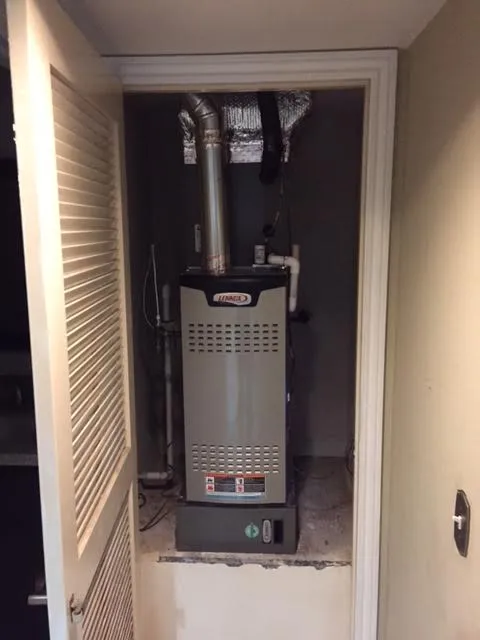
1st Choice Heating & Air Conditioning, Inc. provides a wide range of HVAC services in Anaheim, CA. Their offerings include installation, repair, and maintenance of air conditioners, furnaces, heat pumps, mini-split systems, and thermostats, along with indoor air quality solutions. As a Lennox Premier Dealer and recipient of the Centurion Award, they specialize in Lennox products and deliver energy-efficient heating and cooling systems. Their technicians are trained to handle various HVAC needs, from tune-ups to system replacements, ensuring comfort throughout the year.
Sano Heating & Air Conditioning
5546 E La Palma Ave, Anaheim, CA 92807
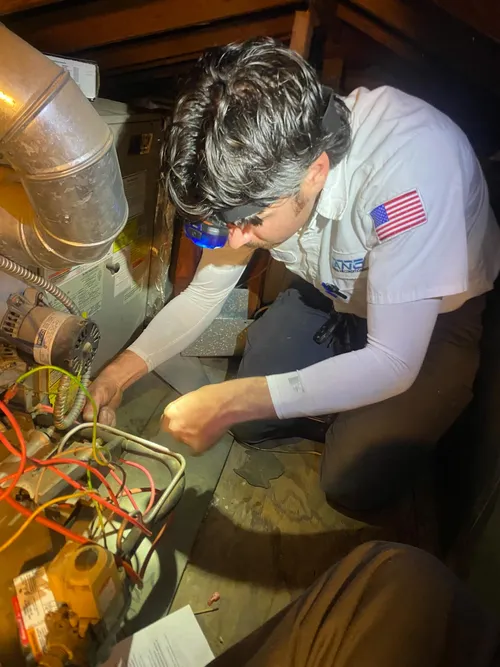
Sano Heating & Air Conditioning is an HVAC company based in Anaheim, CA, providing a range of heating and cooling services. They offer repair and installation for air conditioners, furnaces, heat pumps, mini splits, and perform HVAC tune-ups. The company also specializes in indoor air quality solutions and energy-efficient options like ductless and zoned systems. Serving Anaheim and the surrounding Orange County area, they handle new construction projects and have sheet metal capabilities to support their HVAC services.

Comfort Time Plumbing Heating & Cooling
8038 Freestone Ave, Santa Fe Springs, CA 90670
Comfort Time Plumbing Heating & Cooling is a family-owned company based in Los Angeles, CA, providing comprehensive HVAC and plumbing services for homes and businesses. They specialize in the repair and installation of air conditioning, furnaces, heat pumps, boilers, mini splits, and commercial refrigeration systems. Comfort Time Plumbing Heating & Cooling offers same-day service and uses advanced techniques such as trenchless sewer line replacement to address plumbing issues efficiently. Since 2008, they have served the local community with trained technicians who maintain up-to-date certifications and prioritize respect for customers' homes.
Haven Air Conditioning
1450 N Lakeview Ave, Anaheim, CA 92807
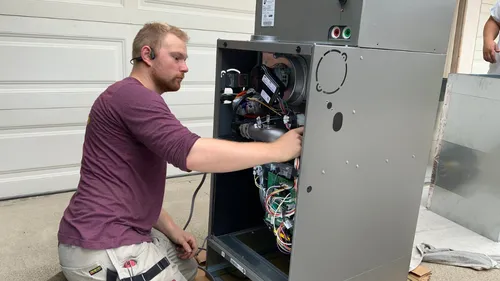
Haven Air Conditioning is an HVAC company based in Anaheim, CA, offering a range of services including air conditioning, furnace, heat pump, and mini split installation and repair. They also provide HVAC tune-ups, duct cleaning, and thermostat installation. The company is experienced in handling complex HVAC systems and offers detailed inspections and maintenance advice to improve system efficiency. Customers appreciate their thoroughness and clear communication throughout the service process. Haven Air Conditioning has built a reputation for professional installations and repairs in the Anaheim area.
Understanding Ductless Mini-Split Systems
A ductless mini-split system consists of one outdoor condenser unit connected by refrigerant lines to one or more indoor air-handling units. Unlike traditional central HVAC that pushes air through a network of ducts, a mini-split delivers conditioned air directly into the space from a compact, wall-mounted unit. This design eliminates the energy losses associated with ductwork, which can account for more than 30% of energy consumption in a forced-air system. The core advantage is zoned comfort; each indoor unit can be controlled independently, allowing you to cool or heat only the rooms you are using. This is particularly valuable in Anaheim's climate, where you might want to cool a sun-facing home office without chilling the entire house.
Ideal Applications for Anaheim Homes
Ductless systems are a versatile choice for many common Southern California home scenarios. Their flexibility makes them a go-to for targeted climate control solutions.
- Room Additions and Conversions: Adding a ductless system is often the most practical and cost-effective way to condition a new family room, converted garage, or ADU (Accessory Dwelling Unit) without the expense and disruption of extending existing ductwork.
- Older Homes Without Ducts: Many historic or older Anaheim homes were built without any central air conditioning. A multi-zone ductless installation can provide whole-home comfort without altering the home's character with bulky ducts.
- Supplementing Central HVAC: If certain rooms are consistently too hot or cold (like a top-floor bedroom or a sunroom), a single-zone mini-split can solve the problem without overworking or replacing your entire central system.
- Improving Efficiency in Specific Areas: They are perfect for efficiently heating and cooling frequently used spaces like home offices, master suites, or great rooms, allowing you to set the central system to a more economical baseline.
Key Installation Considerations: Placement is Critical
Professional installation is paramount for performance, efficiency, and warranty validation. Two of the most important factors your installer will plan are the placement of the indoor and outdoor units.
Indoor Air Handler Placement
The location of the wall-mounted indoor unit directly impacts air distribution and comfort. Best practices include1 2:
- Mounting the unit high on an interior wall, typically 6-8 inches from the ceiling, to allow cool air to descend evenly throughout the room.
- Choosing a central location within the zone, away from corners, to prevent short-cycling and ensure optimal airflow.
- Avoiding placement directly above heat sources like televisions or lamps, or in areas with direct sunlight on the unit's sensors.
- Ensuring at least 1 foot of clearance from walls, ceilings, and obstacles for proper air intake and exhaust.
Outdoor Condenser Placement
The outdoor unit requires careful siting for efficiency, longevity, and noise management.
- It must be placed on a stable, level pad (often concrete) to prevent vibration and noise.
- Ample clearance is required on all sides-typically 1-2 feet-as specified by the manufacturer to ensure unobstructed airflow for the coil and fan3 4.
- The location should allow for easy access for future maintenance and repair.
- Installers will avoid areas where exhaust from the unit could be recirculated back into the intake or where noise could be a nuisance to neighbors or household members.
The Professional Installation Process
A proper ductless mini-split installation is a technical process that should always be handled by certified professionals. Key steps include:
- Load Calculation and Planning: A technician will perform a Manual J calculation to determine the precise heating and cooling needs (in BTUs) for each zone, ensuring the system is correctly sized.
- Mounting the Units: The indoor wall units and outdoor condenser are securely mounted in their pre-determined optimal locations.
- Running Line Sets: Small-diameter copper refrigerant lines, electrical wiring, and a condensate drain line are run through a small, discreet hole in the wall connecting the indoor and outdoor units. This is often concealed with a line-hide cover for a clean look.
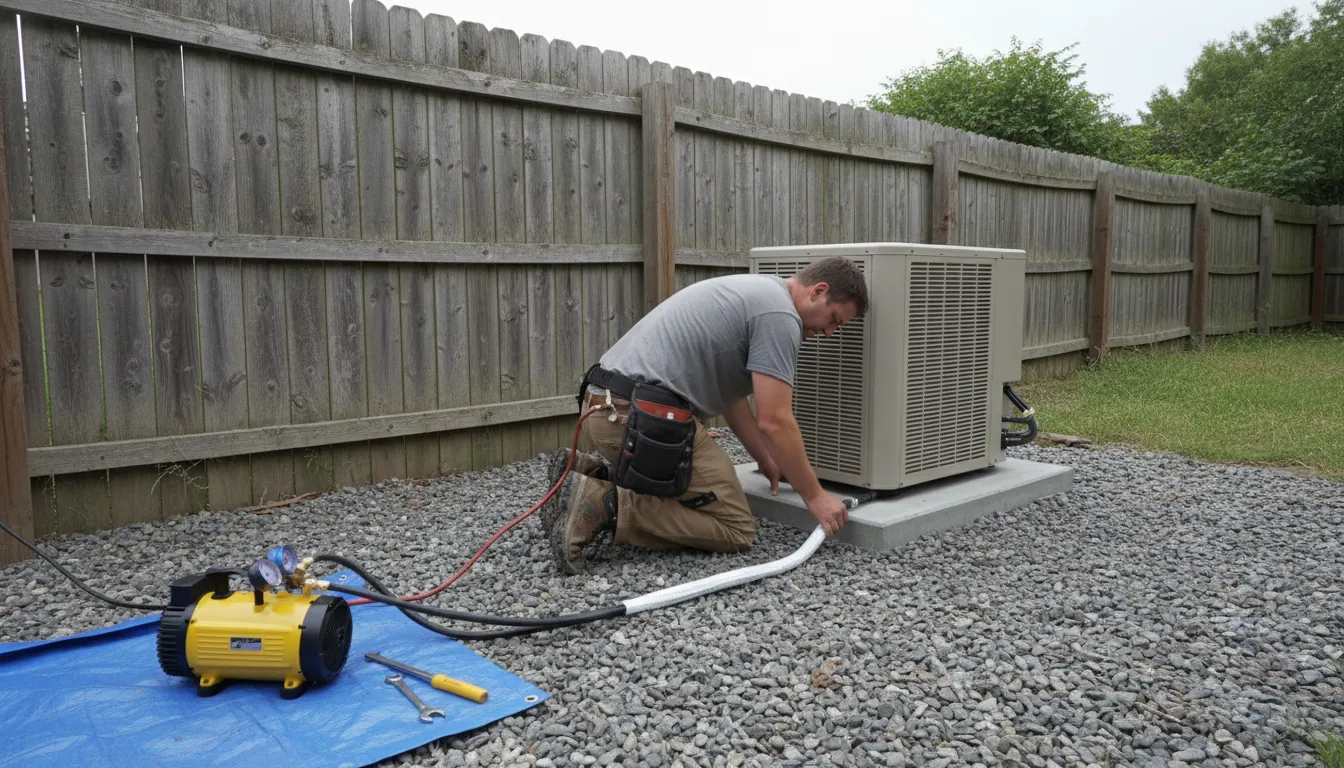
- Making Connections and Vacuuming: The refrigerant lines are connected, and the entire circuit is evacuated with a high-powered vacuum pump to remove all moisture and air, which is critical for system efficiency and longevity.
- System Charging and Testing: The system is charged with refrigerant, and all electrical connections are secured. The installer will then test all functions, including heating, cooling, and each mode on the remote or smart thermostat.
Find the perfect mini-split installers for your needs
Get personalized recommendations and expert advice
Cost Breakdown for Mini-Split Installation in Anaheim
The total investment for a ductless mini-split system in Anaheim varies widely based on the project's scope. The primary cost driver is the number of zones, or indoor units, you need. Here is a general cost breakdown for a professionally installed system 5:
- Single-Zone System: $2,500 - $6,000. This covers one indoor unit and one outdoor condenser, ideal for one room, a garage, or a small addition.
- Two-Zone System: $4,500 - $8,000. This system uses one outdoor unit connected to two indoor handlers, perfect for cooling two bedrooms or a small, open-concept area.
- Three-Zone System: $6,500 - $11,000. A common choice for providing comfort to three key spaces, such as a living room and two bedrooms.
- Four to Five+ Zone System: $8,000 - $15,000+. These multi-zone installations can effectively condition a larger home or entire property without ductwork, offering whole-home zoning capabilities.
What Influences the Final Price?
Several factors can move your project cost within or beyond these ranges6 7 8:
- System Efficiency (SEER2 Rating): Higher-efficiency models with SEER2 ratings of 18+ and advanced inverter compressors cost more upfront but offer significant long-term energy savings, a valuable consideration with Anaheim's utility rates.
- Installation Complexity: Costs increase if the install requires extensive electrical work, running lines long distances through walls or attics, complex carpentry, or challenging outdoor unit placement.
- Brand and Features: Premium brands and models with advanced filtration, ultra-quiet operation, or smart home integration command a higher price.
- Local Permits: Most cities, including Anaheim, require permits for HVAC installation, and these fees are typically included in the installer's quote.
Benefits of a Ductless Mini-Split System
Choosing a ductless system for your Anaheim home comes with a compelling set of advantages:
- Superior Energy Efficiency: By eliminating duct losses and using inverter-driven compressors that adjust speed rather than cycling on and off, mini-splits can be 30-40% more efficient than conventional systems9 10.
- Flexible Zoning: Create custom temperature zones for different family members' preferences or room uses, eliminating hot and cold spots and saving energy.
- Easier Installation: The installation is less invasive than ducted systems, with minimal wall disruption and no need for large mechanical rooms.
- Improved Indoor Air Quality: Without ducts that can accumulate dust and allergens, and with multi-stage filtration in the indoor units, mini-splits can provide cleaner air.
- Quiet Operation: The loudest component-the compressor-is located outside, and modern indoor units operate at very low sound levels.
Frequently asked questions
Sources
Footnotes
-
Best Mini Split AC Installation Location - Carrier - https://www.carrier.com/residential/en/us/products/ductless-mini-splits/install-ductless-ac/best-mini-split-placement/ ↩
-
Best Place to Install a Ductless Mini Split System - https://jacobsheating.com/blog/mini-split-placement/ ↩
-
Ductless mini-split installation: Cool 2025 Guide - Southern Air - https://www.southern-air.com/blog/ductless-mini-split-installation ↩
-
Where Not to Install a Mini Split: Critical Areas to Avoid - https://www.richaircomfort.com/blog/avoid-areas-mini-split-installation-guide/ ↩
-
Understanding mini split installation costs: A quick guide - Homeaglow - https://www.homeaglow.com/hub/content/mini-split-installation-cost ↩
-
Ductless Mini-Split Installation Cost in 2025: Full Breakdown - https://osborneheatingncooling.com/ductless-mini-split-installation-cost/ ↩
-
Ductless Mini Split Installation: A Complete Guide - https://www.goairflow.com/blog/ductless-mini-split-installation/ ↩
-
Ductless Mini-Splits: A Comprehensive Cost Breakdown - https://www.myfivestarhomeservices.com/ductless-mini-splits-a-comprehensive-cost-breakdown/ ↩
-
Cost to Install Mini Split AC System in 2025 - https://dellahome.com/blogs/della-blog/cost-to-install-mini-split-ac-system ↩
-
Mini-Split AC Installation in California - Bonney: Plumbing - https://www.bonney.com/blog/mini-split-ac-cost-california/ ↩