Find the Best Mini-Split Installers for Your Business
No obligation • Fast responses • Nationwide coverage

Why you can trust HVAC Firms
HVAC Firms is a leading United States resource for evaluating HVAC service providers. Our team researches companies, checks credentials, and reviews customer feedback to present clear, unbiased information. Listings and rankings are based on merit, and companies cannot pay to change our editorial content.
Search providers near you
Top Mini-Split Installers in South San Francisco, California Ranked
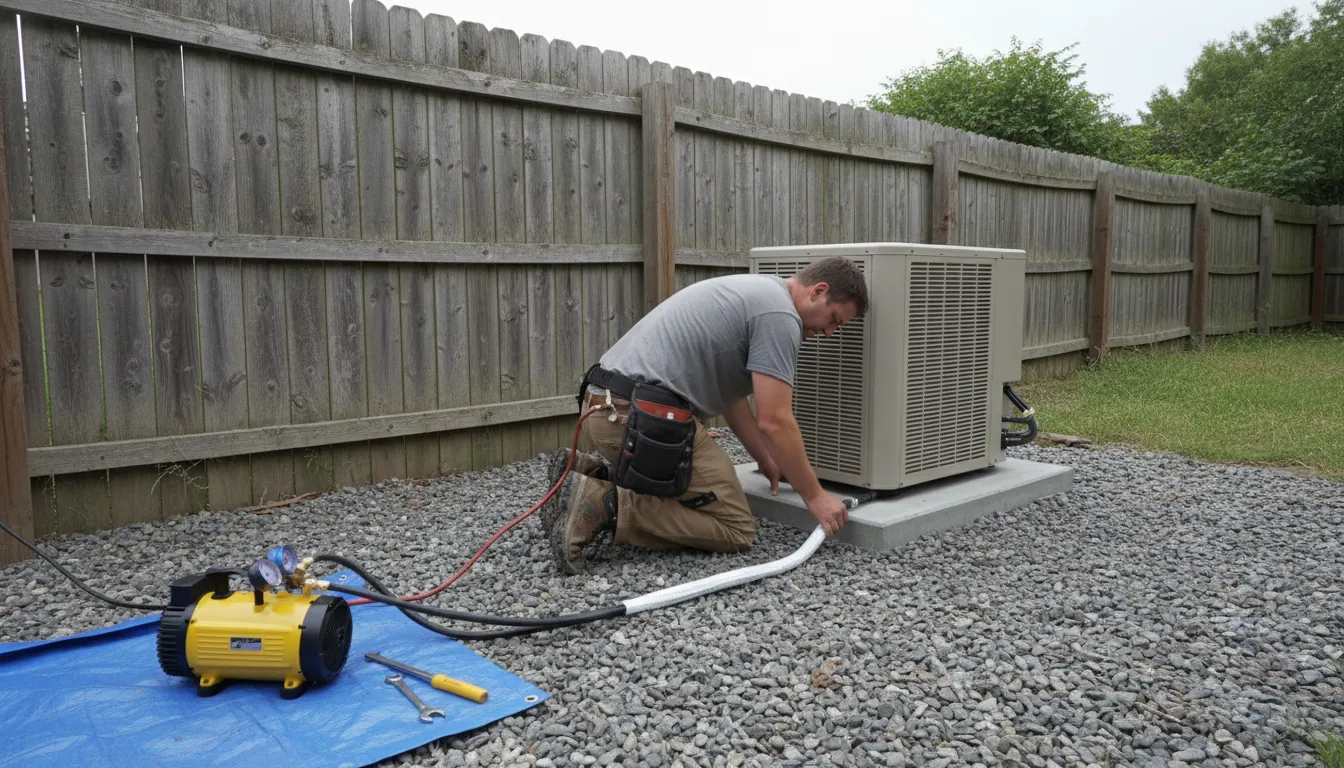
Installing a ductless mini-split system is a smart solution for adding efficient, zoned comfort to your South San Francisco home. These systems are ideal for room additions, older properties without ductwork, or solving persistent hot and cold spots. This guide will help you understand the key considerations-from system types and placement to costs and compliance-so you can confidently explore your options for local ductless HVAC installation.
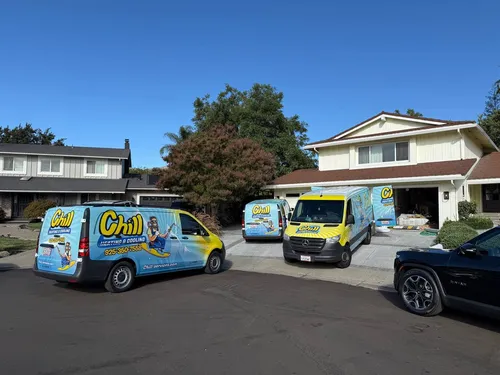
Chill Heating and Cooling
23 Beta Ct suite f, San Ramon, CA 94583
Chill Heating and Cooling is a full-service HVAC company based in Oakland, CA, offering heating and cooling repairs, maintenance, and installations for residential and commercial clients. They provide services including air conditioning, furnace, heat pump, mini split, and thermostat installation and repair. The company is an authorized Carrier dealer and serves the Oakland area with expertise in diagnosing and repairing HVAC systems, as well as installing new units tailored to home or business needs. Chill Heating and Cooling is available for emergency calls and offers same-day service to address urgent heating and cooling issues.
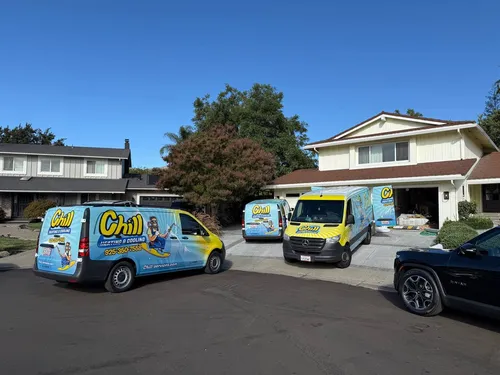
Chill Heating and Cooling
11 Cll Este, Walnut Creek, CA 94597
Chill Heating and Cooling is a full-service HVAC company serving Oakland, CA. They provide expert heating and cooling repairs, maintenance, and installations for residential and commercial customers. Their services include air conditioning, furnace, heat pump, mini split, and thermostat installation and repair. The company is an authorized Carrier dealer and works with major brands such as American Standard and Lennox. They offer emergency service availability and support new construction projects with fast and reliable HVAC system installations. Chill Heating and Cooling emphasizes customer satisfaction and provides professional diagnostics and repairs to maintain comfortable indoor environments year-round.
3rdGen Heating & Cooling
1230 Fourth St Unit A, Berkeley, CA 94710
3rdGen Heating & Cooling is an HVAC contractor based in Berkeley, serving Oakland, CA, and the broader San Francisco Bay Area. They specialize in the design and installation of high-efficiency, fully electric HVAC systems including heat pumps, ductless mini-splits, and mechanical systems for custom homes, multifamily developments, and commercial projects. Their services include integrated HVAC system design and mechanical design-build, with a focus on energy-efficient and precision-engineered comfort solutions. 3rdGen is a certified Mitsubishi Electric Diamond Contractor, offering factory-trained technicians and extended warranties on Mitsubishi heat pump installations.
AIS Heating & Air Conditioning
4432 Enterprise St suite a, Fremont, CA 94538
AIS Heating & Air Conditioning is an HVAC contractor serving San Jose, CA, and the surrounding Bay Area. Since 2008, they have provided a full range of heating and cooling services, including air conditioning and furnace repair, installation, and maintenance. Their expertise covers various systems such as ductless mini-splits, central AC units, heat pumps, and gas and electric furnaces. They also offer indoor air quality solutions like humidifier services, UVC air purifiers, ductwork installation, and duct sealing to improve home air safety and comfort.
All About Air
2415 Radley Ct Suite 8, Hayward, CA 94545
All About Air is a family-owned HVAC company serving Oakland, CA, and the broader San Francisco Bay Area since 2007. They provide a range of services including air conditioning and furnace repair, installation of HVAC systems and mini splits, thermostat installation, and routine maintenance. As a Bryant dealer, they install and service Bryant heating and cooling units, ensuring systems meet manufacturer specifications. With over 14 years of experience, All About Air emphasizes tailored solutions for local climate needs and offers financing options for larger projects.
Why Choose a Ductless Mini-Split for Your Home?
Ductless mini-split systems are uniquely suited to the architectural and climatic needs of South San Francisco. They provide targeted heating and cooling without the need for extensive ductwork, which is perfect for several common local scenarios. For room additions, converted garages, or sunrooms, a mini-split offers a dedicated climate control solution without the expense and disruption of extending existing ducts. In older homes or historic properties where installing ducts is impractical or would compromise architectural integrity, ductless systems are an excellent alternative. They are also the go-to choice for solving comfort issues in specific problem rooms, like a bedroom that never cools down or a home office that gets too warm. For whole-home comfort, multi-zone ductless installations can provide efficient, room-by-room temperature control across your entire house.
Understanding System Types: Single-Zone vs. Multi-Zone
The first major decision in planning your ductless installation is choosing between a single-zone or multi-zone system. This choice fundamentally impacts your home's comfort layout and the project's scope.
A single-zone system consists of one indoor air-handling unit connected to one outdoor condenser. It's designed to condition a single space, such as a new master suite, garage apartment, or great room. This is typically the most straightforward and budget-friendly option for addressing a specific need.
A multi-zone system uses a single, more powerful outdoor condenser to connect to multiple indoor units (e.g., two, three, five, or even eight zones). This setup allows you to independently control the temperature in different rooms or zones throughout your home. For example, you could have one unit in the living room, another in the primary bedroom, and a third in a kitchen addition. Multi-zone installations are ideal for whole-home comfort in properties without ducts, offering significant efficiency advantages by not conditioning unused spaces 1 2.
Selecting the Right Indoor Unit Style
The indoor unit of a ductless mini-split is the visible component in your room, and several styles are available to match different aesthetic and functional requirements. The most common and cost-effective type is the wall-mounted unit. These are installed high on an interior wall, providing wide airflow distribution and a relatively unobtrusive profile 3.
For a more integrated, sleek look, a ceiling cassette can be recessed into the ceiling, with only a decorative grille visible. This option is popular in homes with modern design sensibilities or in rooms where wall space is limited, though it often involves more complex installation due to ceiling modification 4 5. Floor-mounted units are another variant, installed low on a wall. They are an excellent solution for rooms with sloped ceilings, large window walls, or where overhead installation isn't feasible 5.
Regardless of the style, proper placement is critical for performance. All indoor units require clear, unobstructed airflow. They should be positioned away from large furniture, curtains, or other items that could block the air intake or direct the conditioned air flow.
Critical Installation Considerations: Placement, Lines, and Power
Professional installation is not just recommended; it's essential for system performance, warranty validation, and compliance with California's Title 24 energy codes. Several technical factors must be expertly addressed.
Outdoor Condenser Clearance: The outdoor unit requires adequate space for airflow and service access. It must be placed on a stable, level pad with clearance from walls, fences, shrubs, and other obstructions to ensure efficient heat dissipation and prevent overheating.
Line Set Routing: The refrigerant lines (line set) and condensate drain must be run between the indoor and outdoor units. This often involves drilling through walls, running lines through attics, basements, or conduits along the exterior. Longer line sets add material cost and complexity, and the routing must be carefully planned for both aesthetics and function 6.
Electrical Requirements: Ductless systems require a dedicated electrical circuit. A single-zone system may need a new 110V or 220V circuit run from your main panel. Multi-zone systems, especially whole-home setups, often require a more substantial electrical service upgrade or the installation of a sub-panel, which is a significant factor in the overall project cost 7 8.
Find the perfect mini-split installers for your needs
Get personalized recommendations and expert advice
Cost Overview for Ductless Mini-Split Installation
The total investment for a ductless mini-split installation in South San Francisco varies widely based on the system's complexity, efficiency, and your home's specific requirements. Costs are primarily driven by the number of zones, the brand and efficiency (SEER2 rating) of the equipment, and the difficulty of the installation.
- Single-Zone System: For conditioning one room or a small addition, you can expect a range of $2,000 to $8,000. The lower end typically covers a basic system in a straightforward installation, while the higher end includes premium, high-efficiency units or complex mounting and electrical work.
- 2 to 3-Zone System: For cooling and heating multiple rooms, such as a small home or a primary living area, costs generally range from $4,500 to $11,000. This covers the multi-port outdoor condenser and two or three indoor units 9.
- 4+ Zone / Whole-Home System: A comprehensive ductless solution for an entire house can range from $8,000 to $20,000 or more. The final price depends on the number of indoor units, the system's total capacity, the use of advanced ceiling cassettes, and any necessary major electrical upgrades 10 11 12.
It's important to view these figures as an investment in long-term comfort and energy savings. A properly installed, high-efficiency ductless system can significantly reduce heating and cooling costs compared to less efficient alternatives like window units or electric baseboard heat.
The Value of Professional Expertise
Given the technical complexities-from refrigerant handling and electrical work to ensuring compliance with local building and energy codes-a professional installation is non-negotiable. Certified technicians ensure the system is correctly sized for your space, properly charged, and installed to manufacturer specifications, which is required to maintain the full equipment warranty. In South San Francisco, adherence to California's strict Title 24 energy standards is also a critical part of a lawful installation, which professionals are trained to navigate.
Frequently asked questions
Sources
Footnotes
-
Ductless Mini-Split Installation in San Francisco, CA - Magic Plumbing - https://www.magicplumbing.com/air-conditioning/ductless-mini-split-installation/ ↩
-
Ductless Mini-Split Installation Cost in 2025: Full Breakdown - https://osborneheatingncooling.com/ductless-mini-split-installation-cost/ ↩
-
Best Place to Install a Ductless Mini Split System - https://jacobsheating.com/blog/mini-split-placement/ ↩
-
How Much Does a Mini-Split Installation Cost? - Taskrabbit Blog - https://www.taskrabbit.com/blog/mini-split-installation-cost/ ↩
-
How Much Does a Mini Split Installation Cost? (2026) - HomeGuide - https://homeguide.com/costs/ductless-mini-split-ac-cost ↩ ↩2
-
Ductless Mini Split Installation Costs in 2026 - Carrier - https://www.carrier.com/residential/en/us/products/ductless-mini-splits/ductless-mini-split-installation-cost/ ↩
-
Whole House Ductless Mini Split Walk Through - https://www.youtube.com/watch?v=lDwutt_ywsA&t=2 ↩
-
Why Is Space Required For AC Outdoor Unit? - https://www.milleroilcompany.com/space-required-for-ac-outdoor-unit/ ↩
-
Ductless Mini-Splits: A Complete Guide To Cost, Benefits, And ... - https://petermanhvac.com/about-us/blog/mini-splits-complete-guide/ ↩
-
Mini Split Installation | Galaxy Heating & Air Conditioning - https://galaxyservices.com/mini-split-installation/ ↩
-
Mini-Split AC Installation in California - Bonney: Plumbing - https://www.bonney.com/blog/mini-split-ac-cost-california/ ↩
-
Ductless mini-split installation: Cool 2025 Guide - Southern Air - https://www.southern-air.com/blog/ductless-mini-split-installation ↩