Find the Best Mini-Split Installers for Your Business
No obligation • Fast responses • Nationwide coverage

Why you can trust HVAC Firms
HVAC Firms is a leading United States resource for evaluating HVAC service providers. Our team researches companies, checks credentials, and reviews customer feedback to present clear, unbiased information. Listings and rankings are based on merit, and companies cannot pay to change our editorial content.
Search providers near you
Top Mini-Split Installers in San Mateo, California Ranked
Mini-split installation provides a modern, efficient solution for heating and cooling homes and businesses without the need for extensive ductwork. This ductless technology is especially valuable in San Mateo, where it offers precise zoned comfort for room additions, historic homes, or whole-house climate control. Finding a qualified local specialist is key to ensuring your system is correctly sized, installed, and maintained for optimal performance and energy savings.
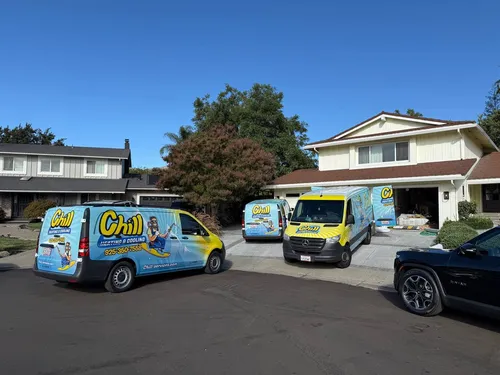
Chill Heating and Cooling
23 Beta Ct suite f, San Ramon, CA 94583
Chill Heating and Cooling is a full-service HVAC company based in Oakland, CA, offering heating and cooling repairs, maintenance, and installations for residential and commercial clients. They provide services including air conditioning, furnace, heat pump, mini split, and thermostat installation and repair. The company is an authorized Carrier dealer and serves the Oakland area with expertise in diagnosing and repairing HVAC systems, as well as installing new units tailored to home or business needs. Chill Heating and Cooling is available for emergency calls and offers same-day service to address urgent heating and cooling issues.
Freon HVAC, Electrical & Appliance
299 E McGlincy Ln Suite A, Campbell, CA 95008
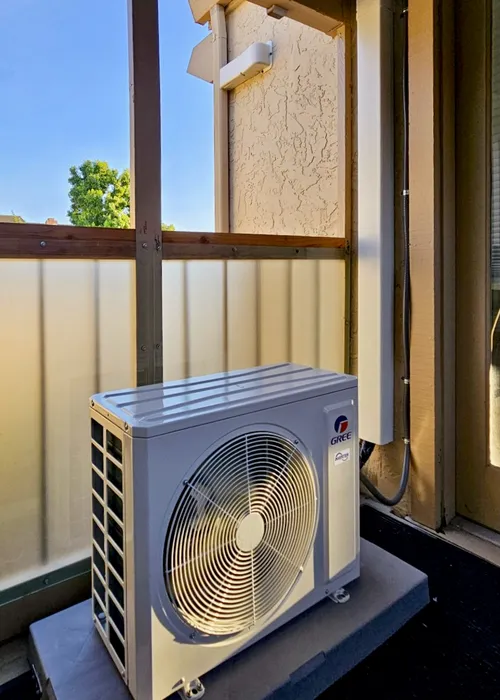
Freon HVAC, Electrical & Appliance provides a range of heating and air conditioning services in San Jose, CA. They specialize in HVAC installation, repair, and maintenance, including air conditioning, furnaces, heat pumps, mini splits, and thermostat installation. Their team handles ductwork repair and indoor air quality services to support comfortable indoor environments. Freon HVAC offers expertise in refrigerant replacement and commercial HVAC solutions, focusing on efficient system operation throughout the year.
3rdGen Heating & Cooling
1230 Fourth St Unit A, Berkeley, CA 94710
3rdGen Heating & Cooling is an HVAC contractor based in Berkeley, serving Oakland, CA, and the broader San Francisco Bay Area. They specialize in the design and installation of high-efficiency, fully electric HVAC systems including heat pumps, ductless mini-splits, and mechanical systems for custom homes, multifamily developments, and commercial projects. Their services include integrated HVAC system design and mechanical design-build, with a focus on energy-efficient and precision-engineered comfort solutions. 3rdGen is a certified Mitsubishi Electric Diamond Contractor, offering factory-trained technicians and extended warranties on Mitsubishi heat pump installations.
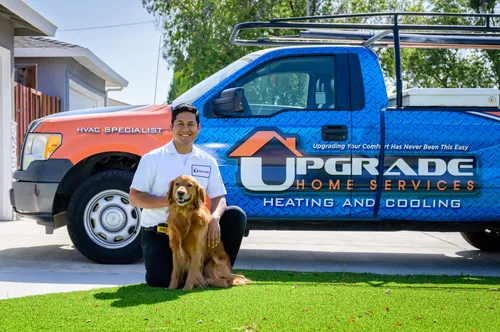
Upgrade Home Services, HVAC
743 Ames Ave, Milpitas, CA 95035
Upgrade Home Services, HVAC is a family-owned company serving San Jose, CA, and the surrounding Bay Area since 2002. They provide a range of HVAC services including air conditioning, furnace, heat pump, and mini split installation and repair, as well as indoor air quality testing and improvements. The company is experienced in handling all major HVAC brands and offers tailored solutions for both basic maintenance and complex home remodeling projects. Their expertise includes helping customers transition to energy-efficient electric heat pump systems. Upgrade Home Services is committed to maintaining comfortable home environments year-round.
Evergreen Air HVAC Corp
San Jose, CA
Evergreen Air HVAC Corp is a family-owned HVAC company serving San Jose, CA, and the Bay Area since 2008. They provide a wide range of heating and air conditioning services, including installation, repair, and maintenance for residential and commercial clients. Their skilled technicians are trained in the latest HVAC technologies and offer services such as A/C installation and repair, gas and electric furnace installation and repair, ductless A/C services, thermostat repair, and air duct installation. Evergreen Air also provides emergency services and virtual consultations to accommodate customer needs.
Understanding Ductless Mini-Split Systems
A ductless mini-split system consists of two main components: an outdoor compressor/condenser unit and one or more indoor air-handling units. These are connected by a small conduit that houses refrigerant lines, a condensate drain, and power cables. This design eliminates the need for bulky, invasive ductwork, making it an ideal choice for homes without existing ducts, room additions, or spaces where installing traditional HVAC systems is impractical or too costly.
The core appeal of a ductless air conditioner and heater lies in its zoning capability. Unlike central forced-air systems that treat the entire house as a single zone, mini-splits allow you to control the temperature independently in each room where an indoor unit is installed. This means you can cool a home office during the day without wasting energy on an empty living room, leading to significant utility savings and enhanced personal comfort.
Ideal Applications for San Mateo Homes
Ductless systems are remarkably versatile and solve common climate control challenges in the San Mateo area.
Single Rooms and Additions: This is the most common application. If you've converted a garage into a living space, added a sunroom, or need to condition a finished attic or basement, a mini-split is often the perfect fit. Running new ducts to these areas can be structurally challenging and expensive, whereas a ductless system requires only a small hole in the wall for the conduit.
Whole-Home Solutions: For homes without any ductwork, such as many older properties in San Mateo, a multi-zone ductless installation can provide complete heating and cooling. A single, powerful outdoor unit can connect to multiple indoor units (e.g., 2, 3, 5, or even 8), creating a customized comfort network for the entire house.
Supplemental and Problem-Solving Comfort: Even homes with central HVAC can benefit. A mini-split can efficiently handle a room that's always too hot or too cold, supplementing the main system and preventing strain. They are also excellent for spaces like workshops, guest houses, or home gyms.
System Types: Single-Zone vs. Multi-Zone
Choosing between a single-zone and multi-zone setup is a fundamental decision in planning your installation.
- Single-Zone Systems: These consist of one outdoor unit connected to one indoor unit. They are designed to condition a single, specific area like a master bedroom, home office, or addition. This is typically the most straightforward and cost-effective option for targeted comfort 1.
- Multi-Zone Systems: These systems connect multiple indoor units (of varying styles and capacities) to a single outdoor condenser. This allows you to independently control the temperature in several rooms or zones-like the kitchen, living room, and two bedrooms-from one outdoor footprint. It's a streamlined solution for whole-house comfort without multiple outdoor units cluttering your property.
Indoor Unit Styles and Placement Considerations
The indoor component of a ductless heat pump comes in several styles to suit different room layouts and aesthetic preferences. Proper placement is critical for both performance and efficiency.
- Wall-Mounted Units: The most common and economical style. They are mounted high on an interior wall and require adequate clearance from the ceiling (typically 4-6 inches) and corners for proper airflow. Furniture placement should also be considered to avoid blocking the air discharge.
- Floor-Mounted/Cassette Units: Ideal for rooms with low walls, large window areas, or sloped ceilings (like in attics). These units are installed near the floor and discharge air upward. Ceiling cassette units are recessed into the ceiling for a discreet, centralized look, distributing air in four directions.
- Clearance is Key: All indoor units require unobstructed space around them for air intake and discharge. Blocked airflow reduces efficiency, can cause freezing or overheating, and may lead to premature system failure. Always follow the manufacturer's specified clearances during installation planning.
Outdoor Unit Placement and Installation Logistics
The outdoor condenser unit requires careful siting for longevity, efficiency, and minimal disruption.
- Stable Foundation: The unit must be placed on a stable, level surface. This is often a concrete pad or specially designed mounting brackets secured to the side of the home. A proper foundation prevents vibration and noise.
- Adequate Clearance: Like the indoor units, the outdoor condenser needs space to breathe. It typically requires 1-2 feet of clearance on all sides, especially where the fan exhausts hot air. This prevents overheating, maintains efficiency, and allows for easy servicing 2.
- Line Set Routing: The refrigerant lines, drain line, and electrical wiring are bundled together in the conduit. Professional installers will route this from the outdoor unit to the indoor location, drilling a small (typically 3-inch) hole through the wall. For a clean look, lines can be run through attics, crawlspaces, or concealed with slim, paintable channel covers 3.
Find the perfect mini-split installers for your needs
Get personalized recommendations and expert advice
The Professional Installation Process
A proper ductless mini-split installation is a technical process best left to certified professionals. A high-quality installation typically follows these key steps:
- Load Calculation and System Design: A technician will perform a Manual J calculation to determine the precise heating and cooling needs (in BTUs) for your space. This ensures the system is neither undersized (struggling to keep up) nor oversized (short-cycling and inefficient) 4.
- Unit Placement and Mounting: Following the design plan, the indoor and outdoor units are securely mounted in their predetermined locations, ensuring all clearances are met.
- Drilling and Line Set Connection: A hole is carefully drilled for the conduit. The refrigerant lines are connected between the indoor and outdoor units using flare fittings or brazing, a skill requiring expertise to prevent leaks.
- Electrical Connection: A dedicated electrical circuit is run from your home's panel to the outdoor unit to power the system.
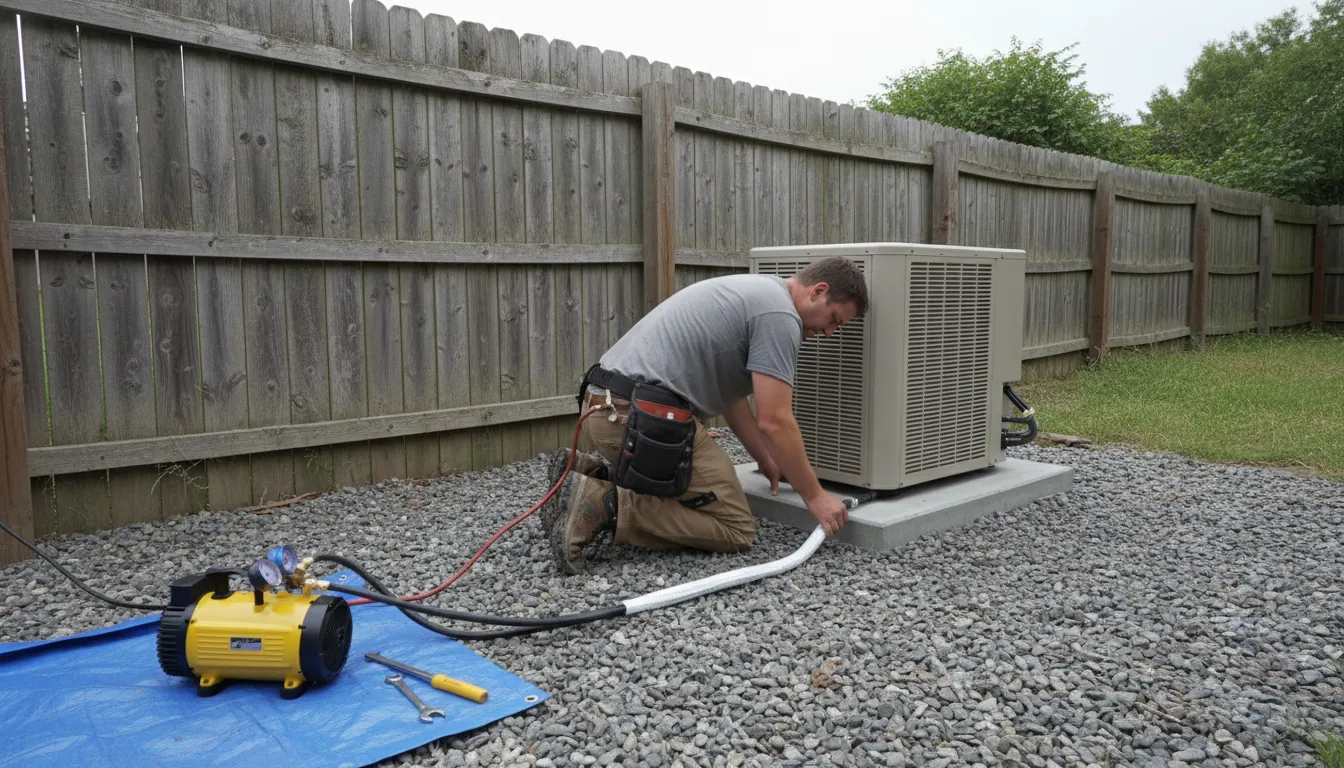
- Evacuation and Charging: The refrigerant lines are evacuated with a high-powered vacuum pump to remove all moisture and air, which are contaminants that can damage the compressor. The system is then charged with the exact amount of refrigerant specified by the manufacturer.
- System Testing and Commissioning: The installer will test all functions-cooling, heating, fan speeds, and thermostat controls-to ensure everything operates correctly and efficiently. They should also explain the basic operation and maintenance of your new system.
Understanding Installation Costs in San Mateo
The cost for a ductless air conditioning installation in San Mateo varies widely based on system scope, complexity, and equipment quality. Here is a general breakdown:
- Single-Zone System: Installing one indoor unit with one outdoor condenser typically ranges from $2,500 to $6,000. This covers a standard wall-mounted unit for a single room or addition 5 6.
- Multi-Zone System (2-3 Zones): For a system with two or three indoor units, costs generally range from $4,500 to $11,000 or more. The price increases with each additional indoor head and the capacity of the outdoor unit.
- Whole-Home Multi-Zone System (5+ Zones): Comprehensively conditioning an entire home without ducts can range from $10,000 to $25,000+, depending on the home's size, the number of zones, and the equipment brand 7 8.
Key factors influencing these costs include the system's efficiency rating (SEER2 for cooling, HSPF for heating), the use of advanced inverter technology, the brand of equipment, and the complexity of the labor (e.g., long refrigerant line runs, difficult electrical access, or complex mounting situations) 9.
Benefits of a Professionally Installed Ductless System
Choosing an expert for your mini-split heat pump installation unlocks the full potential of the technology:
- Energy Efficiency: Correctly sized and installed systems with high SEER2 ratings operate at peak efficiency, reducing your monthly energy bills significantly compared to outdated systems or less efficient alternatives 10.
- Zoned Comfort and Control: Enjoy personalized temperature settings in different areas of your home, eliminating hot and cold spots and catering to individual preferences.
- Improved Indoor Air Quality: Ductless systems have multi-stage filtration that can trap dust, pollen, and other allergens. Since there are no ducts to accumulate and circulate contaminants, air quality can be better than in ducted systems.
- Quiet Operation: The noisiest component-the compressor-is located outside. Modern indoor units operate very quietly, making them ideal for bedrooms and living spaces.
- Flexibility and Aesthetics: With multiple indoor unit styles and the absence of bulky ducts, ductless systems offer design flexibility for almost any space.
Frequently asked questions
Sources
Footnotes
-
San Mateo Ductless Mini Split Installation Near You - https://emenergyair.com/san-mateo/heating-and-cooling/mini-split-installation/ ↩
-
Whole House Ductless Mini Split Walk Through - https://www.youtube.com/watch?v=lDwutt_ywsA&t=2 ↩
-
Ductless Mini Split Setup: An Ultimate Guide - Airflow Heating & Air - https://www.goairflow.com/blog/ductless-mini-split-installation/ ↩
-
Mini Split Installation San Mateo, CA Service - Plum HVAC - https://www.plumhvac.com/mini-split/mini-split-installation-in-san-mateo-ca ↩
-
How Much Does a Mini Split Installation Cost? (2026) - HomeGuide - https://homeguide.com/costs/ductless-mini-split-ac-cost ↩
-
How much to install mini split? - https://mrgoodguyhvac.com/how-much-to-install-mini-split/ ↩
-
Mini-Split AC Installation in California - Bonney: Plumbing - https://www.bonney.com/blog/mini-split-ac-cost-california/ ↩
-
Ductless Mini-Split Installation Cost in 2025: Full Breakdown - https://osborneheatingncooling.com/ductless-mini-split-installation-cost/ ↩
-
Ductless Air Conditioning in San Mateo County, CA | Eco Air - https://www.ecoairtemp.com/air-conditioning/ductless-air-conditioning/ ↩
-
Ductless Mini Split Installation Costs in 2026 - Carrier - https://www.carrier.com/residential/en/us/products/ductless-mini-splits/ductless-mini-split-installation-cost/ ↩