Find the Best Mini-Split Installers for Your Business
No obligation • Fast responses • Nationwide coverage

Why you can trust HVAC Firms
HVAC Firms is a leading United States resource for evaluating HVAC service providers. Our team researches companies, checks credentials, and reviews customer feedback to present clear, unbiased information. Listings and rankings are based on merit, and companies cannot pay to change our editorial content.
Search providers near you
Top Mini-Split Installers in Petaluma, California Ranked
Adding a ductless mini-split system is a smart way to achieve efficient, zoned comfort in your Petaluma home. These systems provide targeted heating and cooling without the need for extensive ductwork, making them perfect for room additions, older homes, or spaces where extending central air is impractical. This guide will help you understand the types of systems, installation considerations, and costs specific to the Petaluma area, so you can find the right local professional for your project.
Element Home AC Company
3288 Pierce St #336C, Richmond, CA 94804
Element Home AC Company is an HVAC contractor serving Oakland, CA, providing a range of heating and cooling services. Their offerings include air conditioning repair, installation, and maintenance, as well as furnace and boiler repair and installation. The company also specializes in smart thermostat installation and services for ductless mini-split systems. They emphasize comprehensive diagnostics and work with all makes and models of HVAC equipment. Element Home AC Company provides 24/7 emergency repair services to address urgent heating and cooling needs promptly.
Golden Comfort AC Repair & Heating
Oakland, CA
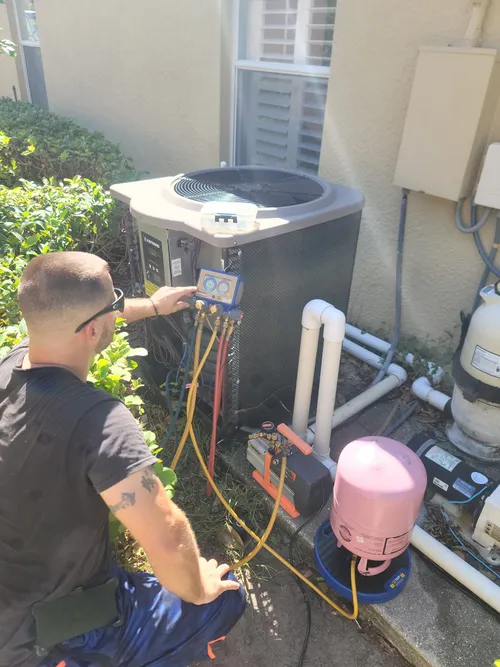
Golden Comfort AC Repair & Heating offers comprehensive heating and cooling services in Oakland, CA. They provide installation, repair, and maintenance for air conditioners, furnaces, heat pumps, and boilers, including ductless mini-split systems and smart thermostat installations. Their capabilities include 24/7 emergency repair services to ensure comfort at any time. The company also offers HVAC maintenance plans with bi-annual inspections and priority emergency service to help extend system lifespan and prevent breakdowns.
Bay Energy Heating & Air
139 Jacaranda Ct, Hercules, CA 94547
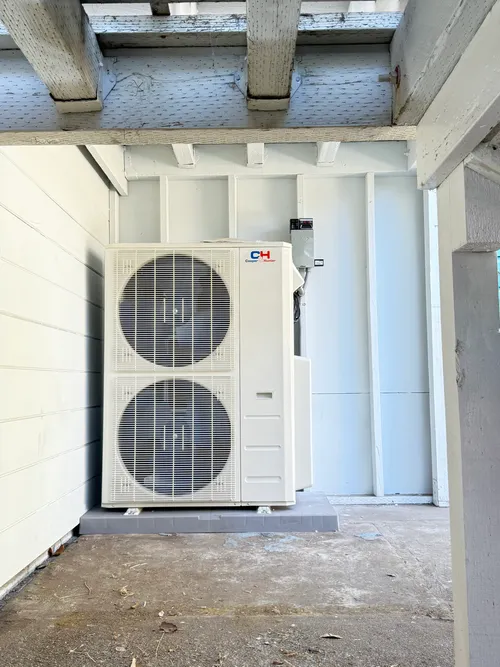
Bay Energy Heating & Air provides professional HVAC installation, repair, and maintenance services in Oakland, CA. They specialize in heat pump, furnace, mini-split, and rooftop unit installations, as well as HVAC tune-ups and dryer vent cleaning. The company offers energy-efficient heating and cooling solutions tailored to residential and commercial properties. Their certified technicians handle all types of HVAC systems with expertise and provide 24/7 emergency service for urgent repairs. Bay Energy Heating & Air emphasizes clear communication and workmanship you can trust.
FIRE & ICE HVAC
San Jose, CA
FIRE & ICE HVAC has been serving San Jose, CA, and the Silicon Valley area for over 10 years. The company offers a wide range of HVAC services including air conditioning and furnace installation and repair, heat pump and mini-split system installation, duct cleaning, thermostat setup, and indoor air quality solutions. Their certified technicians are experienced in energy-efficient technologies and provide same-day service to maintain year-round comfort. FIRE & ICE HVAC is known for handling complex installations and repairs with attention to detail and professionalism.
Understanding Ductless Mini-Split Systems
A ductless mini-split, often simply called a ductless heat pump, is a versatile HVAC solution that consists of an outdoor condenser unit connected to one or more indoor air handlers. Unlike traditional forced-air systems, they deliver climate control directly to individual rooms or "zones." This zoned approach is a key benefit for Petaluma's varied climate, allowing you to cool a sun-facing room in the afternoon while keeping other areas at a different temperature, which can lead to significant energy savings.
The core components are minimal: a compact outdoor unit and sleek indoor units mounted on walls, ceilings, or floors. Refrigerant lines and electrical wiring run through a small, inconspicuous hole in your exterior wall, connecting the two. This design minimizes disruption during installation and is ideal for homes without existing ducts, such as many historic properties in Petaluma or newer additions like converted garages and sunrooms.
Common Applications in Petaluma Homes
Ductless installations are particularly well-suited for several common scenarios in our area:
- Single Rooms or Additions: This is the most straightforward application. Installing a single-zone system is ideal for a new home office, a master bedroom, or a converted garage or attic space that lacks ducting.
- Small Homes and Apartments: A 2-zone or 3-zone ductless system can efficiently heat and cool a small cottage, bungalow, or apartment. It allows for independent temperature control in the main living area and bedrooms, providing whole-home comfort without central ductwork.
- Whole-Home Solutions: For larger residences, multi-zone systems with three or more indoor units can provide comprehensive, room-by-room climate control. This is an excellent solution for heating and cooling a multi-level home efficiently, as you can avoid wasting energy on unoccupied spaces.
Types of Indoor Units
Choosing the right style of indoor air handler depends on your room's layout, ceiling height, and aesthetic preferences. The three main types are:
- Wall-Mounted Units: The most common and generally most affordable option. These are installed high on an interior wall, providing good air circulation across the room. Their popularity in Petaluma stems from their relatively simple installation and effective performance for general room coverage.
- Ceiling Cassette Units: These are recessed into the ceiling, leaving only a sleek vent visible. They offer a very unobtrusive look and distribute air evenly in four directions. Installation is more complex, often requiring ceiling cavity access, which can increase the project cost, but the finished result is seamless 1.
- Floor-Mounted Units: Installed low on the wall, near the floor, these units are an excellent choice for rooms with sloped ceilings, knee walls, or large window walls where wall or ceiling mounting isn't feasible. They function similarly to a traditional baseboard heater in terms of placement.
Installation Considerations for Petaluma Properties
A successful ductless mini-split installation involves careful planning of both indoor and outdoor components.
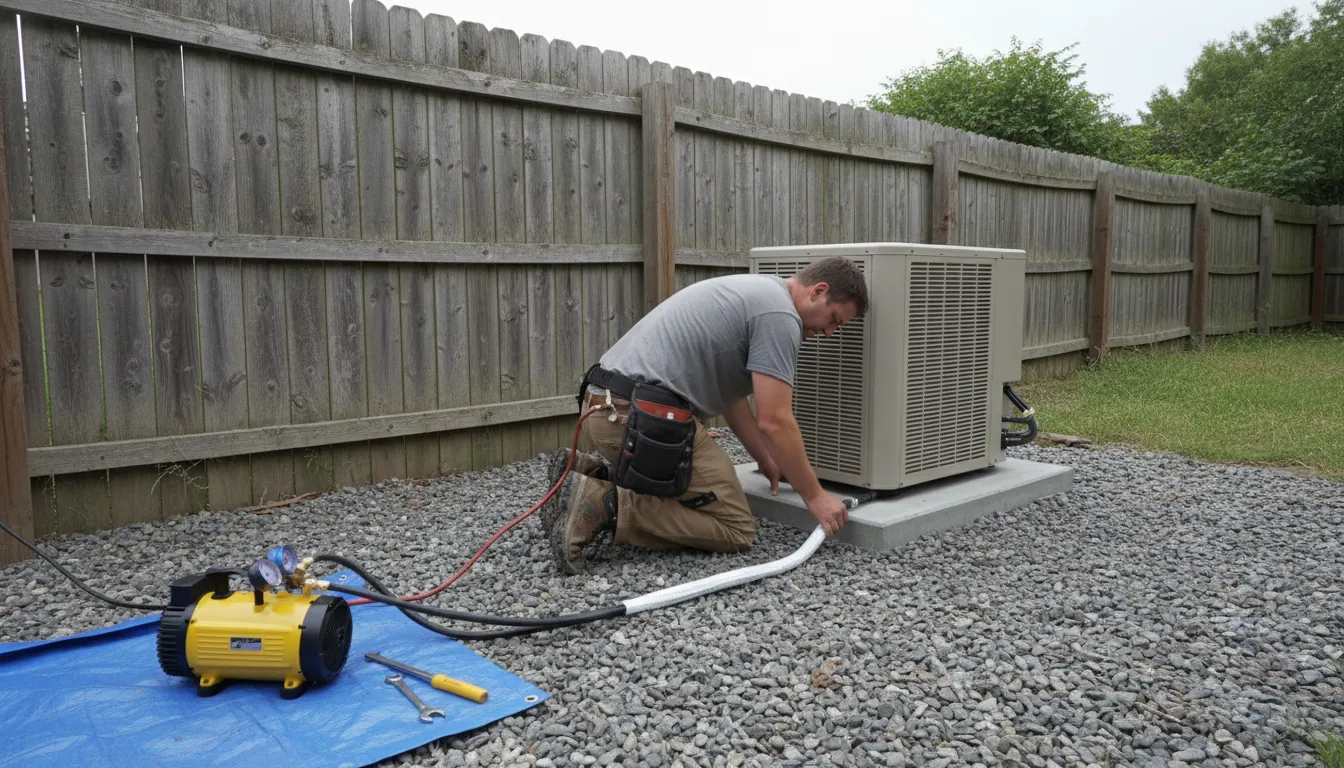
Outdoor Condenser Placement: The outdoor unit requires a stable, level surface-typically a concrete pad or a dedicated wall bracket. It's crucial to choose a location with adequate airflow, maintaining several feet of clearance from walls, fences, or dense shrubbery to ensure efficient operation and easy future maintenance. The unit should also be placed in a spot where its operational noise won't disturb household members or neighbors.
Indoor-Outdoor Connection: A professional installer will drill a small hole (usually about 3 inches in diameter) through the exterior wall to run the refrigerant lineset, condensate drain line, and electrical conduit between the indoor and outdoor units. This hole is then sealed to maintain your home's insulation and weather barrier. Proper sealing is critical in our coastal climate to prevent moisture intrusion 2 3.
Electrical Requirements: Most ductless systems require a dedicated electrical circuit from your home's main panel. The complexity of this electrical work can influence the overall installation cost. A qualified installer will assess your panel's capacity and handle any necessary upgrades to ensure safe and reliable operation.
Find the perfect mini-split installers for your needs
Get personalized recommendations and expert advice
Cost Factors for Mini-Split Installation
The cost of installing a ductless mini-split system in Petaluma can vary widely based on several key factors. Understanding these will help you evaluate quotes from local providers.
Primary Cost Drivers:
- Number of Zones: This is the most significant factor. A single-zone system for one room is the entry point, while multi-zone systems for whole-home comfort represent a larger investment.
- System Brand and Efficiency: Higher-efficiency models with superior SEER2 (Seasonal Energy Efficiency Ratio) ratings for cooling and HSPF (Heating Seasonal Performance Factor) for heating may have a higher upfront cost but offer lower long-term operating costs, which is valuable in California.
- Labor and Installation Complexity: Costs are affected by the difficulty of the install. This includes the length of the refrigerant lines, the complexity of electrical work (like needing a new sub-panel), and any carpentry needed for mounting units or concealing lines.
- Equipment Type: As mentioned, ceiling cassette units typically cost more to install than standard wall-mounted units due to the more involved ceiling work 4 5.
Estimated Cost Ranges
Based on regional data, here are general cost ranges for ductless mini-split installation in the Petaluma area 6 7:
- Single-Zone System (One Indoor Unit): $2,000 - $6,000
- Multi-Zone System (2-3 Indoor Units): $5,000 - $11,000+
- Whole-Home System (4+ Indoor Units): $8,000 - $15,000+
These ranges encompass equipment and professional installation. It's important to note that while ductless systems have a notable initial investment, their high efficiency and zoned operation can lead to substantial savings on monthly energy bills compared to less efficient heating and cooling methods, helping to offset the cost over time 8.
Incentives and Rebates
Investing in a high-efficiency ductless heat pump may make you eligible for financial incentives. These can include federal tax credits, as well as rebates from state programs or local utilities like PG&E. A knowledgeable local installer should be able to inform you of any current rebates or incentives that can reduce your net project cost 9 10 11. Always verify the specifics of any program, as terms and availability change.
Choosing a Local Installation Professional
Selecting the right contractor is crucial for a successful installation. Look for a licensed, bonded, and insured HVAC professional with specific experience installing ductless systems. They should conduct a thorough in-home assessment, often called a Manual J load calculation, to correctly size the system for your space-oversizing or undersizing can lead to inefficiency and comfort issues. A reputable provider will provide a detailed, written estimate that breaks down equipment, labor, and any ancillary costs, and they should be able to clearly explain the installation process and timeline.
Frequently asked questions
Sources
Footnotes
-
Ductless Mini-Splits: A Comprehensive Cost Breakdown - https://www.myfivestarhomeservices.com/ductless-mini-splits-a-comprehensive-cost-breakdown/ ↩
-
Ductless Mini Split Setup: An Ultimate Guide - Airflow Heating & Air - https://www.goairflow.com/blog/ductless-mini-split-installation/ ↩
-
Ductless mini-split installation: Cool 2025 Guide - https://www.southern-air.com/blog/ductless-mini-split-installation ↩
-
How Much Does a Mini-Split Installation Cost? - Taskrabbit Blog - https://www.taskrabbit.com/blog/mini-split-installation-cost/ ↩
-
How Much Does a Mini Split Installation Cost? (2026) - HomeGuide - https://homeguide.com/costs/ductless-mini-split-ac-cost ↩
-
How Much Does It Cost to Install a Mini Split System? - https://elementairco.com/how-much-does-it-cost-to-install-a-mini-split-system/ ↩
-
How Much Does a Mini-Split Cost in 2025? - EnergySage - https://www.energysage.com/heat-pumps/how-much-does-a-mini-split-cost/ ↩
-
Ductless Mini Split Installation Costs in 2026 - Carrier - https://www.carrier.com/residential/en/us/products/ductless-mini-splits/ductless-mini-split-installation-cost/ ↩
-
Ductless Mini-Split Installation Cost in 2025: Full Breakdown - https://osborneheatingncooling.com/ductless-mini-split-installation-cost/ ↩
-
Mini-Split AC Installation in California - Bonney: Plumbing - https://www.bonney.com/blog/mini-split-ac-cost-california/ ↩
-
Ductless Mini-Split AC & Heat Pump Systems | San Francisco & Marin - https://www.gbheatingandcooling.com/minisplitsystems.php ↩