Find the Best Mini-Split Installers for Your Business
No obligation • Fast responses • Nationwide coverage

Why you can trust HVAC Firms
HVAC Firms is a leading United States resource for evaluating HVAC service providers. Our team researches companies, checks credentials, and reviews customer feedback to present clear, unbiased information. Listings and rankings are based on merit, and companies cannot pay to change our editorial content.
Search providers near you
Top Mini-Split Installers in Palmdale, California Ranked
Ductless mini-split systems offer a modern, efficient solution for heating and cooling homes in Palmdale, especially those without existing ductwork. These systems provide zoned comfort, allowing you to control the temperature in individual rooms or areas, which can lead to significant energy savings. This guide will help you understand the process, benefits, and key considerations for installing a ductless mini-split in your home, connecting you with the information needed to find qualified local professionals for your project.
Hilo Aire
28220 Ave Crocker # 407, Valencia, CA 91355
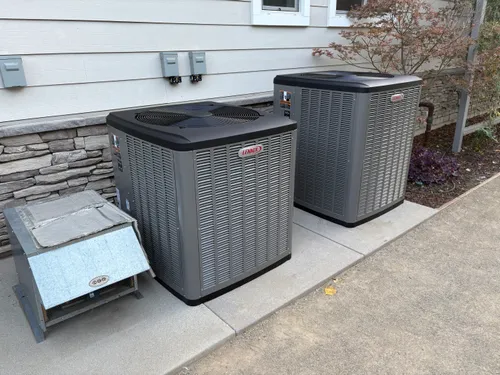
Hilo Aire is an HVAC company serving Santa Clarita, CA, and surrounding areas including Ventura and Los Angeles counties. They provide a range of heating and cooling services such as air conditioning, furnace, heat pump, and ductless mini-split installation, maintenance, and repair. The company also offers indoor air quality services and customized system design focused on energy efficiency. With over 30 years of combined industry experience, Hilo Aire emphasizes transparent pricing and customer-centered service. They provide same-day, weekend, and emergency service options.
Just Rite Air Heating & Cooling Santa Clarita
25030 Avenue Stanford suite 70, Santa Clarita, CA 91355
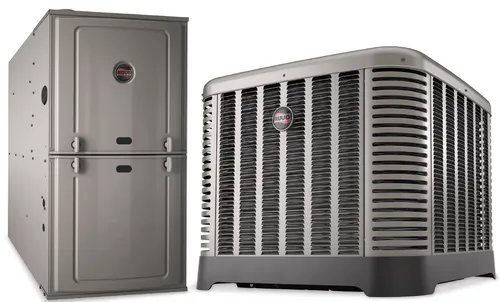
Just Rite Air Heating & Cooling Santa Clarita provides comprehensive HVAC services in Santa Clarita, CA. They specialize in the installation, repair, and maintenance of heating and cooling systems including furnaces, air conditioners, heat pumps, boilers, ductless mini-splits, and geothermal heat pumps. Their services also cover indoor air quality solutions such as air purifiers, humidifiers, and duct cleaning. The company handles diagnostics and repairs for various HVAC components and offers system tune-ups to maintain efficiency. They serve the entire Santa Clarita Valley including Valencia, Saugus, Canyon Country, and Newhall.
Alpha Air Conditioning & Heating
7965 Foothill Blvd, Sunland, CA 91040
Alpha Air Conditioning & Heating is an HVAC company serving Los Angeles, CA, specializing in heating and cooling system installation, repair, and maintenance. They offer services for air conditioners, furnaces, heat pumps, and ductless mini-split systems, with expertise in indoor air quality solutions. As a Mitsubishi Electric Ductless Pro Elite Contractor, they provide skilled installation and servicing of ductless mini-split systems. Established in 2005, Alpha Air Conditioning & Heating has over 15 years of experience and offers same-day and weekend service appointments for heating and cooling emergencies.
Air Max HVAC Inc.
3000 Floyd St, Burbank, CA 91504
Air Max HVAC Inc. is an HVAC company serving Los Angeles, CA, and nearby areas including Burbank, Thousand Oaks, Beverly Hills, and Mission Hills. Since 2001, they have provided a range of heating and cooling services such as air conditioner and furnace installation, repair, and maintenance. The company is a Lennox Premier Dealer, offering energy-efficient heat pumps, ductless mini-split AC systems, and electric furnace services. Their team has over 80 years of combined experience and handles various HVAC needs with certified technicians.
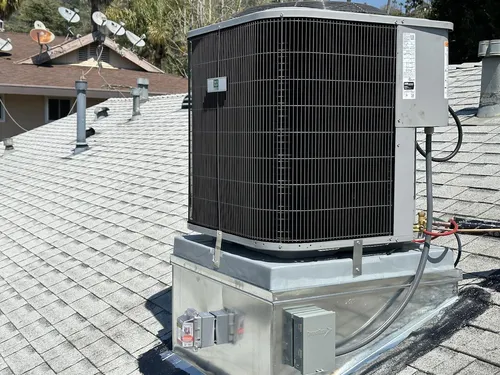
Evans Heating & Air
2560 Gardner Pl, Glendale, CA 91206
Evans Heating & Air is an HVAC company serving Los Angeles, CA, and the surrounding San Fernando Valley areas including Glendale, Burbank, and Pasadena. They provide a range of services such as air conditioning, heating, heat pump, ductless system installation and repair, as well as indoor air quality solutions. Established in 2016, the company handles residential, light commercial, multi-family, and commercial HVAC needs. One of their capabilities includes refrigerant management for air conditioning systems.
Why Consider a Ductless Mini-Split in Palmdale?
Palmdale's climate, with its hot summers and cool winters, makes efficient climate control a priority for homeowners. Ductless mini-split systems are an excellent fit for several common scenarios in the Antelope Valley. They are ideal for whole-home comfort when replacing an old, inefficient central system 1. They are the perfect solution for additions or conversions, such as cooling a garage, sunroom, or newly finished room where extending ductwork is impractical or too costly 2. If you have persistent hot or cold spots that your existing central air can't adequately address, a mini-split can supplement comfort in those specific zones. Most notably, they are the go-to choice for older homes or properties built without any ductwork, providing a complete HVAC solution without the need for invasive and expensive duct installation 1 2.
Understanding System Types and Zoning
The first major decision is choosing between a single-zone and a multi-zone system. This choice dictates how many areas of your home you can independently control.
- Single-Zone Systems: A single-zone system consists of one outdoor condenser unit connected to one indoor air handler. It's designed to condition a single room or open space, such as a master bedroom, home office, or garage 3. This is the most straightforward and often most cost-effective option for targeted comfort.
- Multi-Zone Systems: A multi-zone system uses one outdoor unit connected to multiple indoor air handlers (typically 2 to 5 or more). This allows you to create custom climate zones throughout your home-cooling the living room while heating a bedroom, for example. They are excellent for small homes with distinct areas or for providing whole-home coverage in a ductless property.
- 2-3 Zones: Suitable for conditioning 2-3 primary rooms or areas in a smaller home.
- 4+ Zones: Designed for larger homes, allowing for comprehensive, room-by-room temperature control.
Choosing the Right Indoor Air Handler
The indoor unit, or air handler, comes in several styles to suit different room layouts and aesthetic preferences. Proper selection ensures both effective airflow and a look that complements your space.
- Wall-Mounted: This is the most common and recognizable type. It is mounted high on a wall, typically 7-8 feet from the floor, to promote even air circulation throughout the room. It's a versatile choice for most standard rooms 4.
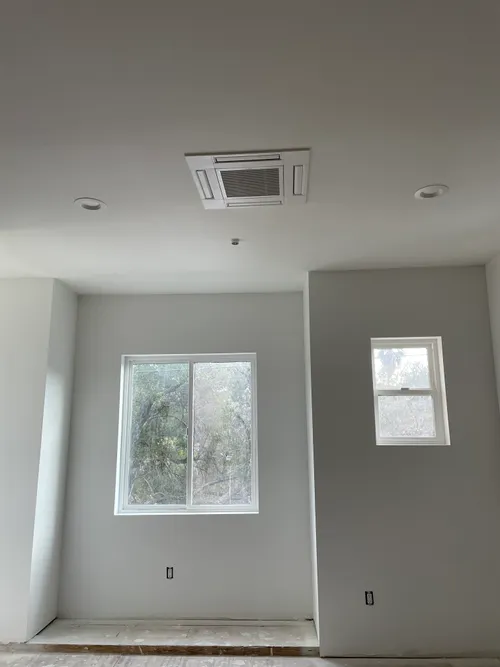
- Ceiling Cassette: These units are recessed into the ceiling, with only a decorative grille visible. They provide a very clean, unobtrusive look and are excellent for open floor plans, hallways, or rooms where wall space is limited. They distribute air in four directions for wide coverage.
- Floor-Mounted: Installed low on the wall, these units are ideal for spaces with sloped ceilings (like attics or converted lofts), rooms with large window walls where high mounting isn't feasible, or for targeted heating, as warm air naturally rises from the low unit 5.
A key principle for any indoor unit placement is to avoid obstructions like furniture or curtains that could block airflow and to position it for even distribution across the room.
Outdoor Unit Placement: Key Considerations
The outdoor condenser's location is critical for system efficiency, longevity, and noise management. Professional installers will assess your property to find the optimal spot.
- Support & Clearance: The unit is placed on a stable, level concrete pad or mounted on sturdy wall brackets. It requires 12 to 24 inches of clearance on all sides, especially the sides with the coil grilles, to ensure adequate airflow for heat exchange. It should be kept away from dryer vents, kitchen exhausts, or any source of debris or excessive heat.
- Strategic Location: For best efficiency, a north-facing wall is often preferred to shield the unit from the intense afternoon sun. It should be placed in an area accessible for future maintenance and cleaning 6. Keeping it away from bedroom windows or patios can help minimize noise disturbance.
Find the perfect mini-split installers for your needs
Get personalized recommendations and expert advice
The Professional Installation Process Explained
A proper ductless mini-split installation is a technical job that requires HVAC and electrical expertise. Here's what a professional installation typically involves 7 8 9:
- Initial Assessment: A technician evaluates your home to determine the ideal capacity (measured in BTUs), the number of zones needed, and the best locations for both indoor and outdoor units.
- Mounting: The indoor air handler(s) are securely mounted on the wall or ceiling. Outside, the condenser is positioned on its pad or brackets.
- Line Set Installation: A small, 3-inch hole is carefully drilled through the exterior wall. The refrigerant line set (copper tubing), condensate drain line, and electrical conduit are run through this hole from the outdoor unit to each indoor head. These lines are then insulated.
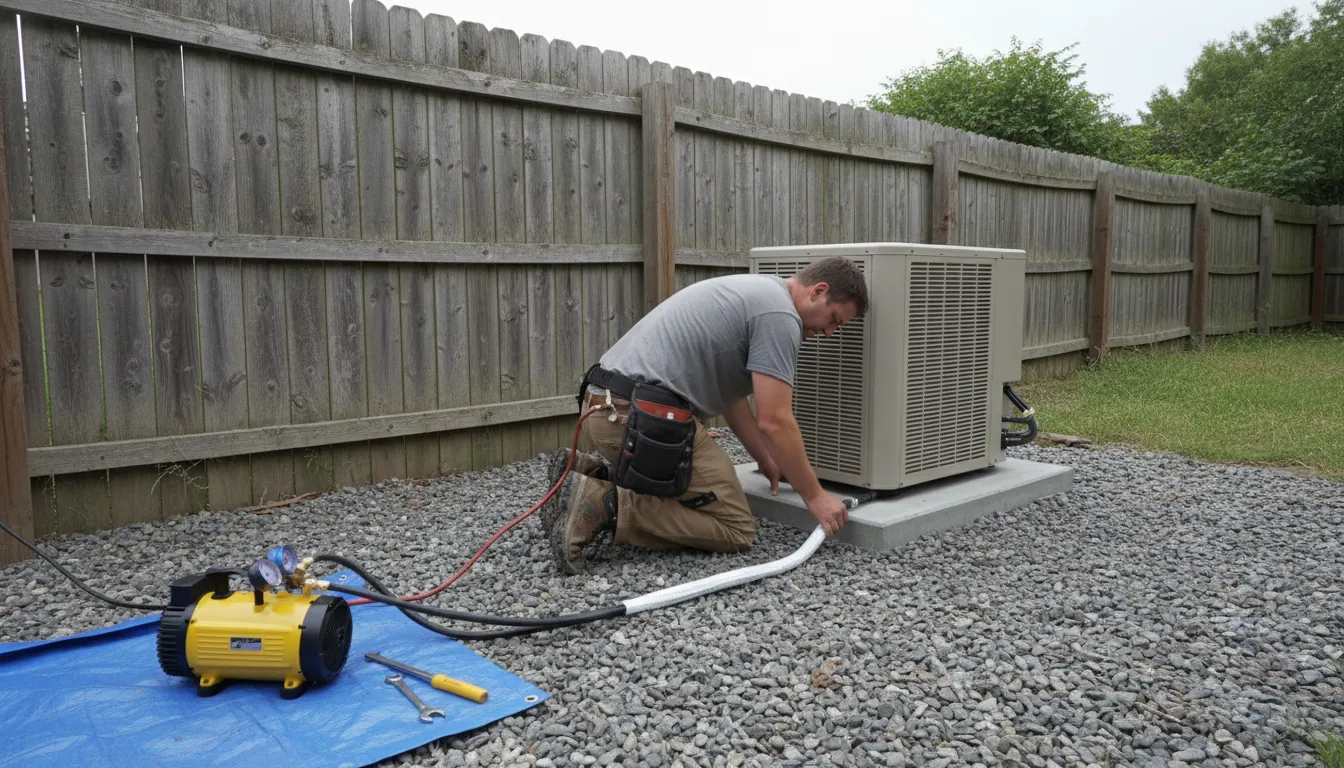
- Making Connections: The refrigerant lines are connected, and a vacuum pump is used to remove all air and moisture from the system-a crucial step for efficiency and longevity.
- Electrical Work: A licensed electrician runs dedicated electrical power from your home's panel to the outdoor unit to ensure safe and reliable operation.
- System Testing & Commissioning: The installer charges the system with refrigerant, tests all functions (cooling, heating, fan modes), verifies drainage, and shows you how to use the remote controls or Wi-Fi thermostat.
Understanding Installation Costs in Palmdale
The cost for a ductless mini-split installation in Palmdale varies widely based on system complexity, brand, and efficiency. Here is a general cost breakdown based on the number of zones 10 11:
- Single-Zone System: A system for one room typically ranges from $3,000 to $5,000+. The final price depends on the unit's efficiency (SEER2 rating), brand, and any specific installation challenges.
- Multi-Zone Systems:
- 2-3 Zones: Installing a system to condition two or three areas generally falls between $5,500 and $8,500+.
- 4+ Zones: For whole-home coverage with four or more zones, homeowners can expect costs ranging from $8,000 to $15,000 or more.
Additional factors that influence the final price include the complexity of the electrical work, the length of the refrigerant line sets, the type of indoor units selected (wall-mounted vs. ceiling cassette), and potential local rebates or incentives for installing high-efficiency equipment 12 13 14.
Frequently asked questions
Sources
Footnotes
-
Mini-Split AC Installation In LA | 30% Energy Savings - https://affordableairla.com/ductless-mini-split-ac-installation/ ↩ ↩2
-
Ductless Mini-Split AC: The Pros & Cons in California - Lee's Air - https://leesair.com/ductless-mini-split-ac-the-pros-cons-in-california/ ↩ ↩2
-
Ductless HVAC: Single-Zone Vs. Multi-Zone Ductless Systems - https://www.rfohl.com/hvac/single-zone-vs-multi-zone-ductless-system/ ↩
-
How Much Does a Mini Split Installation Cost? (2026) - HomeGuide - https://homeguide.com/costs/ductless-mini-split-ac-cost ↩
-
The Different Types of Mini Split Air Handlers: An In-Depth Guide - https://leblanchvac.com/blog/mini-split-heat-pump-news/the-different-types-of-mini-split-air-handlers-an-in-depth-guide ↩
-
Where Can You Install A Ductless Mini-Split - https://gunthers.com/where-can-you-install-a-ductless-mini-split/ ↩
-
Optimize Home Comfort with Mini Split Zones - https://www.affordableairandheating.com/blog/optimize-home-with-mini-split-zones ↩
-
Everything You Need To Know About Mini Splits: How ... - https://www.youtube.com/watch?v=JjZdcON8QG4&t=343 ↩
-
Ductless Mini Split Setup: An Ultimate Guide - Airflow Heating & Air - https://www.goairflow.com/blog/ductless-mini-split-installation/ ↩
-
Ductless Mini Split Installation Costs in 2026 - Carrier - https://www.carrier.com/residential/en/us/products/ductless-mini-splits/ductless-mini-split-installation-cost/ ↩
-
How Much Does It Cost to Install a Mini Split System? - https://elementairco.com/how-much-does-it-cost-to-install-a-mini-split-system/ ↩
-
Ductless Mini-Split Installation Cost in 2025: Full Breakdown - https://osborneheatingncooling.com/ductless-mini-split-installation-cost/ ↩
-
Mini-Split AC Installation in California - Bonney: Plumbing - https://www.bonney.com/blog/mini-split-ac-cost-california/ ↩
-
Ductless mini-split installation: Cool 2025 Guide - Southern Air - https://www.southern-air.com/blog/ductless-mini-split-installation ↩